
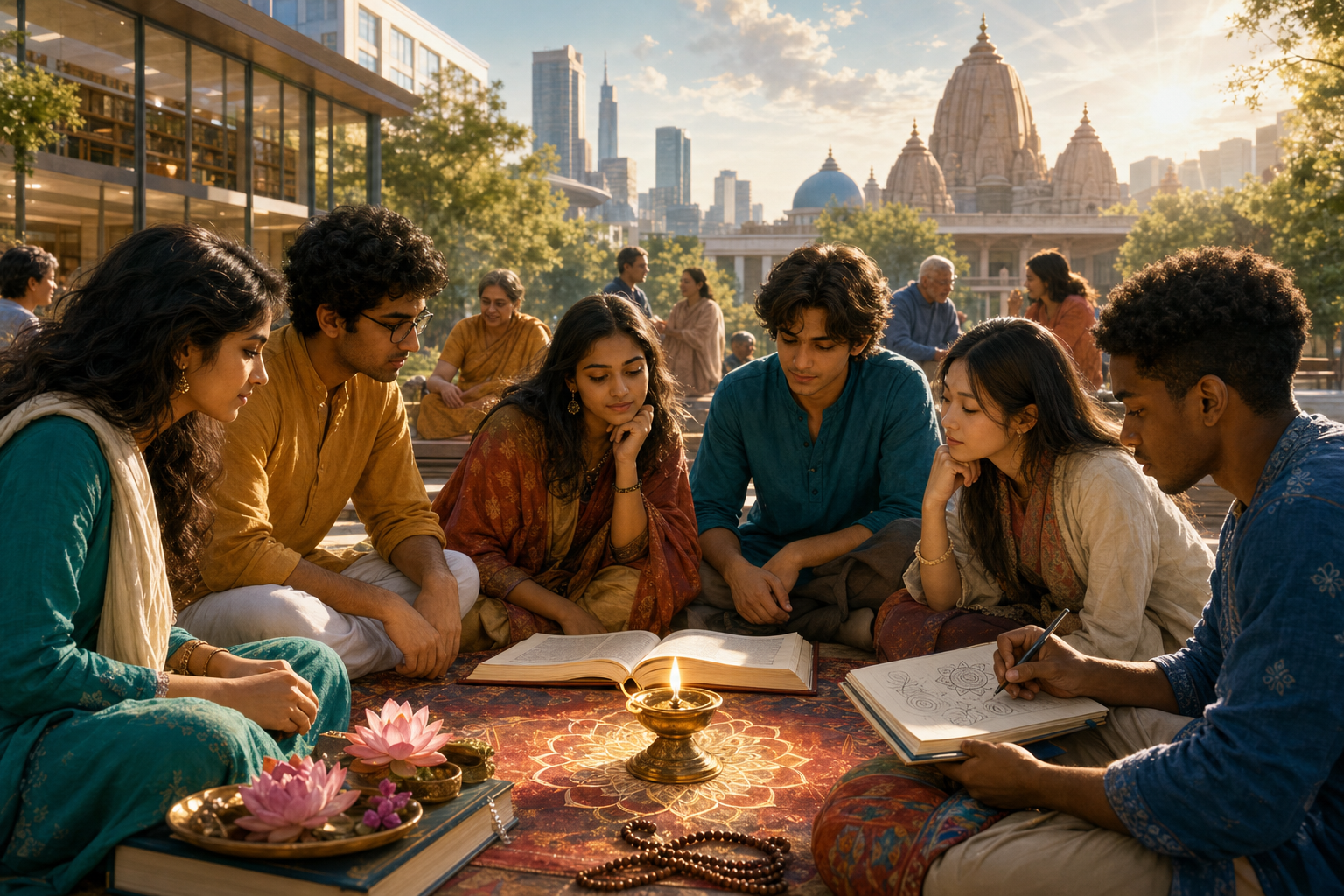
Pew Research Center’s studies of America’s religious landscape reveal a profound cultural transition. In 2014, Pew estimated that roughly 56 million American adults were religiously unaffiliated, a population often described as religious "nones" because they identify as atheist, agnostic, or "nothing in particular." At that time, the unaffiliated had become more numerous than Catholics or mainline Protestants and were second in size only to evangelical Protestants among major religious groupings in the United States.
The trend did not stop there. Pew’s later research found that by 2023 roughly 28 percent of American adults were religiously unaffiliated, and its 2023-24 Religious Landscape Study placed the unaffiliated share near 29 percent. The long-term pattern is clear even if short-term growth has recently slowed: religious identity in America is no longer inherited as automatically as it once was. A younger, more educated, more mobile, and more individualistic society asks every tradition to explain not merely what it teaches, but why those teachings matter.
Hinduism in America must be understood within this wider religious transformation. Pew’s 2014 study estimated that Hindus increased from 0.4 percent of U.S. adults in 2007 to 0.7 percent in 2014, while later data places the Hindu share close to 1 percent. These numbers remain small in national terms, yet they represent a visible and influential Hindu American community, especially in education, technology, medicine, business, public service, and civic life.
The educational profile of Hindu Americans is especially striking. Pew reported in 2014 that 77 percent of Hindus in the United States were college graduates, compared with 27 percent of U.S. adults overall. The same study found that 36 percent of Hindu households reported annual family incomes above $100,000, compared with 19 percent of the general public. These figures help explain the community’s social visibility, but they also reveal a central paradox: achievement alone does not guarantee religious continuity.
A community can become professionally successful while becoming spiritually thin. Children can attend the finest universities, enter respected careers, marry, raise families, and contribute responsibly to society while having little meaningful connection to Hindu Dharma, Hindu philosophy, Hindu practices, or Hindu community institutions. The concern is not moral failure. Many such individuals will live ethical, disciplined, and compassionate lives. The concern is that they may not see why Hinduism is necessary for understanding the deepest questions of life, suffering, duty, selfhood, and liberation.
This is why the rise of the religious "nones" matters so deeply for the Hindu American community. The major challenge facing the next generation is not simply conversion to another religion. In many cases, the real alternative is non-affiliation, indifference, or a private spirituality detached from inherited traditions. The choice for many young Hindus in the United States may not be between Hinduism and another organized faith; it may be between a living Hindu identity and no religious identity at all.
Earlier generations often answered the question of identity through birth, family, and community memory. A child could ask, "Why are you a Hindu?" and receive the answer, "Because I was born a Hindu." In many historical settings, that answer carried social meaning. It located a person within family, ritual, ancestry, language, temple life, and cultural obligation. In contemporary America, however, birth is no longer sufficient as an argument for belonging.
The new generation is likely to ask a more demanding question: why should Hindu Dharma shape life when one can be kind, educated, successful, and socially responsible without formal religious affiliation? This question deserves neither defensiveness nor dismissal. It is a serious philosophical and civilizational question. A tradition that has examined dharma, karma, moksha, suffering, consciousness, and the nature of reality for millennia should be able to meet such questioning with intellectual confidence and spiritual depth.
The answer cannot be reduced to cultural nostalgia. Food, festivals, music, dance, clothing, language, and family customs remain important channels of Hindu cultural heritage. They create memory, affection, and belonging. A child who remembers lamps during Diwali, the sound of mantras in a temple, the discipline of touching elders’ feet, or the shared labor of preparing prasadam receives more than atmosphere; such experiences create emotional pathways into a tradition. Yet culture alone cannot carry the full weight of Dharma for a generation trained to ask for meaning, evidence, and ethical coherence.
Nor can Hindu identity in America remain inseparable from Indian national, linguistic, or regional identity. Many first-generation Hindu immigrants understandably carry a deep attachment to India, its languages, its sacred geography, and its cultural memories. That attachment is historically valid and emotionally powerful. Yet many second-generation and third-generation Hindu Americans will identify strongly as Americans. Their civic formation, public vocabulary, professional networks, and political concerns will be shaped by the United States. For them, Hindu Dharma must be presented not as a foreign inheritance preserved in exile, but as a universal wisdom tradition capable of illuminating life anywhere.
This distinction is crucial. Hinduism is deeply rooted in Bharat and the Indian subcontinent, but its philosophical insights are not confined to ethnicity or geography. Teachings about the self, consciousness, duty, compassion, disciplined action, pluralism, and liberation speak to human beings as human beings. The Upanishadic search for ultimate reality, the Bhagavad Gita’s teaching on Karma Yoga, the practice of meditation, the ethics of ahimsa, and the idea of lokasaṅgraha address universal human concerns. They can guide a physician in Boston, an engineer in California, a student in Texas, or a public servant in Washington without requiring them to treat religion as a museum of inherited customs.
Hindu Dharma is especially well positioned for this moment because it is a knowledge-centered tradition. The word Veda is associated with knowledge, and the tradition repeatedly identifies ignorance, avidyā, as a fundamental human problem. The guru is not merely a ritual authority; the guru is a teacher who dispels darkness through wisdom. This gives Hinduism an unusual capacity to speak to educated young people who respect inquiry, science, philosophy, and debate.
A knowledge-based tradition need not fear truth from any source. Hindu philosophical schools have long debated metaphysics, language, perception, causality, consciousness, ritual, devotion, and liberation with rigor. The darshanas did not develop by avoiding argument. They developed through sustained inquiry. In an American environment where many young adults are suspicious of dogma, this intellectual openness can become one of Hinduism’s great strengths.
At the same time, knowledge in Hindu Dharma is not mere information. It is transformative knowledge. It is meant to reduce suffering, clarify perception, discipline desire, refine conduct, and orient the person toward a deeper fulfillment than consumption or status can provide. This is why the concepts of avidyā and duḥkha remain so relevant. A highly educated person can still be inwardly restless. A prosperous household can still struggle with loneliness, anxiety, comparison, burnout, and loss of meaning. Hindu spirituality becomes compelling when it speaks directly to these realities without sentimentality.
The American religious landscape also shows that non-affiliation does not always mean hostility to spirituality. Pew’s research on religious "nones" indicates that many unaffiliated Americans continue to believe in God, a higher power, the soul, or some form of spiritual reality. Many are not anti-religious; they are unconvinced by inherited institutions, rigid claims, or communities that appear ethically inconsistent. This distinction matters. Hindu communities should not assume that young people have rejected the sacred. Many have rejected shallow explanations of the sacred.
For Hindu Americans, the task is therefore not merely retention. It is interpretation. Temples, families, educators, and community leaders must explain why puja, mantra, seva, yoga, meditation, satsang, scriptural study, and ethical discipline are not isolated activities but integrated ways of shaping consciousness and conduct. A young person should be able to understand why a ritual matters, what a mantra is doing, how a festival encodes philosophy, and why dharma is larger than rule-following.
This also requires careful attention to the unity of Dharmic traditions. Hinduism, Buddhism, Jainism, and Sikhism differ in theology, metaphysics, history, and practice, yet they share civilizational concerns with liberation, self-discipline, compassion, karma, ethical living, and the transformation of the human person. A constructive Hindu future in America should strengthen respect across Dharmic traditions rather than narrow identity into sectarian competition. The goal is not to erase differences, but to cultivate intellectual honesty, mutual reverence, and shared commitment to the public good.
Hindu pluralism has a particular contribution to make in this context. The tradition has long recognized different temperaments, paths, disciplines, and forms of devotion. Bhakti, jnana, karma, dhyana, temple worship, household ritual, philosophical study, and seva can all serve as legitimate modes of spiritual growth. This diversity is not confusion; it reflects a sophisticated understanding of human nature. In a multicultural society, such a framework can help young Hindus see religious diversity not as a threat, but as an opportunity for humility and dialogue.
However, pluralism should not become vagueness. If everything is reduced to the claim that all paths are the same, then no path has depth. Hindu Dharma can honor many paths while still teaching its own disciplines clearly. It can affirm respect for others while explaining karma, rebirth, moksha, Atman, Brahman, Ishvara, dharma, and the disciplines of inner transformation. A tradition becomes attractive not by dissolving its identity, but by presenting its identity with clarity, generosity, and lived integrity.
The transmission of Hindu Dharma in America will also depend on whether adults embody what they teach. Young people quickly detect contradiction. If religion appears only as social pressure, status performance, ethnic pride, or ritual without ethical transformation, it will not hold their allegiance. If, however, Hindu practice produces patience, courage, self-control, compassion, intellectual humility, and service, then it becomes visible as a way of life. The question "Why am I Hindu?" is answered not only in lectures, but in homes, marriages, friendships, business conduct, political behavior, and community service.
This is where lokasaṅgraha becomes indispensable. The Bhagavad Gita’s concern for the welfare and cohesion of the world prevents spirituality from collapsing into private self-improvement. Hindu teachings cannot be presented merely as tools for personal calm, professional success, or individual wellness. They must also be connected to the common good: care for families, service to communities, ethical citizenship, environmental responsibility, interfaith respect, and the protection of human dignity.
Religious teachings are not good simply because they are old. They are good when they deepen truth, reduce suffering, refine character, and contribute to the flourishing of others. Any interpretation of Hinduism that legitimizes cruelty, indifference, arrogance, or social fragmentation betrays the deeper spirit of Dharma. A tradition committed to satyam, shivam, and sundaram must show that truth, goodness, and beauty are not ornamental ideals, but practical measures of religious life.
The future of Hinduism in America will therefore be shaped by three linked responsibilities: intellectual clarity, spiritual authenticity, and civic contribution. Intellectual clarity requires serious teaching of scriptures, philosophy, history, and practice in language accessible to American-born generations. Spiritual authenticity requires communities where worship, meditation, and ethical discipline are lived rather than merely displayed. Civic contribution requires Hindu Americans to bring dharmic values into public life without reducing Dharma to partisan identity.
Families have a central role in this process. A child who hears only commands may comply for a time, but a child who is invited into meaning is more likely to inherit with conviction. Explaining why a fast is observed, why elders are honored, why charity matters, why a deity is worshipped, why Sanskrit words are preserved, and why silence has spiritual value can transform domestic religion from habit into understanding. The kitchen, the prayer room, the car ride after temple, and the conversation after a festival can become informal classrooms of Dharma.
Temples also face a generational test. In America, the temple cannot function only as a ritual center or ethnic gathering place. It must also become a center of learning, counseling, youth formation, intergenerational dialogue, and public service. Young Hindu Americans need spaces where difficult questions are welcomed: questions about science, caste, gender, mental health, religious pluralism, interfaith marriage, career ethics, and political responsibility. Avoiding such questions will not preserve faith. Engaging them carefully may deepen it.
The challenge is real, but it is not a cause for despair. Hindu Dharma has endured because it has repeatedly renewed itself without abandoning its deepest insights. It has absorbed debate, migration, political upheaval, philosophical diversity, devotional creativity, and cultural change. The American context is another test of that adaptive strength. The tradition’s future will not be secured by numbers alone, but by the ability to form human beings who can live with wisdom, courage, and compassion.
In America’s changing religious landscape, Hinduism’s most persuasive offering may be its vision of life as a disciplined search for truth, a compassionate response to suffering, and a beautiful participation in the welfare of the world. If Hindu American communities can communicate this vision with rigor and warmth, the next generation may not remain Hindu merely because it was born Hindu. It may choose Hindu Dharma because it recognizes in it a profound path of knowledge, meaning, belonging, and liberation.
Inspired by this post on Dharma Civilization Foundation.






Leave a Reply
You must be logged in to post a comment.