

Dhwaja Vrata is a specialized Vaishnava vow associated with the worship of sacred flag emblems, or dhwajas, connected with four forms of Lord Vishnu. In the scriptural tradition, it is linked with the Vishnudharmottara Purana and is also referenced through the vrata literature preserved in the Hemadri Vrata Khanda. Its importance lies not merely in the external offering of flags, but in the disciplined transformation of daily life through worship, restraint, color symbolism, seasonal observance, and devotion to the Chaturvyuha: Vasudeva, Sankarshana, Pradyumna, and Aniruddha.
The vrata is often called Chaturmurti Vrata because it extends across four lunar months and honors four distinct manifestations of Vishnu. The original reference to Chaitra, Vaishakha, and Jyeshtha points to the opening three stages of the observance, while Ashadha completes the cycle. This structure is significant because the vow does not remain static. Each month changes the presiding form, the associated dhwaja, and the ritual color, creating a progressive spiritual discipline rather than a single ceremonial act.
In Hindu ritual culture, the dhwaja is more than a banner. It represents presence, sovereignty, consecrated identity, and spiritual orientation. Temples across Bharat often use dhwajas and dhwajasthambhas as visible declarations of sacred space. In Dhwaja Vrata, this symbolism becomes inwardly focused. The devotee does not merely look at a flag as an ornament; the flag becomes a meditative emblem through which divine order, discipline, and remembrance are cultivated every day.
The first month, Chaitra, is dedicated to Vasudeva. The associated dhwaja is Garuda, and the prescribed color is yellow, traditionally called Pita. Chaitra marks a season of renewal in many Hindu calendars, and the use of yellow naturally evokes auspiciousness, clarity, learning, and sacred vitality. Garuda, as the vehicle of Vishnu, also symbolizes alertness, protection, and the power to rise above poisonous tendencies. Within the vrata, this stage may be understood as the beginning of purification and upward aspiration.
The second month, Vaishakha, is dedicated to Sankarshana, identified in many Vaishnava contexts with Balarama. The dhwaja symbol is Tala, the palm tree, and the required color is blue, or Nila. The palm tree suggests steadiness, endurance, and rootedness, while blue carries associations with depth, vastness, and the cosmic presence of the divine. This month deepens the observance by moving the practitioner from initial enthusiasm toward stability and strength.
The third month, Jyeshtha, is dedicated to Pradyumna. The dhwaja symbol is Makara, often rendered as a crocodile or aquatic creature, and the required color is white, or Shveta. Jyeshtha falls in the intensity of summer, and white becomes especially meaningful as a color of cooling, restraint, purity, and mental balance. Makara, with its association with water and depth, introduces a contemplative dimension: the devotee learns to move through the difficult currents of life without losing inner clarity.
The fourth and concluding month, Ashadha, is dedicated to Aniruddha. Its dhwaja symbol is Rishya, understood as a deer or antelope, and its required color is red, or Rakta. The deer is a subtle symbol in Indian religious imagination, often associated with sensitivity, alertness, and the restless movement of the mind. Red suggests energy, commitment, and the final intensification of the vow. By the time Ashadha arrives, the observance has moved through renewal, steadiness, purification, and disciplined offering.
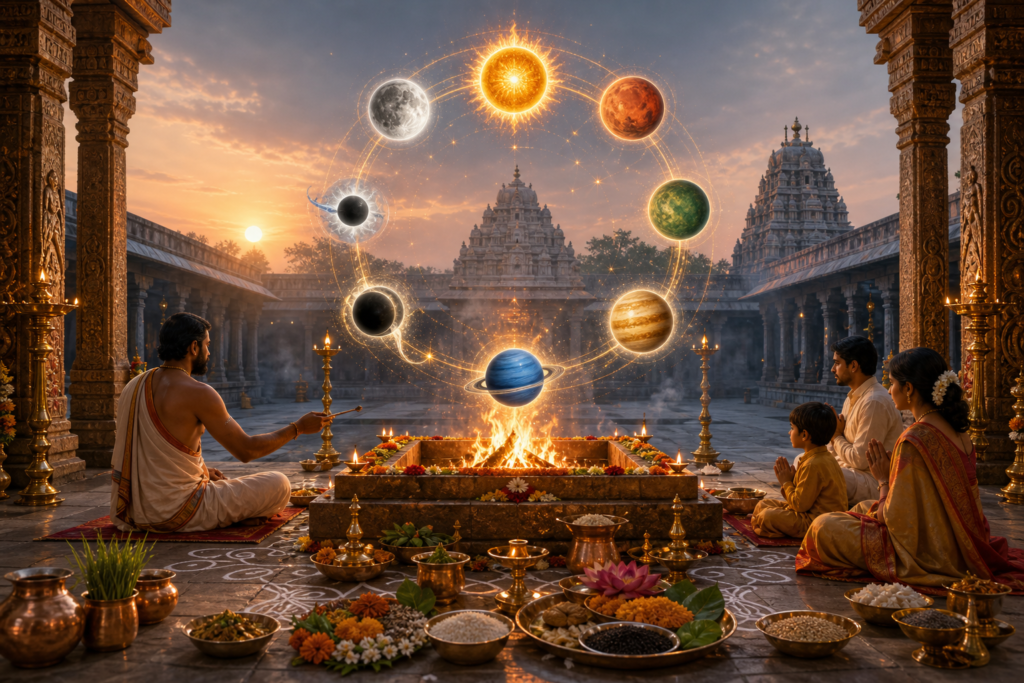
The technical discipline of Dhwaja Vrata is strict. The practitioner is expected to bathe daily, worship the monthly dhwaja emblem, and honor Agni, the sacred fire. These actions unite bodily purity, visual devotion, and sacrificial consciousness. The vrata therefore belongs to a broader Hindu ritual framework in which worship is not isolated from conduct. Cleanliness, food discipline, sleep discipline, celibacy, and charity all become part of a single integrated spiritual practice.
The dietary rule is especially demanding. The observance requires Nakta vrata, meaning that the practitioner eats only once at night. The food is also prescribed to be free from oil. This is not simply a matter of austerity for its own sake. In vrata traditions, regulated food disciplines the senses, reduces indulgence, and makes the body a conscious participant in worship. Such rules remind practitioners that devotion is not only expressed through words and offerings, but also through appetite, restraint, and consistency.
The lifestyle requirements include Brahmacharya and Adhashayya, or sleeping on the floor. Brahmacharya, in this context, emphasizes celibacy and conservation of vital energy during the vow. Adhashayya removes comfort and softens attachment to habit. These practices can appear severe to a modern reader, but they reflect a classical understanding of tapas: spiritual heat generated through deliberate discipline. The goal is not self-punishment, but the refinement of attention and intention.
Dhwaja Vrata also shows how Hindu rituals often combine theology, cosmology, and practical psychology. The four forms of Vishnu are not treated as abstract concepts alone. Each is approached through a monthly rhythm, a symbol, a color, and a discipline. This layered structure allows the mind to return repeatedly to a sacred focus while still experiencing variety. The result is a devotional practice that is systematic, memorable, and emotionally resonant.
The Chaturvyuha framework has an important place in Vaishnava thought, especially in Pancharatra traditions. Vasudeva, Sankarshana, Pradyumna, and Aniruddha are understood as ordered manifestations of the divine, often connected with cosmic functions and inner principles. Dhwaja Vrata brings this theology into practice. Instead of remaining a subject for philosophical study alone, the fourfold manifestation becomes something the devotee honors through time, body, color, food, and conduct.
The color symbolism deserves careful attention. Yellow, blue, white, and red are not decorative choices. In ritual practice, color organizes perception and creates a disciplined atmosphere. Cloth, flowers, sandalwood paste, and offerings are aligned with the color of the month, making the entire act of worship coherent. This kind of ritual precision reflects a broader principle in Hindu scriptures: material objects can become vehicles of sacred meaning when they are used with knowledge, devotion, and purity of intention.
The conclusion of the vrata occurs on the final day of Ashadha. At that point, the practitioner feeds Brahmins and donates colored clothes corresponding to the four months: yellow, blue, white, and red. The act of donation is essential because vrata is never only private spirituality. It culminates in generosity, hospitality, and social dharma. The discipline that begins with the individual body ends by nourishing others and offering useful goods in a sacred manner.
The scriptural promise attached to Dhwaja Vrata is profound. A devotee who completes the four-month cycle every year for twelve years is said to attain Sayujya with Lord Vishnu. Sayujya is a term associated with deep spiritual union and liberation. Whether approached literally, theologically, or contemplatively, this promise expresses the seriousness of the vrata. It is not described as a casual observance, but as a long-term path of disciplined devotion.
From a cultural perspective, Dhwaja Vrata preserves an important feature of Hindu religious life: the union of visible symbol and invisible transformation. A flag is outwardly simple, yet in this vrata it becomes a sacred marker of time, deity, discipline, and aspiration. Such practices help explain why Hindu rituals have endured across centuries. They are not merely inherited customs; they are embodied systems of memory, ethics, worship, and self-regulation.
For contemporary practitioners, the strict classical form may be difficult to observe without guidance from a qualified acharya or family tradition. Even so, the underlying principles remain deeply relevant. Daily purity, mindful food, symbolic worship, seasonal awareness, charity, and disciplined remembrance of the divine can still speak to modern spiritual life. The vrata invites reflection on how devotion becomes durable when it is practiced through routine rather than emotion alone.
Dhwaja Vrata also contributes to the larger unity of Dharmic traditions by highlighting shared values such as restraint, reverence, compassion, disciplined conduct, and liberation-oriented life. While its theology is specifically Vaishnava and centered on Lord Vishnu, its ethical structure resonates across Hinduism, Buddhism, Jainism, and Sikhism in the broader sense that spiritual practice is strengthened by self-control, service, humility, and remembrance of the sacred. This makes the vrata not only a ritual subject, but also a meaningful window into the disciplined heart of Sanatana Dharma.
In this way, Dhwaja Vrata is best understood as a four-month discipline of sacred alignment. Chaitra begins with Vasudeva and the yellow Garuda dhwaja; Vaishakha continues with Sankarshana and the blue Tala dhwaja; Jyeshtha turns to Pradyumna and the white Makara dhwaja; Ashadha concludes with Aniruddha and the red Rishya dhwaja. Through daily worship, Nakta vrata, oil-free food, Brahmacharya, Adhashayya, Agni worship, and final charity, the devotee participates in a demanding but coherent path of Vaishnava devotion.
Inspired by this post on Hindu Pad.




Leave a Reply
You must be logged in to post a comment.