
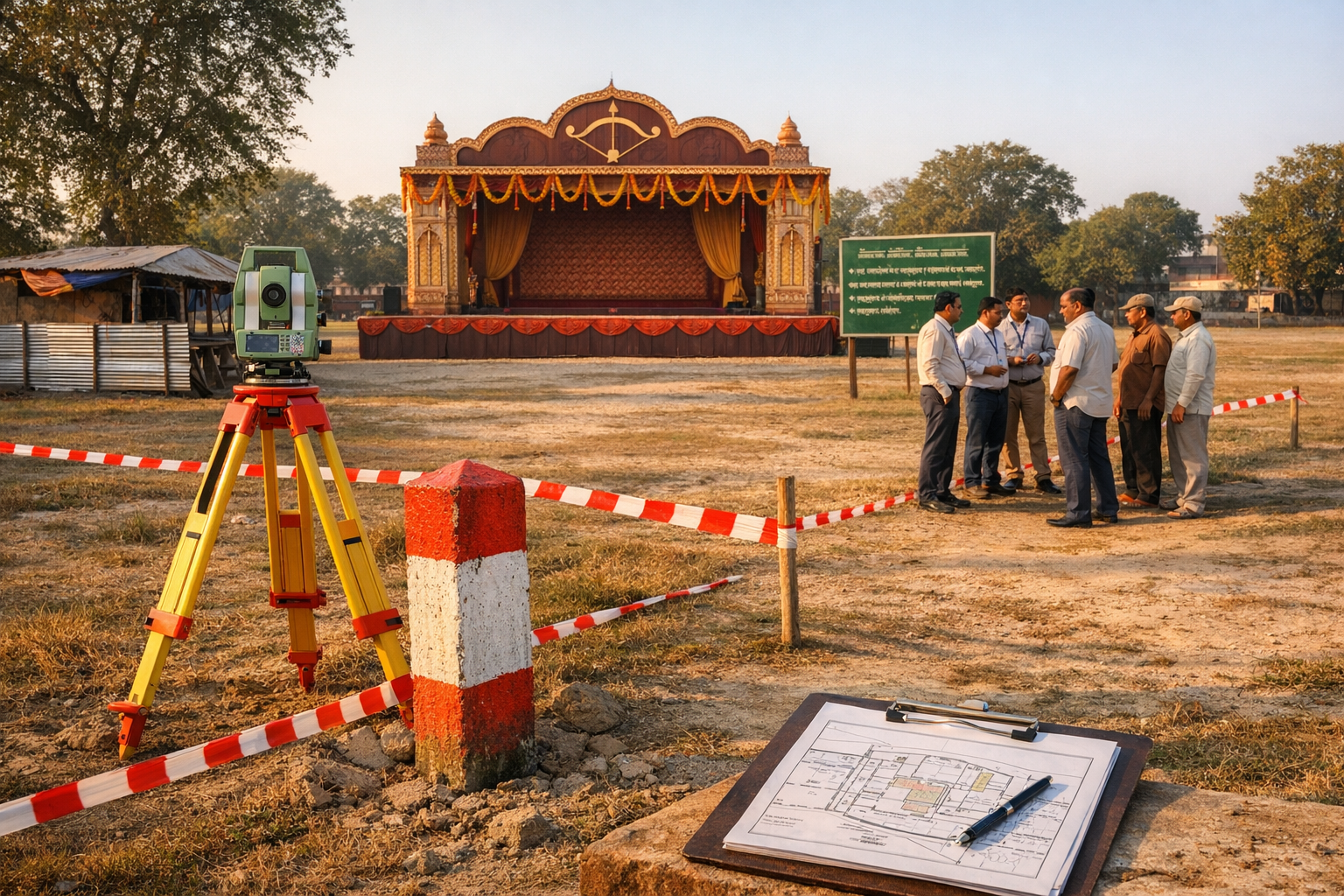
On June 23, 2026, Deoria, Uttar Pradesh, witnessed mounting concern over alleged encroachment on the district’s historic Ramlila ground, alongside a reported public threat of self-harm, even as the district administration assured swift, lawful action. The episode has focused public attention on the protection of shared cultural spaces, the importance of due process, and the need for calm, non-violent resolution rooted in dharmic values and civic responsibility.
At stake is more than a parcel of land. The Ramlila ground functions as a living stage for a tradition recognized internationally as intangible cultural heritage, where stories from the Ramayana are re-enacted, artisans and vendors gather, and families mark the festive calendar together. For many residents, the annual Ramlila is where children learn ethics through performance, elders reunite, and community bonds are renewed in an inclusive environment.
In Deoria, as in many towns across Uttar Pradesh, a Ramlila Maidan is not only a performance venue but a cultural commons that supports local livelihoods, seasonal fairs, and civic events. Such grounds often serve as neutral, community-owned spaces that foster social cohesion and religious harmony across dharmic communities, including Hindu, Buddhist, Jain, and Sikh traditions, which collectively uphold shared values such as ahimsa, seva, aparigraha, and satya.
Encroachment, in legal and administrative terms, typically denotes unauthorized occupation, construction, or material alteration of land recorded for public or community purposes. On cultural commons like a Ramlila ground, this can manifest as incremental boundary shifts, temporary stalls becoming semi-permanent structures, unauthorized fencing, or unapproved construction—each of which, if unchecked, can cumulatively erode access and function.
Several structural factors make such spaces vulnerable: incomplete or outdated cadastral maps; unclear local notification of land use; absence of visible boundary markers; and rapid urbanization that intensifies pressure on open grounds. When the land’s recorded purpose (as reflected in revenue records such as khasra-khatauni) is not consistently signposted, inadvertent or opportunistic encroachment becomes more likely.
In Uttar Pradesh, the immediate administrative pathway for addressing alleged encroachment on public or community land is clear. Upon receipt of a formal complaint, officials ordinarily initiate demarcation (napa-jokha) based on revenue records and site surveys. The lekhpal, revenue inspectors, and the tehsildar play critical roles in verifying title, boundaries, and the nature and extent of any obstruction or occupation.
Following demarcation, authorities proceed with notices to concerned parties under the governing statutes. Where the land is Gaon Sabha or otherwise public, action commonly proceeds under Section 67 of the Uttar Pradesh Revenue Code, 2006 (eviction of unauthorized occupants of public land), or under the Uttar Pradesh Public Premises (Eviction of Unauthorised Occupants) Act, 1972, in cases involving public premises. Where municipal jurisdiction applies, relevant provisions of the Uttar Pradesh Municipalities Act, 1916 or the Uttar Pradesh Urban Planning and Development Act, 1973 may also be engaged.
Due process requires a speaking order, clear timelines, an opportunity to be heard, and reasoned findings on the record. Where removal is warranted, standard operating procedures include videography of the site, an inventory of materials, participation of anti-encroachment squads with appropriate public notice and safety measures, and restoration of the ground to its recorded, lawful use.
Proportionality and procedural fairness remain central. Jurisprudence such as Olga Tellis v. Bombay Municipal Corporation (1985) underscores that state action impacting livelihoods or shelter must follow established legal procedure. While that case addressed different facts, the underlying principles—humane implementation, transparency, and access to remedy—are relevant to any encroachment removal that affects persons or property.
The Ramlila ground is a cultural asset to be stewarded, not only policed. Intangible heritage, when anchored to a specific place, benefits from place-based management: a local heritage register; signage detailing lawful land use and boundaries; and a published calendar of community events that reaffirms the ground’s primary cultural function. Partnerships with schools, local artisans, and cultural bodies strengthen community guardianship and reduce risk of recurrence.
The reported threat of self-immolation is deeply concerning and incompatible with the shared dharmic ethic of ahimsa that guides Hinduism, Buddhism, Jainism, and Sikhism. Such threats imperil life, strain public order, and overshadow legitimate heritage concerns. Non-violence, dialogue, and lawful recourse remain the only principled and effective path—especially when safeguarding heritage and community harmony.
Constructive de-escalation in Deoria can be time-bound and transparent. First, an on-record commitment to a rapid survey and demarcation, with dates and officers named, reassures stakeholders that action is underway. Second, a joint review meeting chaired by the district administration with representation from local civic bodies, Ramlila committees, and dharmic community organizations can translate the assurance of action into a publicly tracked plan.
Third, a 360-degree communication update—site map, boundary coordinates, statutory basis for any notices, and a schedule for next steps—reduces rumor and polarization. Fourth, a formal escalation pathway (tehsil to district level) and a grievance redress window allow individuals to present documents and be heard, minimizing confrontation at the site itself. Fifth, in the event of confirmed unauthorized occupation, a humane removal plan with safety protocols protects both public property and human dignity.
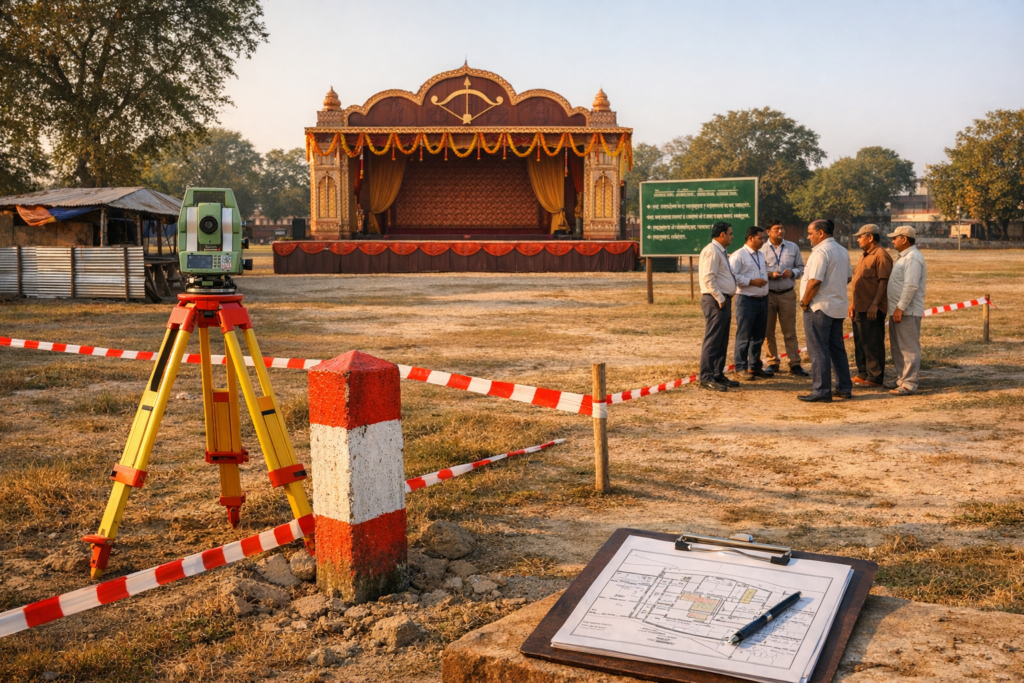
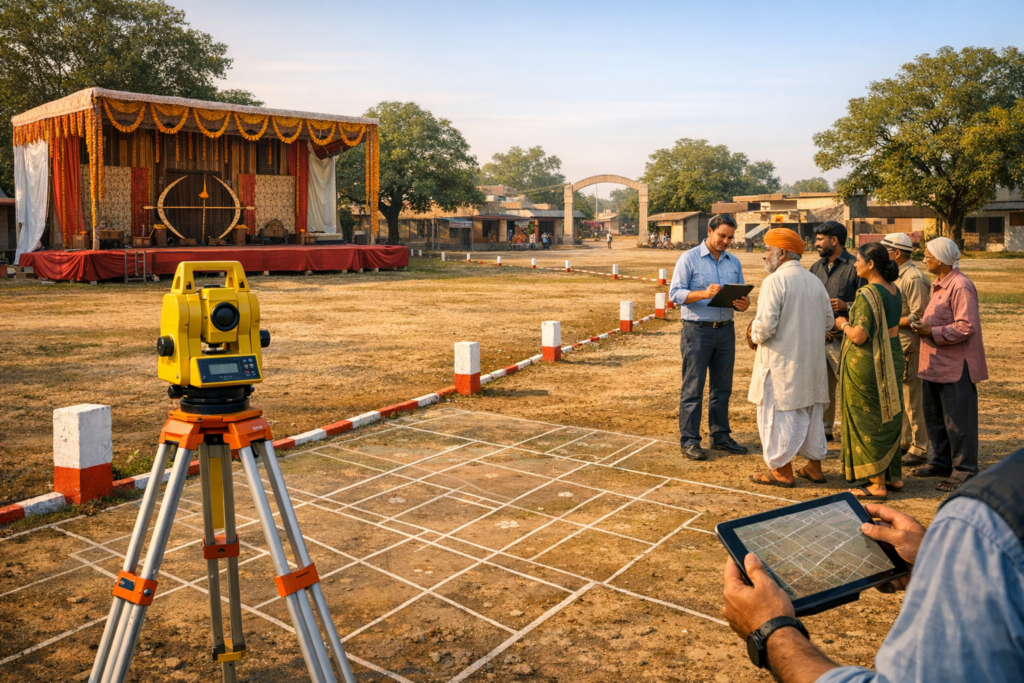
Medium- to long-term safeguards can align heritage protection with modern land governance. Periodic GIS-enabled demarcation; boundary pillars with QR-coded signage linking to land records; a formal “no-encroachment buffer” clearly painted and maintained; and routine, pre-festival inspections by revenue and municipal teams create robust deterrence. Integrating the Ramlila ground into district cultural tourism and community programming ensures year-round, lawful use that naturally resists encroachment.
Dharmic unity is foundational to a sustainable solution. The virtues celebrated through the Ramlila—courage, restraint, truthfulness, compassion—are shared across Hindu, Buddhist, Jain, and Sikh traditions. A plural, dharmic stewardship committee can model cooperation: mediating disputes calmly, prioritizing life and law, and demonstrating that protecting a cultural commons is a collective, inter-traditional duty.
Ultimately, Deoria’s challenge is an opportunity. The administration’s public assurance of swift action should translate into visible demarcation, reasoned notices, and, where required, measured removal in conformity with the Uttar Pradesh Revenue Code and public premises law. Community leaders, cultural organizers, and residents can reciprocate with steadfast non-violence and patience, allowing institutions to work, facts to be established, and the Ramlila ground to be restored as a lawful, open, and shared space.
If managed transparently and humanely, Deoria can offer a replicable template for Uttar Pradesh and beyond: safeguarding an iconic Ramlila Maidan; affirming rule of law; strengthening community cohesion; and embodying dharmic unity. Protecting heritage and protecting life are not competing goals—they are inseparable obligations of a just, plural, and confident society.
Inspired by this post on Struggle for Hindu Existence.








Leave a Reply
You must be logged in to post a comment.