
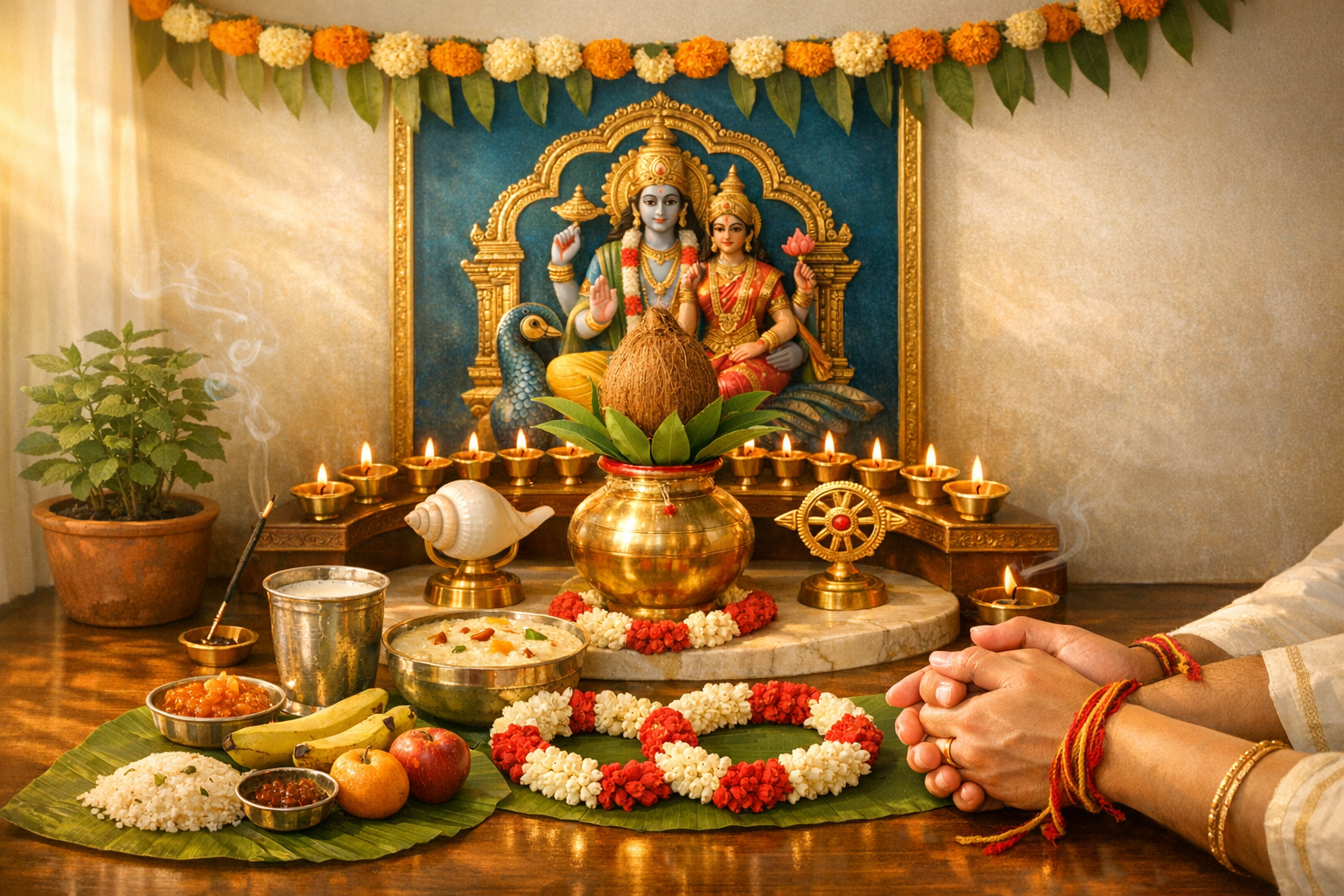
Aviyoga Dwadashi Vrata is a rare and highly specific Hindu observance centered on the ideal of enduring unity in marriage and the deeper spiritual principle of non-separation from the Divine. Etymologically, the Sanskrit compound clarifies its intent: A-viyoga (अवियोग) signifies “non-separation,” while Dwadashi (द्वादशी) denotes the twelfth lunar day (tithi) of the fortnight. Within the broader Vaishnava tradition that venerates Ekadashi–Dwadashi observances, this vrata emphasizes both conjugal harmony and the steadfast alignment of the household with dharma.
In practice, Aviyoga Dwadashi Vrata is undertaken primarily by married householders seeking akhaṇḍa dampatya-sauhārdya—unbroken marital concord—while also reaffirming steadfast devotion (bhakti) to Vishnu. The vrata’s intention is twofold: to sanctify the bond between spouses and to cultivate inner steadiness that does not fragment under life’s dualities. The ideal of aviyoga extends from the marital sphere to the soul’s relationship with the Supreme, affirming that true unity is both relational and spiritual.
Although not universally listed in every regional almanac, Aviyoga Dwadashi Vrata is attested in sectarian lineages and some panchangs where specialized Dwadashi practices are preserved. Puranic and smriti compendia broadly extol Dwadashi as auspicious for Vishnu worship and for concluding Ekadashi austerities; this vrata aligns with that canonical spirit while giving the observance a distinct marital and household focus. Accordingly, families often integrate it into a yearly vrata cycle alongside more widely known Dwadashi traditions.
The calendrical anchor of the observance is the Dwadashi tithi. In classical panchang terms, a tithi is a lunar phase defined by the elongation between the Sun and Moon increasing in successive 12-degree arcs. For vrata purposes, eligibility is governed by the tithi prevailing at sunrise (udaya-tithi). When Dwadashi prevails during prātah-kāla (post-sunrise morning), the day is considered suitable for Aviyoga Dwadashi worship. If Dwadashi is kṣaya (skipped) or begins/ends unusually, practitioners follow established Vaishnava rules to ensure the vrata is observed while the Dwadashi tithi is operative.
Regional almanacs differ on whether the vrata should specifically align with Śukla Paksha Dwadashi (the bright fortnight) or with whichever Dwadashi follows Ekadashi in that fortnight. In many Vaishnava households, the emphasis remains consistent: complete the Ekadashi upavāsa properly and honor Dwadashi with puja, parāṇa (fast-breaking), and charity. Local sampradāya guidance and one’s family guru’s instructions are therefore decisive in finalizing dates and timings.
Preparation for Aviyoga Dwadashi Vrata begins with inward and outward purification. Householders adopt sāttvika conduct in the preceding evening and on the vrata day, emphasizing clarity of speech, gentle demeanor, and moderation in sleep and stimulation. This preparatory discipline is viewed not as a formality but as a relational sādhanā that sets the tone for compassionate communication between spouses during and after the observance.
The sankalpa frames the vrata’s purpose: the couple, or the officiating practitioner on their behalf, articulates the intention to uphold aviyoga—non-separation in thought, speech, and action—seeking Sri Vishnu’s anugraha for enduring harmony and spiritual steadiness. Many households direct worship to Vishnu–Lakshmi, while others, consistent with the Ishta framework, may honor forms such as Śrī Rāma–Sītā, Śrī Kṛṣṇa–Rukmiṇī, or, in some family traditions, Śiva–Pārvatī, all while maintaining Vaishnava Dwadashi timings. The principle of Ishta enables the vrata to remain theologically coherent yet pastorally inclusive.
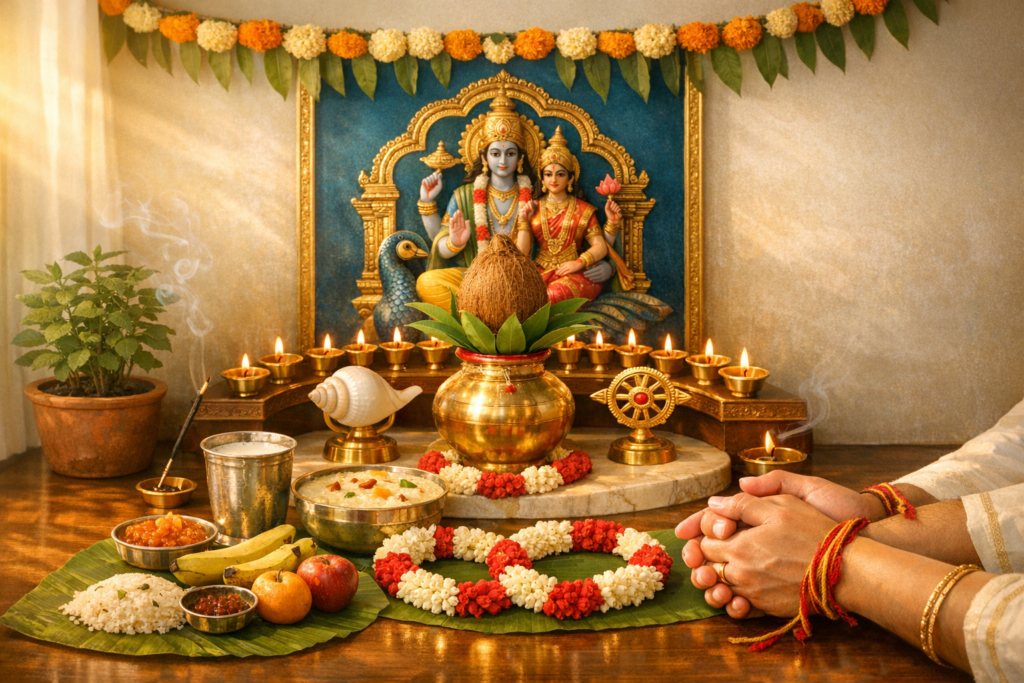
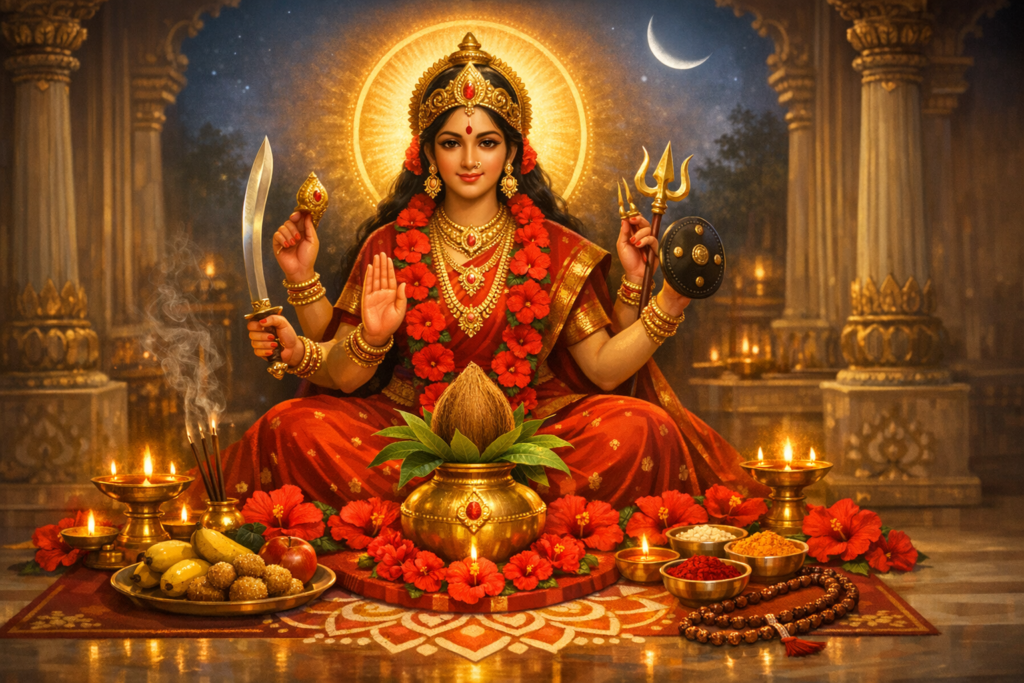
The puja vidhi typically includes: sanctification of space with Ganga-jala or consecrated water; lighting of a deepa to signify knowledge and auspiciousness; invocation of Vishnu–Lakshmi in a kalasha or on the household altar; recitation of Vishnu sahasranāma segments or select stotras such as Vishnu śatranāma; and a 12-fold archana reflective of Dwadashi’s number symbolism. Couples may exchange garlands in the presence of the deities, tie a raksha-sutra as a vow of mutual guardianship, and offer a silent prayer of forgiveness for past transgressions, reinforcing the vrata’s restorative dimension.
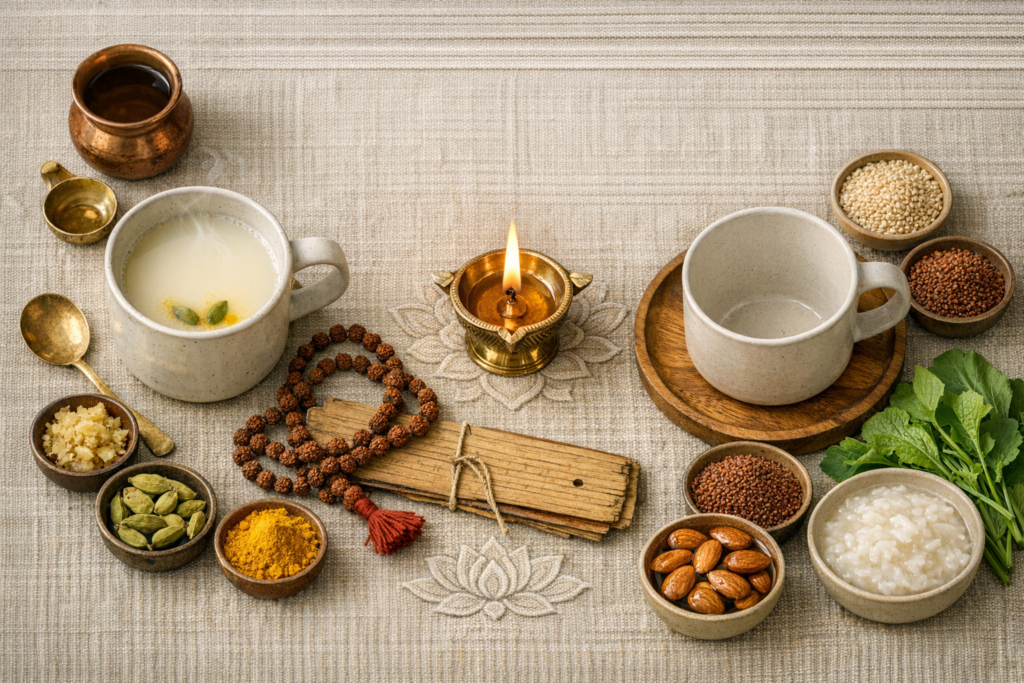
Naivedya often follows a sāttvika, milk-forward profile to resonate with the Kṣīrābdhi (Ocean of Milk) symbolism dear to many Vaishnava lineages. Offerings may include kṣīra (sweet milk), pāyasa/kheer, fresh fruits, and simple, non-garlic, non-onion preparations. After naivedya and ārati, prasāda is shared reverently, with the understanding that prasāda nourishes both the physical body and the couple’s shared resolve to practice aviyoga in daily life.
Charity (dāna) and service (seva) on Dwadashi are strongly encouraged. Some households offer vastra-dāna or anna-dāna to a married couple, a priestly family, or local community kitchens, dedicating the merit to marital concord for all. Acts of generosity are viewed as extensions of the non-separative mindset that the vrata cultivates—reducing self-centeredness and expanding empathy within and beyond the home.
Fasting norms vary by sampradāya. In Vaishnava praxis, the principal fast is kept on Ekadashi, with parāṇa on Dwadashi after proper worship. For Aviyoga Dwadashi Vrata, many households either break the Ekadashi fast ceremonially after the morning puja on Dwadashi or maintain a partial fast on Dwadashi until puja and parāṇa are complete. In all cases, parāṇa is performed within the Dwadashi window according to panchang rules; if Dwadashi ends early, parāṇa is advanced to ensure it falls within the eligible period.
A widely told teaching motif linked with this vrata highlights reconciliation. It speaks of a devout couple who, after a harsh quarrel, turned to Vishnu on Dwadashi, pledging aviyoga through disciplined speech, daily remembrance, and small acts of mutual seva. Their renewed commitment—ritually anchored and practically lived—transformed discord into steady companionship. While such narratives are pedagogical rather than canonical prescriptions, they capture the vrata’s lived purpose: making sacred ideals actionable within family life.
The significance of Aviyoga Dwadashi Vrata extends beyond ritual propriety into psychosocial well-being. Contemporary findings on household rituals suggest that structured, value-centered practices improve relational communication, reduce impulsive reactivity, and create shared meaning. Within that evidence-informed view, the vrata’s combination of sankalpa, mindful speech, and mutual seva functions as a relational protocol for resilience, fortifying the bond against stressors and sustaining harmony over time.
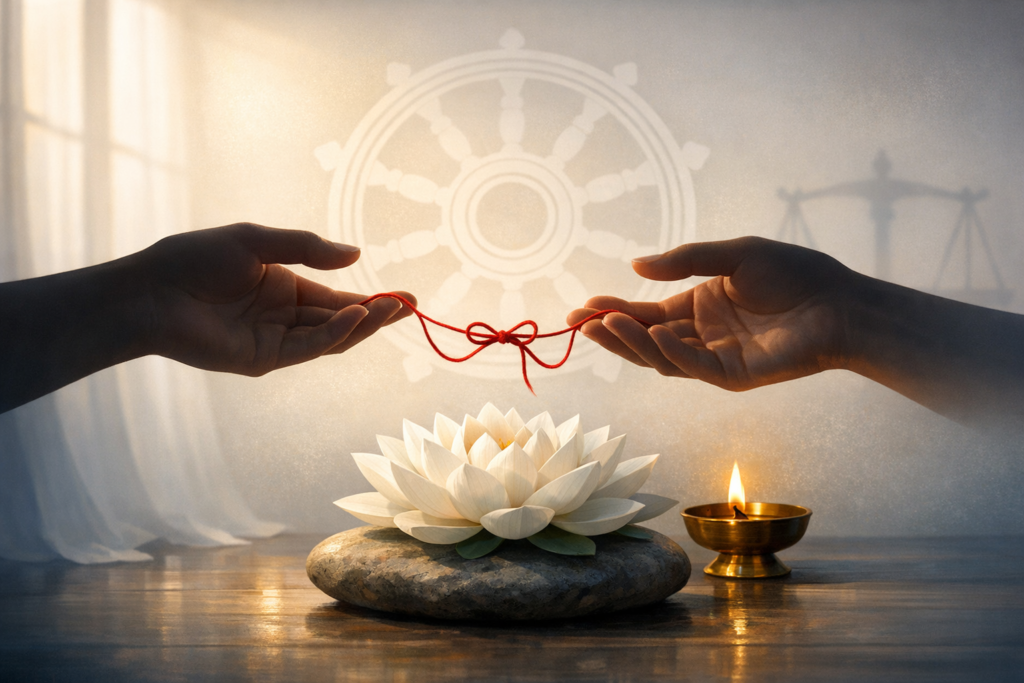
In keeping with the blog’s commitment to inter-dharmic unity, the ethical core of aviyoga resonates across dharmic traditions. Buddhism’s Uposatha emphasizes intentional conduct and right speech that prevent relational rupture; Jain vrata culture and pratikraman cultivate accountability and non-harm, which stabilize familial bonds; Sikh teachings expressed in the Laavaṇ celebrate the evolution of conjugal love into spiritual union. Aviyoga, thus, is not sectarian exclusivity but a shared dharmic value: non-separation through compassion, truthfulness, and steadfast responsibility.
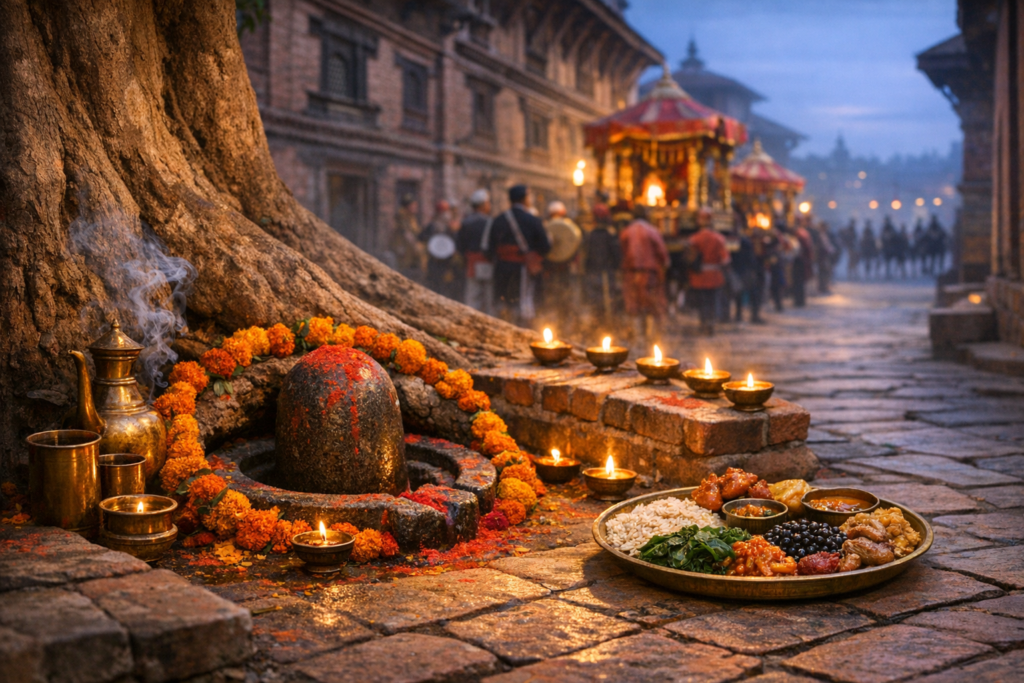
Regional practice shows gentle variation. Some South Indian panchangs and family traditions highlight Shukla Dwadashi for the vrata, whereas other regions focus on the Dwadashi immediately following any Ekadashi. Where a specialized Dwadashi (such as Kartika or Mārgashīrsha observances) is prominent, households may layer Aviyoga intentions into already established Dwadashi pujas. Deference to the local almanac and family guru ensures fidelity to lineage-specific norms.
Eligibility is broad. Married couples observe it for preservation and strengthening of their union; families facing strain adopt it as a remedial practice grounded in both prayer and actionable virtues; those preparing for marriage may keep it aspirationally, shaping habits that support future harmony. Even single practitioners, acting on behalf of family members or as a general vow for household stability, can participate in puja, dāna, and prayers for collective well-being.
Adherence to panchang best practices is important. Vaishnava tradition cautions against breaking Ekadashi during Hari-vasara (the early portion immediately after Ekadashi) and directs parāṇa once Dwadashi is securely operative. When Dwadashi is short or ends before midday, parāṇa is advanced to fit within the tithi. If Dwadashi is kṣaya or significantly offset, consultation with a reliable panchang or priest helps ensure the vrata’s integrity.
Aviyoga Dwadashi Vrata is intentionally simple in outward form and profound in inward aim. By sanctifying the couple’s shared intention, encouraging restrained and compassionate speech, and embedding charity into the day’s fabric, it translates metaphysical aviyoga into daily choices. In doing so, it preserves what is best in household dharma: stability that nurtures all dependents and radiates responsibility into the wider community.
From an ethical and ecological standpoint, the observance welcomes sustainable choices: locally sourced flowers and prasāda, reusable deepas, natural incense, and conscientious disposal of offerings. Such mindfulness extends the vrata’s principle of non-separation to the human relationship with nature, honoring the dharmic vision of interdependence.
In summary, Aviyoga Dwadashi Vrata stands at the intersection of precise calendrical observance and enduring relational wisdom. It integrates panchang science, Vaishnava devotion, and actionable marital ethics into a coherent practice that strengthens households. By aligning the couple’s inner commitments with auspicious Dwadashi worship, the vrata fosters non-separation in spirit and in relationship—an outcome celebrated across Hinduism and deeply resonant with the shared values of Buddhism, Jainism, and Sikhism.
Inspired by this post on Hindu Pad.



Leave a Reply
You must be logged in to post a comment.