
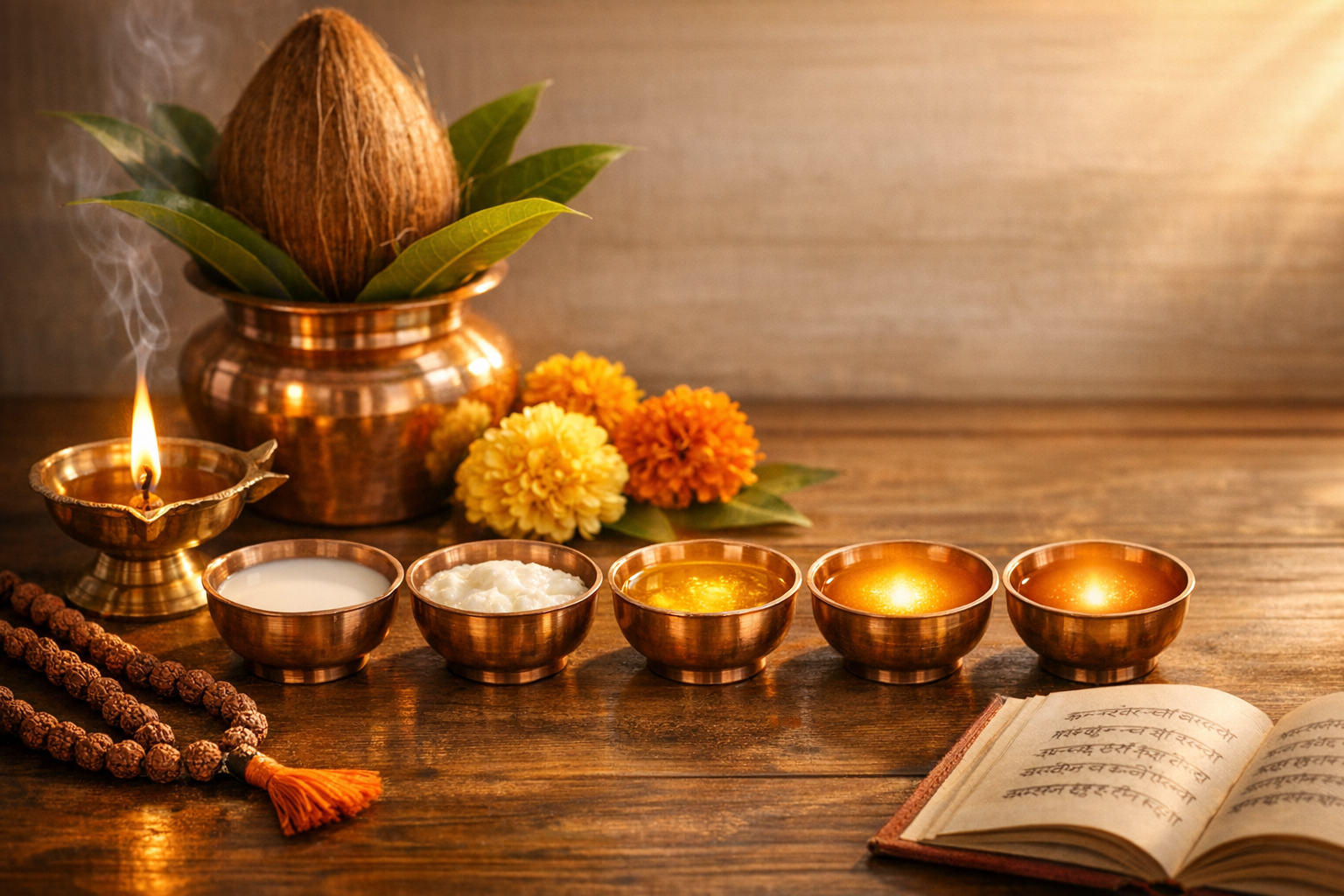
Brahma Kurcha Vrata (also rendered as Brahmakurcha Vratam) is a rigorous ascetic observance within Sanatana Dharma that functions both as vrata (vow) and prāyaścitta (expiation). Rooted in the broader Dharmashastra tradition of personal purification and ethical repair, it aligns disciplined fasting, mantra-japa, and the consecrated intake of Panchagavya to cleanse transgressions, recalibrate conduct, and restore inner sattva (clarity and balance).
In Dharmashastra literature, prāyaścitta is the structured means by which a practitioner addresses moral error (doṣa) and ritual impurity (aśauca) through prescribed tapas (austerity), japa (recitation), dāna (charity), and regulated diet. The Brahma Kurcha Vrata belongs to the classical family of kṛcchra-type austerities—graduated fasting and discipline—articulated across Smriti texts and medieval nibandhas (digest literature). Regional paddhatis (ritual manuals) recognize it as an intense but accessible regimen for householders and ascetics alike when undertaken under competent guidance.
The term “Kurcha/Kurccha” in common parlance reflects vernacular transmission of “kṛcchra,” denoting difficulty or rigor. As a vrata, it is framed not only as penalty but as pedagogy: a method that trains attention, moderates the senses (indriya-nigraha), and forges accountability. Practitioners frequently describe a shift from guilt to responsibility, and from agitation to composure, as the vow proceeds.
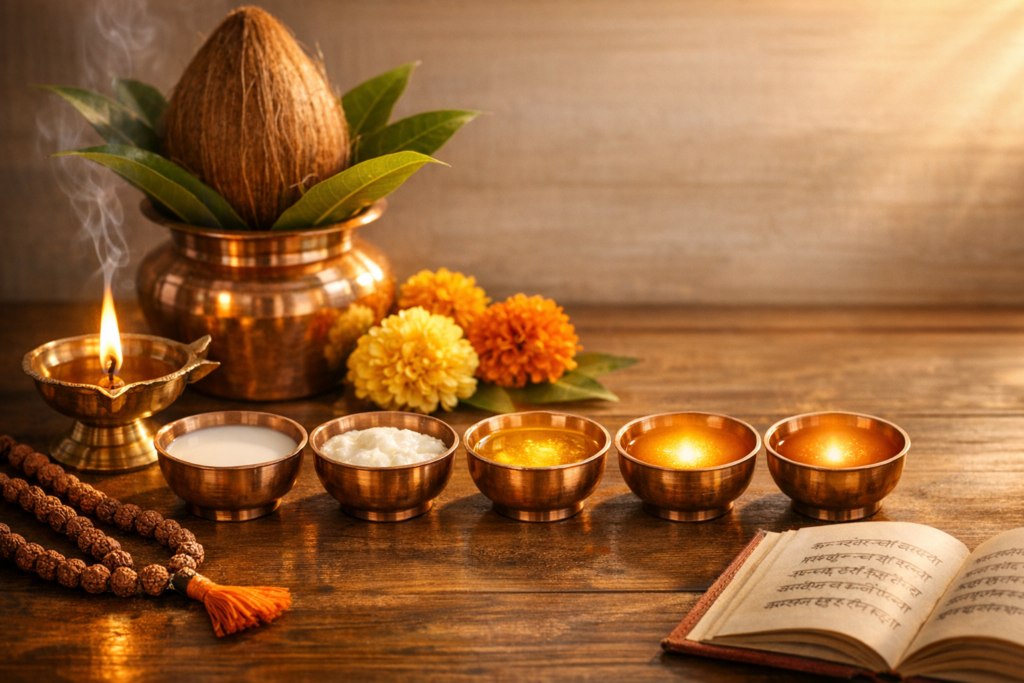
At the heart of Brahma Kurcha Vrata is Panchagavya—five cow-derived substances traditionally enumerated as milk, curd, ghee, gomūtra, and gomaya—prepared and consecrated for measured consumption within the expiatory cycle. The sanctity of Panchagavya in Vedic and Smriti sources is tied to the civilizational reverence for gau-mātā and to a view of purification that is simultaneously bodily, ethical, and sacramental. Textual authorities differ on the exact contexts and quantities, but they concur on the central principle: properly consecrated Panchagavya, taken with sankalpa (intent), supports prāyaścitta and internal reformation.
Classical paddhatis emphasize purity of sourcing and preparation. Ingredients are to be fresh, ethically procured, and handled with śuddhi (clean protocols). While consecration formulas vary, Smarta practice typically includes pavitrīkaraṇa (ritual purification), sankalpa facing the east, and recitation of widely attested mantras such as Gāyatrī, Mṛtyuñjaya, and Pavamāna verses. The specific mantric corpus should follow one’s sampradāya and the guidance of a family priest (purohit) or ācārya.
Brahma Kurcha Vrata is frequently paired with a regulated fasting sequence drawn from the kṛcchra family. These sequences balance restraint and nourishment, ranging from ekabhukta (one meal daily) to upavāsa (complete fast) intervals, and sometimes payo-vrata (milk-based regimen) or phalāhāra (fruits/roots). The diet logic is pedagogical rather than punitive: it cultivates mindful consumption, steadies attention for japa, and sensitizes the practitioner to inner states that require correction.
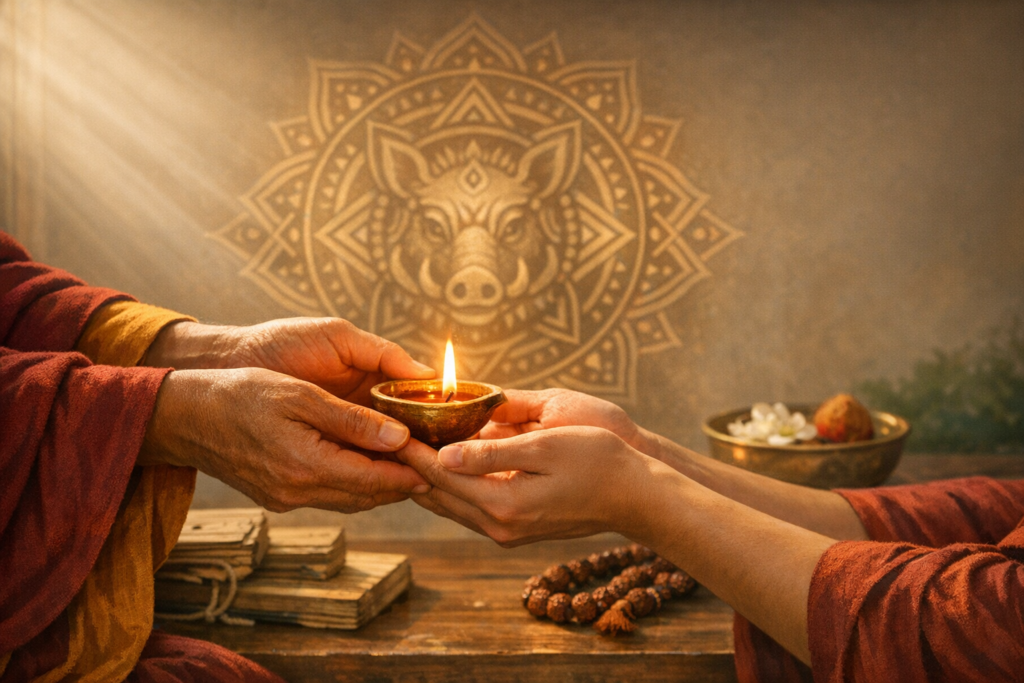
An indicative procedural flow—subject to one’s paramparā—is as follows. After pre-dawn snāna and ācamana, a clear sankalpa states the intent, duration, and the specific prāyaścitta framework being undertaken. Deity meditation (such as Gaṇapati dhyāna) readies the mind, followed by the consecration of Panchagavya with mantras authorized by the tradition. A measured intake of Panchagavya is then followed by quiet japa and contemplation. The day continues with the chosen fasting regimen, scriptural recitation, and a concluding prayer seeking kṣamā (forgiveness) and niyama (resolve) to prevent recurrence.
Mantra-sādhana during this vrata typically privileges texts oriented to purification and steadiness: Gāyatrī-japa, Śrī Rudram, Viṣṇu-sahasranāma, or sections from the Bhagavad-Gītā (notably chapters that foreground dharma and self-regulation). Many practitioners report that combining japa with reflective writing—brief daily notes on actions, impulses, and insights—accelerates the ethical and emotional reset that prāyaścitta intends.
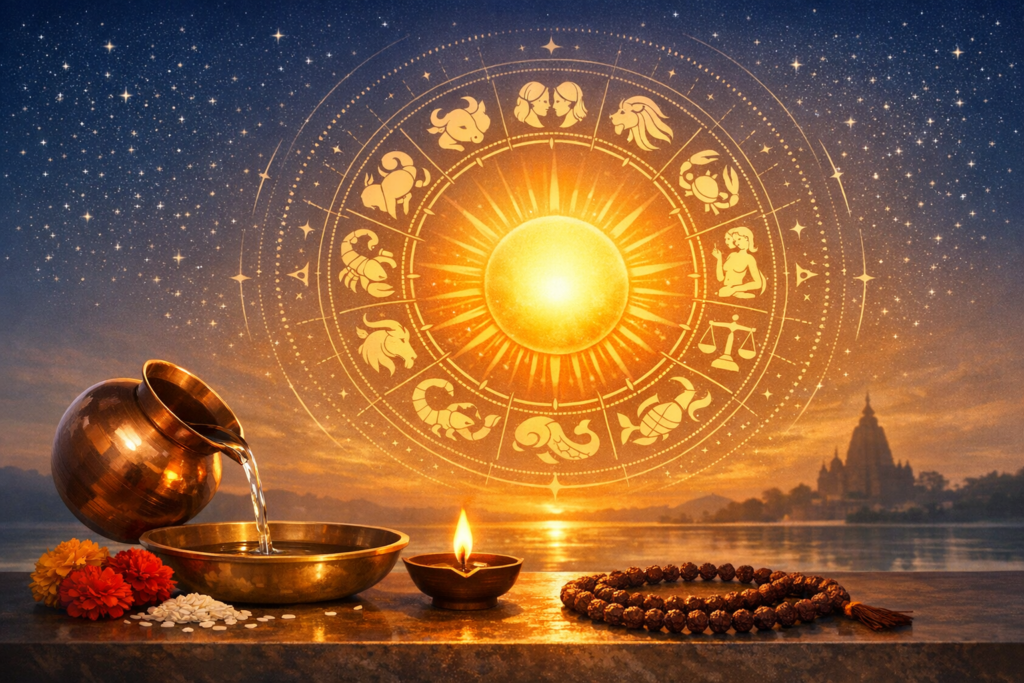
As with most prāyaścitta, timing can be flexible when responding to a specific lapse; yet, for those observing it devotionally, śukla pakṣa days, Ekādaśī, Pradosha, Amāvasyā, and saṅkrānti windows are commonly preferred. Muhūrta should be selected with local counsel, and any temple-based components integrated in harmony with the temple’s traditional schedule and protocol.
Eligibility calls for prudence. Pregnant individuals, nursing mothers, the elderly, and anyone with medical vulnerabilities should consult a qualified Vaidya or an informed healthcare professional before undertaking austerities involving fasting or ingestibles. When direct intake of Panchagavya is contraindicated, many traditions allow for alternatives: symbolic offering, homa and japa intensification, dāna (notably gau-sevā support without harm), and added svādhyāya (scriptural study) to preserve the vrata’s ethical core.
The ethical dimension of Brahma Kurcha Vrata extends beyond personal purity to ecological and social responsibility. Gau-sevā is meaningful only when it is compassionate and sustainable: cruelty-free sourcing, respect for animal welfare, and gratitude expressed through care, not exploitation. Many communities now pair this vrata with seva initiatives—clean-water projects, tree planting, temple cleaning, or community kitchens—to translate inner purification into tangible collective uplift.
Conceptual clarity dispels common misconceptions. In the Dharmashastra idiom, prāyaścitta does not “erase” consequences mechanically; it cultivates remorse (āvega), insight (viveka), restitution where possible, and sustained resolve (dṛḍha-saṅkalpa). Panchagavya and fasting become vehicles for reordered attention and renewed conduct, not ends in themselves. The measure of success is not mere ritual completion but verifiable transformation in behavior, speech, and thought.
Regional variations are expected. Smārta paddhatis in South India, for instance, may sequence mantras differently from Vaishnava or Shaiva lineages; some households retain ancestral procedures drawn from family manuscripts. Such diversity is a hallmark of Sanatana Dharma’s living hermeneutic. Fidelity to one’s sampradāya and the counsel of one’s guru or family priest preserves coherence while honoring plural practice.
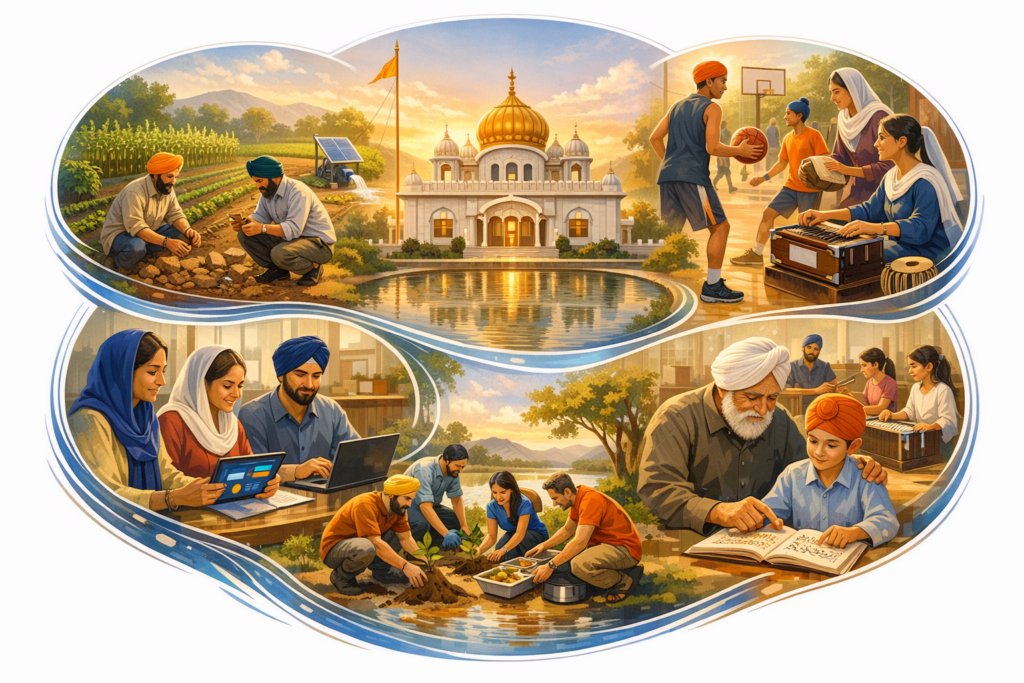
Parallels across dharmic traditions underscore a shared ethical grammar. Jainism’s pratikramana and tapas-cycles refine conduct through confession, restraint, and non-violence; Buddhism’s uposatha restores mindfulness and virtue through precept renewal; Sikh practice centers on Simran, Ardās, and seva to align daily life with truthful living. While forms differ, the convergent aim—purification of intention and compassionate action—reveals a civilizational unity that this vrata exemplifies.
From a psychological perspective, Brahma Kurcha Vrata can be read as a structured cognitive-emotional reset. The vow names the lapse (cognitive clarity), limits impulse (behavioral discipline), installs counter-habits (japa, svādhyāya, seva), and reinforces identity as a dharmic agent (ethical self-authorship). Over days, attention steadies, reactivity softens, and a more truthful baseline for decision-making reemerges.
For those interested in scriptural anchors, Manusmriti, Yājñavalkya Smriti, and later nibandhas systematize kṛcchra-type expiations, while Puranic narratives model contrition and rectification through vows, pilgrimages, and recitations. Smārta and Āgamic manuals detail the pavitrīkaraṇa steps relevant to consecration, with pundits customarily tailoring selections to the devotee’s capacity and context.
Completion of Brahma Kurcha Vrata is traditionally marked by udvāsana (formal closing), thanksgiving, and dāna. Food sharing, support for gau-sevā aligned with welfare standards, and commitments to prevent recurrence give the vrata a social horizon. In many communities, a simple home satsanga—reading a chapter from the Bhagavad-Gītā or a Purana—extends the merit by inspiring collective reflection.
In sum, Brahma Kurcha Vrata offers an exacting yet compassionate pathway for inner renewal. By uniting Panchagavya consecration, calibrated fasting, mantric contemplation, and service, it weaves ritual precision with ethical purpose. Its relevance endures because it speaks to perennial needs: to acknowledge error, repair harm, retrain attention, and return—steadily and humbly—to a life anchored in dharma. Within the broader dharmic family, it stands as a reminder that true purification is both inward and outward, both personal and shared.
Inspired by this post on Hindu Pad.




Leave a Reply
You must be logged in to post a comment.