
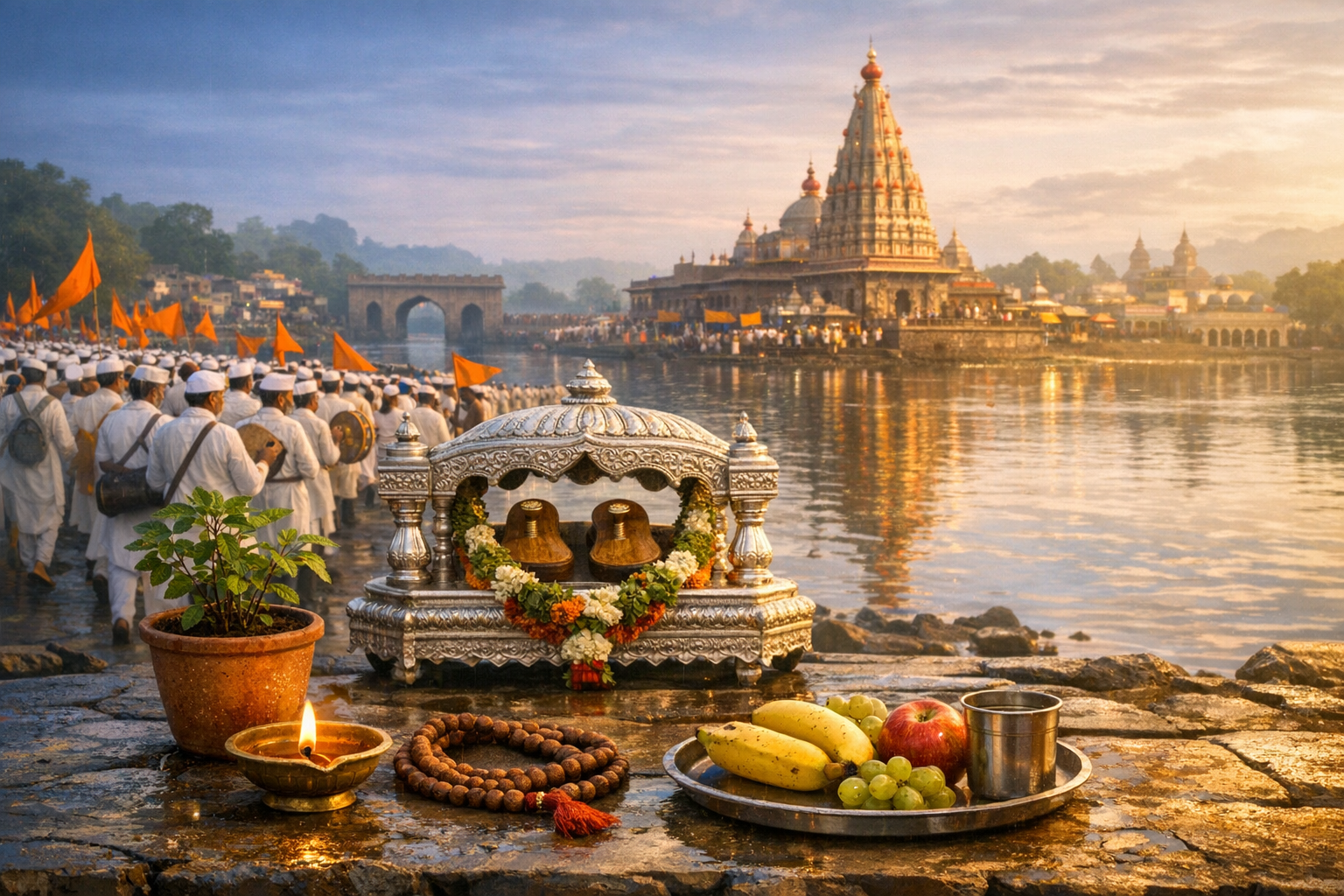
Pandharpur Ekadashi 2026 falls on 25 July 2026, aligning with the Shukla Paksha Ekadashi of the Ashadha month in the traditional lunisolar calendar followed in Maharashtra. At the Shri Vitthal-Rukmini Mandir in Pandharpur, this observance anchors one of South Asia’s most influential bhakti-centered pilgrimages. While every Ekadashi is celebrated with devotion in this temple town, Ashadi Ekadashi and Kartik Ekadashi are regarded as exceptionally significant.
Among these two, Ashadi Ekadashialso known as Shayani Ekadashiholds primacy in Pandharpur. It inaugurates Chaturmas, the four-month vow-period in many Vaishnava and broader dharmic traditions, during which Sri Vishnu is believed to enter yoga-nidra. Kartik Ekadashicalled Prabodhini Ekadashiconcludes Chaturmas and marks the divine awakening, making both dates pivotal bookends of the sacred monsoon cycle.
The Pandharpur Wari culminating on Ashadi Ekadashi represents a living, inclusive bhakti tradition that has shaped spiritual culture in western India for centuries. Lakhs of Warkari devotees walk in disciplined dindis (pilgrim groups), singing abhangs and performing kirtan as they proceed towards Pandharpur with humility and shared purpose.
Historically associated with revered Vaishnava Saints such as Sant Dnyaneshwar, Sant Tukaram, Sant Namdev, Sant Eknath, and others, the Wari is organized around palkhi processions that ceremonially carry padukas (sacred sandals) from spiritual centers like Alandi and Dehu. The practice emphasizes egalitarian access to devotion, collective discipline, remembrance of the divine name, and service (seva) to all.
On arrival in Pandharpur near the Chandrabhaga (Bhima) river, many devotees undertake ritual snana (bathing) before darshan at the Shri Vitthal-Rukmini shrine. Temple observances typically include kakad aarti at dawn, prolonged queue-based darshan, and special pujas, with the atmosphere charged by continuous namasankirtana and recitation of abhangs resonating through the temple lanes.
From a theological standpoint, Shayani Ekadashi initiates inner disciplines associated with Chaturmassatvika diet, study (svadhyaya), meditation (dhyana), truthful speech (satya), and expanded compassion (karuna). Symbolically, devotees align personal rhythm with the monsoon’s inward turn, framing Ekadashi vrata as a disciplined practice that purifies intention and strengthens spiritual resolve.
Kartik (Prabodhini) Ekadashi, the second focal point of Pandharpur’s ritual calendar, celebrates Vishnu’s awakening and the conclusion of Chaturmas. Closely associated with Tulsi Vivah in many regions, it renews vows of devotion and is accompanied by lamps, kirtans, and studyoften making it the most luminous and introspective moment of the ritual year after the rains.
Together, Ashadi and Kartik Ekadashi reflect a cyclical theology: entry into contemplative austerity followed by re-awakening into renewed service and joy. This rhythm has informed the Warkari ethos for centuries and remains a guiding framework for devotees who seek to balance inward practice with outward seva.
Ekadashi observance is determined by the tithi (lunar day). The standard rule across traditions is that Ekadashi fasting is observed when the Ekadashi tithi is present at sunrise according to the local panchang. Parana (the ritual breaking of the fast) is performed on Dwadashi when the prescribed time-window opens, avoiding Harivasara (the last quarter of Ekadashi tithi), which is traditionally reserved for worship.
Smarta and Vaishnava calendars sometimes differ in application (e.g., sunrise-based versus madhyahna-based determinations), leading to occasional one-day variations. As a result, devotees are advised to consult a reliable local panchang, temple notice, or authoritative digital panchang for precise parana timings at their location.
As a vrata, Ekadashi emphasizes anna-tyaga (abstention from grains and beans) and the cultivation of sattva. Commonly followed diets include phalahar (fruits), milk, nuts, and Ekadashi-friendly preparations such as sabudana and kuttu, while avoiding cereals and certain legumes. Many adherents maintain nirjala fasting if health permits; however, hydration and appropriate nutrition are encouraged for those with medical needs.
Individuals who are elderly, pregnant, nursing, or managing conditions like diabetes should adapt the fast in consultation with medical guidance. In all cases, the intent of the vrataclarity of mind, purity of action, and steadiness of devotiontakes precedence over austerity for its own sake, reflecting the compassionate heart of the Bhakti Tradition.
Core practices for Ekadashi in Pandharpur include continuous nama-japa, listening and singing of abhangs, kirtan participation, reading of sacred texts such as Bhagavad Gita and portions of the Bhagavata Purana, and reflection upon the lives and verses of the Vaishnava Saints. The mantra refrain “Hari Vitthal, Jai Jai Vitthal” is cherished for its simplicity and devotional power.
For most locations, parana for the Ashadi Ekadashi observed on 25 July 2026 will take place on Dwadashi the following day within the locally prescribed window. Because parana windows depend on tithi transitions and Harivasara considerations, consulting the local temple or panchang is essential to avoid breaking fast at an inauspicious time.
Pilgrimage logistics in 2026 require careful planning. Pandharpur is accessible by road from Pune, Solapur, and other Maharashtra hubs; the nearest major railheads include Solapur and Kurduwadi, with bus services intensifying around Ekadashi. Monsoon conditions typically prevail; protective rainwear, secure footwear, and waterproof covers for essentials are strongly advised.
Accommodation during Ashadi Ekadashi is in high demand. Devotees often arrange stays in dharmashalas, mathas, and modest lodges, and many dindis organize collective arrangements. Early booking, adherence to local codes of conduct, and respectful sharing of facilities help sustain the pilgrimage’s cooperative spirit.
Responsible pilgrimage is central to the Warkari ethos. Minimizing plastic use, carrying refillable water containers, disposing of waste responsibly, and protecting riverbanks along the Chandrabhaga reflect a commitment to ecological stewardship in line with dharmic values.
Large gatherings necessitate attention to safety and health. Staying with one’s dindi or group, keeping emergency contacts at hand, following police and volunteer instructions, and seeking first-aid promptly when needed are practical steps that ensure a safer experience for all.
The cultural landscape of Pandharpur on Ashadi Ekadashi is shaped by continuous kirtans, community kitchens (anna-dana), and shared service. This atmosphere encourages humility, camaraderie, and seva across social lines, affirming that devotion is accessible to all who approach with sincerity.
Religious significance extends beyond individual merit (punya) to a social ethic rooted in compassion, non-violence, and service. In this way, the Pandharpur tradition resonates with values cherished across dharmic lineagesBuddhism’s karuna and mindful discipline, Jainism’s ahimsa and aparigraha, and Sikhism’s kirtan and sevanurturing harmony and mutual respect.
Historically, the Warkari movement fostered an inclusive, non-ritualistic orientation to devotion centered on remembrance of the Divine Name and ethical living. This orientation integrates well with the broader Hindu way of life, in which the performance of daily duties (dharma) and devotion (bhakti) together lead to inner refinement.
For those new to Ekadashi, a practical approach includes setting a clear sankalpa (vow), choosing a sustainable fasting level, arranging a quiet time for japa and reading, visiting the temple or participating in local kirtans, and concluding with a conscientious parana. Even outside Pandharpur, observing the vrata in this spirit yields meaningful spiritual benefit.
While Ashadi Ekadashi often draws the largest gathering, Kartik Ekadashi in Pandharpur is nearly as momentous. Devotees experience a palpable sense of renewal as Chaturmas ends, and the reawakening motif of Prabodhini Ekadashi inspires fresh beginnings in study, service, and community life.
Families often participate together, introducing children to Warkari songs and simple seva. The intergenerational transmission of abhangs and stories of the saints strengthens cultural continuity and fosters a shared spiritual vocabulary that is formative and enduring.
Those unable to travel to Pandharpur can still connect meaningfully by joining local satsangs, streaming kirtans from recognized institutions, reading abhangs and the Dnyaneshwari, and offering small acts of service within their communities. The essence of the vratadevotion, restraint, and servicetranscends geography.
In 2026, the convergence of Ashadi Ekadashi with the monsoon underscores the contemplative tone of Chaturmas. Whether on the road to Pandharpur or observing from home, devotees align personal aspiration with timeless principles that unify the dharmic traditionsdiscipline, compassion, truthfulness, and reverence for the sacred.
Summary guidance for 2026 is straightforward: observe Ashadi Ekadashi on 25 July 2026; plan early for travel and lodging; follow Ekadashi dietary guidelines suited to health and capacity; maintain consistent japa, kirtan, and study; and perform parana at the locally prescribed Dwadashi time. For Kartik (Prabodhini) Ekadashi later in the year, consult regional panchangs for the exact November date and timings.
Above all, Pandharpur Ekadashi continues to exemplify the living strength of the Bhakti Traditiondevotion that is inclusive, community-oriented, and anchored in ethical action. By honoring both Ashadi and Kartik Ekadashi, practitioners embrace a cycle of introspection and renewal that nourishes personal transformation and societal harmony.
Inspired by this post on Hindu Pad.
