
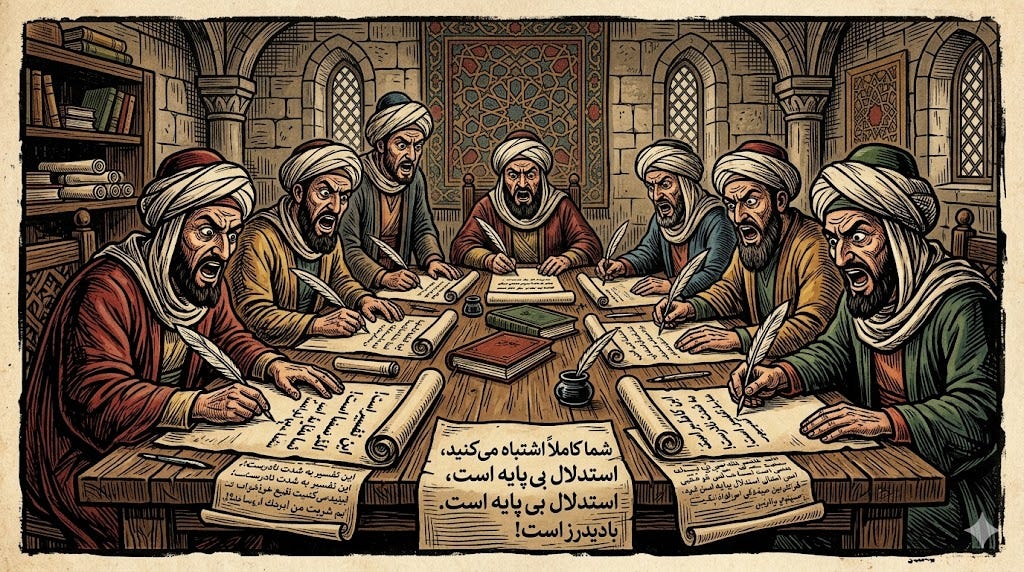
Reading medieval Indo‑Islamic court chronicles is indispensable for understanding how conquest, piety, and power were narrated in medieval India. These texts—produced in the Ghaznavid, Ghurid, and Delhi Sultanate courts—offer unfiltered windows into a specific courtly mindset. They reveal how history was fashioned to legitimize rule, sanctify violence, and script cultural hierarchies. At the same time, they must be read with care: they record elite perspectives, not the diverse social realities of the era, and should never be confused with the faith or conduct of all Muslims then or now. A balanced historiography serves a higher civic goal—truthful memory that strengthens mutual respect and unity among Hindu, Buddhist, Jain, and Sikh communities whose cultural worlds were repeatedly entangled with the politics of these centuries.
Note on terminology and intent: The passages quoted below are primary-source translations that contain harsh, dehumanizing language. They are reproduced for the limited purpose of historical analysis. They reflect courtly rhetoric, not prescriptions for contemporary society. The scholarly task is to examine how such rhetoric worked, how it framed political theology, and how it shaped later narratives about medieval India (medieval India, Delhi Sultanate, Ghaznavid Invasions, historiography, iconoclasm).
Consider Al‑Utbi’s record of Sultan Mahmud of Ghazni’s humiliation of the Shahi ruler Jayapaladeva. The passage stages sovereignty, punishment, and public fear as instruments of rule:
"…Jayapala’s children, grandchildren, relatives, nephews, generals, and the “chief men of his tribe” were bound with ropes and carried before the Sultan, like as evildoers, on whose faces the fumes of infidelity are evident, who are covered with the vapours of misfortune, will be bound and carried to Hell… The Sultan directed that the polluted infidel Jaipal should be paraded about, so that his sons and chieftains might see him in that condition of shame, bonds, and disgrace and that the fear of Islam might fly abroad through the country of the infidels."
In the same chronicle, a figure described as reverting to his ancestral faith, Nawasa Shah, is framed as a cautionary tale to display royal zeal and punitive power:
"Satan had got the better of Nawasa Shah, for he was again apostatizing towards the pit of plural worship, and had thrown off the slough of Islam, and held conversation with the chiefs of idolatry respecting the casting off the firm rope of religion from his neck. So the Sultan went swifter than the wind in that direction, and made the sword reek with the blood of his enemies…then cut down the harvest of idolatry with the sickle of his sword and spear. After God had granted him this and the previous victory, which were tried witnesses as to his exalted state and proselytism, he returned without difficulty to Ghazna."
Hasan Nizami, writing in the early Delhi Sultanate, celebrates Qutb‑ud‑Din Aibak through an explicitly de‑idolizing programme that sacralizes iconoclasm and public policy together:
"Kutub-ud-din [Aibak], on whose fortunate forehead the light of world-conquest shone conspicuous… purged by his sword the land of Hind from the filth of infidelity and vice, and freed the whole of that country from the thorn of God-plurality, and the impurity of idol-worship, and by his royal vigour and intrepidity, left not one temple standing."
Describing the Ghurid advance on Ajmer, Nizami intensifies othering and triumphalism with striking imagery and casualty claims:
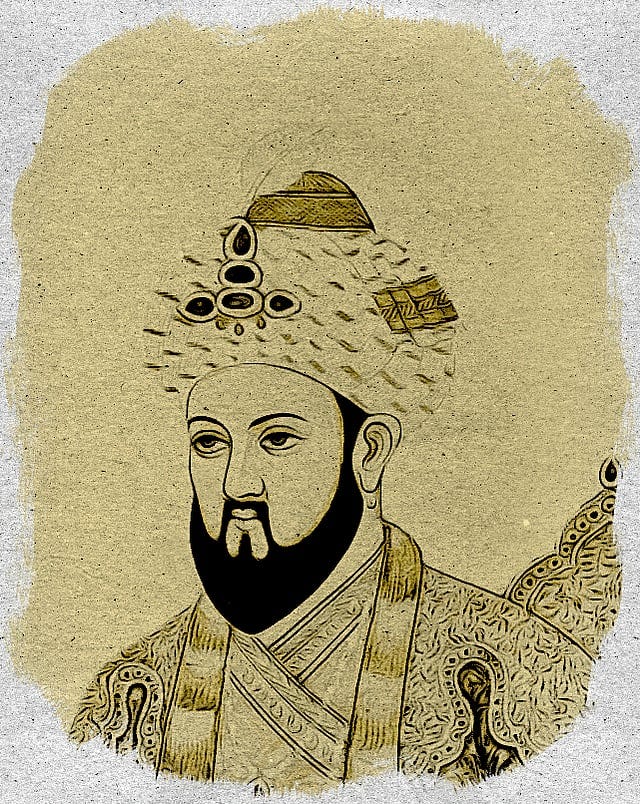
"The victorious army…departed towards Ajmer. When the crow-faced Hindus began to sound their white shells on the backs of the elephants, you would have said that a river of pitch was flowing impetuously down the face of a mountain of blue. The army of Islam was completely victorious, and a hundred thousand grovelling Hindus swiftly departed to the fire of hell. He destroyed (at Ajmer) the pillars and foundations of the idol temples, and built in their stead mosques and colleges, and the precepts of Islam, and the customs of the law were divulged and established."
Ziauddin Barani’s writings are noteworthy for their prescriptive tone. He treats statecraft as an instrument for enforcing religious hierarchy and, at times, advocates punitive coercion. One representative line attributed within his milieu reads:
"What is our defence of the faith, cried Sultan Jalaluddin Khalji, that we suffer these Hindus, who are the greatest enemies of God and of the religion of Mustafa, to live in comfort and do not flow streams of their blood?"
Amir Khusrau, a celebrated poet at the Delhi court, also wrote panegyrics that describe the “splendour” of Islam in Hindustan and a subduing of idolatry. Both Barani and Khusrau were connected to the Chishti Sufi network around Nizamuddin Auliya, a reminder that court culture, literature, and religious fraternities often overlapped in the urban centres of the Delhi Sultanate. Modern dramatizations—such as Girish Karnad’s Tughlaq, which draws on Barani—demonstrate how later authors re‑engaged these sources to explore the moral ambiguity of power rather than to endorse their harsh prescriptions.
The jurist Qazi Mughisuddin, advising Ala‑ud‑Din Khalji, presents a more legalistic register of subordination toward dhimmi subjects. The rhetoric is jarring to contemporary readers and important for understanding how norms were formulated in some courtly circles:
"The Hindu should pay the taxes with meekness and humility coupled with the utmost respect and free from all reluctance. Should the collector choose to spit in his mouth, he should open the same without hesitation, so that the official may spit into it… God Almighty Himself (in the Quran) commands their complete degradation in as much as these Hindus are the deadliest foes of the true prophet."
Minhaj‑us‑Siraj’s praise of Balban offers a classic case of court panegyric. The sovereign’s rise is cast as a providential drama, translating political fortune into sacred teleology:
"The Almighty desired to grant support to the power of Islam and to the strength of the Muhammadan faith, to extend his glorious shadow over it, and to preserve Hindustan within the range of his favour… He therefore removed… [Balban] in his youth from Turkistan, and separated him from his race…and conveyed him to the country (of Hindustan)… His success was so great that other nobles began to look upon it with jealousy, and the thorn of envy began to rankle in their hearts. But it was the will of God that he should excel them all, so that the more the fire of their envy burnt, the stronger did the incense of his fortune rise from the censer of the times."

Fifth trait: Divine legitimation and elastic narration. These chronicles tend to recalibrate narratives to preserve the sovereign’s prestige in three recurring circumstances: when a favourite ruler is defeated, when he targets rival Muslim rulers, or when he violates normative tenets in pursuit of power. For example, Mahmud of Ghazni’s unsuccessful operations at Kalinjara (Bundelkhand) are framed as magnanimity rather than setback; Hasan Nizami softens his account of Iltutmish’s conflict with Taj‑ud‑Din Yildiz; and Minhaj‑us‑Siraj’s silence about Balban’s irregular accession underscores how panegyric could sidestep contradiction. Such elasticity was not accidental—it was a craft purpose‑built to stabilize authority.
Sixth trait: The social silence of the sources. Across many texts, the lifeworld of common people—Hindu, Buddhist, Jain, Sikh precursors, and Muslim alike—rarely appears except as taxable bodies, temple‑builders or breakers, or conquered subjects. Patronage conditions and the imperatives of courtly legitimacy narrowed the lens. Elliot and Dowson, the nineteenth‑century compilers of History of India as told by its own Historians, described the social costs of despotic court cultures in strongly worded prose:
"If… we turn our eyes to the present Muhammadan kingdoms of India, and examine the character of the princes, and the condition of the people subject to their sway, we may…draw a parallel between ancient and modem times…we behold kings… sunk in sloth and debauchery, and emulating the vices of a Caligula… we can gather, that the common people must have been plunged into the lowest depths of wretchedness and despondency.… Should any…functionary entertain the desire of emulating the ‘‘exceedingly magnifical structures of his Moghal predecessors, it will check his aspirations to learn, that beyond palaces and porticos, temples, and tombs, there is little worthy of emulation…in the long line of Dehli Emperors, the comfort and happiness of the people were never contemplated by them ; and with the exception of a few serais and bridges…he will see nothing in which purely selfish considerations did not prevail… there is not one which subserves any purpose of general utility."
While Elliot and Dowson’s translations remain invaluable, their evaluative judgements reflect nineteenth‑century British sensibilities and must be filtered through modern historiography. The enduring scholarly value here is the consolidation of primary passages that allow independent readers to test claims about iconoclasm, temple destruction, taxation, and governance in medieval India against the words of the chroniclers themselves.
Implications for historiography and cultural memory are significant. These court texts exemplify how a rhetoric of conquest translated into administrative norms and monumental programmes, especially in the early Delhi Sultanate. For communities grounded in the dharmic traditions of Hinduism, Buddhism, Jainism, and Sikhism, engaging these sources can be painful; it can also be empowering when read alongside inscriptions, temple archaeology, regional vernaculars, Jain prabandhas, Sikh janam‑sakhis, and Buddhist chronicles. A plural evidence base counters any single, triumphalist narrative by restoring the complexity of India’s civilizational fabric.
Whitewashing and the present: In the contemporary information ecosystem, the visibility of such primary passages can be shaped by platform moderation, search algorithms, and shifting editorial conventions. When the hardest evidence from the medieval record is sidelined—whether by omission, inconsistent labelling, or euphemistic paraphrase—public understanding suffers. A constructive alternative is open access to primary sources, critical annotations that separate theology from policy, and educational initiatives that teach students how to read courtly rhetoric as rhetoric, not as a timeless civilizational verdict.
Responsible method for readers and educators: Cross‑verify panegyrics with epigraphy (for example, Gahadavala and other inscriptional corpora), correlate literary claims with archaeological layers at temple and mosque sites (such as Ajmer and the Quwwat‑ul‑Islam complex), and compare Persian chronicles with Jain, Buddhist, and regional Sanskrit or vernacular texts. Terminology like “iconoclasm,” “temple demolition,” and “jizya” should be historically specified—by reign, region, and institutional context—so analysis remains evidence‑bound rather than polemical.
Ultimately, studying the psyche and rhetoric of medieval Muslim court chroniclers illuminates a small but consequential part of India’s historical tapestry. Doing so with empathy for living communities and solidarity among dharmic traditions safeguards both truth and harmony. The aim is not recrimination but clarity, memory, and a shared resolve to protect cultural heritage in a spirit of mutual respect.
|| Om Tat Sat ||
Inspired by this post on Dharma Dispatch.








Leave a Reply
You must be logged in to post a comment.