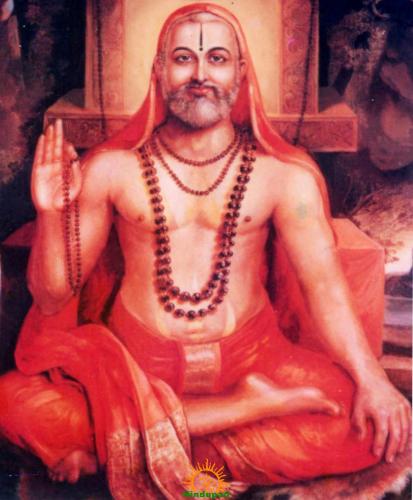
The term Aghora, when read closely in Sanskrit, is not a synonym for fear or darkness but its opposite: a- + ghora, literally “not terrible.” In Vedic and Śaiva sources, Aghora names the serene, beneficent face of Rudra–Śiva, the aspect in which dread subsides into clarity, and aversion dissolves into reverence. Within this frame, an Aghori is not a figure of menace but a practitioner trained to abide in fearlessness, dignity, and compassion, seeing sanctity where ordinary perception recoils. This core insight aligns with the original sentiment that Aghora connotes what is beautiful and honorable, and that an Aghoriproperly understoodcultivates peace and conducts life accordingly.
Textually, Aghora appears in Śaiva Āgamas and is anticipated by Vedic invocations to Rudra that petition a calming of terror into protective grace. In later Śaiva esotericism, Aghora becomes one of the pañcavaktra (five faces) of Śiva, associated with transformative power that transfigures fear (ghora) into wisdom (jñāna) and compassion (karuṇā). This shift is not merely conceptual; it is soteriological. By training attention to encounter what is ordinarily shunned, the Aghori path aspires to dismantle dualitiespure/impure, pleasant/horrificthat bind consciousness.
Historically, scholars trace the proximate antecedents of the Aghori milieu to ascetic orders with cremation-ground affiliations and skull-bowl symbolism in medieval India, as seen in Kāpālika and related currents. In the early modern period, the Aghor stream became particularly associated with Kashi (Varanasi) and saints like Baba Keenaram. The living lineage in Varanasi, often linked to service initiatives and inclusive outreach, demonstrates how the tradition’s philosophical non-dualism readily translates into social compassion.
Situated within the broader ecosystem of Hindu spirituality, Aghora is one among many yogic disciplines. It is neither a template for the majority of practitioners nor a spectacle; rather, it is a specialized sādhanā that complements mainstream temple, bhakti, and mantra-centered paths. Its signature orientationradical acceptance grounded in non-dualityprovides a counterweight to habitual aversion, and, when rightly guided, matures into humility and service.
Central to Aghori practice is the contemplative engagement with impermanence. Cremation-ground sādhanā (śmaśāna-sādhanā), undertaken by advanced initiates under a guru’s supervision, is not morbid pageantry but a rigorous meditation on mortality (anitya) and the extinction of clinging (abhiniveśa). By stabilizing awareness where fear is strongest, practitioners report a durable peace that does not depend on agreeable circumstancesan abiding relevant to any seeker confronting loss, grief, or change.
Ritual symbols help scaffold this training. Sacred ash (vibhūti) reminds one that forms end as ash and thus teaches detachment alongside gratitude for life’s transience. The kapāla (skull bowl) is not an emblem of shock; it is a memento of impermanence that invites reverence rather than revulsion. Rudrākṣa mālās, simple robes, and disciplined alms (bhikṣā) practices reinforce minimalism and ethical restraint. Each symbol functions pedagogically to de-condition reflexive disgust and cultivate equal vision.
Mantra is foundational. A widely recited invocation is: “Om aghorebhyo atha ghorebhyo ghoraghoratarebhyaḥ sarvebhyaḥ sarvaśarvebhyo namaste astu rudra rūpebhyaḥ.” Preserved in Vedic tradition, this mantra acknowledges Rudra across all gradations of experiencefrom serene to fearsomeand bows to the one reality appearing as many. In Aghori practice, japa of such mantras steadies attention, refines breath and mind, and continuously reorients perception toward unity.
Iconographically, Aghori devotion often honors Bhairava, an intense form of Śiva associated with protection, liminality, and the courage required to cross thresholds of fear. The dog (śvan) frequently seen with Bhairava symbolizes vigilant loyalty and the capacity to navigate marginal spaces without defilement. This iconography is not an endorsement of transgression for its own sake; it describes the resolve to carry awareness across boundaries that ordinarily intimidate spiritual aspiration.
Ethically, the Aghori path is anchored in ahiṃsā and compassion. The method aims to eliminate aversion, not to valorize harm or illegality. Contemporary lineages commonly emphasize sevaservice to the ill, the stigmatized, and the marginalizedas a direct expression of non-dual insight. By affirming that all beings share the same sacred essence, the practitioner treats none as untouchable and none as outside the ambit of care.
Accounts that sensationalize Aghoris by highlighting rare or extreme behaviors misconstrue the norm. Responsible lineages neither encourage spectacle nor reduce teachings to transgression. Many practices that appear “antinomian” in older texts are interpreted today in internalized, symbolic, or strictly liturgical ways under qualified guidance. The emphasis is on inner transformation and ethical maturation rather than on shocking public sensibilities.
The notion of pañcamakāra is instructive here. Historically present in some tantric frames as boundary-testing practices, reputable teachers consistently insist on context, consent, legality, and the priority of inner meanings (e.g., transforming craving into devotion or sublating disgust into compassion). In contemporary Aghori milieus, the “five” are more often reframed as disciplines of mind, breath, and perception that subdue the root poisons of attachment and aversion.
Guru-śiṣya transmission (dīkṣā) remains essential. Aghori practice is not self-invented experimentation; it proceeds in small, supervised steps calibrated to a student’s capacity, temperament, and ethical readiness. The guru’s role includes safeguarding against psychological strain, ensuring adherence to dharma, and continually translating non-dual insight into kindness.
In Kashi, where cremation ghats meet living neighborhoods, many pilgrims observe an Aghori quietly absorbed in japa as dawn softens the sky. For numerous visitors, that stillness catalyzes a shift: curiosity displaces fear; judgment gives way to humility. Such lived encounters often teach more effectively than polemic that the heart of Aghora is peacea peace unafraid to dwell where life and death meet.
There is also a robust record of service. Modern Aghori leaders in and around Varanasi have established initiatives for those historically shunnedpatients with chronic illness, persons in hospice care, and communities facing stigma. This work exemplifies the Aghora commitment to recognize sacredness where society looks away, turning metaphysics into medicine and ritual into relief.
Resonances across dharmic traditions are profound. In Buddhism, charnel-ground contemplations and marana-sati (mindfulness of death) cultivate non-attachment and compassion in the face of impermanence. Vajrayāna’s yogic engagement with liminal spaces parallels Aghori training in fearlessness, emphasizing that liberation requires meeting reality as it is, not as one wishes it to be.
Jainism offers further consonance through rigorous tapas and meditations that contemplate life’s finitude while centering ahiṃsā. The resolve to purify perceptionrather than to perform for public gazemarks a shared śramaṇa sensibility with Aghori disciplines: inner conquest takes precedence over outer display, and ethics guide every method.
Sikh tradition articulates nirbhau (fearlessness) and nirvair (without enmity) as spiritual virtues that animate constructive service (seva). While its praxis and theology are distinct, the Sikh insistence on courage transmuted into compassion aligns with Aghora’s aim: to become unafraid without becoming unkind, and to enact transcendence through care for others.
These parallels underscore a unifying lesson: across Hinduism, Buddhism, Jainism, and Sikhism, transformative practices regularly invite practitioners to confront discomfort, relinquish clinging, and respond with compassion. The pathways differ, but the ethical arctoward fearlessness, inclusivity, and serviceis shared.
For contemporary seekers, the Aghori emphasis on impermanence and acceptance offers practical benefits. It equips the mind to engage grief honestly, to support loved ones at end-of-life with steadiness, and to participate in social care work without burnout by reframing revulsion as an opportunity for service. In environmental ethics, the vibhūti reminderthat form returns to elementsencourages consumption with restraint and gratitude.
Methodologically, Aghori practice integrates breath regulation, mantra japa, ritual minimalism, and meditation within a disciplined daily routine. Food, sleep, and speech are moderated to support clarity. Over time, attention becomes less reactive, enabling the practitioner to remain composed amid pain and to act skillfully where others freeze or turn away.
Responsible engagement from visitors and pilgrims is straightforward. Observing without intrusion, asking permission before photography, and supporting bona fide service projects honor the living tradition. More importantly, refraining from exoticizing the practitioner preserves the dignity of a path designed to heal aversion, not to provoke it.
From a philological angle, returning to the mantra “Om aghorebhyo…” is clarifying. The prayer bows to all modalities of Rudrapeaceful, fearsome, and those beyond the reach of namingaffirming that the sacred is not restricted to agreeable appearances. This is the philosophical engine of Aghora: reality is one, and wisdom is measured by how widely, and how mercifully, that oneness is recognized.
In sum, Aghora is best understood as an advanced yogic discipline that trains fearless compassion by dissolving the reflex of disgust. Its symbolsash, skull-bowl, cremation groundare pedagogies of impermanence, not endorsements of harm. Its ethicsahiṃsā, seva, inclusivityreveal continuity with the wider dharmic tapestry in which difficult truths are met with steadiness, and insight ripens as care.
Thus, the original claim holds with greater depth: Aghora is that which is not terrifying; it is the beauty that emerges when fear subsides. An Aghori, accordingly, seeks to live in unshakable peace and to behave with honorfinding Śiva equally in the temple sanctum and on the river’s burning ghat, and by that recognition, helping all who cross their path.
For those walking the ghats of Kashi, this understanding turns a passing glimpse into a contemplative mirror: what once seemed frightening now appears as a courageous pedagogy, and what once felt distant becomes kin to the shared dharmic pursuit of fearlessness, wisdom, and compassionate unity.
Inspired by this post on Hindu Pad.