Marco Rubio’s high-profile arrival in Bharat (India) and his decision to visit Mother Teresa’s Missionaries of Charity in Kolkata, rather than any of India’s ancient dharmic centers, spotlights a recurring blind spot in Western diplomacy: the underestimation of civilizational symbolism. In international relations, itinerary choices are more than logistics; they are semiotic signals of respect, parity, and cultural literacy. When a visit elevates a missionary institution without parallel recognition of indigenous Hindu, Buddhist, Jain, and Sikh heritage, many across India read it not as a neutral humanitarian gesture but as a hierarchy of traditionsone that history has rendered painfully familiar.
Diplomatic theory and practice acknowledge that statecraft communicates most powerfully through symbols: sites visited, images captured, and rituals observed. These choices shape narratives in partner countries and among diasporas, influencing soft power, trust, and long-term alignment. A constructive U.S.–India relationship therefore requires not only shared interests in economics and security but also a shared grammar of respect for India’s civilizational depthits sacred geography, pluralist ethos, and the dharmic traditions that have informed the broader Asian world for millennia.
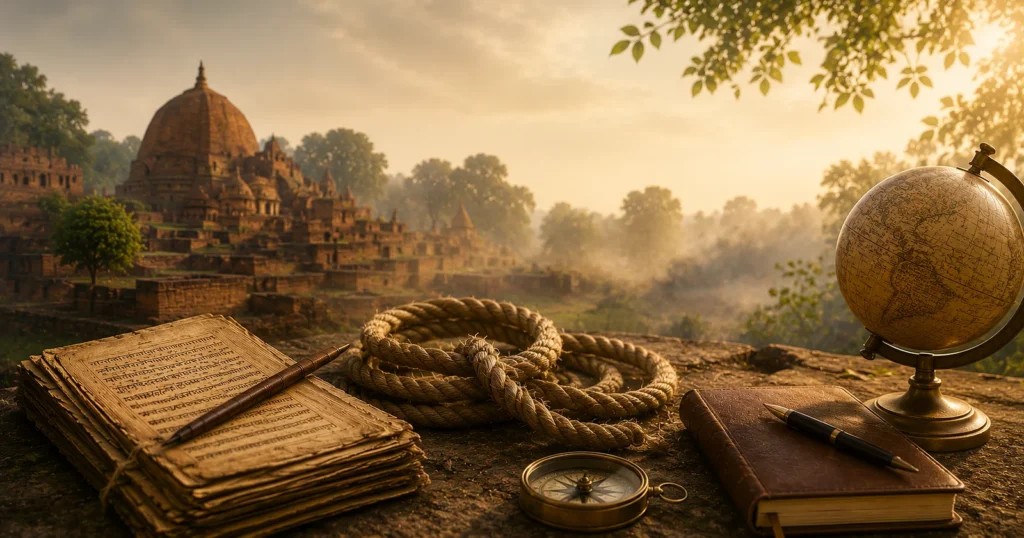
India is one of humanity’s longest-lived civilizational continuities and a crucible of intellectual innovation. It developed the decimal place-value system, formalized zero both as placeholder and as number, advanced trigonometry, and anticipated rules later associated with calculus, alongside seminal contributions in number theory. These achievements are not museum pieces; they underpin contemporary science and technology. For a country often described as a “civilization-state,” the sites and traditions that carry this continuitytemples, viharas, gurudwaras, tirthas, mathas, and monastic centersfunction as living institutions of identity and meaning.
Against this backdrop, prioritizing a missionary organization can be perceived as overlooking the civilizational core of Bharat. This perception is sharpened by historical memory: during the colonial era, parts of the missionary enterprise were entangled with political power, linguistic erasures, and cultural disruptions. For many Hindus, Buddhists, Jains, and Sikhs, it is not charity that is troubling, but an implied value-order in which indigenous traditions appear secondary to institutions associated with conversion, however indirect or contested the connection.
Mother Teresa’s global recognition and her order’s humanitarian work are acknowledged and respected by many. At the same time, her legacy remains debated in India and beyond. Criticsnotably Christopher Hitchens and researchers such as Aroup Chatterjeehave raised allegations about inadequate medical care standards, romanticization of suffering, and ethically fraught fundraising. They have cited controversies surrounding donations accepted from figures like Haitian ruler Jean-Claude Duvalier and U.S. financier Charles Keating, arguing that moral authority may have inadvertently laundered reputations. Defenders counter that the organization’s primary aim has been service to the poor. The point for diplomacy is not to adjudicate these debates, but to appreciate how they inform public sentiment in a plural, post-colonial society.
This is neither a critique of Christianity nor of humanitarian action. Rather, it is a call for parity and pluralism in official symbolisman approach that avoids reinscribing civilizational hierarchies under benevolent banners. In India, seva has long been embedded within dharmic traditions themselvesacross Hindu mathas and temple trusts, Sikh langars, Jain charitable hospitals, and Buddhist monastic initiatives. A high-visibility state visit can honor this indigenous ethic of service while engaging international faith-based organizations in a spirit of mutual respect.
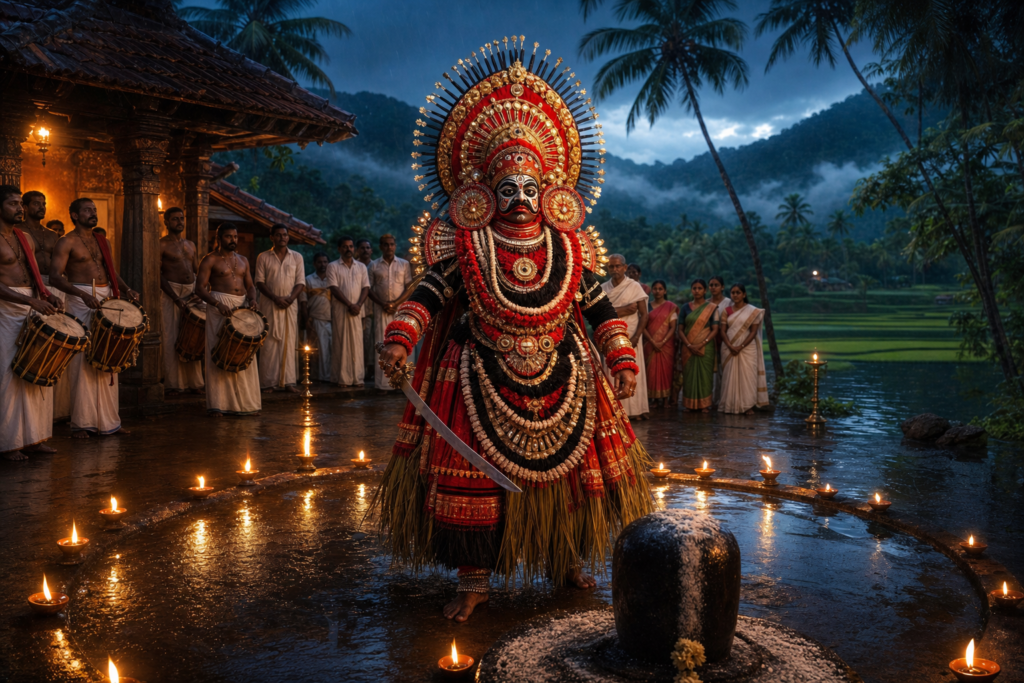
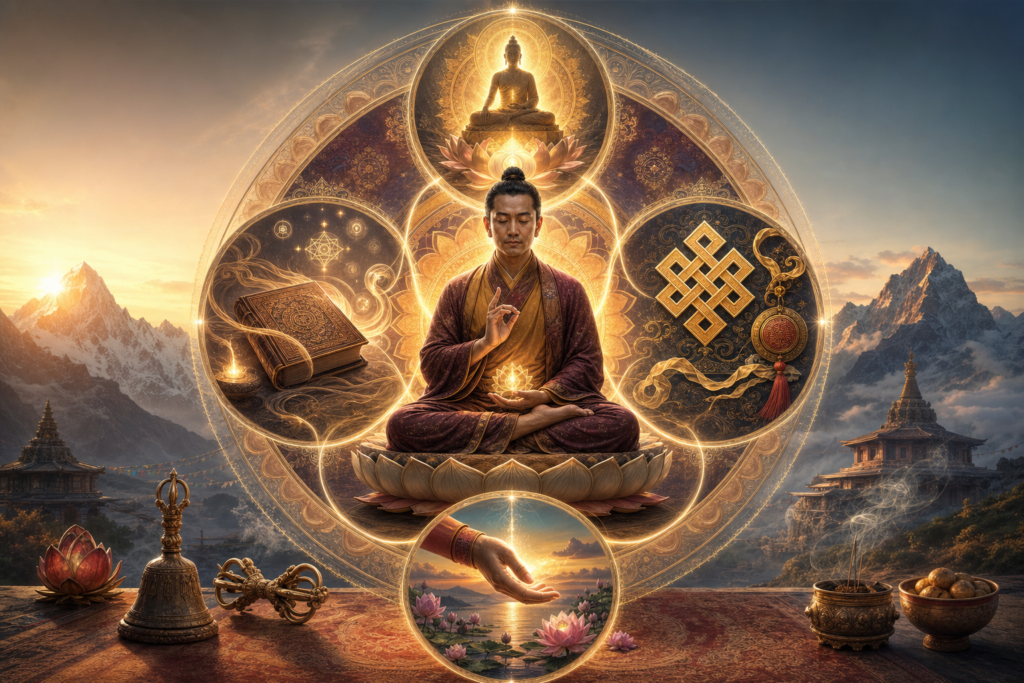
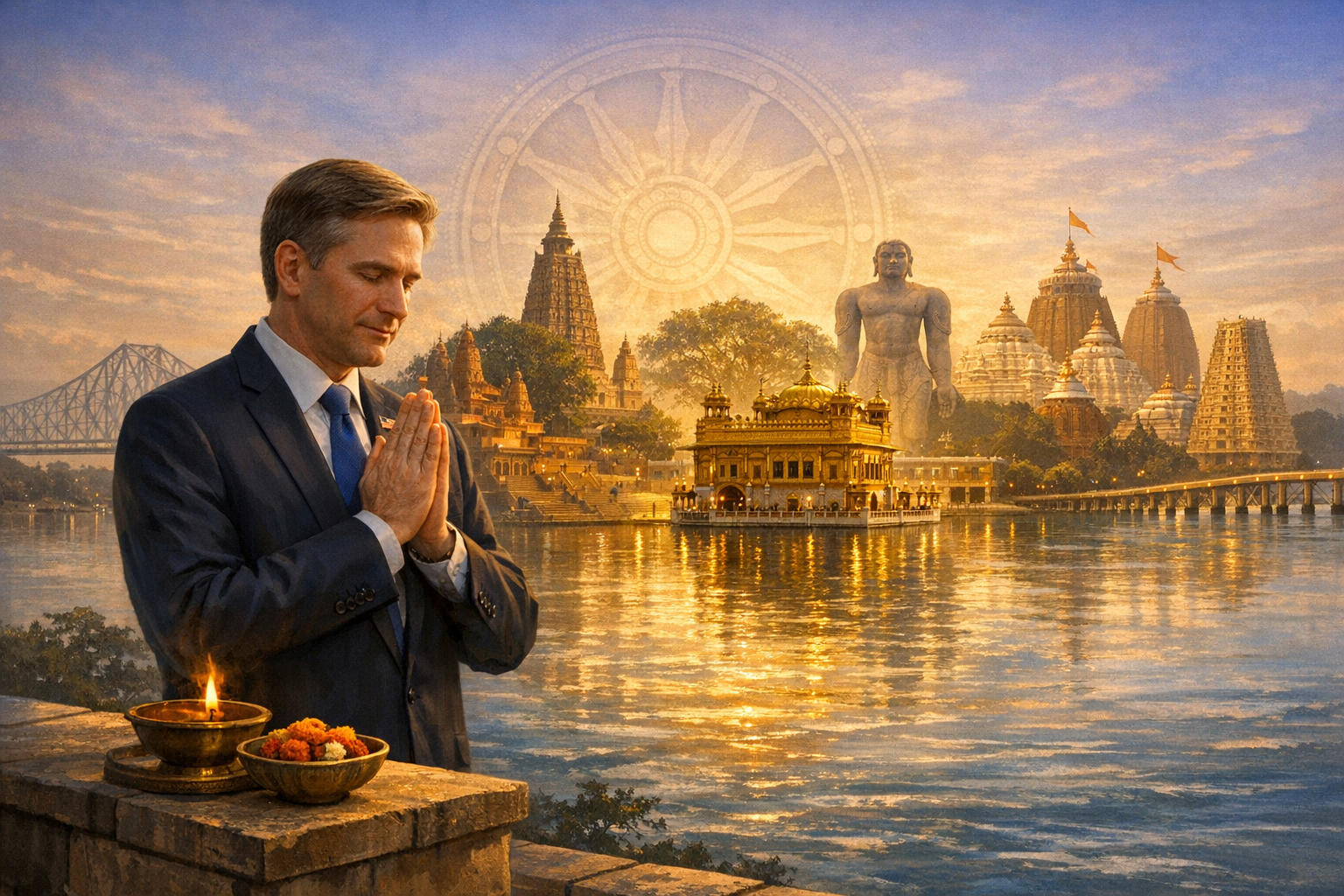
Civilizational respect in practice means recognizing foundational sites: Kashi and Kedarnath, anchors of Hindu sacred geography and pilgrimage; Bodh Gaya, where the Buddha attained enlightenment and which remains a living Buddhist center with global resonance; Amritsar, home to the Harmandir Sahib (Golden Temple), embodying Sikh ideals of equality and seva; Madurai and Rameswaram, luminous nodes of Tamil Hindu tradition and maritime sacred history; Shravanabelagola, a preeminent Jain tirtha of renunciation and learning; and Jagannath Puri, a civilizational pilgrimage axis linking sacred time, ritual, and community. These are not tourist stops; they are repositories of memory and meaning.
A practical framework can help align itineraries with this depth. First, institute religious-literacy briefings for visiting delegations, focusing on India’s dharmic plurality and its ethos of Ishta (honoring diverse spiritual paths). Second, balance official photo-ops: pair any visit to globally known Christian charities with equal or greater engagement at Hindu, Buddhist, Jain, and Sikh institutions that practice seva without proselytization. Third, consult representative bodies and scholars across traditions before finalizing stops, ensuring geographic and faith diversity. Fourth, engage indigenous service institutionstemple trusts, Sikh langars, Jain hospitals, and Buddhist vihara-run clinicsto foreground locally rooted humanitarian work. Fifth, apply clear giving and partnership standards to avoid reputational laundering through aid optics.
These steps support unity among dharmic traditions while strengthening diplomatic legitimacy. They also address a persistent Western gap in understanding India’s spiritual architecture: a mosaic that is not exclusivist but grounded in pluralism, including the principle of Vasudhaiva Kutumbakamthe world as one family. When visiting dignitaries publicly acknowledge this pluralism, they invest in social capital that outlasts any single policy cycle.
India, too, can sharpen its own signaling. Critics have noted moments when official participation in externally driven canonizations or narratives appeared to sideline indigenous traditions. A more deliberate “civilizational diplomacy” would place Hindu, Buddhist, Jain, and Sikh centers at the heart of state visits, elevate scholarship on India’s scientific heritage, and highlight dharmic models of social welfare as global public goods. The goal is not antagonism, but symmetryreciprocal respect among traditions at home and abroad.
For context, a video of the Kolkata visit circulated widely in Indian media and on social platforms, shaping perceptions in real time. Video reference: http://www.hinduhumanrights.info/wp-content/uploads/2026/05/YTDown_YouTube_Like-a-family-Marco-Rubio-visits-Mother-_Media_Yw4rpJezzBY_005_240p.mp4
Ultimately, the strongest U.S.–India partnership will grow from a grammar of mutual recognition: strategic convergence paired with civilizational humility. When diplomacy reflects India’s indigenous sacred continuum and honors dharmic unityHinduism, Buddhism, Jainism, and Sikhism standing togetherthe relationship gains moral depth and social durability. Symbolism is not cosmetic; it is constitutive of trust. Respect cannot be selective.
For further reading on the debates surrounding Mother Teresa’s legacy and the broader question of charity and conversion in India, see: “The ‘Real’ Mother Teresa by Christopher Hitchens” and “Mother Missionary Teresa: The Dark Side.” These sources are cited by critics who argue for greater scrutiny of humanitarian optics in post-colonial settings.
Inspired by this post on Hindu Human Rights Blog.