On Sunday, May 31, 2026 (IST), the Panchang records Purnima tithi (the full moon day) until 1:02 PM. From that moment onward, Krishna Paksha Pratipada (the first lunar day of the waning fortnight) commences and continues until 3:04 PM on Monday, June 1, 2026. These tithi boundaries provide the primary temporal framework for spiritual observances and day-to-day decision-making.
The timings above are provided in Indian Standard Time and are broadly applicable across northern, southern, and eastern regions of India. Local sunrise, sunset, and moonrise will vary by city; for fine-grained planning, one may align these tithi endpoints with local dawn and dusk to preserve accuracy within a few minutes.
Within the traditional Panchang, the key daily determinants include tithi (lunar day), vara (weekday), nakshatra (lunar mansion), yoga, karana, and Chandra rashi (the Moon’s sidereal sign). For May 31, 2026, the salient feature is the Purnima tithi prevailing through midday, followed by Krishna Paksha Pratipada. This shift from the bright to the dark fortnight has practical implications for rituals, vrata observance, and the selection of shubh muhurat for household and community activities.
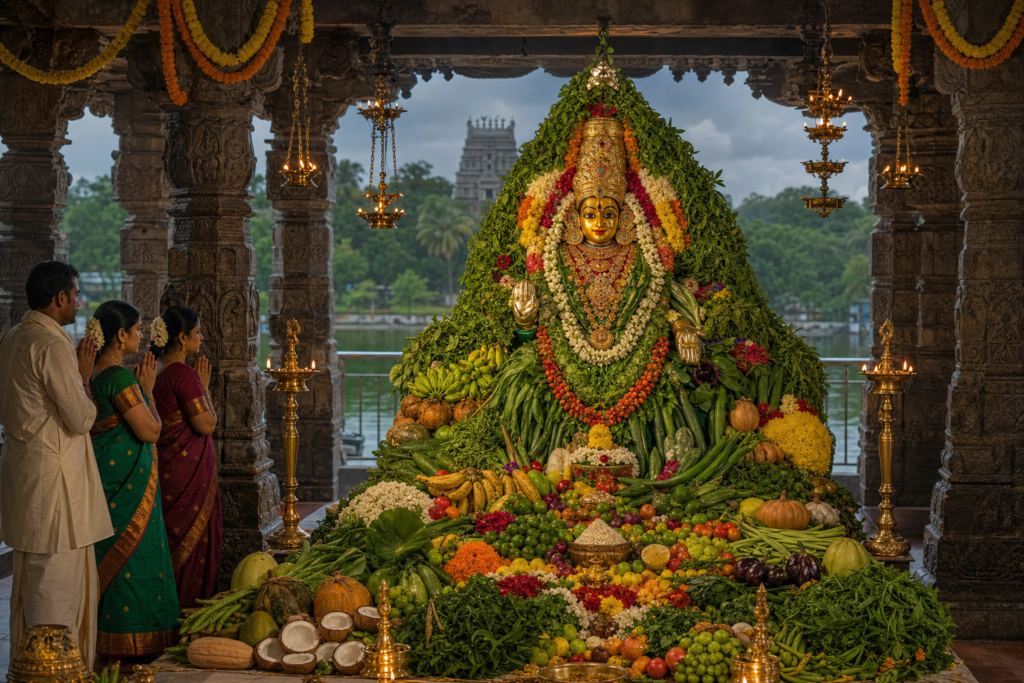
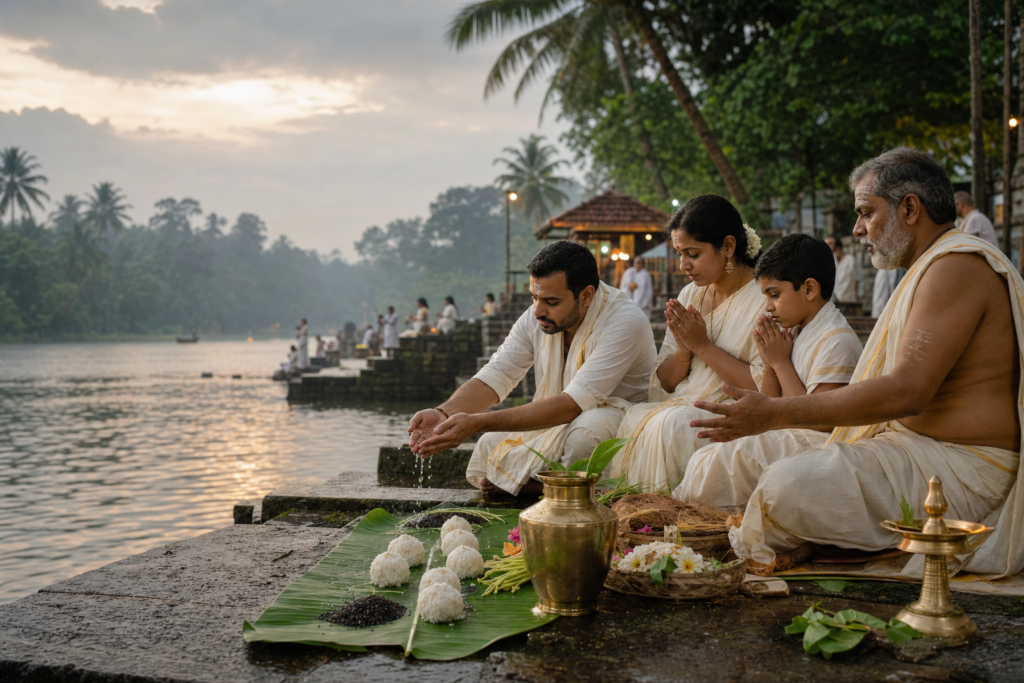
Purnima carries an elevated spiritual resonance across Dharmic traditions. Many Hindu households undertake Satyanarayana puja, offer tarpanam for ancestors, perform daan (charity), and engage in vrata (fasting) or satsang. In several Buddhist communities, the full moon is a preferred time for meditation, dana, and collective reflection; in some years and lineages this full moon aligns with Vesak observances, subject to calendar conventions. Jains often mark Purnima with prarthana, tapas, and temple darshan, while Sikh communities that reference the Vikram Samvat recognize the full moon’s congregational value for kirtan and seva. Emphasizing shared valuesahimsa, dana, japa, and sevanurtures unity among Hinduism, Buddhism, Jainism, and Sikhism.
Because Purnima prevails through midday on May 31, many consider the central part of the day especially supportive for satvika undertakings: study, mantra recitation, sankalpa for service, and quiet consecrations. The well-regarded Abhijit Muhuratcentered on local solar noonserves as a compact, generally auspicious window for initiations and important resolutions. In practice, Abhijit Muhurat spans roughly the 24 minutes before and after local solar noon (definitions vary between 40–48 total minutes depending on regional panchang rules); verifying the exact instant of solar noon for one’s locale yields the most reliable result.
Beyond Abhijit, day-planning typically accounts for Rahu Kalam, Yamaganda, and Gulika Kalam, which are avoided for commencing major actions. The method is systematic: divide the interval from sunrise to sunset into eight equal parts (each is a kaal). For Sundays, Rahu Kalam falls in the 8th part of the day, Yamaganda in the 5th part, and Gulika Kalam in the 7th part. Concretely, once local sunrise and sunset are known, each kaal’s span is computed and mapped to these weekday-specific segments. This approach remains portable across cities and time zones and is preferable to using fixed clock times.
If a refined auspiciousness assessment is desired, practitioners may also consult Choghadiya. Day Choghadiya begins at sunrise and Night Choghadiya at sunset; each consists of seven repeating intervals designated as Amrit, Shubh, Labh (favorable), and Char, Rog, Kaal, Udveg (unfavorable or neutral, depending on tradition). Selecting Amrit, Shubh, or Labh coinciding with Purnima and, when possible, with Abhijit Muhurat offers a layered method that balances precision with tradition.
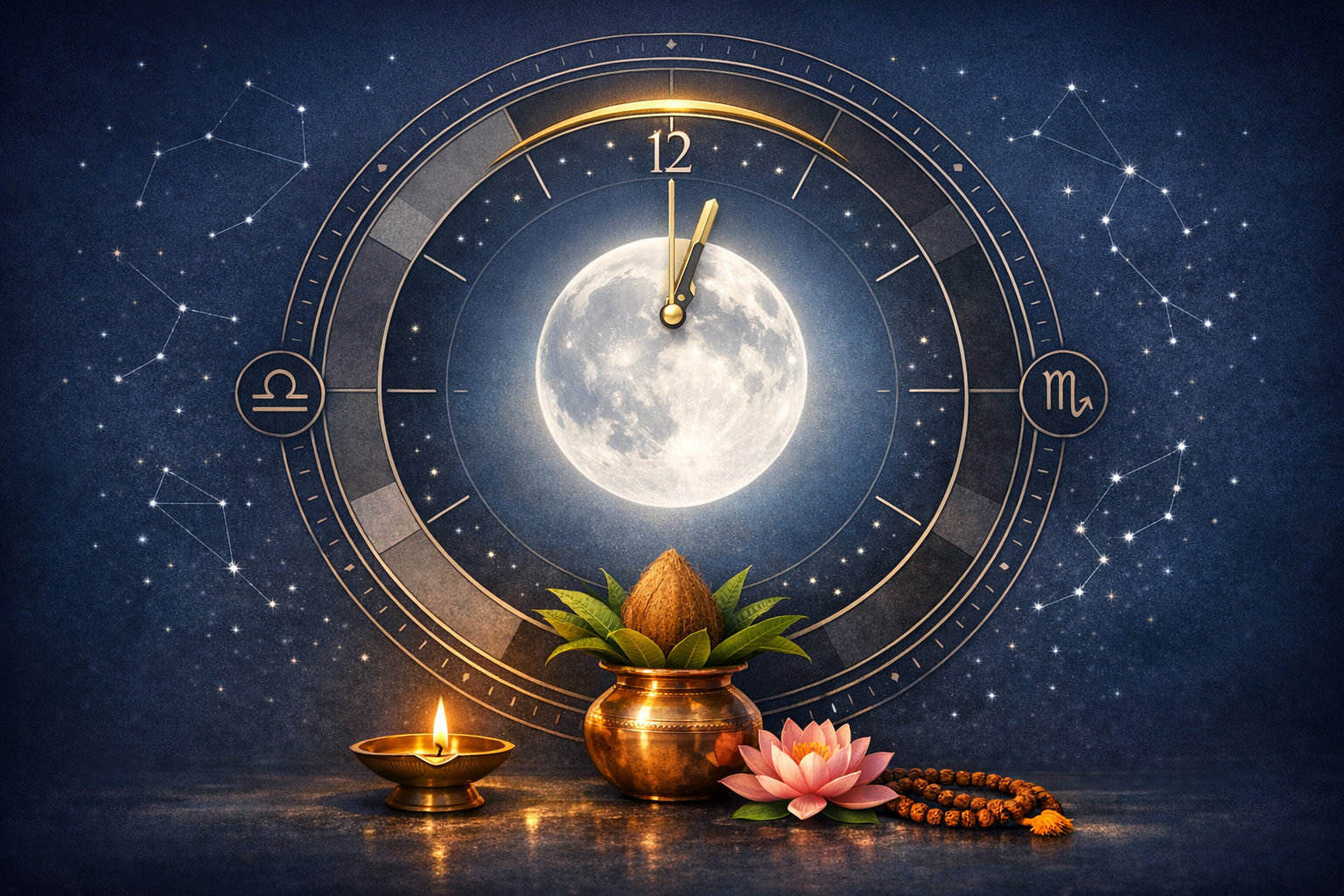
Nakshatra and Chandra rashi (Moon’s sidereal sign) are best confirmed via a location-specific Panchang, as the lunar mansion can transition at any time of day. Around late May and early June in the sidereal framework, the full moon commonly traverses the Libra–Scorpio sector, frequently engaging Vishakha–Anuradha–Jyeshtha zones depending on the year’s lunation schedule and any adhika (intercalary) month. Because May 31, 2026 features Purnima until 1:02 PM IST, the nakshatra prevailing at sunrise is often prioritized for daily sankalpa; nevertheless, when a nakshatra changes mid-day, both segments may be contextually relevant for vrata and muhurta selection.
In muhurta practice, the Moon’s rashi and nakshatra inform nuance: Vishakha lends clarity for learning and outreach; Anuradha supports devotion, cooperation, and team efforts; Jyeshtha emphasizes responsibility and restraint in speech. These are classical tendencies, harmonized with personal charts, family traditions, and the practical needs of the day. Where doubt exists, deference to one’s kula parampara or local priestly guidance preserves both accuracy and continuity.
Vrata observance on Purnima typically follows two rules of thumb. First, if Purnima prevails at sunrise, that civil date is observed for the Purnima fast and worship. Second, Parana (fast breaking) is undertaken after the prescribed timeoften after Purnima tithi has ended, or at moonrise when indicated by tradition. As Purnima on May 31, 2026 ends at 1:02 PM IST, many lineages will complete the primary worship within the Purnima window and break the fast after the indicated Parana time; others may continue observances into the evening. Checking a locality-specific Panchang ensures fidelity to one’s sampradaya.
Ritual suggestions commonly observed on this full moon include snana (preferably at sunrise), lighting a deepa, recitation of Vishnu Sahasranama or Lalita Sahasranama, Satyanarayana puja, and annadana or vastra daan. Simple, heartfelt actspreparing sattvic meals, reading the Bhagavad Gita or Dhammapada passages with family, participating in kirtan, or supporting a community kitchenare equally consonant with the day’s spirit and contribute to shared wellbeing across communities.
Transitioning into Krishna Paksha Pratipada in the afternoon invites a contemplative reset. The opening of the waning fortnight is suitable for decluttering, process improvements, healing disciplines, and committing to steady practices like nitya japa and mindfulness. Many households find that concluding Purnima worship before 1:02 PM and then dedicating the later hours to reflective planning for the fortnight maintains both auspiciousness and serenity.
For practical scheduling on May 31, 2026: initiate auspicious undertakings during Purnima before 1:02 PM IST, prefer Abhijit Muhurat around local solar noon when feasible, and avoid Sunday Rahu Kalam (the 8th daylight part) as well as Yamaganda (5th) and Gulika Kalam (7th). Where an activity must span multiple windows, commencing during a favorable interval is traditionally considered most impactful. Combining Purnima, a favorable Choghadiya, and Abhijit Muhurat yields a robust, tradition-aligned selection.
Those outside India may convert the IST tithi boundaries to local time or, preferably, consult a regional Panchang that uses local sunrise/sunset and sidereal calculations consistent with the chosen school (e.g., Drik or Surya Siddhanta parameters within a given tradition). Adhering to a single, trusted computational standard ensures consistency across months, especially in years with intercalary months (adhika maasa) such as 2026.
In essence, May 31, 2026 offers a luminous Purnima through middaywell suited for worship, study, and charityfollowed by the inward-leaning Krishna Paksha Pratipada. Approached with a spirit of unity, compassion, and shared purpose, the day naturally supports the common ethical and contemplative core of Hinduism, Buddhism, Jainism, and Sikhism, affirming the Panchang’s enduring role in harmonizing personal, familial, and social rhythms.
Inspired by this post on Hindu Blog.