Deva Snana Purnima, the solemn bathing festival of Sri Jagannath, Sri Balabhadra, and Devi Subhadra at Puri Jagannath Temple (Puri Srimandir), marks the formal public appearance of the deities before the world and the ritual threshold to the Ratha Yatra. In 2026, Deva Snana Purnima falls on 29 June, the Purnima (full moon) of the Hindu month of Jyeshtha. This observancealso called Snana Yatra or Devasnana Purnimabrings to the fore a sophisticated matrix of temple protocol (niti), calendrical precision, and theological symbolism that has evolved over centuries at Purushottama Kshetra.
Classical sources, including the Skanda Purana’s Purushottama Mahatmya and regional temple chronicles (Madala Panji), situate Deva Snana Purnima as the day on which the deities accept abhisheka (ritual bathing) in full view of devotees. The rite embodies a core principle of Sanatana Dharma: darshana (sacred beholding) as transformative encounter. It is the first complete public darshana of the year for many pilgrims and symbolically inaugurates the sequence of nitis that culminate in the grand Ratha Yatra.
Calendrically, Snana Purnima is anchored to the full moon of Jyeshtha as per the lunisolar Hindu calendar. Intercalations (adhika maasa) periodically align lunar and solar years; if an Adhik Jyeshtha occurs in 2026, Srimandir’s Record of Rights and the official panji (almanac) still determine the operative Purnima for the festival. For 2026, the date is established as 29 June, subject to the temple administration’s final schedule and local sunrise–moonrise computations.
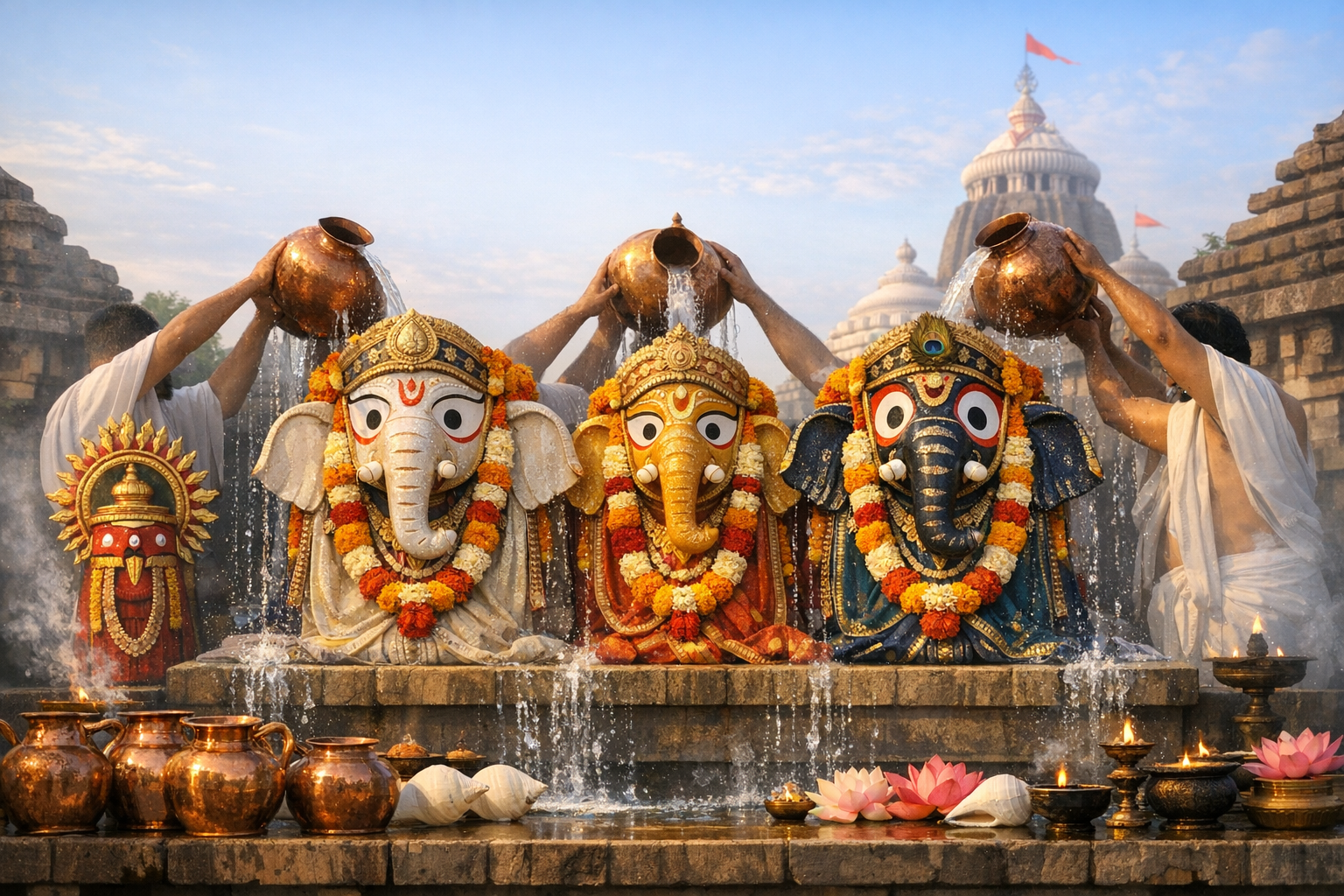
The ritual sequence begins before dawn with preparatory nitis inside the sanctum, followed by the ceremonial pahandi procession of the three deities (and the Sudarshana) to the Snana Bedi, the bathing platform visible to the congregated public. The jalabhisheka is then performed with 108 consecrated pitchers of waterdrawn traditionally from the temple’s sacred well and sanctified with Vedic mantras, sandalwood, camphor, and aromatic herbspoured over each murti in prescribed order by the sevayats. The number 108, resonant across Dharmic traditions, encodes completeness and cosmological wholeness in ritual mathematics.
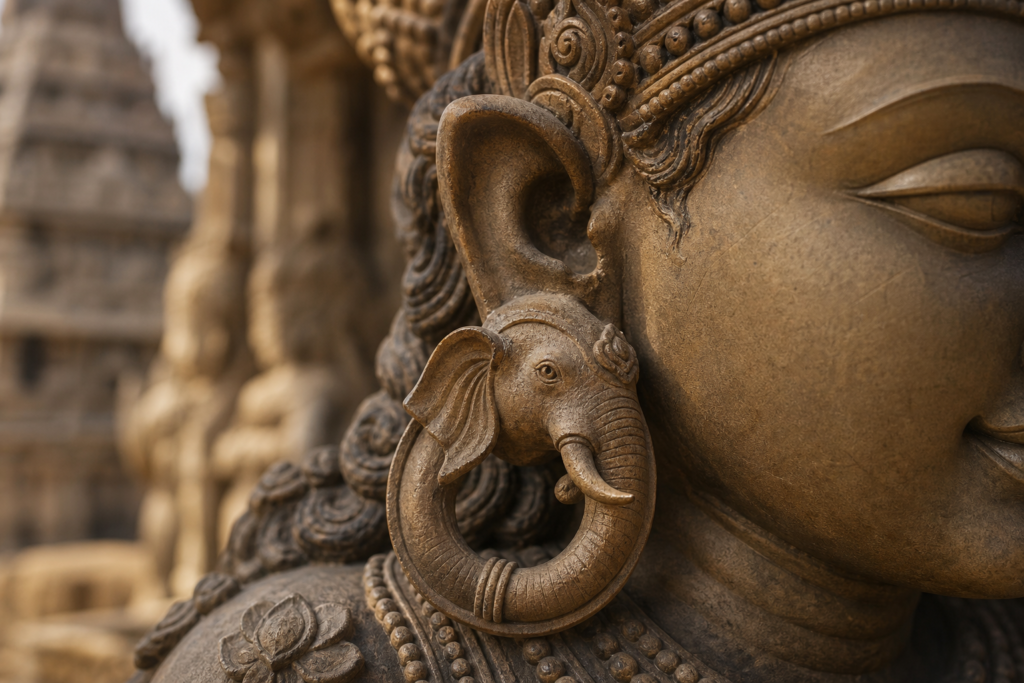
Following the abhisheka, the deities are adorned in Hati Vesha (Gajanana or Gajanana Besha), an elephant attire that evokes Shri Ganapati’s guardianship of auspicious beginnings. This fleeting visual theologydeities momentarily appearing with elephant-like headgearcreates an indelible impression for pilgrims and signals the liminal passage from the bathing to the resting phase.
Immediately after Snana Purnima, the deities enter Anavasara (also called Anasara), a period of seclusion lasting roughly a fortnight. Temple lore expresses this as a sacred convalescence after the intensive abhisheka; in theological terms, Anavasara protects the divine vigraha from overexposure while ritual specialists (including Chitrakar sevakas) renew the deities’ external form through banaka lagi (rejuvenating cosmetic and pictorial applications). Public darshana remains suspended, and devotees traditionally visit Alarnath at Brahmagiri for Alarnath Darshana during this interregnum.
Anavasara culminates in Netrotsava (Nava Yauvana Darshana), the “festival of the eyes,” when the deities, ritually re-animated and youthfully resplendent, grant darshana anew. This reappearance folds directly into the momentum of Ratha Yatra, where the theology of movementGods journeying out among the peopleunites orthopraxy with communal devotion at an immense scale.
Beyond its spectacular form, Deva Snana Purnima articulates a layered theology of purity and restoration. Water functions not merely as a cleansing element but as a carrier of mantra, fragrance, and intentionintegrating senses and spirit. The post-bath seclusion underscores an embodied logic of care, rest, and renewal. The entire cycleabhisheka, Hati Vesha, Anavasara, Netrotsavamanifests a rhythm of revelation, withdrawal, and return that is foundational to the living tradition of Puri Srimandir.
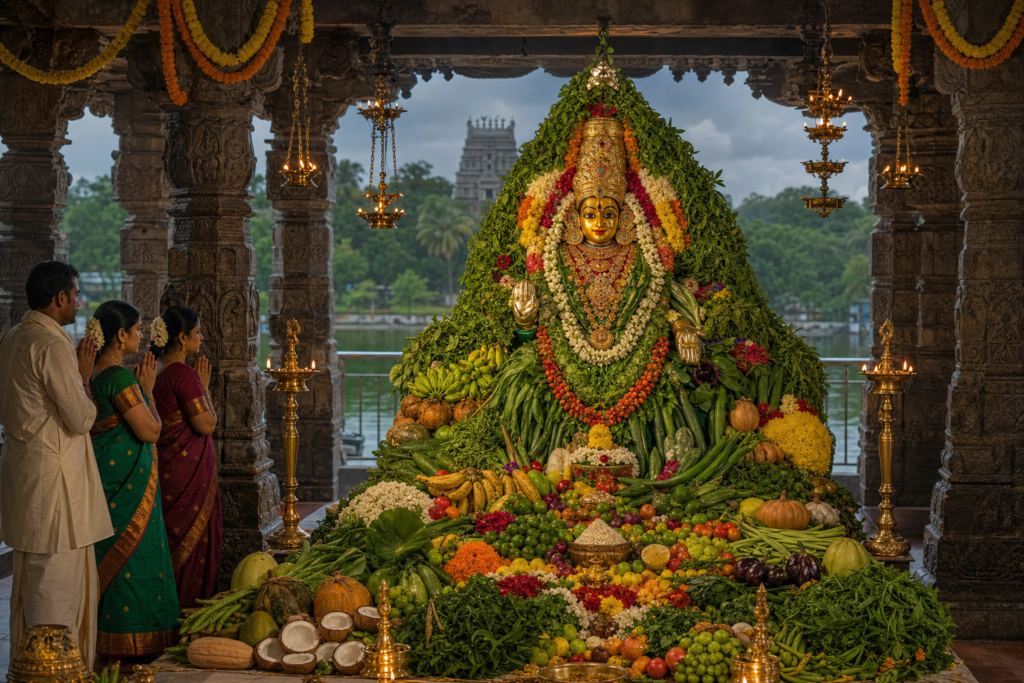
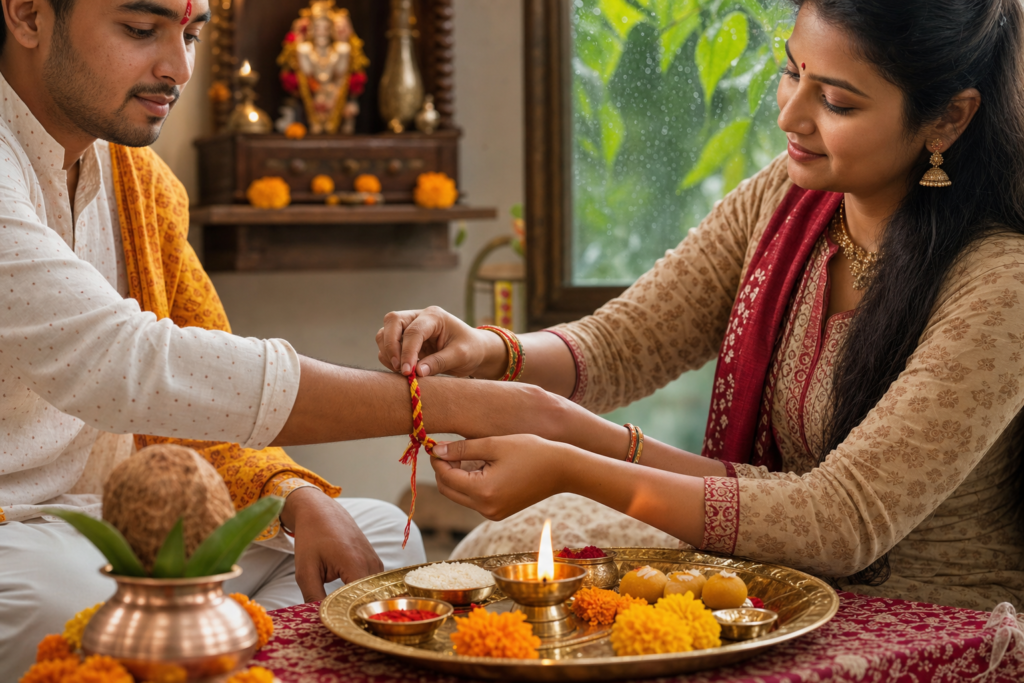
Experientially, pilgrims and viewerson-site or through authorized broadcastsoften describe a heightened sense of collective sanctity as the jalabhisheka unfolds. The cadence of recitation, the measured pour of each kalasha, and the rare Hati Vesha create a shared contemplative field. Even those observing from afar routinely practice home-based upasana on this day: a morning snana (bath), offering of water to a Krishna or Jagannath image or shaligrama (where appropriate), recital of Jagannath Ashtakam, and simple naivedya, aligning household devotion with Srimandir’s liturgical heartbeat.
The festival also exemplifies a unifying Dharmic ethos. Ritual bathing of sacred images (abhisheka/snapana) is integral not only to Hindu worship but is resonant with Jaina jal-abhisheka for Tirthankaras and with Buddhist and Sikh practices that sanctify isnaan (purificatory bathing) and seva (service) as pathways to inner clarity. By foregrounding water’s purificatory symbolism and community service around the event, Deva Snana Purnima affirms shared valuespurity, compassion, care for the sacredthat knit together Hindu, Buddhist, Jain, and Sikh sensibilities in a spirit of mutual respect.
For those planning to be in Puri on 29 June 2026, practical considerations help preserve both safety and sanctity. Large crowds are expected from pre-dawn, and access to vantage points near the Snana Bedi is tightly regulated by the temple administration. Modest attire, adherence to local guidelines, and patience with phased entry are essential. As with all Srimandir observances, final timings and public access protocols rest with the Shree Jagannath Temple Administration (SJTA); schedules may be adjusted for ritual integrity and crowd management.
An environmental ethic, increasingly emphasized by devotees and administrators, encourages biodegradable offerings, restraint in single-use plastics, and mindful disposal of prasad packaging. Households mirroring the ritual at home can substitute synthetic perfumes with natural sandalwood and camphor, and offer locally sourced flowers to minimize ecological footprintextending the festival’s purificatory intent to care for the shared environment.
In scholarly and devotional perspective alike, Deva Snana Purnima 2026 (29 June) is best understood as a living confluence of scripture, calendar science, temple protocol, and embodied devotion. The festival’s dramaturgypublic bathing, symbolic transformation through Hati Vesha, contemplative withdrawal in Anavasara, and renewed darshana at Netrotsavaprepares hearts and city alike for the outward surge of Ratha Yatra. In venerating the deities’ sacred bath, communities across the world participate in a continuity of faith that is at once rigorously traditional and inclusively Dharmic.
Inspired by this post on Hindu Pad.