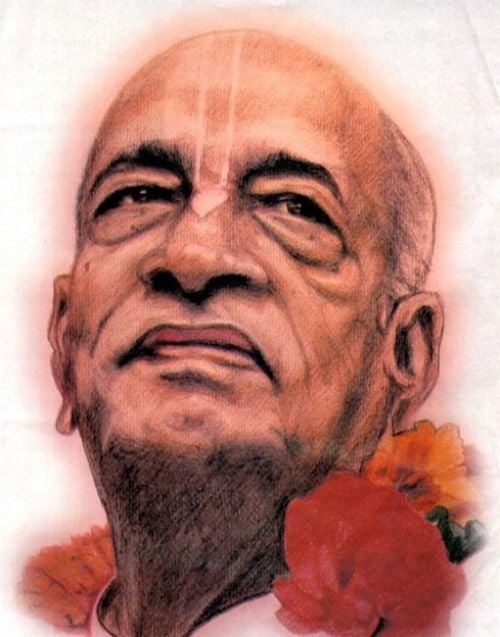
Srila Prabhupada’s life and work closely align with the sastric delineation of a perfected devoteeone whose every word and act is dedicated to glorifying the Supreme Personality of Godhead, Lord Sri Krsna. His conduct remains consistently purposeful: speech oriented toward the Absolute Truth, action disciplined by remembrance, and daily routine free from frivolity or material idleness. In the Vaishnava perspective, such unwavering focus is not momentary but continuous, expressing an abiding, realized relationship with Krsna.
Classical bhakti descriptions present a clear hallmark of pure devotion: constant connection to Krsna’s Name, Form, Instructions, and Pastimes. Testimonies preserved in community memory and institutional histories portray how Srila Prabhupada’s schedulejapa, study, teaching, kirtan, and servicelinked each moment to this fourfold remembrance. Those who observed him frequently recall that even brief, practical interactions redirected attention to devotion, ethics, and service, reinforcing a culture of purposeful speech and mindful engagement.
Sastric discussions of transcendence emphasize freedom from the three modes of material nature (sattva, rajas, tamas). Within that framework, a perfected devotee is no longer compelled by material impetus but acts as an instrument of Krsna’s Internal Potency. Descriptions of Srila Prabhupada in this light underscore agency rooted in surrender rather than compulsion, aligning with the Bhagavad-gita’s analysis of action, detachment, and devotion. The theological claim is that such a devotee is “never forced to act,” because intention and conduct have been harmonized with the divine will.
Vaishnava theology further teaches that Krsna’s care and protection accompany a devotee singularly devoted to Him, and that He remains inseparably present with such a devotee through love and bhakti. Traditional phrases such as “as good as Krsna Himself” are understood to indicate perfect representational fidelitycomplete alignment of purpose, service, and compassionwithout conflating the devotee with the Supreme. This framing preserves doctrinal clarity while conveying the exceptional stature attributed to a cent-percent pure devotee.
These principles gain historical texture when considering Srila Prabhupada’s impact. The rapid, global dissemination of Krsna-bhakti through the Hare Krishna Movement and ISKCON illustrates how steadfast devotion, rigorous practice, and scripturally grounded teaching can resonate across cultures and generations. Observers from varied backgrounds often note the emphasis on compassion, self-discipline, and truth-seeking that renders this message widely accessible without sacrificing theological depth.
Bhakti literature outlines a consistent pedagogy: through attentive hearing (sravana) about the qualities of a pure devotee, faith (sraddha) arises and matures. In this process, grace operates both externallyvia the guidance of the guruand internallyvia the indwelling Paramatma directing the sincere seeker. This dual modality invites firm commitment to Krsna alongside thoughtful self-examination, humility, and ethical conduct, integrating scriptural learning with lived transformation.
As faith stabilizes through practice, the “imports of the scriptures” progressively reveal themselves in experience: verses once read become personally illuminating; disciplines once observed dutifully become spontaneous expressions of love and service. While rooted in the Vaishnava stream, the underlying virtuesreverence for truth, compassion toward all beings, disciplined mind, and selfless actionare celebrated across Hinduism, Buddhism, Jainism, and Sikhism. This shared ethical ground strengthens mutual respect and the possibility of constructive dialogue.
Comparable ideals across dharmic traditions highlight these affinities without erasing distinctives. Sikh teachings on Naam-simran and seva resonate with continuous remembrance and service. The Buddhist bodhisattva ethic exemplifies compassionate engagement free from grasping. Jain commitments to ahimsa and aparigraha mirror disciplined restraint and ethical speech. Such convergences affirm that deep devotion and moral clarity can inspire unity in spiritual diversity while honoring each tradition’s unique theology and practice.
Consequently, Srila Prabhupada’s example offers a constructive pathway for unity within a broad dharmic family. Within Hindu traditions, it exemplifies the Role of Guru and the Guru-Shishya Tradition; in a wider frame, it models how devotion, non-harm, integrity, and service can be pursued without diminishing others’ paths. Respect for distinct practices is preserved, while shared ethical and contemplative commitments foster solidarity.
For contemporary practitioners, several orientations follow naturally. Keep speech purposeful and free from frivolity; let time be engaged in remembrance of Krsna’s Name, Form, Instructions, and Pastimes; cultivate freedom from the gunas through disciplined sadhana; seek guidance from qualified teachers while honoring the conscience illuminated by Paramatma; and support inter-dharmic goodwill through humility, listening, and service. These commitments synthesize sastric guidance with practical steps for personal growth and social harmony.
Viewed in this way, Srila Prabhupada conforms to sastric expectations not only through personal conduct but also through the capacity to awaken faith and illuminate scripture for others. The enduring impression is of a life wholly entrusted to Lord Sri Krsna, sustained by love and devotion, and fruitfully shared with the world in a manner that strengthens unity across the dharmic traditions of Hinduism, Buddhism, Jainism, and Sikhism.
Inspired by this post on Dandavats.