
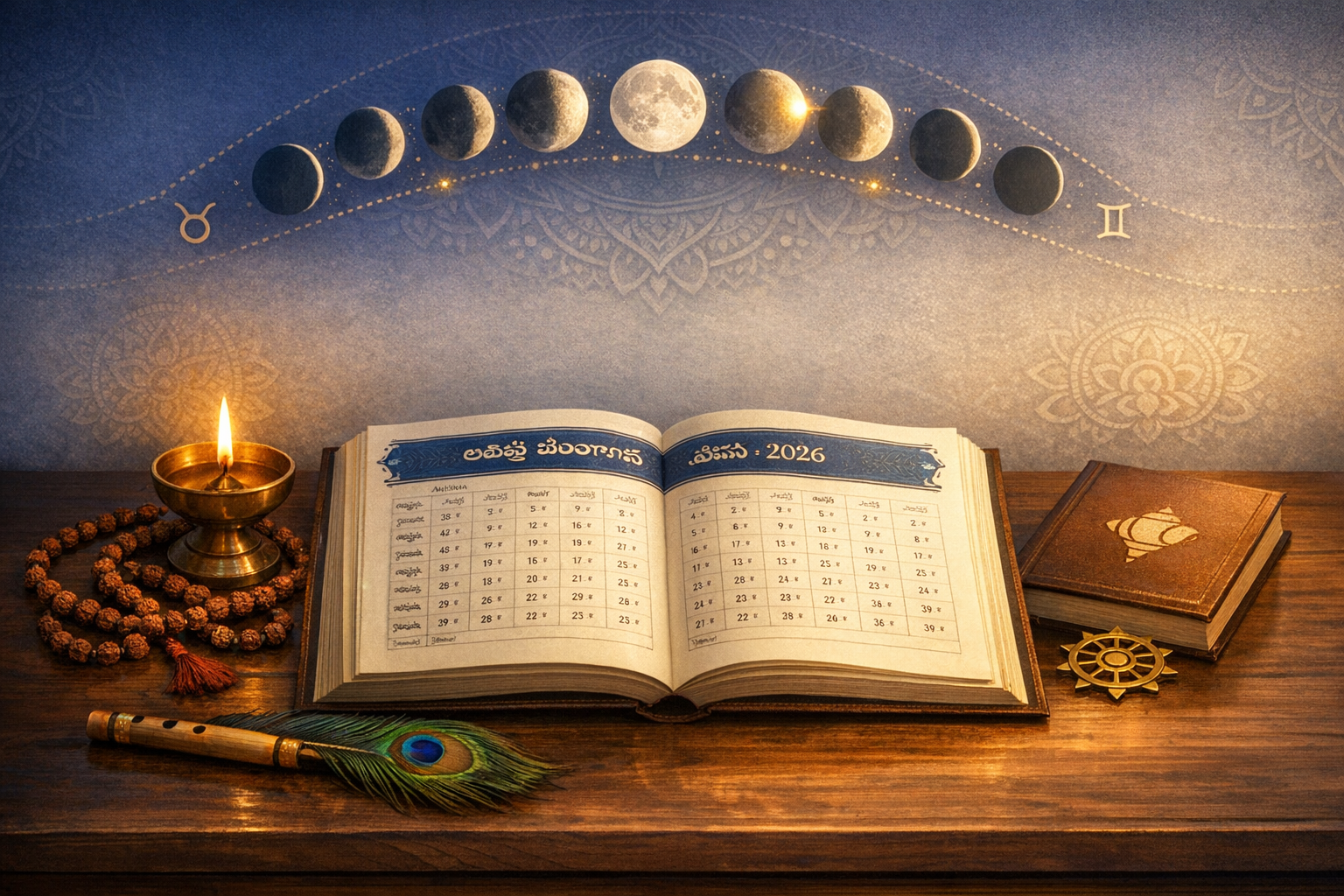
Adhika Jyeshta Masam 2026 in the Telugu Chandramana Panchangam begins on 17 May 2026 and ends on 15 June 2026 (IST). The 2026–2027 Hindu calendar year is Parabhava Nama Samvatsaram. This intercalary month—known as Adhika Masam and revered as Purushottam Maas—holds a distinctive place in the Hindu calendar for deepening sadhana, vrata, and seva, especially in Vaishnava traditions devoted to Sri Krishna.
In calendrical terms, Adhika Masam is an extra lunar month inserted to harmonize the lunar cycle with the solar year. The rule is straightforward and precise: when no solar ingress (Sankranti) occurs between two consecutive Amavasya (new moons), the intervening lunar month is designated as Adhika Masam. This mechanism preserves long-term alignment in the Hindu calendar while remaining faithful to lunar observance.
The designation of 2026 as Adhika Jyeshta Masam follows from this astronomical rule. Between the Amavasya commencing on 17 May 2026 and the subsequent Amavasya on 15 June 2026, there is no Sankranti. The Sun’s transition into Vrishabha (Taurus) occurs before the month begins, and the transition into Mithuna (Gemini) falls after the month ends in lunar reckoning. Hence, the entire lunar span is classified as Adhika Jyeshta Masam.
Regional month-reckoning is also relevant. Telugu Panchangam follows the Chandramana Amanta system, where months run from Amavasya to Amavasya; thus, the extra month is labeled Adhika Jyeshta Masam. In North Indian Purnimanta almanacs, the civil month runs from Purnima to Purnima but the intercalation logic remains identical; the month is similarly recognized as an Adhika month of Jyeshta in practice.
The internal structure of the month is as expected in an Amanta scheme: Shukla Paksha (waxing fortnight) begins with Amavasya on 17 May 2026 and culminates at Purnima around the end of May (IST), while Krishna Paksha (waning fortnight) runs from late May/early June to Amavasya on 15 June 2026. Local sunrise-bound tithi observance may shift dates by location, so consulting a city-specific Panchang is prudent for sankalpa and vrata timings.
Ekadashi observances gain special prominence in Purushottam Maas. In many Vaishnava traditions, the two Ekadashis in an Adhika month are known as Padmini Ekadashi (Shukla Paksha) and Parama Ekadashi (Krishna Paksha). In 2026 they are expected to fall in late May (Shukla) and mid-June (Krishna) in India; exact dates and paran timings should be taken from a reliable Panchang.
Adhika Masam is widely dedicated to Lord Krishna, venerated as Purushottama—hence the name Purushottam Maas. Devotional practices commonly include daily japa of the Hare Krishna maha-mantra or Vishnu mantras, parayanam of the Bhagavad Gita and Bhagavata Purana, and recitation of Vishnu Sahasranama. Many households in Andhra Pradesh and Telangana add simple, sustainable vrata disciplines to daily routines, cultivating quiet reflection and bhakti.
Scriptural and traditional guidance emphasizes tapas (austerity), dana (charity), japa (mantra repetition), svadhyaya (study), and seva (service). Anna-dana, care for elders, support for students, and community-oriented acts of compassion are encouraged. Temples and satsangs often hold pravachana series on Krishna-bhakti, illustrating how Purushottam Maas becomes a lived experience of values, not merely a calendrical anomaly.
Customary wedding and griha-pravesha muhurta are generally deferred during Adhika Masam. While daily pujas, upasana, and remedial rites continue as usual, major samskaras like vivaha and upanayana are typically postponed to the following Nija Jyeshta Masam or later, unless circumstances demand otherwise and guidance is taken from a competent acharya and local Panchang.
In Andhra and Telangana, observances during Adhika Jyeshta Masam often include additional Sri Krishna archana, sankirtana, and study circles anchored in the Bhagavata tradition. Families report that this month’s slower rhythm fosters a collective return to essentials—shared prayer, mindful giving, and the restorative calm of evening aarti.
From a technical standpoint, Telugu Chandramana Panchangam today relies on drik (observationally corrected) calculations rooted in siddhantic astronomy. The intercalation test—absence of Sankranti between two Amavasya—remains consistent across regional schools. Minor differences in tithi end-times across almanacs usually reflect methodological choices (drik vs. older vakya tables) and latitude–longitude adjustments rather than doctrinal divergence.
Within the broader calendrical cycle, Parabhava Nama Samvatsaram (2026–2027) situates this Adhika Masam in the traditional 60-year Jovian sequence. The Samvatsara name appears in formal sankalpa and aids continuity across regions, lineages, and ritual handbooks, thereby connecting household practice with the classical backbone of the Hindu calendar.
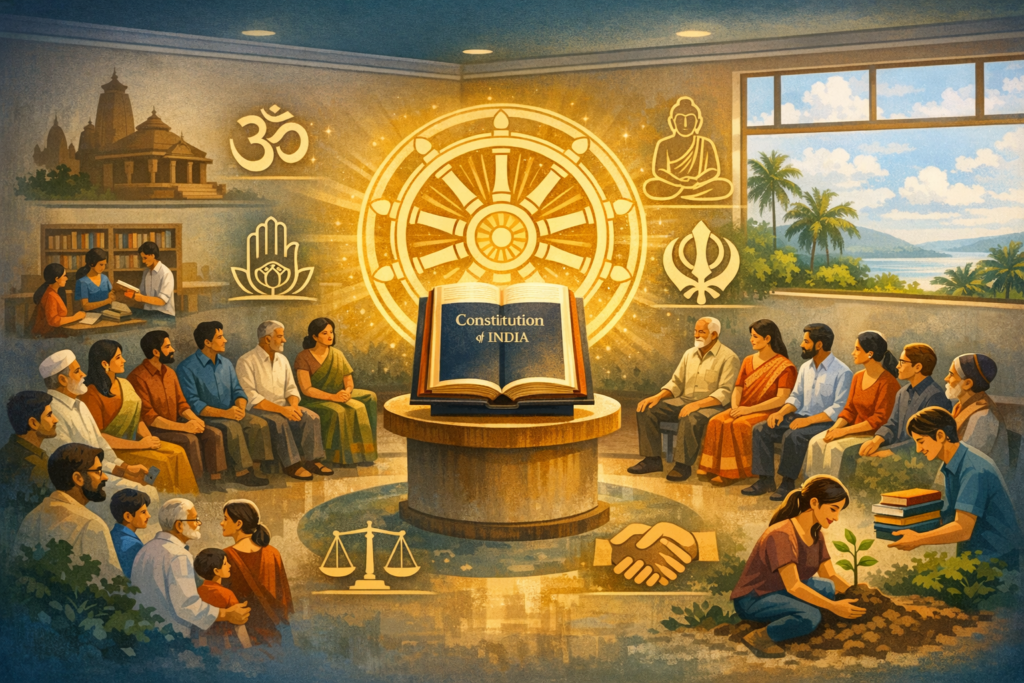
Adhika Masam’s spirit of introspection and compassionate action speaks across dharmic traditions. Jain, Buddhist, and Sikh communities that reference lunisolar frameworks historically recognize intercalation to maintain seasonal alignment. While specific observances vary, the shared ethical emphasis on restraint, remembrance, and service offers a unifying cultural thread that strengthens interfaith respect and societal cohesion.
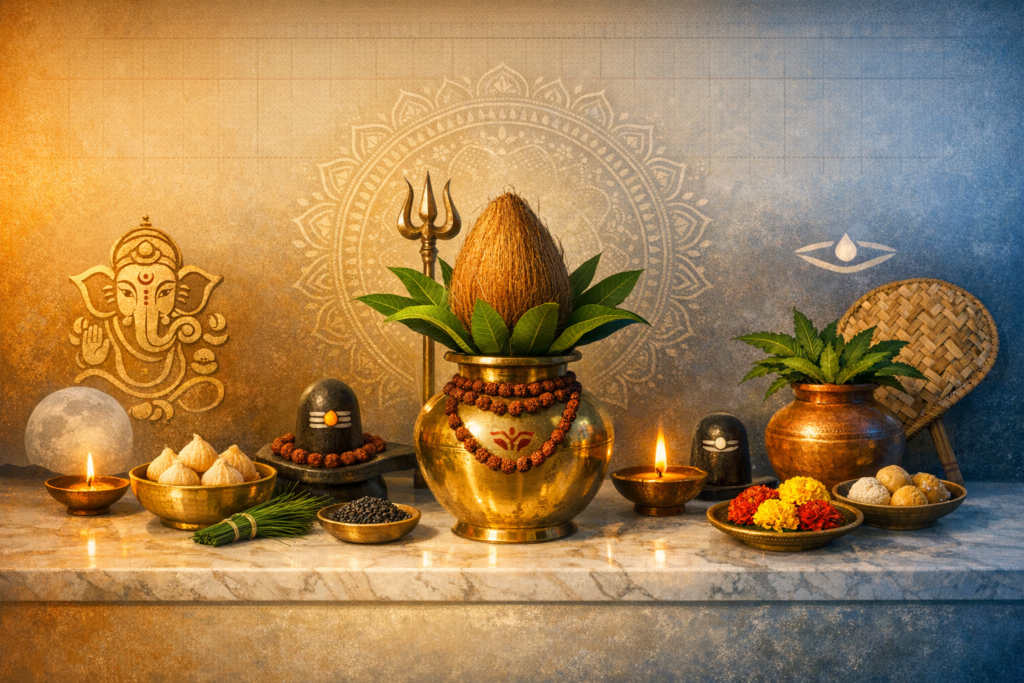
Practical planning benefits from a simple checklist: review the local Panchang for daily tithis, align sankalpa with Parabhava Nama Samvatsaram and Adhika Jyeshta Masam, and block personal time for vrata and study. Households and temple committees often plan annadana, extended parayanam schedules, and gentle outreach activities that emphasize inclusivity and sustainability.
A traditional sankalpa for this period, adapted to local details, might reference: “Parabhava Nama Samvatsare, Uttarayane, Adhika Jyeshta Mase, Shukla/ Krishna Paksha, [tithi], [nakshatra], [yoga], [karana], Sri Vishnu preetyartham…” The exact components should follow the local Panchang and family tradition, maintaining accuracy and clarity in pronunciation and intent.
In summary, Adhika Jyeshta Masam 2026 (17 May–15 June IST) is a fortuitous interval designated by a precise astronomical rule in the Hindu calendar. For devotees relying on the Telugu Panchangam, it becomes a month-long invitation to immerse in Sri Krishna bhakti, strengthen ethical living through seva and dana, and cultivate shared cultural values that resonate across the dharmic family. Observed with informed care and a spirit of unity, Purushottam Maas nourishes both tradition and contemporary life.
Inspired by this post on Hindu Pad.





Leave a Reply
You must be logged in to post a comment.