
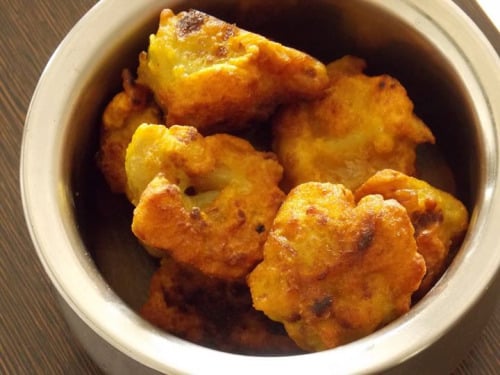
A friendly caution resonates in many dharmic kitchens: cook, offer, and distribute truly exemplary pakoras, and guests will arrive in joyful numbers. This sentiment captures both the culinary magnetism of perfectly made pakoras and the devotional warmth of sharing prasadam in community.
At a Vyasa Puja celebration for Srila Prabhupada, expert cook Sunanda Prabhu (ACBSP) recounted a memorable episode from a journey on the Radha Damodar bus traveling from New York to Gita Nagari, Pennsylvania. Because Srila Prabhupada had a chest cold, he requested something hot for breakfastspecifically pakoras made from green chilies. Unable to secure green chilies that morning, Sunanda Prabhu prepared cauliflower pakoras instead, following the formula in The Hare Krsna Cookbook (published 1973). He made nearly twenty pakoras, and Srila Prabhupadadelighted by their taste and warmthate every one.
Senior devotees and seasoned cooks who heard the account affirmed a widely held view: the pakora recipe in the 1973 Hare Krsna Cookbook remains superb and has not been surpassed for balance, reliability, and flavor. Its enduring stature reflects an elegant proportion of chickpea flour, judicious spicing, and a method that consistently yields a crisp, aerated crust around tender interiors.
From a culinary-science perspective, the batter’s performance is rooted in the protein–starch matrix of chickpea flour (besan), the leavening action of baking powder, and the emulsifying richness of ghee. Turmeric, cumin, coriander, and warming aromatics (allspice and cinnamon) build a complex flavor base, while crushed chilies lift the profile with gentle heat. A slightly thick, lump-free batter clings to vegetables in a uniform sheath, puffing into a golden, micro-crisp lattice when immersed in hot ghee.
Across dharmic traditionsHindu, Buddhist, Jain, and Sikhsimple, nourishing fritters prepared with gratitude and shared in fellowship embody values of seva, community hospitality, and ahimsa-aligned nourishment. While specific devotional practices and dietary guidelines vary by sampradaya and household, the spirit of offering and sharing remains a unifying thread that strengthens familial and community bonds.
Pakora Recipe (as printed in The Hare Krsna Cookbook, 1973)
Batter:
1 cup chickpea flour
1 t. ground cumin seed
1 t. turmeric
1 ½ t. ground coriander
½ eachallspice & cinnamon
¾ t. salt
½ t. crushed chilies
¾ t. baking powder
A little less than 1 cup water
Ghee for frying
Sift chickpea flour. Add all spices, salt and baking powder. Mix with hands until blended. Add water a little at a time to avoid lumps. Heat ghee for deep frying.
Plain pakora:
Pour a small amount (about 1 T.) into hot ghee. It will puff up into a small ball. Turn over and brown. Tap with a spoonif it sounds hollow, it’s done. Remove with a skimmer and drain on paper towel. Fry several at a time.
Filled pakora:
Filling: thin-sliced eggplant wedges or strips, small cauliflower flowerets, green pepper strips, asparagus tips, parsley sprigs, thin rounds of zucchini or cucumber, carrot rounds or strips. Pieces should be no bigger that 2″ long and they should be thin. Dip vegetables into batter and deep fry in ghee until golden. Remove and drain. The little-fried batter drips can be removed and saved for salad or peas and peanuts.
Technique note: For the most consistent texture, sift besan thoroughly and mix the dry ingredients well before adding water. Gradual hydration prevents lumps and promotes a smooth, clingy batter. A short rest (10–15 minutes) after mixing can further hydrate the flour and yield a more even crust.
Technique note: Maintain ghee at a steady frying temperature of approximately 170–180°C (338–356°F). Ghee’s high smoke point (about 230–250°C) supports clean, crisp frying and a nuanced aroma that complements sattvic preparations. If a thermometer is unavailable, a small drip of batter should sink slightly, then rise and sizzle briskly without scorching.
Technique note: Slice vegetables thinly so they cook through in the time required for the batter to crisp and color. Pat produce dry before dipping to improve adhesion. Salt vegetables only after frying to preserve surface dryness and maximize crunch.
Technique note: While the 1973 recipe specifies ghee for both culinary and devotional reasons, neutral vegetable oils can be used where dairy-free preparation is preferred in some households. In such cases, maintain the same temperature discipline to achieve comparable crispness.
Technique note: Fry in moderate batches to avoid heat loss, drain on a rack or absorbent towel, and serve promptly. For short holding, keep pakoras on a wire rack in a warm oven (around 90–95°C) to preserve the crust until distribution as prasadam.
Variation note: To honor Srila Prabhupada’s original breakfast request that morning, green chili pakoras can be prepared by dipping slit, deseeded mild chilies (or left with seeds for more heat) in the same batter and frying until puffed and golden.
Dietary and allergen considerations: Chickpea flour is naturally gluten-free, though cross-contact depends on the mill. Ghee contains dairy; for vegan service, use an appropriate oil. Adjust chili levels to suit household preferences, especially when sharing prasadam with children or elders.
Offering and sharing: In Vaishnava practice, foods prepared with care, offered to Krsna, and respectfully distributed as prasadam nourish both body and heart. Related values of gratitude, seva, and community hospitality also animate Sikh langar traditions, numerous Hindu festivals, and many Jain and Buddhist household practices, reflecting a shared dharmic ethos of inclusive fellowship and compassionate nourishment.
“Sri Caitanya Mahaprabhu approved of all the methods employed in cooking and offering food to Krsna. Indeed, He was so pleased that He said, ‘Frankly, I will personally take the lotus feet of anyone who can offer Krsna such nice food and place those lotus feet on My head birth after birth.‘” (Cc Madhya 3.66)
In that spirit, a final good-humored reminder bears repeating: cooking, offering, and distributing these special pakoras may well bring a surge of guests to the home, temple, or gatheringan auspicious outcome where culinary excellence meets devotional hospitality.
Inspired by this post on Dandavats.










