Hindu Janajagruti Samiti (HJS) recently launched the nationwide ‘Beti Surakshit, Rashtra Surakshit’ initiative in Pune, positioning community-led vigilance, women’s safety, and civic responsibility at the heart of a larger conversation on social cohesion and national well-being.
While campaign materials referenced concerns that are sometimes described in public discourse using polarising labels, the constructive thrust emerging from the Pune launch centers on universal, rights-based safeguards: protecting young people from deception and coercion, strengthening corporate accountability, and deepening community awareness without profiling any faith or community. Framed this way, the initiative aligns with constitutional values and a dharmic ethos of ahimsa, dignity, and mutual respect across Hindu, Buddhist, Jain, and Sikh traditions, and in peaceful coexistence with others.
Pune’s role as a higher-education and technology hub makes it a logical starting point. High youth mobility, rapid digital adoption, and dense corporate ecosystems create both opportunity and risk. Community stakeholdersfamilies, campuses, resident welfare associations, and employersare uniquely placed to build everyday practices that translate the promise of ‘Beti Surakshit, Rashtra Surakshit’ into measurable safety outcomes.
Contextualising the need, NCRB data show that reported crimes against women in India have risen in recent years, with persistent categories including cruelty by husband or relatives, kidnapping/abduction, and sexual offenses. Although figures vary across states, the signal is consistent: prevention requires a portfolio of interventionslegal literacy, digital safety, bystander training, accessible reporting, and responsive institutionsrather than any single measure.
Digital deception and grooming are notable vectors. Romance and impersonation scams, doxxing, non-consensual image sharing, and intimidation thrive in environments where privacy hygiene is weak and redressal pathways are unclear. Cyber fraud alerts from enforcement agencies and CERT-In advisories underscore a rising sophistication of tactics, making community education on cyber safety essential, especially for students and young professionals.
Workplace safety is another critical pillar. The Sexual Harassment of Women at Workplace (Prevention, Prohibition and Redressal) Act, 2013 (POSH) mandates Internal Committees (ICs), periodic training, and transparent processes. For ‘Beti Surakshit, Rashtra Surakshit’ to yield durable gains, employers across sectorscorporate, educational, and non-profitneed to rigorously operationalise POSH compliance, track case resolution times, and disclose anonymised metrics that build trust.
Corporate accountability also extends beyond POSH. Clear codes of conduct on employee relationships, conflict-of-interest disclosures, vendor and recruiter due diligence, and whistleblower safeguards can reduce exploitation in hiring, housing, and financial arrangements linked to employment. When companies lead with ethics and transparency, communities benefit from a wider safety net.
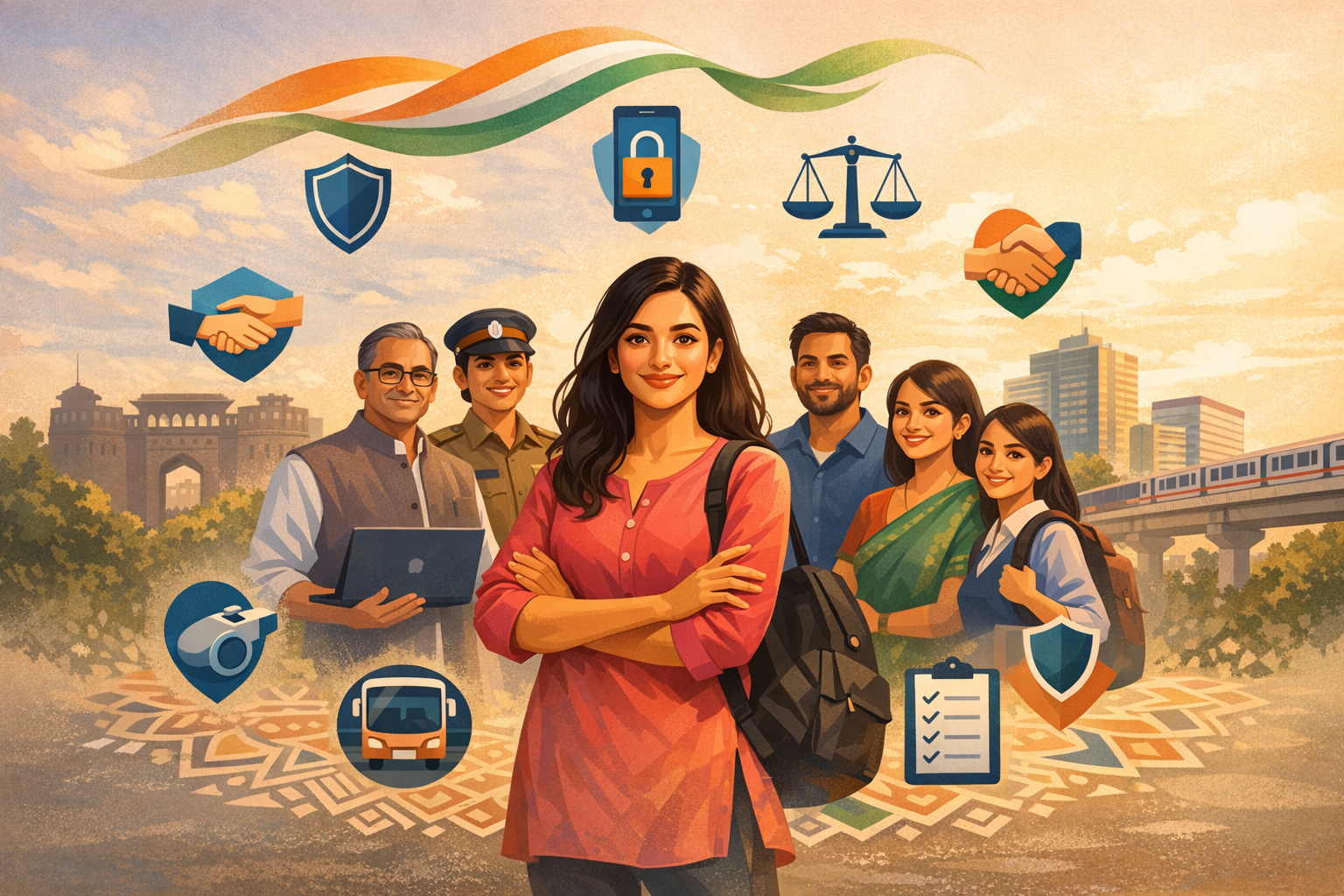
The Pune launch points to a multi-module campaign architecture that can scale nationally: (1) legal and rights literacy; (2) digital self-defense; (3) relationship and consent education; (4) bystander intervention; (5) workplace and campus protections; (6) survivor-centered reporting and support; and (7) collaborative monitoring with law enforcement and civil society.
Digital self-defense should emphasise practical steps: strong, unique passwords and two-factor authentication; prudent sharing on social media (disabling geotagging where appropriate); cautious acceptance of friend requests; reverse-image searches to detect catfishing; encrypted communication; and prompt documentation and reporting of threats or extortion attempts under the IT Act (e.g., Sections 66C, 66D, and 67).
Relationship and consent education works best when it is rights-based and non-discriminatory. Adults retain the constitutional freedom to choose partners under Article 21 and relevant personal and civil laws, and safety guidance should not stigmatise interfaith or inter-community relationships. The focus should remain on informed consent, transparency of identity and intent, financial prudence, peer and mentor support, and immediate recourse to legal protections in cases of coercion, fraud, or violence.
Families often navigate complex emotions as young adults form relationships. Structured dialoguescovering digital footprints, privacy, emotional boundaries, warning signs of manipulation, and help-seekingcan strengthen trust without resorting to surveillance or moral panic. Community counselors and peer mentors can facilitate such dialogues while respecting autonomy.
Bystander intervention training equips peers, neighbors, and co-workers to safely de-escalate risk, document incidents, and guide survivors to official channels. Simple heuristics such as the “Direct–Distract–Delegate–Document” framework keep actions lawful and proportionate, avoiding confrontation where it may cause harm and prioritising timely reporting.
A clear legal map improves confidence in reporting. Relevant provisions include IPC Sections 354 (outraging modesty), 354D (stalking), 366 (kidnapping/compelling marriage), 376 (sexual assault), 417 and 420 (cheating), Section 370 (trafficking), POCSO for minors, and the POSH Act for workplaces. Emergency and support channels112 (ERSS), 1091 (women), 181 (women’s helpline), and 1098 (Childline)provide entry points, with state variations noted. Survivors benefit from early FIRs, medical documentation, and legal aid.
Campus and corporate implementations can include anonymous reporting portals; confidential liaison officers; periodic safety audits of transit, hostels, and common areas; and MoUs with local police for safe commuting corridors. These steps, when publicised, materially reduce barriers to help-seeking and deter misconduct.
Monitoring and evaluation lend rigor to the campaign. Suggested indicators include: number of trainings conducted; participant coverage by age group and institution; pre/post knowledge assessments; reporting volume and case disposition times; POSH compliance rates; cyber incident response times; and periodic community perception surveys. Dashboards reviewed quarterly by a multi-stakeholder committee sustain momentum and accountability.
A dharmic unity lens enhances social legitimacy. Shared values across Hindu, Buddhist, Jain, and Sikh traditionsahimsa (non-violence), satya (truth), daya (compassion), aparigraha (non-possessiveness), and sewa (service)naturally support women’s dignity and safety. Inter-tradition dialogues, led by women scholars and community leaders, can foreground care, consent, and mutual respect while explicitly rejecting vigilantism and prejudice.
Participants at community sessions commonly describe relief when safety is treated as a universal right rather than a contested identity marker. Parents seek practical checklists; students ask for privacy-preserving tools; employees want credible ICs; and neighborhood groups request clear escalation pathways. When these needs are met, trust growsand reporting improves.
Responsible communication is indispensable. Rumor-checking protocols, fact-verification before forwarding messages, and referral of alleged offenses to lawful authorities prevent mob dynamics. Campaign content should avoid profiling language and instead highlight legal standards, survivor dignity, and the presumption of innocence until due process concludes.
Policy synergies can amplify impact: integrating ‘Beti Surakshit, Rashtra Surakshit’ modules with state skill-mission programs; incentivising POSH and safety-certification audits through industry associations; and aligning with police community outreach (e.g., cyber cells and women’s safety initiatives). Such institutional linkages translate awareness into sustained systems change.
Seen through this inclusive, evidence-led frame, the Pune launch can seed a replicable national model. If HJS and partner institutions prioritise legal literacy, digital safety, corporate responsibility, survivor-centered support, and dharmic unity, ‘Beti Surakshit, Rashtra Surakshit’ can strengthen women’s agency and social harmony in equal measureprotecting daughters and, in doing so, protecting the nation’s moral fabric.
Inspired by this post on Hindu Jagruti Samiti.