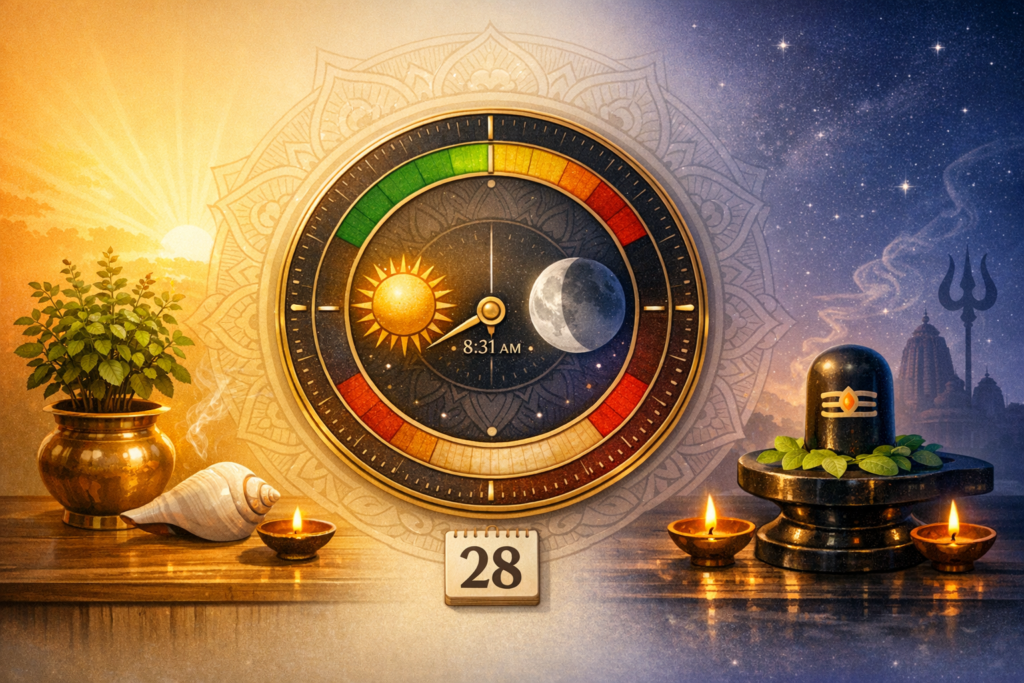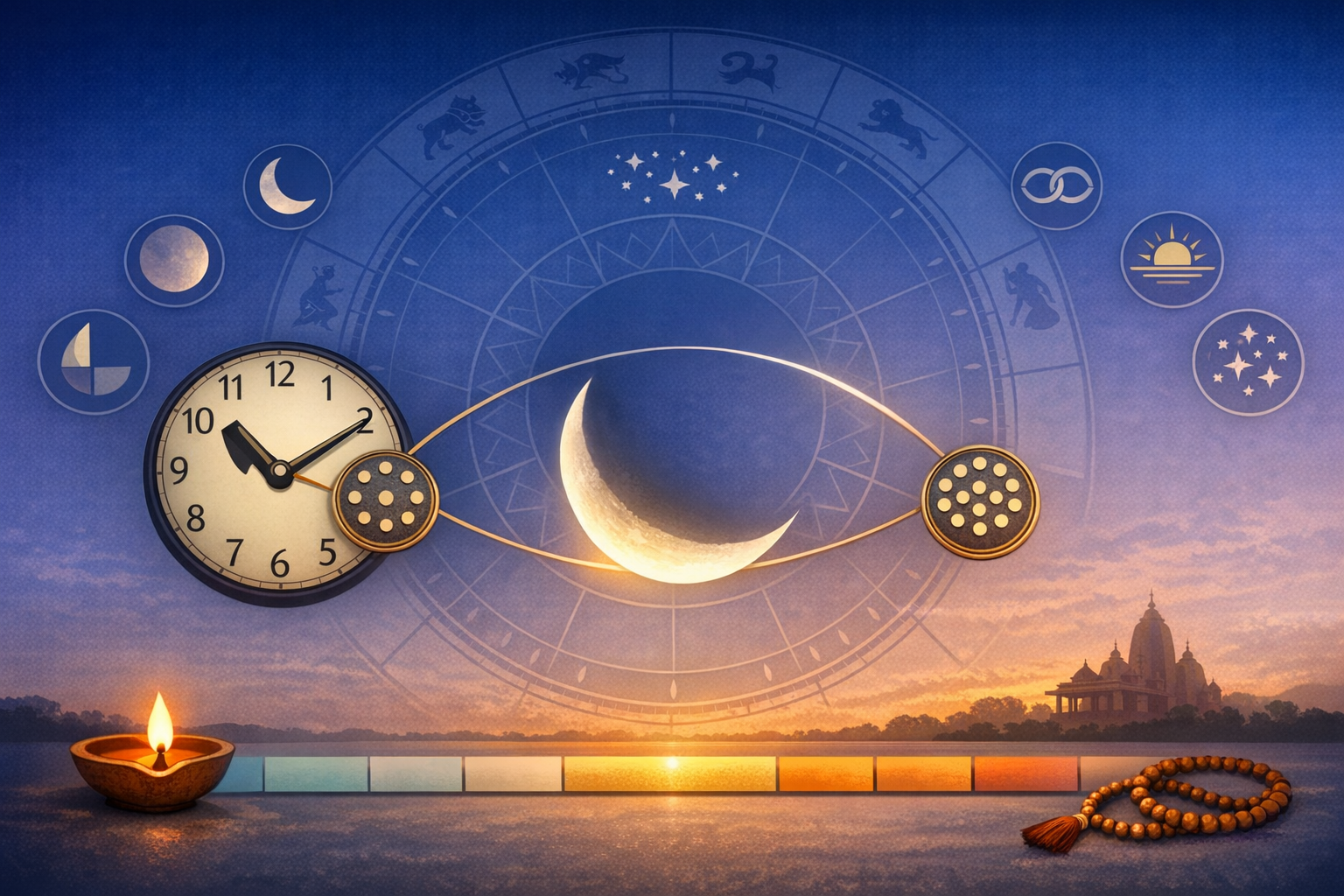
Monday, May 11, 2026, in the Hindu calendar (Panchang) marks Krishna Paksha Navami, the ninth lunar day of the waning half of the month, in most regions. Krishna Paksha Navami tithi prevails until 10:12 AM on May 11, after which it transitions to Krishna Paksha Dashami, the tenth lunar day of the dark fortnight. This sequence is central to daily observances and time selection for worship, vrata, and personal milestones across Indic traditions.
Tithi is a fundamental time unit in the Panchang, determined by the angular separation between the Moon and the Sun on the ecliptic. Each tithi spans a 12-degree increment of this separation. Navami corresponds to the interval when the lunar elongation lies between 96° and 108°, while Dashami spans 108° to 120°. Because the Moon’s motion varies, tithi durations are not fixed clock hours and can begin or end at any moment within the civil day, which is why the precise switch at 10:12 AM is crucial for ritual planning.
For practical observance, many traditions give weight to the tithi at local sunrise when assigning festival days and vratas. Two special scenarios are recognized: tithi kṣaya (when a tithi is skipped between consecutive sunrises) and tithi vṛddhi (when a tithi spans two sunrises). On May 11, 2026, the transition is within the day, making the morning more aligned with Navami observances and the remainder of the day aligned with Dashami considerations, subject to regional and sampradāya guidelines.
A Panchang typically lists six limbs of daily astrology and timekeeping: tithi, vara (weekday), nakshatra, yoga, karana, and sunrise/sunset. While the present reference provides the authoritative tithi change at 10:12 AM, local nakshatra, rashi (Moon sign), yoga, and karana for May 11, 2026 depend on geographic coordinates and ayanāṁśa (Lahiri is widely used). Therefore, practitioners should consult a region-specific Panchang or ephemeris for these additional elements to fine-tune decisions such as travel, samskāras, and temple visits.
Understanding nakshatra and rashi adds interpretive depth. Nakshatra identifies the Moon’s position against one of 27 stellar sectors and shapes the emotional and ritual tone of a day, while rashi contextualizes that lunar position within one of the 12 sidereal signs for broader behavioral and planning cues. In daily life, many devotees correlate a serene or devotional focus with certain nakshatras that encourage introspection, noticing that brief japa or dhyāna during sandhyā (twilight) often feels especially settling regardless of the specific lunar mansion.
Karana and yoga further refine the day’s texture. A karana is half a tithi and is used to judge the suitability of activities such as agreements or journeys; for example, Viṣṭi (Bhadra) is classically avoided for auspicious undertakings. Yoga, computed from the sum of the Sun’s and Moon’s longitudes, suggests undertones for health, communication, and collaboration. As with nakshatra and rashi, these are location-sensitive and merit verification from a precise local Panchang.
Selecting shubh muhurta (good time) on May 11, 2026 benefits from a few robust principles that transcend local variation. Abhijit Muhurta—centered on local solar noon and lasting roughly 48 minutes—is widely esteemed for initiating significant tasks when other windows are uncertain. Vijay Muhurta in the mid-afternoon and the traditional “Sāḍe-Teen Muhurat” set (Abhijit, Vijay, certain Rohiṇī periods, and the Godhūli twilight) are considered inherently auspicious by many authorities. When exact city-based timings are unavailable, these principles help structure the day with confidence.
On weekdays, practitioners often avoid Rahu Kāla, Yamaganda, and Gulika Kāla for initiating new projects. A quick method applies to any location: divide the time from sunrise to sunset into eight equal parts. For Monday, Rahu Kāla occupies the 2nd segment of daylight, Yamaganda the 3rd segment, and Gulika Kāla the 6th segment. Applying this proportional formula to actual local sunrise and sunset yields precise windows to avoid, complementing the auspicious anchors noted above.
Krishna Paksha, the waning half, traditionally supports inward-turning practices—japa, svādhyāya (self-study of scripture), and quiet seva—without prescribing uniform austerities for every household. On a Navami morning, many prefer meditative recitation (for example, Vishnu Sahasranama or a favorite stotram), gentle dāna, and reconciliation efforts in relationships. As Dashami arrives after 10:12 AM, those preparing for the upcoming Ekadashi may taper diet and screen time, aiming for clarity and lightness that make the Ekadashi vrata more mindful and sustainable.
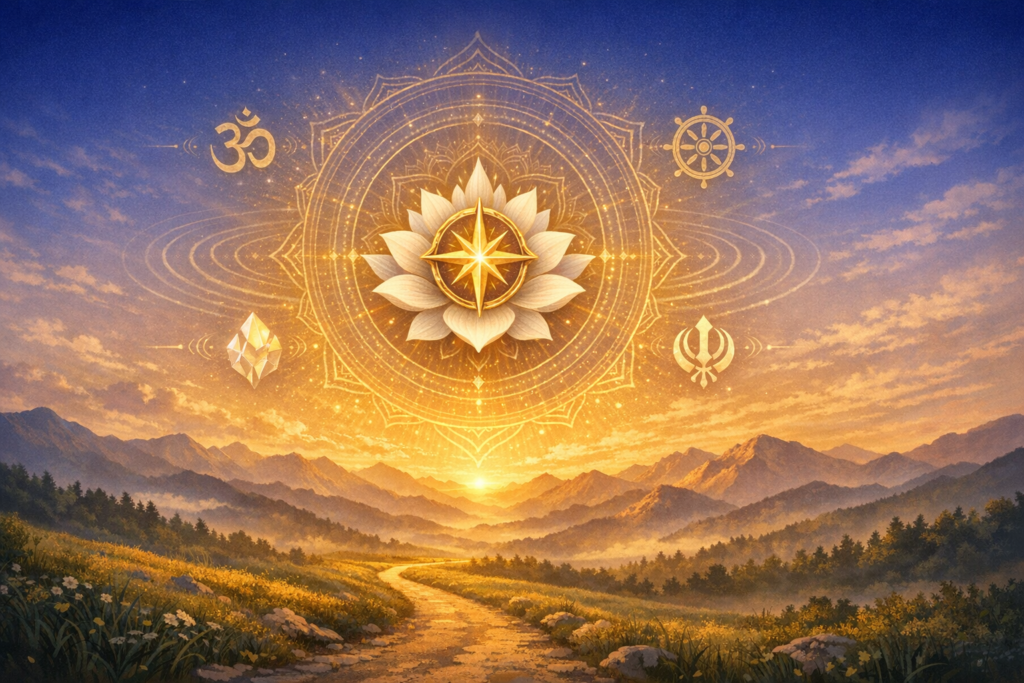
These daily rhythms resonate across dharmic paths. In Hindu practice, Panchang-based alignment is a longstanding way to harmonize inner and outer life. Buddhists observe uposatha on lunar days with parallel emphasis on ethical recollection, meditation, and metta. Jains integrate tithi awareness into pratikraman and anuvrata observances, emphasizing ahimsa and self-restraint. Sikhs, while following the Nanakshahi solar calendar for gurpurabs, similarly embody nitya (daily) discipline through Nitnem, simran, and seva; devotees often share that dedicating a few focused minutes at dawn and dusk fosters calm and unity that transcends calendrical systems. The shared ethos—truthfulness, compassion, and disciplined remembrance—underscores substantive unity among the dharmic traditions.
From a technical perspective, most Indian Panchang computations are nirayana (sidereal), offset from tropical positions by the ayanāṁśa. The widely adopted Lahiri ayanāṁśa expresses this offset for any given date, ensuring that tithi, nakshatra, yoga, and rashi reflect the sidereal sky. Accuracy depends on high-quality ephemerides and correct geographic inputs. Small computational differences between almanacs are common and typically reflect choices of constants, rounding thresholds, and sunrise definitions (apparent vs. mean).
Regional Panchangs also differ in month reckoning—amānta (month ends at Amavasya) and pūrṇimānta (month ends at Purnima). While this affects month names and some festival placements, it does not change the underlying tithi sequence for a given day. Therefore, the Navami-to-Dashami transition at 10:12 AM on May 11, 2026 holds consistently even where month naming conventions vary.
For those planning samskāras, travel, or institutional events on May 11, 2026, a prudent approach is: confirm local sunrise and sunset; compute Rahu Kāla, Yamaganda, and Gulika Kāla by proportional division; prioritize Abhijit Muhurta and other strong windows when feasible; and, if available, corroborate nakshatra and yoga from a precise city-based Panchang. When choices are constrained, many practitioners lean on intention (sankalpa), satya in speech, and ahimsa in action—timeless safeguards that align with the spirit of shubh rather than relying solely on clock time.
In sum, May 11, 2026 offers a Navami morning conducive to inward renewal, shifting to Dashami by 10:12 AM for steady, practical follow-through. Even without complete local astronomical data, the Panchang framework—tithi science, proportional avoidance periods, and universally auspicious anchors—provides a reliable compass. The deeper invitation, shared across Hinduism, Buddhism, Jainism, and Sikhism, is to convert accurate timekeeping into accurate living: attentive, compassionate, and resolute in dharma.
Inspired by this post on Hindu Blog.