Context and scope
Two vantage points illuminate a pivotal transformation in post-Independence Indian higher education at Mysore: the collegial ideal preserved in A.N. Murthy Rao’s elegiac essay, The Common Room of the Maharaja College, and the sharper sociological observations that B.G.L. Swamy later recorded in Mysore Diary. Read together, they trace a shift from a culture of shared intellectual responsibility to a pattern of hardened factionalism on the university campusa shift with implications for academia, public life, and the dharmic ethos of plural debate and nonviolence.
The collegial ideal and its moral architecture
Murthy Rao’s portrait of the Common Room captures a formative ecosystem in which teachers and peers acted as mutual correctives, reinforcing character and scholarly rigor. The concluding insightpreserved here verbatimarticulates an ethic of interdependence that once defined the best of university life:
Everyone who was part of the Common Room had shaped the lives of all the others. If any one of them were to write his autobiography, he would have no choice but to write the story of all the others as well… they were all participants in one anothers’ enthusiasm, boredom, joy, and sorrow, … When faced with trials of character, when the mind leaned towards ignoble paths, the thought of what my friends would think of me acted as my protection. Some divine medicines, if consumed once, give strength to the body for an entire lifetime. The influence of my teachers, elders, and friends was akin to such a divine medicine.
Across India’s dharmic traditionsHinduism, Buddhism, Jainism, and Sikhismthis moral architecture resonates: community, accountability, and the steadying force of satsaṅga as a durable “divine medicine.” It models an academic culture of dialogue, restraint, and dignity that enables difference without division.
From collegial circles to factional networks
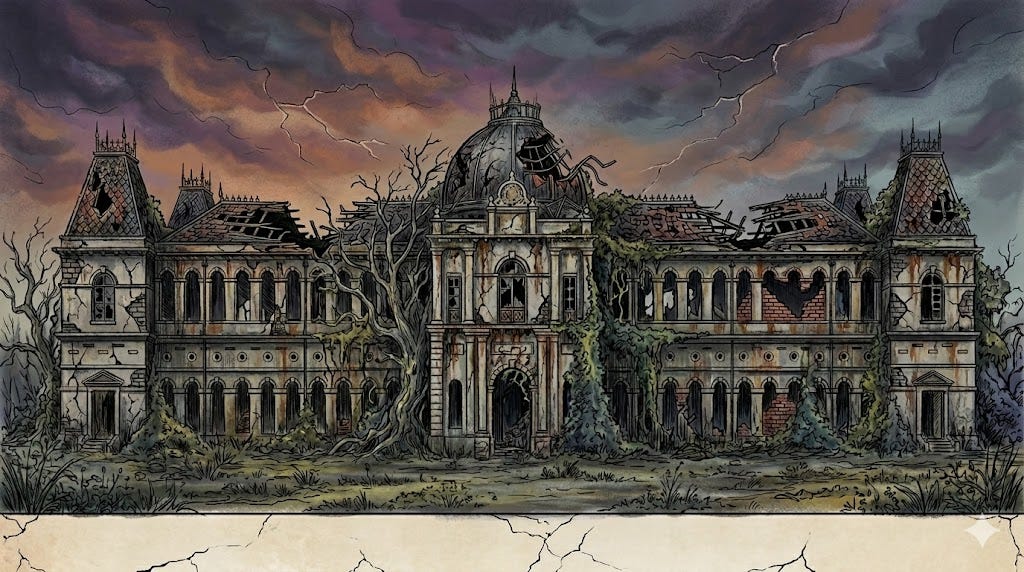
Four decades after the Common Room’s heyday, B.G.L. Swamy returned to the same spaces and noted a proliferation of cliques that he analyzed with satirical precision in the essay Kaltugaḷu Paṭṭugaḷu (Cults and Tactics). The reading elicits dismay that, over time, risks becoming numbnessan effect akin to an aphorism associated with M.N. Roy about the normalization of bad news. Swamy’s idiom“cult deities,” “cult scholars,” and “cult worship”is mordant, but his lens is analytical: he is mapping patronage networks, boundary-marking, and performative conflict.
The following passage preserves Swamy’s own words on the scale and cadence of factional display:
Manasagangotri is expansive… I was astonished at the number of cults that have sprung up there; what’s more, I was bewildered. I could not even grasp the difference between two cults… Building one cult and forcibly keeping it alive, whether with life or without life these are the acrobatics on display here. It seems the cult deities are never satisfied. At least four or five times a year, one must step into the arena, wrestle, and raise dust. Those particles must enter some people’s eyes and irritate them. This is a primary rule of the cult.
Swamy’s account carefully suggests that these networks did not end at the campus gate; some participants in this milieu later assumed significant public roles. The point is not to personalize but to recognize how student-faculty patronage, if left unchecked, can shape institutional cultures and, by extension, public life.
From B/Non-B binaries to ideological splintering
S.L. Bhyrappa’s Bhitti documents an earlier, simpler alignment“B and Non-B” (Brahmin and Non-Brahmin)during his student years. By the time of Mysore Diary, that binary had fractured into finer caste and subcaste blocs layered with ideological affiliations: socialists, rationalists, progressives, communists, Marxists, Lohiaites, and more. In Kannada literary circles, the modernist movement labeled Navya often furnished rhetorical cover or cultural prestige for these alignments, even when the underlying drivers included resource competition, status signaling, and institutional patronage.
Rāga–Dveṣa and the “prophetic mentality”
At a philosophical register, this fragmentation can be read through the classic dharmic lens of rāga (attachment) and dveṣa (aversion). When ignited by prestige anxiety, grievance, or ressentiment, these impulses tend to produce a doctrinal assertiveness that Dr. Koenraad Elst has termed the “Psychology of Prophetism.” In organizational behavior, such prophetism often appears as moralized in-group certainty, charismatic vanguardism, and a strategic readiness to polarize for tactical advantage. The combination erodes sabhyatācivilityand weakens the slow work of scholarly inquiry.
Gopalakrishna Adiga’s Kaṭṭuvevu Nāvu (“We Shall Build”) exemplifies a mobilizing idiom that prioritizes rupture over continuity. While Adiga’s craft is evident and his contribution to Kannada literature is undeniable, the rhetorical modelas with Telugu poet Sri Sri’s war songstends toward radical simplification: a call to build a “new age” by antagonizing an “old age.” Bhyrappa’s Bhitti traces how such prophetism generated rapid schisms within Navya, a cycle he witnessed and endured firsthand.
Splinters and afterlives: Bandaya, Dalit assertion, and the politics of style
Among the many embers from the Navya moment, the Bandaya (Rebel) stream and Dalit assertion emerged as major currents, each using literature and poetry as instruments of political voice. Adiga’s refined style and vocabulary sometimes carried socially disruptive propositions in persuasive language. The Bandaya aesthetic, by contrast, often embraced frontal candor: anger presented as art, with few euphemisms and little ornament.
Swamy preserves examples of wall inscriptions seen at Manasagangotri, which show how slogans sought to frame history as a battlefield of ages and identities:
“We shall build the new age
We shall pound the old age”
“Burn, burn, burn
Caste, caste, caste!
Leave, leave, leave
Your gotra, your sūtra!”
As political rhetoric, these lines are legible; as a pedagogy for plural societies, they struggle. A dharmic university ethos privileges reform without humiliation, memory without vengeance, and critique without dehumanization.
Escalation into confrontation: patronage, pedagogy, and the street
Bhyrappa’s recollection suggests that earlier anti-Brahmin agitation during his student days seldom turned violent. By Swamy’s time, conflicts among non-Brahmin groupings had grown more combustible, a shift linked to the consolidation of ideological patronage and the diffusion of confrontational templates into student politics. At the national level from the mid-1960s onward, left-of-center currents gained strength across campuses; the establishment and rapid rise of Jawaharlal Nehru University as a hub for critical social theory marked one influential node within a broader, complex academic landscape. In Karnataka, contemporaneous caste-centered politics under figures such as Devraja Urs interacted with these currents, creating new alignments and incentives.
Swamy observed how seminar rooms and salons sometimes bled into street action, with a minority of faculty allegedly incentivizing disruption. The following passage, preserved as written, is analytically significant because it describes a repertoire of contentionagenda-setting, grievance articulation, message seeding, and escalationfamiliar to students of social-movement theory:
“Some members of the teaching staff conduct their own private durbars. They call their favourite disciples home or to a hotel, comfort them with drinks and snacks, and then taunt them: ‘What is this? Everything in the campus has remained peaceful this year! Will you let it remain like this for the whole year?’ Then they hold consultations with mantras and tantras about the actions that need to be taken next… A list of grievances is then prepared… Discussions about it fill the atmosphere of Manasagangotri… In modern, popular and ‘pure’ Kannada, messages are written on building walls and tar roads for public awareness… The movement [begins]… This is a very dangerous period.”
Repeated agitations, class suspensions, and performative unrest eventually earned Maharaja’s College the sardonic moniker Maha-holiday. Beyond immediate disruption, the deeper cost was the corrosion of trust that holds a university togetherbetween peers, across disciplines, and along the teacher–student axis.
Analytical lenses: how and why factionalism scales
Several research-backed mechanisms help explain these patterns without resorting to caricature. Social identity theory clarifies how in-group signaling escalates under status competition. Resource-mobilization theory shows how networks convert grievance into action through patronage, logistics, and narrative frames. Moral-panic dynamics highlight how sensational cues spread rapidly in closed epistemic circuits. Over time, these processes normalize brinkmanship, deskill deliberation, and make restraint feel like defeatall inimical to the dharmic preference for balance (samatā), truth-seeking (satya), and nonviolence (ahiṃsā).
A dharmic blueprint for campus renewal: unity in diversity
Across Hindu, Buddhist, Jain, and Sikh thought-worlds, unity is not enforced sameness but concord amid principled difference. Applied to contemporary academia, this translates into institutional design and daily practice:
Reinstate shared intellectual spacesCommon Room–style fora for cross-disciplinary, cross-identity dialogueso that peers again become moral safeguards.
Codify civility: protect robust dissent while proscribing intimidation, disruption of teaching, and ad hominem mobilization; pair rights with explicit academic duties.
Teach debate as a discipline: embed śāstrārtha-inspired methods of evidence, inference, rejoinder, and steelmanning across curricula in the humanities and social sciences.
Diversify canons: read S.L. Bhyrappa, A.N. Murthy Rao, and B.G.L. Swamy alongside thinkers from Buddhist, Jain, and Sikh traditions to honor India’s full civilizational spectrum.
Incentivize mentorship over mobilization: align promotions and rewards with teaching excellence, research rigor, conflict resolution, and community-building, not public theatrics.
Monitor institutional health: publish transparent data on class days held, seminars completed, disciplinary cases, and student learning outcomes to counter the “Maha-holiday” effect.
Continuity with conscience
Murthy Rao’s “divine medicine” metaphor names a durable cure: the presence of elders, peers, and teachers who make ignoble paths unthinkable. Swamy’s field-notes map the symptoms when that medicine is withdrawn: cults of grievance, patronage masquerading as pedagogy, and movements that exchange learning for spectacle. A dharmic university recommits to conscience and continuity: reform without rancor, critique without cruelty, and truth-seeking with humility. In that renewal, the Common Room becomes a living institution againone where the lives and stories of all shape, steady, and uplift one another.
Inspired by this post on Dharma Dispatch.