Raksha Kali, venerated across Shakta Tantra as the Divine Protector, is honored in many lineages as one of the ekadasha (eleven) manifestations of Goddess Kali. The Sanskrit term “raksha” signifies protection and guardianship, succinctly expressing this form’s central function: the safeguarding of devotees and the upholding of cosmic order (rita) and dharma. Closely aligned with Dakshina Kali, Raksha Kali intensifies the protective dimension of grace, making the liberative power of Kali immediately available as compassionate shelter in times of uncertainty, loss, and fear.
The protective emphasis harmonizes with a wider Shakta understanding of Kali as both dissolver of limitations and restorer of balance. As a specialized form of Dakshina Kali, Raksha Kali channels the south-facing, boon-bestowing current of compassion into vigilant guardianship, extending care to individuals and communities while affirming a just moral universe. This synthesisfearlessness joined to maternal solicitudeexplains why Raksha Kali is invoked in households, pilgrimage centers, and during community rites seeking well-being and resilience.
Philologically, “raksha” carries a wide semantic range in Sanskrit usage: protection, refuge, amulet, and safeguarding vow. The term resonates with pan-Indic practices such as raksha-sutra (a consecrated thread for protection), underscoring how verbal and ritual cultures integrate the concept of safeguarding into daily life. Read alongside Shakta metaphysics, Raksha Kali becomes the personal embodiment of this protective vow, transforming abstract assurance into a living experience of sanctuary.
Within the doctrinal topography of Shakta Tantra, protection (raksha) is not merely defensive; it is a dynamic affirmation of dharma. Raksha Kali is thereby invoked against existential insecurity (bhaya), sudden calamity (apamrityu), and subtle inner disturbances (klesha). The protective energy stands inseparable from wisdom (jnana) and compassion (karuna), enabling devotees to navigate periods of vulnerability without succumbing to despair.
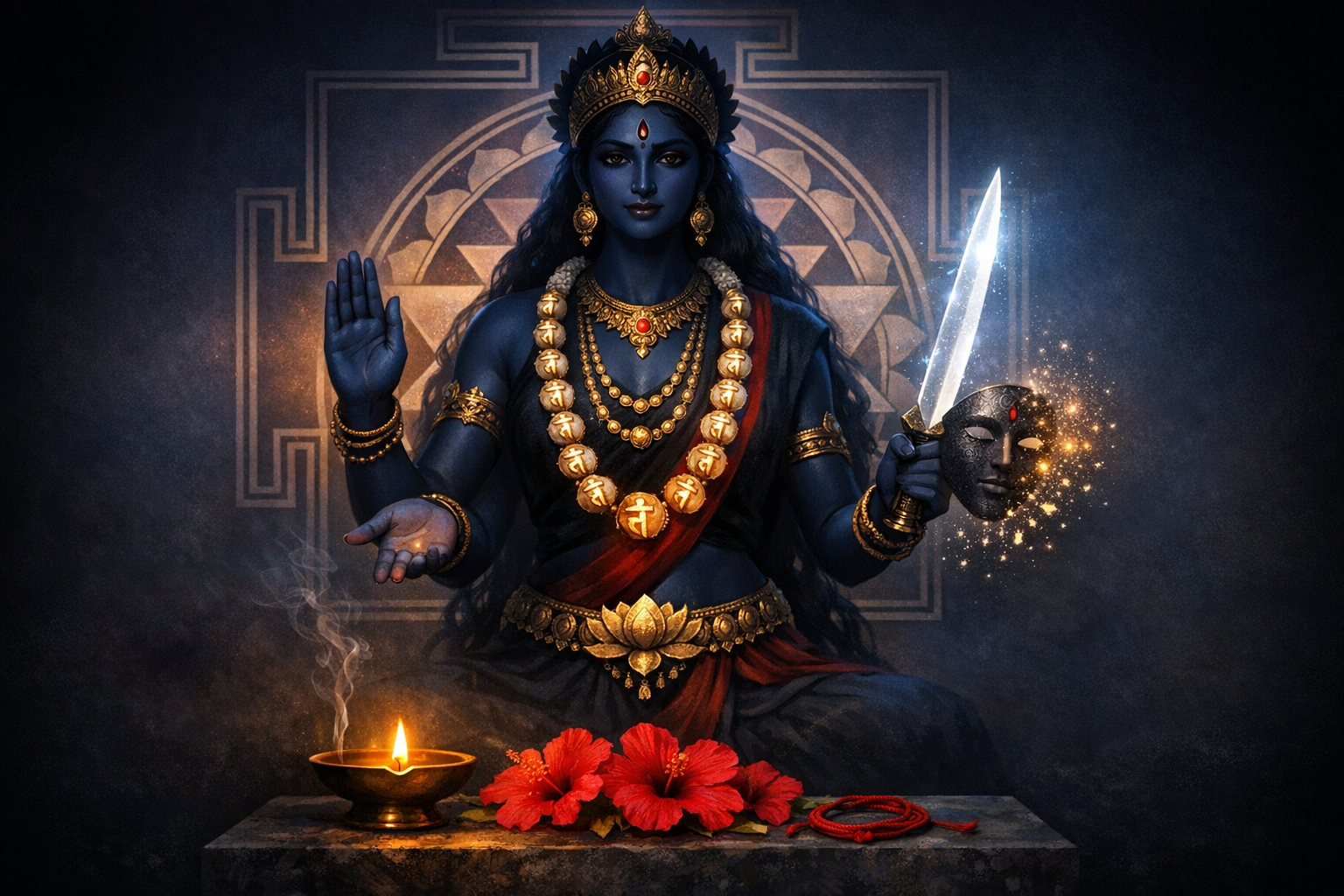
Iconographically, Raksha Kali shares the recognizable features of Kali while heightening signals of protection. The body is often depicted as dark (shyama/krishna), signifying the boundless matrix of time (kala) and the womb of all possibilities. The visage may show the lolling tongue that drinks away the poison of ego and fear. A mundamala (garland of severed heads) and a girdle of severed arms can appear, which Shakta exegetes frequently interpret as symbols of transcended speech-forms and karmic doership rather than literal violence. The right hands commonly display abhaya (fear-not) and varada (boon-granting) mudras, while the left hands may hold a khadga (sword of discernment) and a severed head (the cut root of ignorance). Raksha Kali’s postures and implements point, above all, to courage, clarity, and refuge.
As a close counterpart of Dakshina Kali, Raksha Kali reflects the southward current of benevolence. In many temples and home-altars, the icon can emphasize a sheltering affect: the gesture of abhaya dominates the visual field, while the gaze is read as watchful rather than ferocious. This does not diminish Kali’s transformative power; instead, it focuses that force as guardianshipfirm, compassionate, and immediately present.
Color symbolism reinforces this reading. Black and deep blue absorb and neutralize negativity, while red accentskumkuma, sindura, or hibiscus offeringscommunicate active shakti. Cremation-ground (smashana) imagery, when present, signals Kali’s sovereignty over liminality: where endings occur, protection and rebirth begin. In devotional hermeneutics, this becomes a psychology of resiliencecourage under duress, steadiness amidst change, and a renewed sense of sacred belonging.
Numerous Shakta commentators associate Kali’s garland with the Sanskrit phonemes, suggesting that the Goddess wears language itself. In this view, protection includes the righting of speech and thought: slander, confusion, and inner self-talk are purified into clarity, truthfulness, and strength. The sword (khadga) is then discrimination (viveka), and the severed head is the ego’s obstinacy relinquished to grace.
In mantric practice, Kali’s beej “Krim/Kreem” is widely revered as a seed-syllable of transformative protection. Devotees across lineages often employ concise invocations such as “Om Krim Kalikayai Namah,” recognizing them as general Kali mantras rather than lineage-specific formulas. Advanced kavacha and nyasa traditions exist in Shakta Tantras, but these are best approached with guidance due to their ritual precision and initiatory context.
Household worship of Raksha Kali can be structured through Panchopachara (fivefold) or Shodashopachara (sixteenfold) upacharas. In a simple Panchopachara, one may offer: ganda (fragrant paste), pushpa (flowersespecially red hibiscus), dhupa (incenseguggul or sandal), deepa (a mustard-oil or ghee lamp), and naivedya (foodsesame sweets, fruit, or cooked offerings per one’s tradition). This basic framework allows the protective dimension of Kali to be honored with dignity and accessibility.
Shodashopachara deepens the sequence to include water offerings, arghya, achamana, vastra (cloth), and other refinements. Many practitioners begin with bhuta-shuddhi (elemental purification), prana-pratishtha (ensouling the image), and nyasa (placing mantras on the body), followed by mantra-japa and dhyana. Even when pared down for daily life, the underlying intention remains the same: to invoke protection that is both ethical (aligned with dharma) and efficacious (steadying the heart-mind).
Yantric worship may accompany mantric practice. Kali-yantras often center on interlocked triangles within a protective bhupura; in some households, a consecrated yantra is installed and periodically anointed with til oil, kumkuma, and chandan. A raksha-sutraconsecrated threadmay be tied on the wrist after puja to ritualize a continued remembrance of protection throughout daily tasks.
Protective worship is traditionally intensified during Amavasya (new-moon nights), with particular solemnity on the night of Kali Puja that coincides with Deepavali in Bengal and eastern India. Community Kali Pujas frequently include collective sankalpas (vows) for the protection of households, neighborhoods, and the broader society, threading personal devotion into social care.
Historically, Raksha Kali has been invoked during periods of epidemic, crop failure, or social turbulence. In such contexts, puja functions as spiritual first response: to keep fear from overwhelming judgment, to strengthen mutual aid, and to remind communities that courage and compassion are renewable resources. This protective lens never stands apart from practical action; rather, it animates responsible conduct.
While specific “Raksha Kali” shrines are often local and lineage-based, major centers of Kali worship such as Dakshineswar and Kalighat in Kolkata demonstrate how devotees experience protection through the broader grace of Kali. Pilgrims and householders alike attest that the Mother’s shelter is felt not only before an image but also in the rhythms of ethical living, service (seva), and remembrance (smarana).
Related formsincluding Bhadrakali and Chamundahighlight different inflections of the same Shakti. Bhadrakali emphasizes auspicious benevolence, Chamunda engages the fierce removal of entrenched negativity, and Raksha Kali focuses the vigilant sheltering of life and dharma. These are not competing theologies; they are complementary facets of a single, compassionate intelligence.
Ethically, Raksha does not license aggression; it integrates courage with responsibility. Shakta dharma holds that protection must be yoked to non-cruelty and proportionate response, cultivating inner steadiness first and foremost. The result is a kshatra (protective strength) tempered by karuna (compassion), well-suited to family life, professional obligations, and civic duties.
Resonances with other Dharmic traditions reveal a shared commitment to safeguarding the good. In Vajrayana Buddhism, Mahakala functions as a dharmapala (protector of dharma), embodying fierce compassion. In Jain traditions, yakshis such as Ambika and Padmavati are venerated as protective attendants, guiding devotees with gentle firmness. In Sikh praxis, the valorous invocation of Shakti in compositions such as Chandi di Var kindles the energy to protect the weak and uphold justice. While iconography and metaphysics vary, the protective archetype unites these traditions in a common ethic of courage allied to compassion.
Psychologically, Raksha Kali serves as an archetype of containment: a maternal holding that makes space for grief, integrates fear, and restores agency. Devotees often report that steady remembrance of the Goddess diminishes intrusive worry, improves clarity in hard decisions, and fosters ethical self-confidenceeffects consistent with contemporary understandings of how secure attachment and contemplative practice support resilience.
A brief daily liturgy may be shaped as follows: settle the breath, silently set an intention for the protection and well-being of all beings, light a lamp, offer a single red flower, and chant “Om Krim Kalikayai Namah” 8–27 times. Conclude by resting attention in the heart, allowing feelings of steadiness and care to pervade the body. Even in its simplicity, such practice can anchor a day with purpose and calm.
It is prudent to approach advanced Tantric ritescomplex nyasas, homas, and specific kavachasunder qualified guidance. Shakta Tantras widely honor Kali’s guardianship while emphasizing that mantra and ritual precision matter; initiatory traditions therefore transmit safeguards that ensure practice remains wholesome, effective, and anchored in compassion.
Shakta Puranas and Tantric compendiasuch as the Kalika Purana and classical Tantras studied in Shakta lineagespraise Kali’s raksha as inseparable from liberative grace. Devotional literature in Bengali, Odia, and other languages echoes this ethos, with songs that implore “raksha karo, Ma” and reaffirm that fearlessness becomes practical wisdom when motherly care is inwardly known.
In contemporary life, Raksha Kali speaks to a near-universal need: to feel protected without hardening the heart. By joining discernment and tenderness, vigilance and humility, this form of the Hindu Goddess offers a workable spirituality for households, professionals, and seekers who aim to protect what is good while remaining open, ethical, and kind.
In sum, Raksha Kali can be understood as Dakshina Kali’s protective wavesimultaneously fierce and nurturing, transcendent and close. Her iconography teaches fearlessness; her mantras cultivate clarity; her rituals weave personal resilience into communal care. In honoring Raksha Kali, devotees affirm that true protection is never merely private security; it is the shared flourishing of life in alignment with dharma.
Inspired by this post on Hindu Blog.