More than seven decades after independence, India continues to grapple with colonial-era legacies that shape institutional design, public discourse, and the vocabulary of social conflict. Within this evolving context, the Supreme Court of India recently declined to entertain a plea seeking formal recognition of “Brahmophobia” as a punishable form of caste-based hate speech. A bench of Justice B.V. Nagarathna and Justice Ujjal Bhuyan permitted the petitioner to withdraw the matter and reiterated a constitutional ethic that is often invoked yet under-realized: fraternity. The brief order (Diary No. 69172 / 2025), publicly reported by @LiveLawIndia, reflects a recurring judicial stance that new speech offences, if any, lie in the province of the legislature, while the judiciary applies existing law to concrete facts.
The debate that surrounded the petition is symptomatic of a wider anxiety: how to differentiate between legitimate critique of entrenched hierarchies and dehumanizing speech that targets a community for scorn or violence. In recent years, terms such as “Brahminphobia” or “Brahmophobia” have entered the lexicon of media and activism to describe hostility against Brahmins as a group. Proponents argue that such hostility is frequently a proxy for broader Hinduphobia, where Hindu traditions are portrayed as a monolith, and intellectual or ritual lineages are mischaracterized as instruments of oppression. Critics respond that expanding the taxonomy of protected groups through ad hoc labels can fracture equal protection and complicate enforcement. The challenge is not merely semantic; it bears on how India nurtures dharmic unity across Hinduism, Buddhism, Jainism, and Sikhism while robustly deterring hate speech against any community.
The Court’s disposition was procedurally straightforward. The petitioner, Mahalingam Balaji, sought directions to the Union and State governments to recognize “Brahmophobia” as a punishable form of caste-based discrimination, to act promptly against such speech in mainstream and social media, and to investigate alleged coordinated domestic or foreign campaigns to incite caste conflict or promote hatred or genocide against Brahmins. During the hearing, Justice Nagarathna emphasized that hate speech against any community is unacceptable and that social harmony ultimately depends on education, intellectual development, tolerance, patience, and the practice of fraternity. On being permitted to withdraw, the petition was dismissed as withdrawn, with liberty to approach appropriate forums.
A legal reading of this outcome aligns with the Court’s broader jurisprudence. Under Article 19(1)(a) of the Constitution, free speech is subject to reasonable restrictions under Article 19(2), including public order, decency, and morality. The Indian Penal Code already provides provisions that can address hateful or incendiary expressionsuch as Sections 153A (promoting enmity), 295A (outraging religious feelings), and 505(2) (statements conducing to public mischief)without carving new, community-specific offences. The Supreme Court has also signaled, in cases such as Pravasi Bhalai Sangathan v. Union of India (2014) and Amish Devgan v. Union of India (2020), that the line between robust critique and criminalized hate turns on intent, context, and the likelihood of incitement. Creating a novel, single-community speech category is ultimately a legislative policy choice; judicially endorsing it risks uneven protection when general laws already exist to protect all groups.
The petition’s other requests raise important, sensitive questions of transitional justice and civic education. It urged the Union Government to constitute a high-level truth and justice commission to investigate and acknowledge the “1948 Maharashtra Brahmin Genocide” and the 1990 Kashmiri Pandit genocide, to recommend rehabilitative and educational support for survivors and descendants, to include chapters on the Maharashtra Brahmin Genocide, the 1984 Sikh Genocide, and the 1990 Kashmir Pandit Genocide in NCERT and State textbooks, to establish publicly funded memorial museums, and to declare January 19 as “Genocide Victims Solidarity Day.” It further sought disqualification of public servants indulging in caste-based hate speech against Brahmins, the adoption of anti-hate codes of conduct by NGOs, removal of misleading assertions portraying Brahmins negatively in textbooks, and publication of a white paper on hate and discrimination issues faced by Brahmins.
As policy proposals, these demands intersect with several legal constraints and comparative lessons. First, in India, disqualification of public office typically follows conviction under the Representation of the People Act, not mere allegation; strengthening the Model Code of Conduct and ensuring swift prosecution under existing hate speech provisions may be more congruent with current law. Second, curricular changes should be evidence-based, peer-reviewed, and balanced, ensuring that no communityBrahmin or otherwiseis portrayed in essentialist or derogatory terms. Third, truth commissions and memorialization initiatives, if undertaken, must employ transparent archival methods, survivor testimonies, and multi-disciplinary scholarship to earn legitimacy across communities. The suffering of 1984 Sikh families, the displacement endured by Kashmiri Pandits in 1990, and reported anti-Brahmin violence in parts of Maharashtra in 1948 are all part of India’s painful historical tapestry; acknowledging these tragedies responsibly can deepen empathy rather than entrench grievance.
The public conversation around “Brahmophobia” also touches the global arena. In North America and Europe, anti-discrimination initiatives that reference caste are growing, sometimes amid accusations that such policies pathologize Hindu identity or single out Indian-origin professionals. Constructive diaspora engagement can reduce polarization: policies can and should prohibit caste-based harassment without stereotyping any religion or nationality; workplace training should be culturally literate and rights-based; and redress mechanisms should be neutral, evidence-driven, and mindful of due process. These guardrails protect vulnerable individuals while resisting the stigmatization of dharmic communities.
Equally salient is the allegationvoiced in activism and mediaof foreign interference or coordinated online campaigns against Hindus in general and Brahmins in particular. Such claims warrant rigorous inquiry. Robust verification requires multilingual monitoring, digital forensics on networked amplification, and independent replication by academic teams. Documenting incidents systematically, disaggregating lawful critique from unlawful hate, and releasing anonymized datasets can transform a rhetorical dispute into a research-driven policy response. When evidence is methodically assembled, remedies through police complaints, regulatory complaints, or civil litigation become more effective and less vulnerable to dismissal.
Another strand in the debate concerns how Hindu practices are framed globally. Some yoga teachers have reported being discouraged from integrating explicitly Hindu spiritual elements into classes, on the assertion that “Hinduism is a Brahmin construct.” Such claims erase the documented diversity of Hindu traditions and the broader dharmic constellation, which includes contributions from householders, renunciants, bhakti and tantra lineages, as well as Jain, Buddhist, and Sikh thought-worlds that have co-evolved on the subcontinent. Accurate pedagogy recognizes plurality rather than projecting a single social group as the essence or the enemy of an entire civilization.
Fraternity, as the Court stressed, is not a rhetorical flourish but a constitutional discipline. It calls for responsibility in speech, humility in scholarship, and compassion in civic life. It also requires differentiating critique of ideas and institutions from attacks on people. India’s hate speech laws, properly enforced, are designed to protect every communityincluding Brahminswithout proliferating bespoke categories that may unintentionally harden boundaries. Civil society can advance these aims through counterspeech, media literacy, inter-community dialogues, and cross-dharmic service projects that bring Hindus, Buddhists, Jains, and Sikhs into practical cooperation.
Importantly, strategic choices matter. Calls for large-scale street mobilization risk overshadowing quieter but often more effective avenues: meticulous legal drafting, well-evidenced complaints, independent monitoring of enforcement, and transparent engagement with regulators and platforms. Courts do not, and should not, pivot based on the size of protests; they pivot on the strength of law and fact. When communities document harm with precision and insist on equal application of existing statutes, reversals of injustice become more likely and less fragile.
Education is a long lever for change. NCERT and State boards can strengthen critical thinking by foregrounding primary sources, diverse regional experiences, and survivor narratives from episodes such as 1984, 1990, and 1948, while also interrogating colonial constructions of caste that still pervade public discourse. Content should avoid vilifying any community and instead illuminate how social practices vary across region, time, and textual traditions. Museums and memorials, if pursued, can be curated as spaces of healingplacing individual dignity at the centerrather than as theatres of competitive victimhood.
Technology and information ecosystems must be part of the solution. Concerns about AI biasechoed in headlines such as “ChaatGPT is Upper-Caste Brahminical Propaganda Claims A Colonial Database Brain”point to the need for culturally representative training corpora, transparent evaluation benchmarks for sensitive attributes, and community oversight in content moderation. Without these correctives, algorithms may misclassify or invisibilize dharmic knowledge systems, inadvertently fueling the very stereotypes society seeks to dismantle.
The philosophical core of the issue is not whether one community deserves special protection; it is whether every person, across all dharmic and non-dharmic traditions, is equally protected from hate and equally free to practice, study, and transmit heritage. Fraternity reframes “unity” away from erasing difference and toward honoring it responsibly. Texts, temples, gurdwaras, viharas, and derasars become shared civilizational assets when speech is firm but not demeaning, and when historical memory is curated to educate, not to incite.
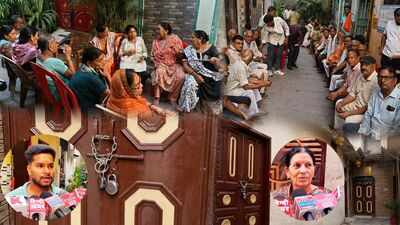
For families who lived through the 1990 Kashmiri Pandit exodus, for Sikh households that still carry 1984 in living memory, and for Maharashtrian families with stories from 1948, acknowledgment is not an abstractionit is a pathway to dignity. For students encountering Hinduism only through reductive frames, balanced curricula can open intellectual doors rather than close them. For practitioners facing derision online, predictable enforcement of general hate speech laws offers recourse without requiring new labels. Taken together, these steps can reduce harm while advancing unity among Hindus, Buddhists, Jains, and Sikhs.
The Supreme Court’s refusal to entertain the “Brahmophobia” petition neither denies the reality of targeted hostility nor forecloses remedy; it signals where remedy must be pursued and how: through evidence, existing legal architecture, and a societal commitment to fraternity. If India can align law enforcement, education, technology governance, and cross-dharmic solidarity around these principles, the country can protect every community from hate while affirming a pluralistic civilizational ethos.
Inspired by this post on Hindu Human Rights Blog.