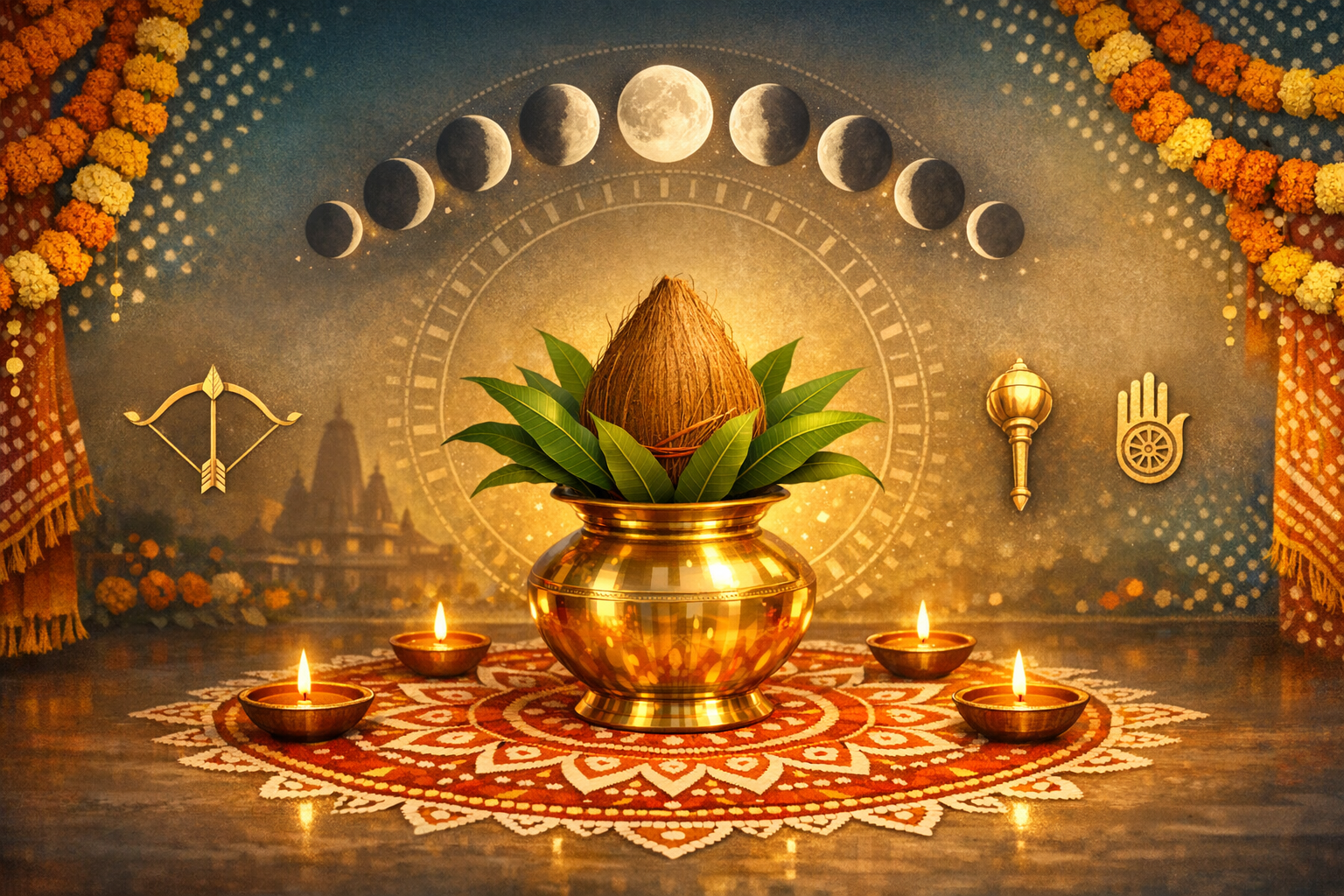
Chaitra maas (Chaitra month) in the Gujarati Panchang is the sixth month of the Gujarati lunisolar year and, in 2026, spans Thursday, 19 March to Friday, 17 April (Gregorian). This interval overlaps largely with regional Amanta calendars used in Maharashtra, Karnataka, and Andhra–Telangana (Telugu Panchangam), ensuring broadly similar festival windows across western and southern India even as local names and new-year conventions differ.
Gujarati time-reckoning is lunisolar: lunar days (tithi), fortnights (paksha), and months are synchronized periodically with the solar year. Gujarat follows the Amanta schememonths begin the day after Amavasya (New Moon) and end on the subsequent Amavasyawhile setting the civil New Year at Kartak Shukla Pratipada, the day after Deepavali. This is why Chaitra, though the first month in many Indian calendars, is the sixth month in Gujarat, preceded by Kartak, Magshar, Posh, Maha, and Phagun, and followed by Vaishakh, Jeth, Ashadh, Shravan, Bhadarva, and Aso.
In year numbering, the period March–April 2026 in Gujarat falls in Vikram Samvat (VS) 2082, because the Gujarati New Year began after Deepavali 2025. In contrast, regions that commence the Vikram Samvat year with Chaitra Shukla Pratipada mark the start of VS 2083 in late March 2026. Recognizing this dual convention helps readers reconcile almanacs and festival notices across states and the diaspora.
For observances, Chaitra maas 2026 in the Gujarati Panchang runs from the Amavasya on 19 March to the next Amavasya on 17 April. Within this span, Chaitra Shukla Paksha typically begins the day after Amavasya, placing Chaitra Shukla Pratipada on or around 20 March in most Indian time zones. This day anchors Chaitra Navratri and, in Amanta traditions beyond Gujarat, the regional New Year known as Gudi Padwa (Maharashtra) and Ugadi (Karnataka, Andhra Pradesh, Telangana). While Gujarat celebrates the civil New Year after Deepavali, families still honor the auspicious energy of Chaitra with vratas, temple visits, and seasonal rites.
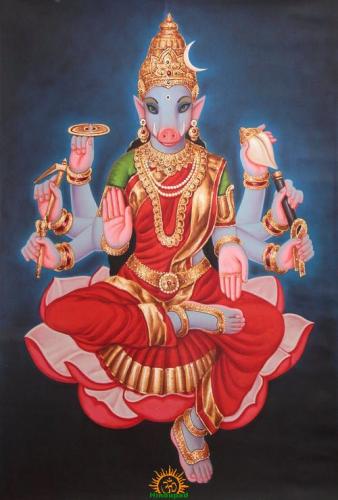
Chaitra Navratri, beginning on or about 20 March 2026, unfolds over nine nights venerating Devi in her benevolent and protective forms. The sequence culminates on Shukla Ashtami and Navami with Durga Ashtami and Ram Navami, respectively. With Pratipada likely on 20 March, Ram Navami correspondingly aligns around Saturday, 28 March 2026, subject to tithi observance by local sunrise. The devotional mood is marked by Rama-katha recitations, Sri Rama Taraka mantra japa, and community annadanam across Gujarat’s temples.
Jain communities observe Mahavir Jayanti in Chaitra on Shukla Trayodashi, commemorating the birth of Bhagavan Mahavira. In 2026, this falls approximately on Wednesday, 1 April in many Indian locations (contingent on local tithi start–end). Processions (rath yatra), prabhavana, and seva initiatives highlight ahiṁsa, satya, and compassionvirtues cherished across Dharmic paths and readily embraced by Hindu neighbors, reinforcing the shared ethical core of the region’s living traditions.
In several North Indian traditions, Hanuman Jayanti is observed on Chaitra Shukla Purnima. For 2026, this points to an early April date (around 5 April, if Shukla Pratipada holds near 20 March), again subject to precise tithi timing. Even where Hanuman Jayanti is kept in other months regionally, the Chaitra full moon remains spiritually resonant for vrata, darshan, and recitation of Hanuman Chalisa and Sundara Kanda.
Because Gujarati months follow the Amavasya-to-Amavasya arc, Chaitra Krishna Paksha completes the month, concluding on 17 April 2026 at the next Amavasya. Devotees often reserve this waning phase for introspective sadhanaquiet japa, simple satvik ahara, and evening dipa offeringsbefore stepping into the rejuvenating currents of Vaishakh.
Practically, five Panchang elements steer day-to-day decisions in Chaitra maas: Tithi (lunar day), Vaar (weekday), Nakshatra (lunar mansion), Yoga, and Karana. Auspicious windows (muhurta) for home puja, sankalpa, or community initiatives favor alignment among these, adjusted to local sunrise and geographic coordinates. Since tithis can bridge civil midnights differently across time zones, those outside India should verify observances with a locally computed Panchang to avoid a one-day shift.
Culturally, Chaitra’s arrival coincides with seasonal renewal across western India. Even as Gujarat reserves ledger-opening rituals (Chopda Pujan) for Deepavali, the spirit of new beginnings in Chaitra is widely palpableseen in households preparing fresh prasada, communities organizing Devi alankara and bhajan evenings, and children encountering epic narratives of Sri Rama and Devi during temple gatherings. Across the Deccan, families exchange the signature bitter–sweet combinations of Ugadi/Bevu-Bella/Pacchadi, a poetic reminder to accept life’s full spectrum with steadiness and grace, a sentiment equally appreciated in Gujarati homes during this month.
Chaitra maas 2026 also models Dharmic unity in action. Hindus observing Navratri and Ram Navami, Jains celebrating Mahavir Jayanti, and Dharmic neighbors who join in seva and satsanga embody a shared civilizational ethos: satya, daya, dana, and dharma. While each tradition maintains distinct liturgies and dates, the month’s devotional current encourages mutual respect and learningvalues echoed in Sikh seva practices and Buddhist mindfulness, even when their primary festivals fall outside Chaitra.
Planning for 2026 can be straightforward with the following guardrails. First, anchor the month to 19 March–17 April (Gujarati Panchang). Second, treat Chaitra Shukla Pratipada as beginning near 20 March locally for Navratri, Ugadi, and Gudi Padwa where applicable. Third, anticipate Ram Navami around 28 March, Mahavir Jayanti near 1 April, and the Chaitra full moon in the first week of April, always confirming against a regional Panchang for city-specific muhurta. Finally, approach the Krishna Paksha with contemplative practices that prepare the mind for Vaishakh’s outward-oriented energies.
In sum, Chaitra maas 2026 in the Gujarati Panchang offers a compact, luminous seasonrooted in a precise lunisolar science yet animated by living rituals that bind families and communities. Its festivals and vratas are not merely dates but opportunities to renew ethical commitments, deepen interfaith kinship among Dharmic traditions, and align personal rhythm with the cosmic cadence that India’s Panchang has preserved for millennia.
Inspired by this post on Hindu Pad.