Panguni Uthiram is a cornerstone festival in the Tamil calendar, observed in the month of Panguni (mid-March to mid-April), when the Uthiram (Uttara Phalguni) Nakshatra coincides with the Pournami (Full Moon) tithi. This rare and potent alignment anchors the festival’s spiritual significance, bringing together cosmology, ritual practice, and the celebration of divine marriages (kalyanam) across major South Indian temples and the global Tamil diaspora.
The month of Panguni is regarded as auspicious precisely because the star ‘Uthiram’ frequently falls on Pournami. In traditional Panchang reckoning, this conjunction amplifies sattvic energies and is therefore revered as a day when the blessings of household prosperity, harmony, and dharmic commitment are especially accessible to devotees.
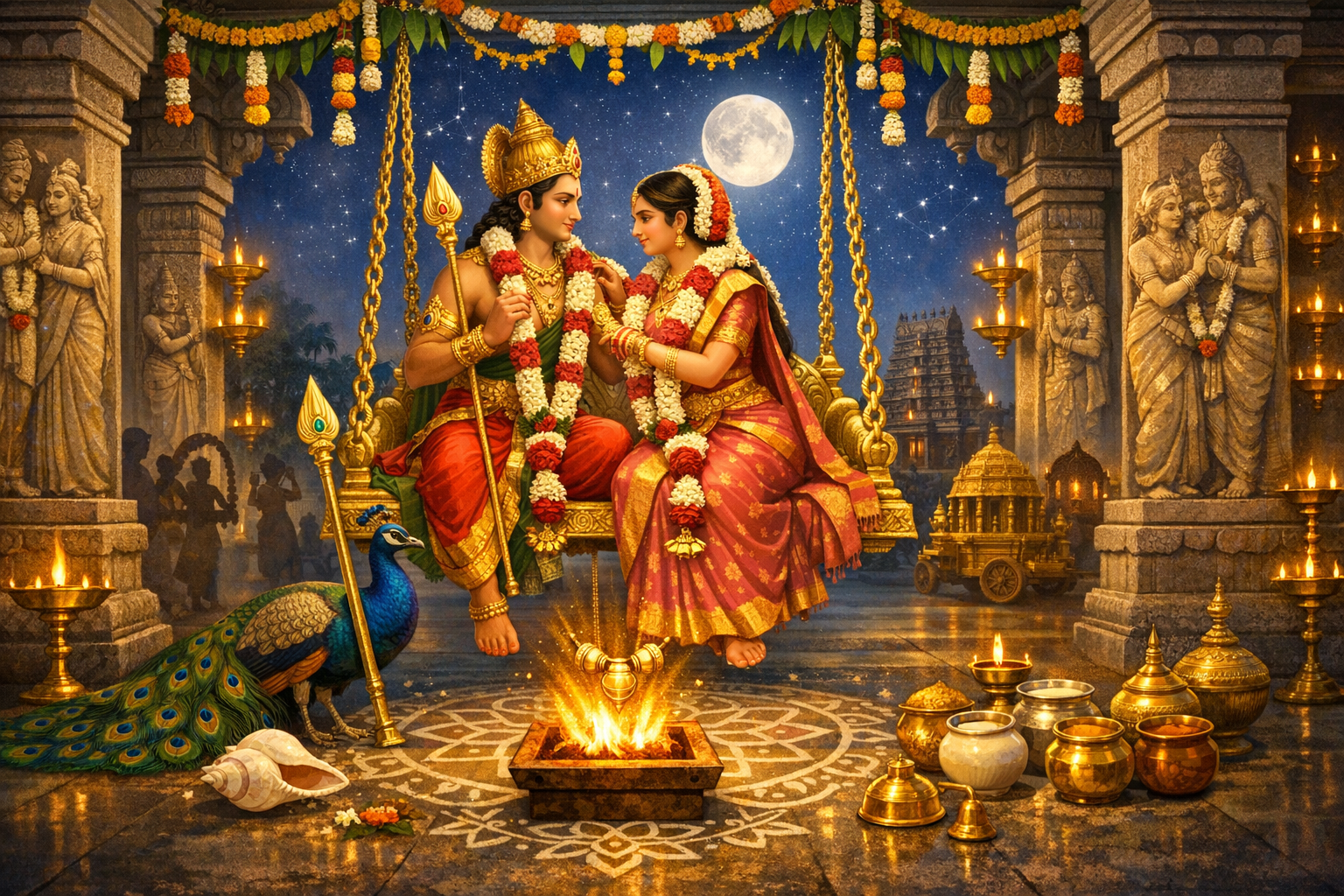
At its heart, Panguni Uthiram commemorates divine unions that exemplify the ideal of dharmic companionship. Shaiva traditions recall the wedding of Shiva and Pārvatī (Girija Kalyanam), while Murugan (Subrahmanya, Skanda) is celebrated for his celestial marriage to Deivayanai (Devasena), particularly at the Tirupparankundram temple near Madurai. Vaishnava traditions in Srirangam mark the culmination of the Panguni Brahmotsavam with the profoundly moving serthi (divine union) of Sri Ranganathar and Ranganayaki Thayar.
These weddings are not merely ceremonial pageantry; they are theological enactments of auspicious unionof wisdom and compassion, strength and grace, Purusha and Prakriti. They also hold a social message: marriage as a vow to uphold dharma, mutual respect, and service, ideals embraced across Hindu communities and resonant with kindred values throughout the wider dharmic family.
Scriptural memory and temple tradition both underwrite Panguni Uthiram. The Skanda Purana and its eminent Tamil retelling, the Kanda Puranam, narrate Murugan’s marriage rites and victories, while Agamic sources detail Kalyanotsavam protocols in both Shaiva and Vaishnava lineages. The festival’s ritual grammarabhishekam, alankaram, homa, kirtan, and processionfollows these canonical rhythms to transmit continuity from one generation to the next.
Astrologically, Uthiram (Uttara Phalguni) is ruled by the Sun (Aditya) and associated with Aryaman, the Vedic deity of contracts, friendship, and social bonds. Its symboloften likened to the back legs of a bedevokes stability in household life. When this star coincides with Pournami, the Moon’s fullness enhances Soma’s nourishing qualities, making the day ideal for samskaras that sanctify commitment and care, including weddings and renewal of family vows.
Calendrical practice varies by temple tradition. In general, Panguni Uthiram is observed when Uthiram overlaps with the Purnima tithi. If exact simultaneity is not achieved locally, temples may prioritize the Nakshatra or the Pournami based on their Agamic injunctions and institutional precedents. Devotees typically consult a regional Panchang for precise muhurta determination.
In Srirangam, the Panguni Brahmotsavam reaches its crescendo on Uthiram with serthi sevai, the radiant union of Sri Ranganathar and Ranganayaki Thayar. The day’s liturgy includes elaborate abhishekam, oonjal (swing) sevai, and Kalyanotsavam, drawing vast congregations who witness, with palpable devotion, the theological drama of compassion uniting with sovereignty.
Murugan temples present equally profound observances. At Tirupparankundram, Murugan’s kalyanam with Deivayanai is the central rite, while Palani, Tiruchendur, Thiruttani, Swamimalai, and Pazhamuthircholai mark the day with abhishekam, special alankarams, golden chariot processions, and vow-fulfillment ceremonies. The Sikkal Singaravelan temple too attracts large gatherings reaffirming the living continuity of Skanda devotion.
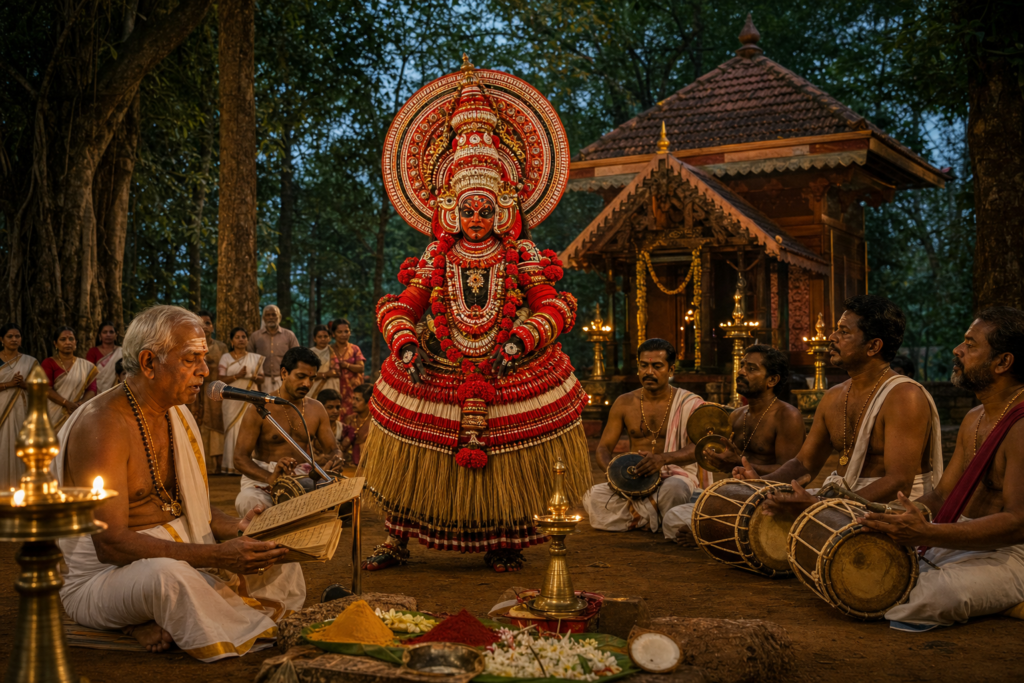
Beyond Tamil Nadu, Panguni Uthiram is vividly observed across Sri Lanka, Malaysia, Singapore, Mauritius, Réunion, and South Africa. Processions, kavadi attam, paal kudam (milk-pot offerings), and community bhajans make the day a high point of Tamil cultural identity, while temple corridors ring with kirtans to Murugan and hymns drawn from the Tiruppugazh tradition.
The kavadi vowexpressed through physical austerity, alagu kuthal (piercings) in some communities, or increasingly through symbolic, non-injurious formsembodies the devotee’s resolve to conquer inner obstacles. In many places, spiritual counselors and temple committees gently guide participants toward practices that honor personal safety, ahimsa, and public health while preserving the vow’s devotional core.
Temple liturgies on Panguni Uthiram typically begin with sacred bathing rites (abhishekam) using milk, curd, honey, turmeric, sandalwood, and fragrant waters, followed by resplendent alankaram. The Kalyanotsavam dramatizes the exchange of garlands, the tying of the mangalyam, and the blessing of devotees seeking marital harmony, family well-being, and spiritual progress.
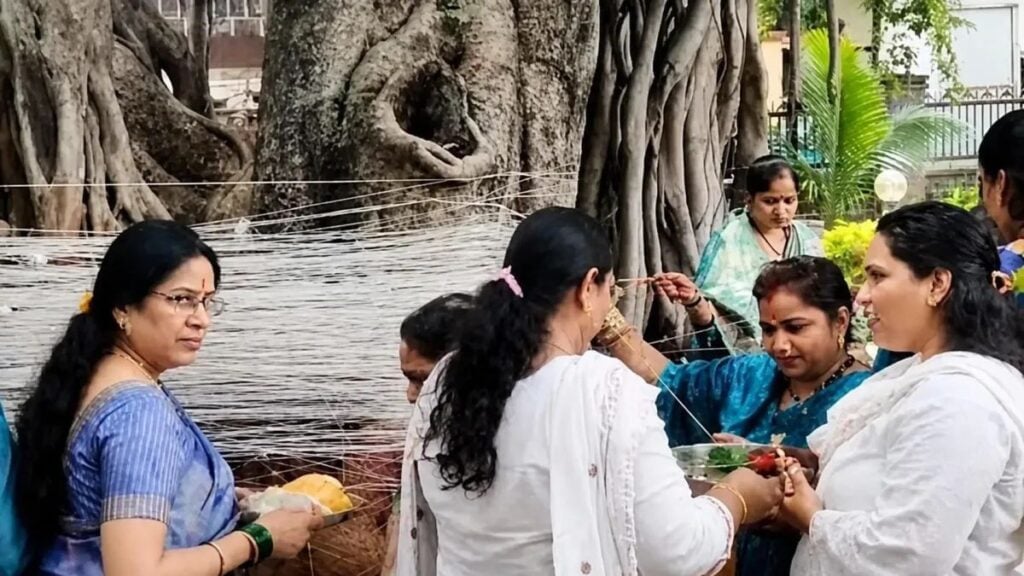
Household observances often include a simple vrata with sattvic meals, recitation of stotras, lighting of lamps at dusk, and distribution of prasadam. Many families invite elders and well-wishers to bless young couples, echoing the day’s message that a stable grihastha (householder) life is a pillar of social and spiritual order.
Panguni Uthiram also catalyzes community solidarity. Mass weddings supported by philanthropy, annadanam (free food distribution), and neighborhood service initiatives transform the festival into a platform for collective uplift. These acts mirror the festival’s theological core: auspicious union is not private alone; it ripples outward as seva and social harmony.
Theologically, the festival can be read as a pedagogy of kalyana shaktithe auspicious force that reconciles energies. In Shaiva idiom, the union of Shiva and Pārvatī is the alignment of consciousness and creative power; in Murugan bhakti, the vel symbolizes jnana-shakti (the piercing clarity that vanquishes ignorance), crowned by the peacock’s restraint and grace.
These motifs resonate with a wider dharmic vocabulary. The harmonizing of complementary principlesvariously expressed as purusha–prakriti, upaya–prajna, or the balance of wisdom and compassionfinds kinship across Hindu, Buddhist, Jain, and Sikh traditions. Panguni Uthiram, therefore, is not only a regional observance but also a cultural lens on unity in spiritual diversity.
From a cultural history perspective, the festival stands between Maasi Magam and the onset of Chithirai, creating a seasonal arc of renewal around the vernal equinox. The riverine temple towns of the Kaveri deltaSrirangam prominent among thembecome theaters of living heritage where hymns, dance, and processions preserve intangible knowledge and communal memory.
For devotees planning observance, a basic Panchang workflow is helpful: confirm the local date on which the Purnima tithi prevails; verify the Uthiram Nakshatra window; and, where needed, check which criterion (tithi or Nakshatra) the local temple prioritizes. When both coincide in daylight hours at the kshetra, participation in Kalyanotsavam or serthi sevai is considered especially meritorious.
Ethical mindfulness elevates the rite. Observing niyamastruthfulness, cleanliness, compassion, and moderationaligns personal conduct with the day’s sanctity. Where offerings are made (flowers, fruits, cooked prasadam), sourcing that respects ecological limits and local livelihoods extends dharma into everyday choices.
For travelers, larger temples such as Srirangam, Tirupparankundram, Palani, and Tiruchendur experience peak footfall on Panguni Uthiram. Early arrival, awareness of queue systems, and adherence to temple dress codes ensure a calm darshan. Those unable to travel often join live streams from temple trusts to participate in sankalpa, kirtan, and collective prayer.
Families frequently use the day to renew wedding vows, seek counsel from elders, and support young couples setting out in life. In this way, Panguni Uthiram bridges the spiritual and the socialits religious core empowering practical virtues like patience, reciprocity, and shared responsibility.
In contemporary diasporic settings, Panguni Uthiram also functions as cultural education. Children learn the meanings of abhishekam, kalyanam, and kavadi; they hear the stories of Murugan’s valor and grace; and they witness how Vaishnava and Shaiva temples celebrate in parallel, reinforcing a spirit of mutual reverence within Hindu pluralism and across the dharmic spectrum.
Ultimately, the significance of Panguni Uthiram is twofold: cosmically, it is the luminous meeting of Uthiram Nakshatra with Pournami; communally, it is the vow to uphold auspicious union in thought, word, and deed. Whether in the grandeur of temple Kalyanotsavams or the quiet sanctity of home worship, the festival invites a recommitment to harmonywithin the self, the family, and society.
As the Full Moon of Panguni rises over the temple towers, the bells, conches, and hymns do more than mark a date. They re-enshrine the perennial truth that unityof virtues, communities, and complementary pathsis the living pulse of dharma, celebrated in different forms yet shared in one spirit.
Inspired by this post on Hindu Pad.