The claim that God wills human suffering as the instrument of spiritual realization stands at odds with the central current of Hindu philosophy. Across the Upanishads, the Bhagavad Gita, and the wider Vedantic tradition, liberation (moksha) emerges not from glorifying pain but from removing ignorance (avidya) through knowledge (jnana), stabilizing the mind through meditation (dhyana), purifying intention through selfless action (karma yoga), and opening the heart through devotion (bhakti). The inner logic of Sanatana Dharma regards suffering (dukkha) as a condition to be understood and transcended, not as a divinely mandated prerequisite for God-realization.
At the core of Hindu philosophy, moksha denotes freedom from samsara, the cycle of birth and death conditioned by karma and ignorance. In Advaita Vedanta, this freedom is the recognition that the Atman is none other than Brahman; in Vishishtadvaita and Dvaita, it is loving union with and service to the Supreme (Ishvara). While these darshanas differ in metaphysical detail, they converge on the view that illumination, devotion, and righteous conductnot the pursuit of painopen the way to spiritual maturity. In all cases, the trajectory is transformative and constructive, oriented toward clarity, compassion, and inner freedom.
Scriptural language further underscores that duhkha is an effect to be skillfully addressed rather than a divine demand. Suffering arises from the play of the gunas, from attachment and aversion, and from erroneous self-identification with the body-mind complex. The Gita frames Ishvara as benevolentsuhrdam sarva-bhutanam, the well-wisher of all beingsthereby rejecting any theodicy that portrays God as desiring pain. Within this moral universe, the law of karma explains experiential outcomes, while dharma and sadhana provide the means to remedy their causes.
The Bhagavad Gita also warns against self-mortification masquerading as spirituality. In a critical passage (17.5–6), practices that inflict harm on the body and violate scriptural guidance (asastra-vihitam ghoram) are censured as tamasic and rooted in delusion. This is not an endorsement of indulgence but a principled boundary: tapas (austerity) is a disciplined refinement of life-force and intention, not the worship of pain. Ahimsa, both toward others and oneself, remains an anchor of dharmic ethics.
Equally, the Upanishadic voice situates the goal of life in the realization of truth, not in the accumulation of wounds. The mahavakya traditiontat tvam asi (Chandogya Upanishad)asserts an identity that becomes evident through inquiry, contemplation, and steadfastness. Taittiriya Upanishad’s movement from annamaya to anandamaya kosha frames the journey as one of progressive interiorization and unveiling of innate bliss (ananda), thereby orienting practice toward insight and serenity rather than toward ritualized suffering.
Jnana Yoga in Advaita emphasizes a rigorous methodologyshravaṇa (listening to the teaching), manana (reasoned reflection), and nididhyāsana (deep contemplation). This triad is enabled by sadhana-chatushtaya (viveka, vairagya, shama–dama–uparati–titiksha–shraddha–samadhana, and mumukshutva). Nowhere here is pain an end in itself; rather, disciplined inquiry reveals the error that produces bondage. Pain may accompany the unraveling of attachments, but it is incidentala sign of transition, not a soteriological requirement.
Karma Yoga, central to the Gita, purifies the heart (chitta-shuddhi) by aligning action with dharma and relinquishing claim over outcomes. By undertaking selfless service (seva) for loka-sangrahathe cohesion and uplift of the worldone attenuates egoic patterns that breed suffering. The fruits of such action are inner composure (sthita-prajna) and readiness for deeper realization. This is spiritual engineering: a methodical reduction of the inner noise that perpetuates duhkha.
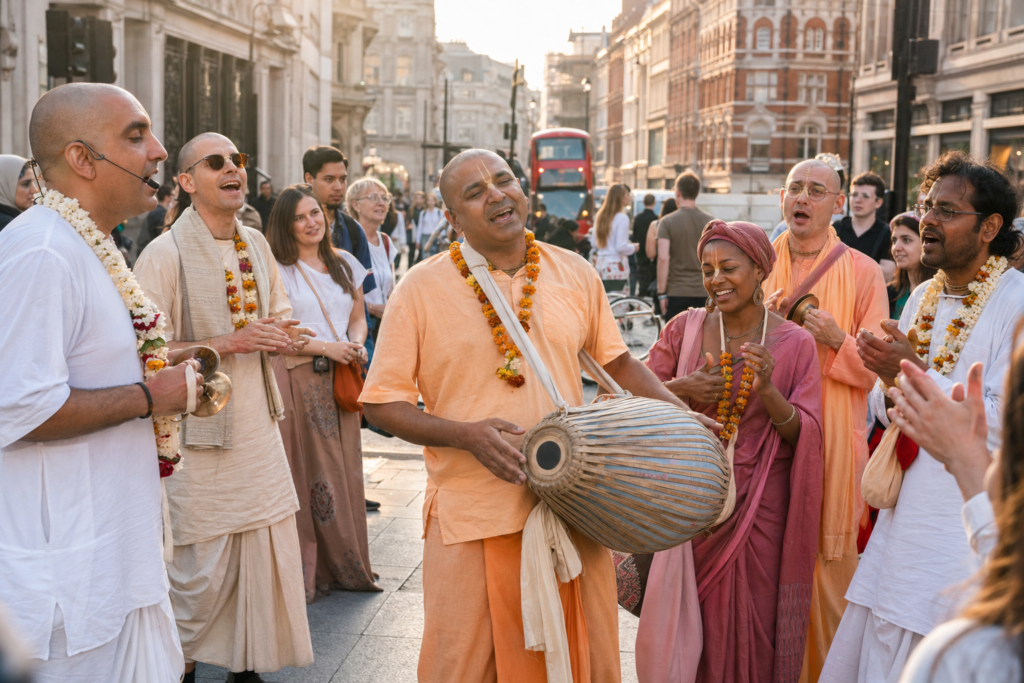
Bhakti Yoga situates devotion as a direct and profound means to grace (kripa). In the Bhagavata and the Gita, loving remembrance of the Divine (smarana), chanting (kirtana), and surrender (prapatti) integrate the heart’s energies, converting fear and grief into trust and resilience. Parampara after parampara affirms that bhakti does not demand intentional injury to the self; it invites an ever-warmer intimacy with the Divine, which dissolves suffering by displacing it with love, not by increasing it.
Raja Yoga and the Yoga Sutra contribute technical clarity: Kriya Yogatapas, svadhyaya, Ishvara-pranidhanasystematizes inner refinement for klesha-nivritti (removal of afflictions). Here, tapas is a steady heat of discipline, not a cult of pain; svadhyaya is self-study through sacred texts and introspection; Ishvara-pranidhana centers practice in humility. The endpoint, samadhi, is a quieting of mental fluctuations (chitta-vritti-nirodha) in which suffering becomes inoperative because its cognitive seedmisidentificationhas been neutralized.
It is important to separate the symbolism of ascetic imagery from the philosophy it serves. Photographs of sadhus in austere settings can be misread as endorsements of self-harm. In context, classical tapas aims to simplify life, concentrate attention, and strengthen will; it is most effective when guided by guru, shastra, and viveka. Hindu ethics does not valorize pain; it valorizes clarity and compassion secured through ethical restraint, disciplined practice, and insight.
This vision resonates across dharmic traditions. Buddhism diagnoses dukkha and prescribes the Noble Eightfold Path; it explicitly rejects both indulgence and extreme mortification, embodying a Middle Way that Hindus recognize as parallel to the synthesis of karma, bhakti, jnana, and dhyana. Jainism culminates in kevala-jnana (perfect knowledge) through rigorous self-discipline framed by ahimsa; here again, intentional crueltyeven toward oneselfis not a spiritual ideal. Sikhism centers on Naam-simran, seva, and trust in hukam; liberation unfolds through remembrance, ethical living, and grace, not through deliberate suffering. A shared dharmic thread affirms that wisdom, compassion, and disciplined practicenot the deification of paintransform the human condition.
Hindu philosophy also explains why suffering, though not divinely willed, can still catalyze growth. Pain draws attention to misalignment. When met with dharmic meanssatsanga, svadhyaya, japa, meditation, and sevait becomes compost for insight. This instrumental role must not be confused with intrinsic value; the tradition enjoins practitioners to learn from suffering and then transcend it, not to enthrone it as a spiritual end.
Consider a practitioner who has lost a loved one. When grief feels overwhelming, the Gita’s vision of the imperishable Self (na hanyate hanyamane sharire) consoles, bhakti offers a channel for love that has nowhere to go, and seva situates personal sorrow within a larger field of solidarity. Through consistent practice, anguish modulates into acceptance, and acceptance matures into quiet understanding. The arc is emblematic of Hindu spiritual psychology: duhkha is not denied, but it is not fetishized; it is integrated and surpassed.
Another practitioner may face moral exhaustion in public service. Karma yoga reframes work as worship, reducing the psychic residue that suffering thrives on. Bhakti replenishes, raja yoga steadies, and jnana supplies perspective: the doer and deed are held within a vast order, not owned by a contracting ego. Here again, the transformation is constructive and humane, affirming the Gita’s teaching that equanimity in action breeds freedom.
From an ethical standpoint, the doctrine of ahimsa establishes a non-negotiable bottom line: life and limb are not to be despised in the name of God. This is why practices that injure the body or degrade others, even when dressed in religious language, are rejected as adharma. The long arc of Hindu legal and philosophical literaturefrom Dharmashastra to Vedantakeeps the compass oriented toward restraint, compassion, and discernment.
In philosophical terms, the distinction between duhkha-nivritti (the cessation of suffering) and ananda-prapti (the recognition of intrinsic bliss) is helpful. Hindu soteriology does not trade one set of miseries for another; it replaces them with knowledge and freedom. Jnana removes the false superimposition (adhyasa) that produces bondage; bhakti draws the mind continually to that which cannot be lost; karma yoga lightens the self by diluting possessiveness; raja yoga stabilizes attention so that insight becomes abiding. Suffering neither initiates nor consummates this process; sadhana does.
This clarity also addresses a cultural misunderstanding: that spirituality requires theatrical hardship to be “authentic.” Hindu tradition asks instead for efficacy. The measure is whether a practice reduces greed, fear, anger, and delusion while increasing compassion, clarity, and courage. On that measure, knowledge, devotion, righteous action, and meditation excel; self-harm does not.
Practically, a balanced sadhana for contemporary life may include daily svadhyaya (reading the Upanishads or the Bhagavad Gita), japa of one’s chosen mantra, seated meditation, and karma yoga expressed as honest work and community service. Occasional vrata or mild tapas (such as mindful fasting) can strengthen resolve when guided by health, moderation, and scriptural counsel. Satsanga with a competent guru clarifies doubts; sharanaagati (surrender) dissolves anxiety about results; living by yamas and niyamas keeps the inner instrument sattvic and ready for realization.
Above all, Sanatana Dharma does not picture a God enthroned on human misery. It presents Ishvara as compassionate and wise, the inner ruler and outer support, and it equips seekers with tested means to overcome suffering and realize the Self. When seen in this light, the proposition that God wants suffering misunderstands both God and the human journey. Hindu philosophy invites a nobler reading: liberation is the fruit of knowledge, devotion, and righteous action, and the hallmark of that liberation is freedom from fear and the flowering of love.
In harmony with Buddhism, Jainism, and Sikhism, this vision sustains unity across dharmic traditions. Each contributes a refined skill for ending suffering and revealing wisdom; none makes pain itself the object of worship. Together, they affirm a compassionate, knowledge-centered path to spiritual awakeningone that dignifies life, honors truth, and culminates in moksha.
Inspired by this post on Hindu Blog.