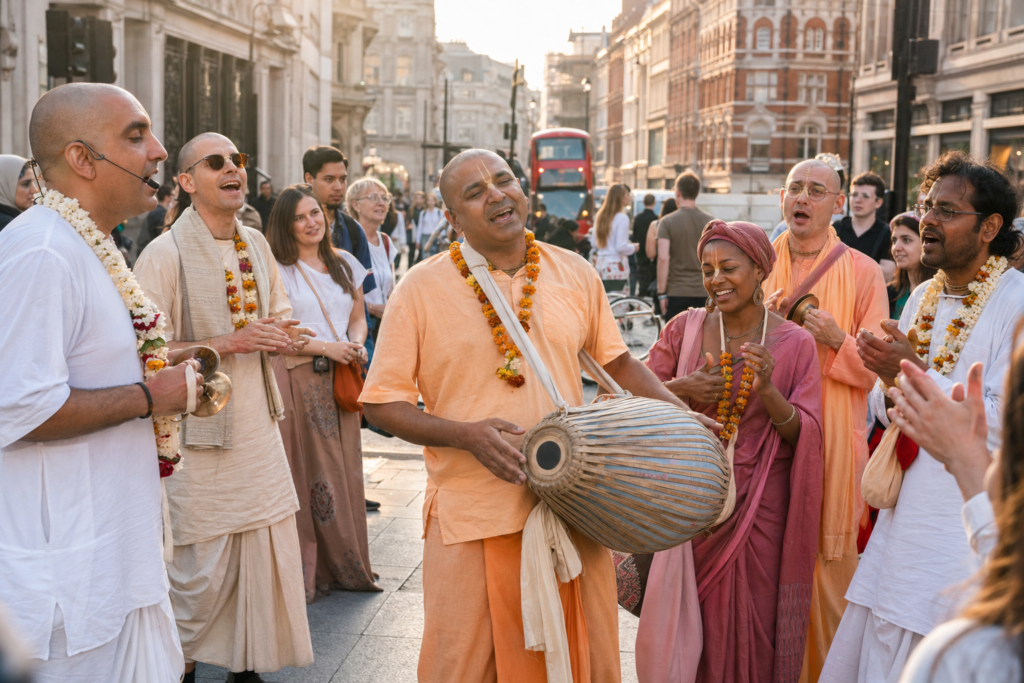
Across contemporary discourse, a persistent myth suggests that liberated beings must appear extraordinarydressed in unusual attire, speaking in cryptic riddles, or performing dramatic austerities. Dharmic traditions consistently offer a different picture. In Hindu philosophy and its sister traditions of Buddhism, Jainism, and Sikhism, authentic realization expresses itself as profound normalcy: the enlightened walk among ordinary people, fulfill ordinary duties, and often remain unnoticed, not because realization is mundane, but because it is inwardly complete.
Clarity begins with definitions. Hindu thought commonly describes liberation as mokṣa or jīvanmukti, the cessation of bondage through knowledge (jñāna), devotion (bhakti), disciplined action (karma-yoga), and contemplative absorption (raja-yoga). Advaita Vedanta emphasizes the nondual recognition of ātman and Brahman, while Yoga philosophy outlines the attenuation of kleśas and the cessation of mental modifications (citta-vṛtti-nirodha). Buddhism articulates nirvāṇa as the extinguishing of craving and ignorance; Jainism defines kevala-jñāna as perfect knowledge accompanied by the eradication of karmic obscurations; Sikhism speaks of sahaj avasthā, the natural ease of abiding in the Divine Name while living a householder’s life. Different maps, same summit: abiding freedom from compulsive reactivity and a steady radiance of compassion and insight.
A shared denominator surfaces across texts and traditions. Liberation is less a performance and more a transformation of cognition and conduct: equanimity under pressure, effortlessly ethical choices, and an unostentatious rhythm of living aligned to dharma. The Bhagavad Gita’s portrait of the sthitaprajña (person of steady wisdom) emphasizes equipoise, truthfulness, and non-injury; Buddhist discourses highlight the Noble Eightfold Path as realized in right view, speech, and livelihood; Jain āgamas detail ahiṁsā, satya, and aparigraha as hallmarks of purification; Sikh tradition enshrines nām-simran, honest work, and seva (service) within family and society. Nowhere do the classics require eccentric spectacle.
The question, then, is not whether the enlightened eat, speak, or behave differently from others, but how their relationship to eating, speaking, and behaving is transformed. In practical Hindu philosophy, this shift is called sattvaclarity, harmony, and luminositygoverning choices without rigidity. Buddhism’s middle way guards against both indulgence and mortification. Jainism orients conduct through layered vows appropriate to householders (anuvratas) and ascetics (mahāvratas). Sikhism dignifies the gr̥hastha (householder) as an ideal context for realization. The realized person’s life becomes intelligible, ethically intelligible, to community and kin.
Scriptural exemplars underscore this normalcy. King Janakacelebrated in the Upanishads and the Bhagavad Gitaembodies nonattachment while actively ruling a kingdom. The Sikh Gurus model liberated householder life, integrating devotion, justice, and community service. Early Buddhist sources consistently present the Buddha’s pupilsboth monks and lay disciplesexhibiting ordinary social conduct imbued with extraordinary clarity. Jain Tirthaṅkaras renounce to teach ahiṁsā universally, while advanced lay followers cultivate deep equanimity in family and trade. Liberation is not escapism; it is ethical mastery within, and often for, the world.
Diet is a useful lens. Hindu texts value mitāhāra (moderation) and sattvic food for mental clarity, while also recognizing regional and āśrama-specific norms. The Gita classifies foods by their influence on mindsattvic (promoting clarity), rājasic (exciting), tāmasic (dulling)to cultivate discernment rather than dogma. Buddhism’s middle path cautions against extremes; monastics follow specific disciplinary codes (vinaya), while lay practitioners apply mindfulness and compassion to eating. Jain ahiṁsā prescribes rigorous vegetarian ethics for ascetics and conscientious restraint for laypeople, minimizing harm in procurement and preparation. Sikh langar institutionalizes simple, egalitarian meals that erase hierarchy and emphasize service. The liberated do not advertise special diets; they eat in ways that sustain clarity, compassion, and community.
Speech provides another window. The Gita describes speech-discipline (vāṅmaya-tapas) as that which is truthful, kind, beneficial, and conducive to peace. The Buddhist canon enjoins right speechtrue, timely, gentle, and purposeful. Jain teachings emphasize satya practiced with careful non-harm. Sikh tradition esteems speech charged with nām and humility, steering clear of slander and divisiveness. In all, realized persons speak simply and sparingly, avoiding spectacle. Words become medicine rather than performance.
Clothing and outward signs are culturally variable and doctrinally secondary. Saffron robes, white garments, or ordinary attire can all house realization; the differentiator is not fabric but freedom. Traditional symbols can serve sādhanā and community life, but they are not proof of attainment. Texts consistently prioritize inner lakṣaṇasequanimity, compassion, clarityover outer liṅgas (signs) susceptible to imitation.
Psychologically, liberation recalibrates attention and affect. In Yoga philosophy, kleśas such as avidyā (misapprehension) and rāga-dveṣa (craving-aversion) lose compulsive force as insight stabilizes. In Advaita Vedanta, the dawning of self-knowledge dissolves delusion about self and world, transforming conduct without theatrical strain. Buddhist analysis observes the cessation of reactive patterns through insight into impermanence and non-self (anattā). Jainism details the thinning and falling away of karmic accretions. Sikh thought describes sahajthe spontaneous ease of a mind attuned to nām, unmoved by praise or blame. These inner reorganizations express outwardly as calm, everyday reliability.
The social consequence is service without spotlight. The Gita’s doctrine of loka-saṁgraha commends sustaining social order through righteous action, even post-realization. Buddhism’s bodhisattva ideal, Jain practices of dana and anukampā, and Sikh seva collectively argue that genuine insight ripens into communal uplift. The enlightened do not flee the world; they lessen its burdens, often quietly.
Because realization is subtle, discernment (viveka) is essential. Dharmic traditions advise evaluation by durable criteria rather than charisma: freedom from exploitation, consistency with śāstra-pramāṇa (sound teaching aligned with canonical sources), humility, non-possessiveness, and a demonstrable capacity to reduce suffering. Claims of exclusive techniques, guaranteed results, or personality cults conflict with the plural, open architecture of Dharmic wisdom. Authentic teachers point beyond themselves, toward the perennial pathways of Yoga, Vedanta, Buddhist mindfulness and ethics, Jain ahiṁsā and aparigraha, and Sikh nām and seva.
It is instructive to consider how an enlightened person might navigate a day. Eating is moderate, grateful, and mindful; speech is truthful and kind; work is carried out diligently for the common good; family and community ties are honored; solitude and contemplation are woven into the ordinary cadence of life. There is no disdain for the marketplace or the household, only freedom from being possessed by them.
This ordinariness is not a lack of depth but the signature of depth integrated. In Advaita Vedanta, jīvanmukti is not a trance but a seeing-through that permits fully human participation in society. In Buddhist terms, wisdom and compassion mature together, transforming ordinary encounters. In Jain practice, carefulness (samiti) and vigilance (gupti) render routine actswalking, speaking, tradingnon-injurious. In Sikh praxis, remembrance of nām infuses labor and service with luminosity. The enlightened appear normal because their freedom is perfectly fitted to life.
Dietary practices illustrate this integration across contexts rather than conflict among traditions. A sattvic vegetarian may exemplify clarity in one milieu; a Sikh participating in langar manifests egalitarian service; a Buddhist householder practices mindful eating and generosity; a Jain layperson applies seasonal and regional discernment to minimize harm. The shared ethical grammar is palpable: moderation, compassion, non-injury, and gratitude.
Speech, too, reveals unity in diversity. Whether framed as vāṅmaya-tapas, right speech, satya grounded in ahiṁsā, or nām-colored utterance, the test is functional: does speech heal rather than harm, clarify rather than confuse, reconcile rather than polarize? The enlightened prefer understatement to spectacle because truth requires no amplification.
Practical markers help seekers calibrate expectations. First, authenticity expresses as increasing serenity under strain rather than theatrical displays in comfort. Second, ethical clarity strengthens in granular choicesfinances, relationships, and civic duties. Third, teachers who honor the multiplicity of valid paths reflect the Dharmic axiom that temperament (adhikāra) matters; the “right” path is the one that cultivates virtue and insight given a person’s constitution. Fourth, in all traditions, genuine progress correlates with humility.
Everyday vignettes bring this home. Consider a schoolteacher who begins the day with japa, offers lessons patiently to distracted students, eats a simple lunch, declines gossip in the staff room, volunteers at a local shelter after work, and returns home to care for elders with unhurried attention. Nothing here is dramatic, yet the architecture of freedom is unmistakableclarity in decisions, steadiness in emotions, and generosity in action.
Or consider a physician in a busy clinic who practices mindful breathing between consultations, speaks candidly yet gently with anxious families, eats with gratitude, donates time for community health camps, and ends the day in contemplative reading of the Upanishads or the Guru Granth Sahib. The visible details are ordinary; the invisible alignment is extraordinary.
Finally, imagine a merchant shaped by Jain anuvratas: pricing fairly, sourcing conscientiously, refusing exploitative practices, and sharing profits for community welfare. The business remains competitive, but the aspiration is non-injury. The enlightened are not anti-world; they are anti-harm.
Unity across Dharmic traditions becomes evident when the focus shifts from labels to lived qualitiesequanimity, compassion, clarity, and service. Terms differmokṣa, nirvāṇa, kaivalya, kevala-jñāna, sahaj avasthābut the realized life is recognizably coherent. Hindu philosophy, Buddhism, Jainism, and Sikhism agree: true freedom dignifies ordinary life, refines conduct, and contributes to collective well-being.
In conclusion, the enlightened need not look unusual, speak in riddles, or withdraw from society. The most reliable signs are ethical steadiness, moderated habits, truthful and compassionate speech, and a bias for service over spectacle. The Dharmic inheritancerich with Vedanta and Yoga, Buddhist ethics and contemplation, Jain ahiṁsā and aparigraha, and Sikh nām and sevaaffirms that liberation blossoms as wise normalcy. The enlightened walk among us, often unrecognized, precisely because realization perfects, rather than abandons, the human.
Inspired by this post on Hindu Blog.