Across Bengal and the eastern regions of India, Surya occupies a singular place in devotional life and cultural memory. Revered locally as Dharma Deva or Ral Deva, the Sun God is understood not only as the radiant source of light and time, but as the living emblem of righteousness (dharma), fertility, prosperity, and well-being. This integrated visionethical, ecological, and spiritualhas shaped practices that align human rhythms with the solar cycle, sustaining households, fields, and communities.
In Bengal’s folk and classical imagination, Dharma Deva embodies the moral clarity that dispels darkness. Surya’s steady journey across the sky symbolizes reliability and right conduct, while his life-giving warmth nourishes crops and kinship networks. The agricultural calendarespecially in Poush and Maghechoes this bond, as families mark seasonal thresholds with offerings, fasts, and vows that reaffirm gratitude for sustenance and social harmony.
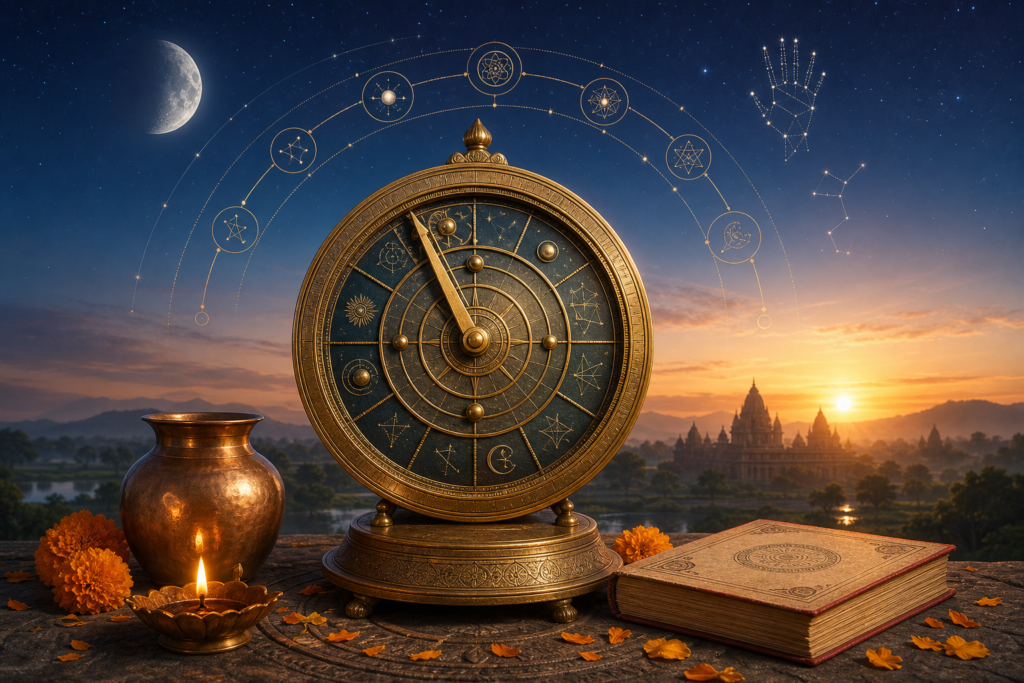
Everyday worship makes this philosophy tangible. At dawn on ponds, ghats, and riverbanks, devotees offer arghyalibations of water cupped toward the rising sunseeking clarity of mind, strength of purpose, and the welfare of all beings. In homes and neighborhood shrines, red and yellow flowers, grains, and lamps are arranged in soft morning light, creating an atmosphere where reverence merges with routine and devotion blends with daily duty.
Regional names and practices preserve a distinctive aesthetic. The veneration of Surya as Dharma Deva or Ral Deva in parts of Bengal communicates a local idiom of universal truths: that right living (dharma) sustains prosperity, that gratitude deepens resilience, and that communal well-being grows when individual conduct aligns with a higher moral order. Folk observances often emphasize familial participationelders instruct, children imitate, and the tradition renews itself through shared, intergenerational experience.
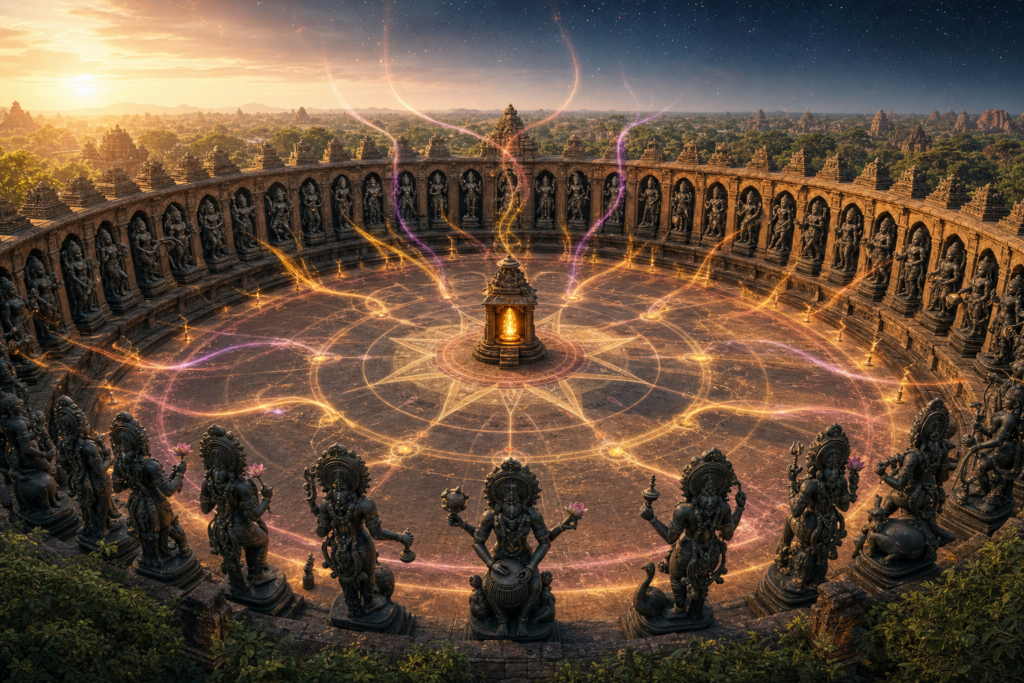
The philosophical foundations are deep and wide. Vedic hymns to Āditya describe Surya as witness, guide, and guardian of ṛtathe cosmic order from which dharma flows. Classical imagerySurya’s chariot drawn by seven horsesencodes light’s spectrum as knowledge’s many paths, each valid yet converging on truth. In this lens, Bengal’s Dharma Deva is not a regional exception but a resonant expression of Sanatana Dharma’s unity-in-diversity.
Art and architecture in eastern India reinforce these continuities. Terracotta panels and manuscript paintings commonly portray Surya with the radiance of a moral sovereignupright posture, lotus in hand, and the charioteer Aruṇa guiding the coursers of light. The visual grammar is didactic as well as devotional, teaching through form that illumination is both aesthetic beauty and ethical insight.
Surya’s symbolism also offers a bridge of shared meaning across dharmic traditions. The idioms of light, clarity, discipline, and compassion are celebrated in Hinduism, Buddhism, Jainism, and Sikhism in ways that honor distinct paths while affirming common aspirations. In this spirit, Bengal’s reverence for Dharma Deva becomes a cultural meeting groundupholding pluralism, encouraging mutual respect, and fostering unity in spiritual diversity.
Contemporary relevance follows naturally. As communities seek balance amid modern schedules, Surya worship’s dawn disciplines invite ecological awareness, circadian harmony, and a renewed ethic of stewardship. Simple observancesmindful breathing at sunrise, a brief arghya facing the east, a quiet vow to practice truthfulness and caretranslate ancient wisdom into accessible, everyday commitments.
Viewed through this holistic frame, Surya as Dharma Deva or Ral Deva in Bengal is more than a regional devotional form; it is a comprehensive way of seeing. Light stands for knowledge, warmth for compassion, and steady motion for perseverance. When families gather at first light, they not only greet the sunthey reaffirm a civilizational habit of unity, responsibility, and hope that continues to illuminate Bengal’s cultural landscape.
Inspired by this post on Hindu Blog.