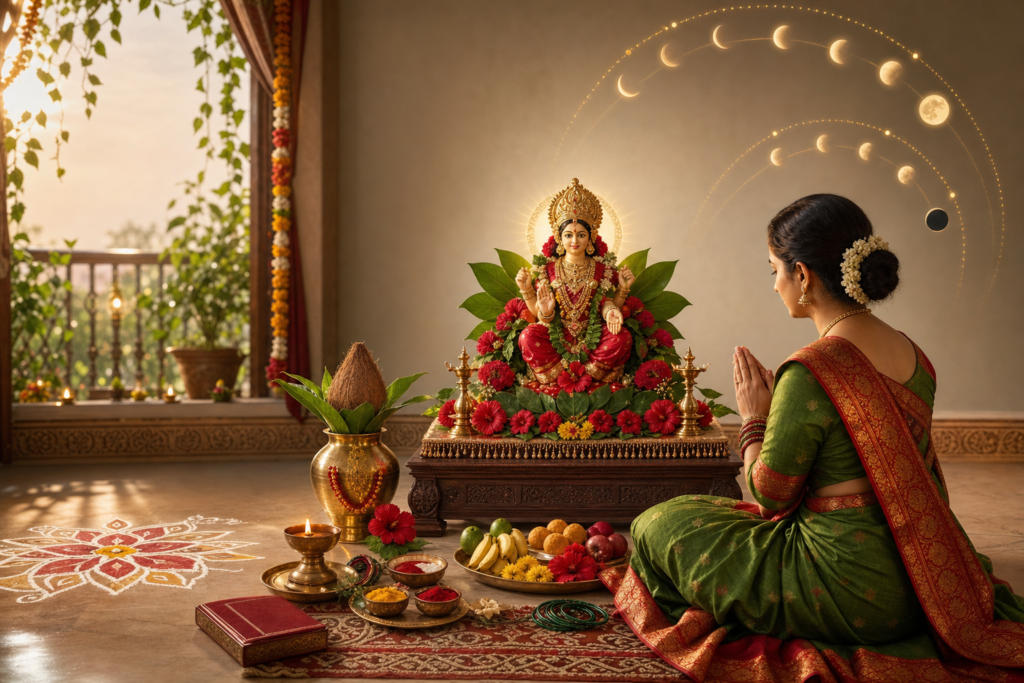
Saturday, December 27, 2025, in the Hindu calendar (Panchang) marks a clear transition of tithi in most regions. The day begins with Shukla Paksha Saptamithe seventh lunar day in the waxing phase of the moonlasting until 8:53 AM. From that time onward, it shifts to Shukla Paksha Ashtami, the eighth lunar day in the bright fortnight.
Within the framework of the Hindu calendar, Saptami during the waxing phase is traditionally associated with vitality, intention-setting, and steady progress. Many households greet the morning with Surya arghya (water offerings to the Sun) and simple dharmic practices that cultivate clarity and disciplinehabits that align well with the constructive tone of Saptami.
As the day advances into Ashtami, devotional focus often deepens into restraint, contemplation, and inner steadiness. Ashtami is widely regarded as supportive of prayer, vrata (observances), and mindful study of scriptures, aligning personal effort with spiritual purpose. In this way, the Saptami–Ashtami sequence offers a balanced arcfrom energizing beginnings to reflective consolidation.
Details such as Nakshatra, Rashi, and Shubh Muhurat (auspicious time) vary by location and local sunrise. For accurate planningwhether for puja, sankalpa, or family eventspractitioners typically consult a region-specific Panchang or temple noticeboard to align activities with local Nakshatra, Rashi, Abhijit Muhurat, and to avoid Rahu Kalam and other inauspicious windows.
For many families, these rhythms of tithi nurture a sense of shared culture across dharmic traditions. While the Hindu Panchang provides the specific framework for tithis, communities in Buddhism and Jainism also observe lunar-based disciplines, and Sikh familiesparticularly in cultural settings that reference the Vikrami calendarmay mark select lunar observances. This shared attentiveness to the moon’s cycle fosters unity, respect, and mutual understanding among dharmic paths.
Practically, the morning hours up to the tithi change are well suited to intention-led tasks associated with Saptami’s constructive tone, while the post-8:53 AM period supports Ashtami’s contemplative emphasisreading, japa, quiet seva, or reflective family time. Those planning key actions may choose supportive windows identified by the local Panchang, aligning with Shubh Muhurat where possible.
Overall, December 27, 2025 invites a thoughtful cadence: begin with purposeful clarity under Shukla Paksha Saptami, then settle into focused devotion and inner balance under Shukla Paksha Ashtami. Attuned to Panchang guidance, the day can be lived with both efficiency and reverence.
Inspired by this post on Hindu Blog.