-
June 2026 at Tiruchanur: Soulful Guide to Sri Padmavathi Ammavari Festivals & Planning

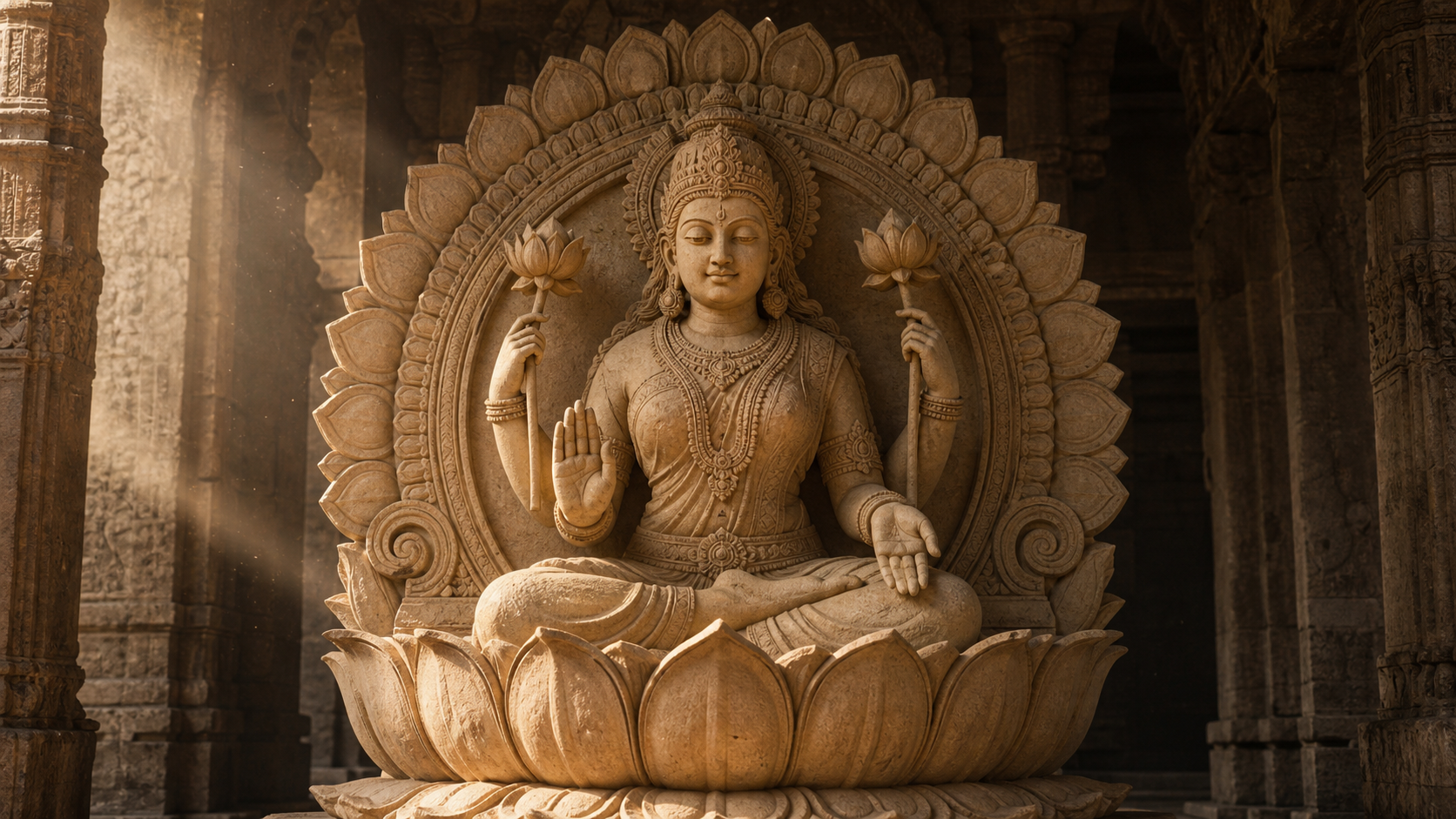
June 2026 at Sri Padmavathi Ammavari Temple, Tiruchanur, unfolds under a precise TTD calendar aligned to Jyeshtha and Ashadha. This guide explains how Panchang-driven scheduling works, the core Lakshmi-centric sevas commonly seen in June, and how to plan Darshan and Seva bookings smoothly. Devotees can anticipate kumkumarchana, sahasranamarchana, and designated snapana tirumanjanam, with tithi observances…
-
Align Body, Mind, and Heart in Chanting (Japa): A Proven Framework for Deep Focus and Grace

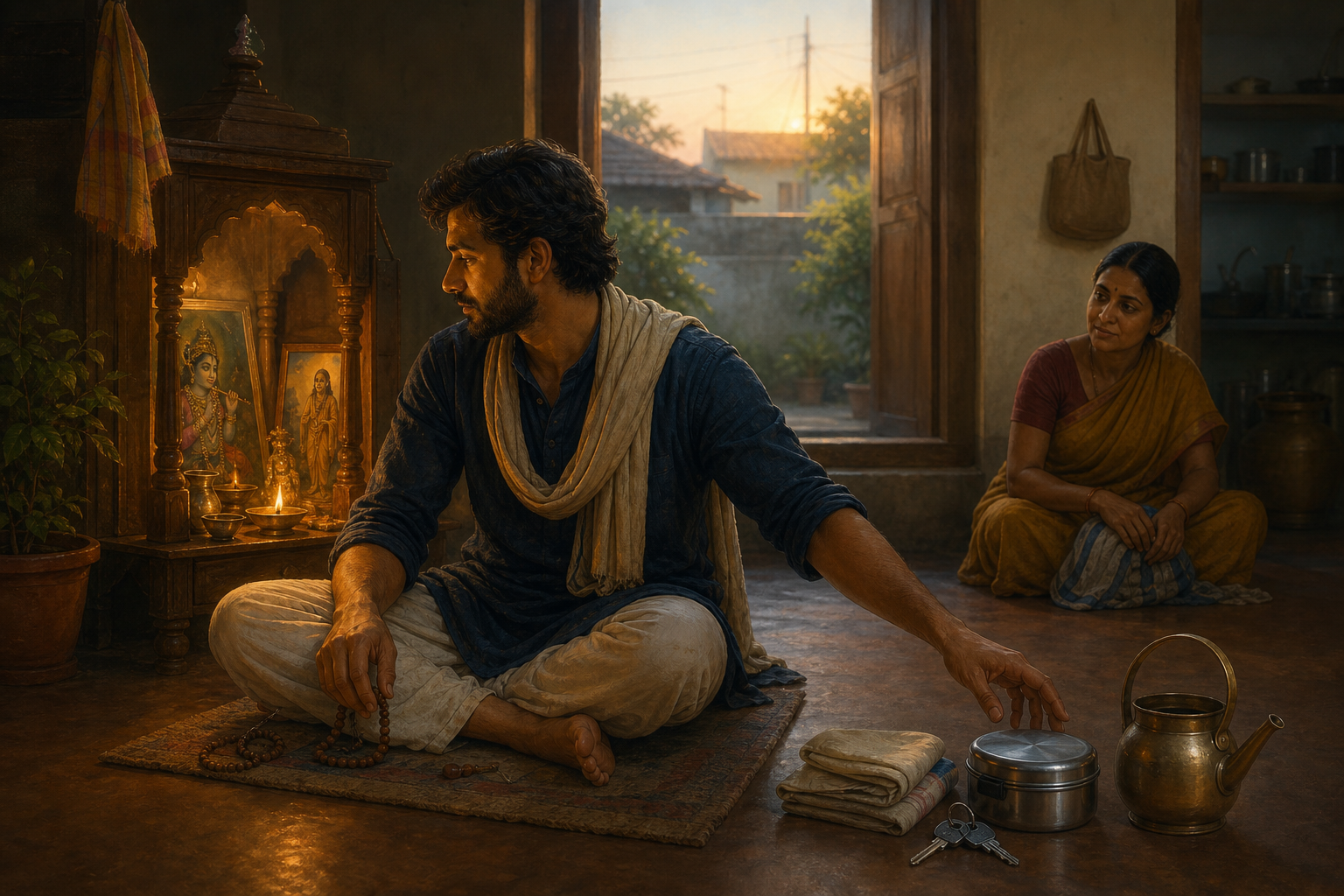
This research-informed guide distills mantra chanting (japa) into a practical three-part alignment of body, mind, and heart shared across Hinduism, Buddhism, Jainism, and Sikhism. It details posture, pronunciation, and environment to support precise articulation and a steady cadence. An onset-focused attentional method—returning to the first “Hare”—rapidly recovers attention after distraction and sustains presence across each…
-
‘Savarkar Sadan’ under threat: HJS seeks urgent Maharashtra action and National Monument status

Hindu Janajagruti Samiti (HJS) and allied groups in Ratnagiri have sought urgent Government of Maharashtra intervention to secure ‘Savarkar Sadan’ from a reported builder-led demolition threat. The demand anchors itself in constitutional duties (Articles 49 and 51A[f]) and established heritage law, including the AMASR Act (1958, amended 2010) and state-level protections. A sequenced plan—immediate stop-work…
-
Shri Padmanabhaswamy alert: alleged missing gold, security lapses, and a rigorous audit blueprint

Intelligence inputs have reportedly flagged possible discrepancies in valuables, security gaps, and record‑keeping irregularities at Kerala’s Shri Padmanabhaswamy Temple, prompting calls for a calm, evidence‑led response. This analysis explains how to separate allegations from adjudicated fact and outlines a practical, temple‑compatible audit roadmap. It details inventory identity protocols, chain‑of‑custody discipline during rituals, tamper‑evident digital record‑keeping,…
-
Prasadam as Light: Srila Prabhupada’s Vision from Vrindavan Dialogues to Mayapur Grace

This long-form reflection presents Srila Prabhupada’s concise thesis—”Prasadam is the most important thing to bring people out of darkness”—and situates it within Gaudiya Vaishnava theology, ISKCON history, and a broader dharmic ethic of compassionate food-sharing. Drawing on Sravanananda’s detailed memories from Vrindavan and Mayapur, it analyzes respectful philosophical dialogue, the transformative impact of Govardhan Puja…
-
Forgiveness vs Trust: A Dharmic, Evidence-Based Guide to Boundaries, Healing, and Growth

Forgiveness becomes practical once separated from trust: the former is an inner virtue that releases resentment, while the latter is a behavior-based, conditional decision about future access. Drawing on convergences across Hinduism, Buddhism, Jainism, and Sikhism, this guide shows how compassion and accountability can reinforce one another. It introduces a two-track model—inner release and outer…
-
USCIRF, Diaspora Campaigns and Hindutva: How Overseas Targeting Imperils Dharmic Unity

Uttarakhand BJP leader Mahendra Bhatt’s description of perceived overseas targeting of Hindutva voices via USCIRF highlights a wider challenge: how global advocacy, media narratives, and diaspora life intersect. This analysis explains USCIRF’s mandate, clarifies the distinction between Hinduism and Hindutva, and shows how labels can migrate from policy briefs to classrooms and workplaces. It grounds…
-
Bhadra in Hindu Astronomy: Unveiling the Two Bhadrapadas and Their Timeless Celestial Significance

Bhadra in Hindu astronomy refers to a paired lunar mansion—Purva Bhadrapada and Uttara Bhadrapada—rooted in the 27-nakshatra system that has guided observation and calendrics since Vedic times. The two Bhadrapadas occupy consecutive spans from late Aquarius into mid-Pisces, blending empirical sky-mapping with rich symbolic and ethical meanings. Classical Jyotiṣa associates them with Jupiter (Aja Ekapada)…
-
Shiva as the Tiger‑Slayer: Sardula Samhara Murti, Darukavana Myth and the Fall of Ritual Ego

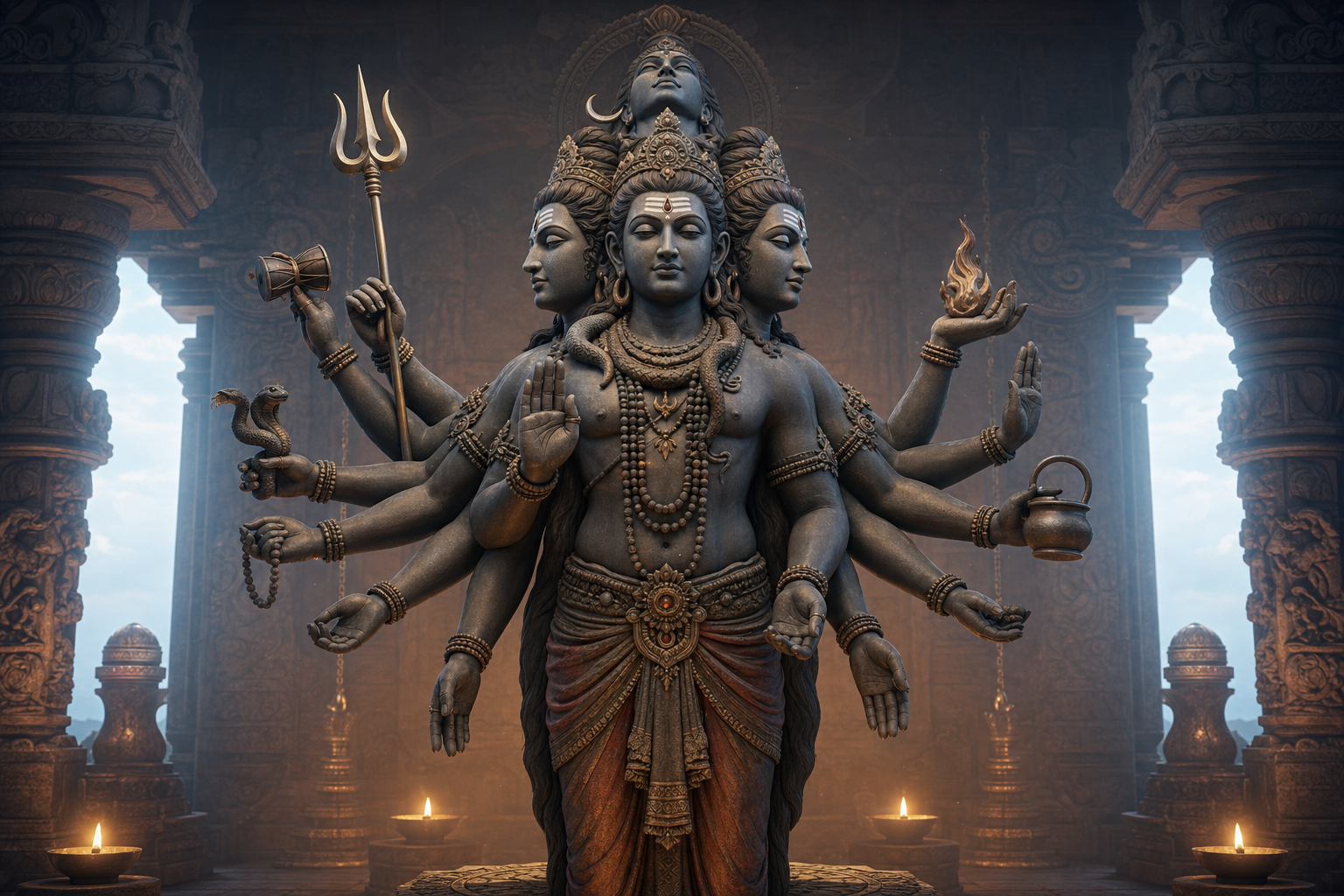
Sardula Samhara Murti portrays Shiva as the Tiger‑Slayer of Darukavana, an image that dissolves ego and ritual pride rather than celebrating brute force. The narrative anchors a subtle theology: saṁhāra is the removal of inner obstructions, not annihilation of life. By reading the icon’s visual grammar—tiger skin, serpents, ḍamaru, and agni—readers gain a practical key…
-
Devotion and Public Service: Suvendu Adhikari leads Aarti at ISKCON Mayapur, West Bengal

Suvendu Adhikari, Leader of the Opposition in West Bengal, visited ISKCON Mayapur in Nadia district to perform aarti and pay respects to Srila Prabhupada, drawing an enthusiastic response from devotees. The report explains why Mayapur is central to Gaudiya Vaishnavism and the global Hare Krishna movement, highlighting the Sri Mayapur Chandrodaya Mandir and the Temple…
-
From Self-Consciousness to True Belonging: Evidence-Based Shifts in Presence and Self-Acceptance

This evidence-based reflection traces a shift from strategic blending to authentic belonging, showing how small, repeatable choices can transform chronic self-consciousness into grounded presence. It explains the psychological mechanisms involved—social comparison, high self-monitoring, rejection sensitivity, and the spotlight effect—and how to dismantle them with practice. The narrative integrates dharmic insights from Hinduism, Buddhism, Jainism, and…
-
Snan Darpan at Puri: The Sacred Mirror Bath Preserving Jagannath and Revealing Living Dharma

At Puri’s Jagannath Temple, Snan Darpan—“bathing by the sacred mirror”—unites Agamic ritual theory with careful conservation of the daru-brahma murtis. A consecrated mirror receives the ablutionary mantras and offerings, transmitting the bath to Mahaprabhu Jagannath by reflection rather than direct immersion. This practice preserves delicate wooden images while remaining fully orthodox within temple paddhatis. The…
-
Timeless Dharmic Science of Joy: A Sacred Blueprint for Lasting Happiness Within

Hindu philosophy holds that lasting happiness is not acquired but uncovered by cultivating a living relationship with the Divine within. Drawing on the Upanishads, Bhagavad Gita, and Yoga philosophy, this exploration distinguishes fleeting pleasure from the abiding fullness called ānanda. The analysis integrates Advaita, Viśiṣṭādvaita, and Dvaita perspectives, while honoring dharmic unity with Buddhism, Jainism,…
-
Kamakhya’s 16-Day Navratri 2026: Definitive Guide to Assam’s Unique Shakta Puja and Darshan

Kamakhya Temple in Guwahati, Assam, hosts a rare sixteen-day observance of Durga Puja and Navratri in 2026, rooted in Shakta-tantric tradition and the temple’s aniconic yoni-pitha. Unlike the mainstream nine-night format, Kamakhya’s Shodasha-dinātmak Navaratri integrates Shodasha Upachara, daily Chandi Path, Kumari Puja, Sandhi Puja, and homa, culminating in Vijayadashami. The complex’s Daśa Mahāvidyā shrines and…
-
June 5, 2026 Panchang: Exact Tithi Timings, Auspicious Muhurtas, Nakshatra and Rashi Insights

June 5, 2026 aligns with Krishna Paksha Panchami until 9:29 PM, after which Sashti begins, a change that guides how vratas and muhurta choices are made. The article explains how tithi is computed astronomically and why times vary by location, underscoring the sunrise rule used for many observances. It outlines daily tools such as Abhijit…
-
London’s Festival of Chariots 2026: 57 Years of Devotion, Culture, and Community Spirit

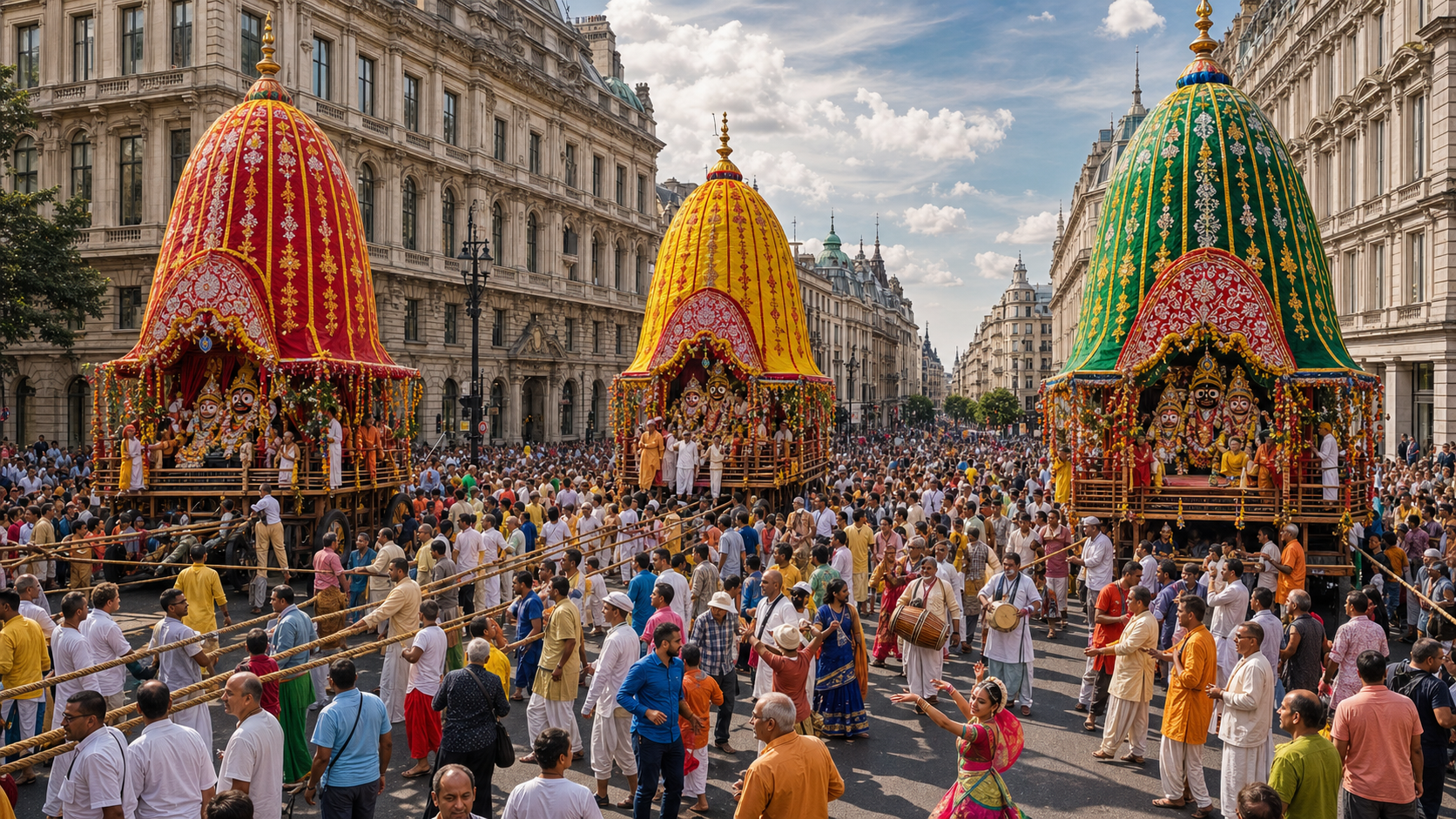
The 2026 London Rathayatra gathered more than 10,000 participants along Park Lane to accompany three 40-foot chariots in a joyful display of devotion and cultural heritage. Marking 57 years on London’s streets since 1969, the Festival of Chariots demonstrated how an ancient Indian tradition thrives in a modern, multicultural city. The procession honoured Lord Jagannath,…
-
Savarkar Jayanti in Kolkata: Debating ‘Hinduize the Politics and Militarize the Hindudom’

Held on 28 May 2026, the Hindu Samaj Kalyan Samiti’s Savarkar Jayanti in Kolkata revisited the maxim ‘Hinduize the Politics and Militarize the Hindudom’ through a constitutional, dharmic lens. The analysis situates V D Savarkar’s thought historically and reframes the slogan as a call for ethics-driven public life and lawful, nonviolent resilience. It underscores pathways…
-
Ruru Bhairava Iconography Unveiled: The Gentle Guru Among the 64 Fierce Protectors

Ruru Bhairava is revered as the teacher among the sixty-four manifestations of Bhairava, presiding over the second group within the Ashtashta Bhairavas. Iconography emphasizes a serene, pedagogical presence—often with a vīṇā, book, or rosary—set within Bhairava’s standard emblems such as jaṭā, serpent ornaments, and the crescent moon. Regional traditions vary in vāhana and hand-attributes, but…
-
How to Stay Light‑Hearted in Bleak Times: Evidence‑Based Dharmic Strategies for Resilience

This essay examines how to remain light‑hearted when life feels bleak by integrating dharmic wisdom with contemporary psychology. It reframes a childhood vignette—eating ice cream under sodium lights—as a practical method for values‑aligned action in the presence of difficult emotions. Drawing on Hindu concepts like aparigraha, Buddhist mindfulness and equanimity, Jain Anekantavada, and Sikh chardi…