-
Dissolving Trishna’s Hidden Fire: Timeless Dharmic Strategies to Transform Craving into Freedom

This long-form, research-driven exploration explains trishna (craving) as the subtle energy that precedes action—the “root before the root.” It integrates Hindu, Buddhist, Jain, and Sikh perspectives to present a unified Dharmic framework for transforming craving into clarity and freedom. Readers gain a technical map (kleśas, vāsanās, vedanā, dependent arising), scriptural anchors (Yoga Sutra, Bhagavad Gita,…
-
Samhara of Shiva: Unveiling the Compassionate Power of Dissolution and Renewal

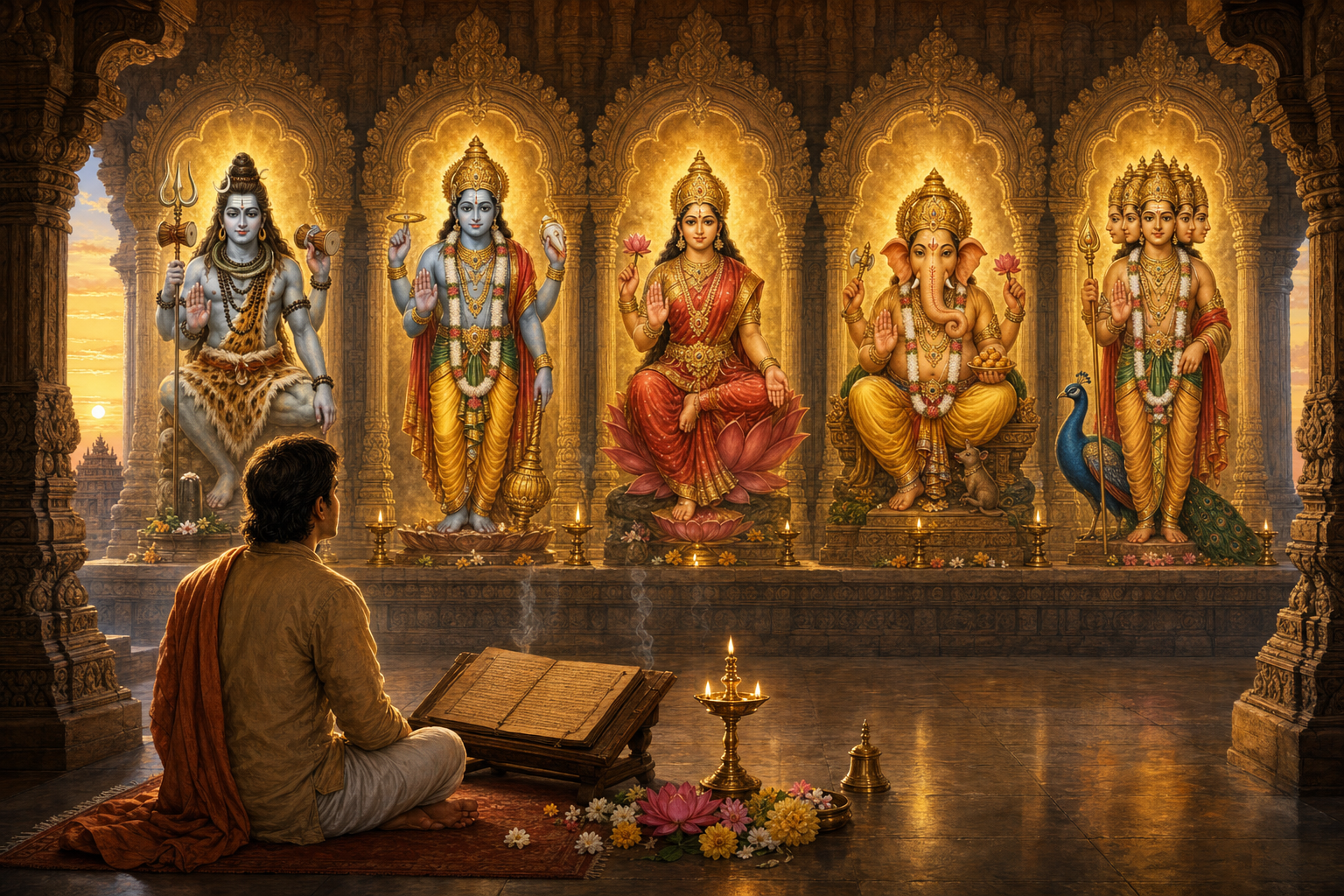
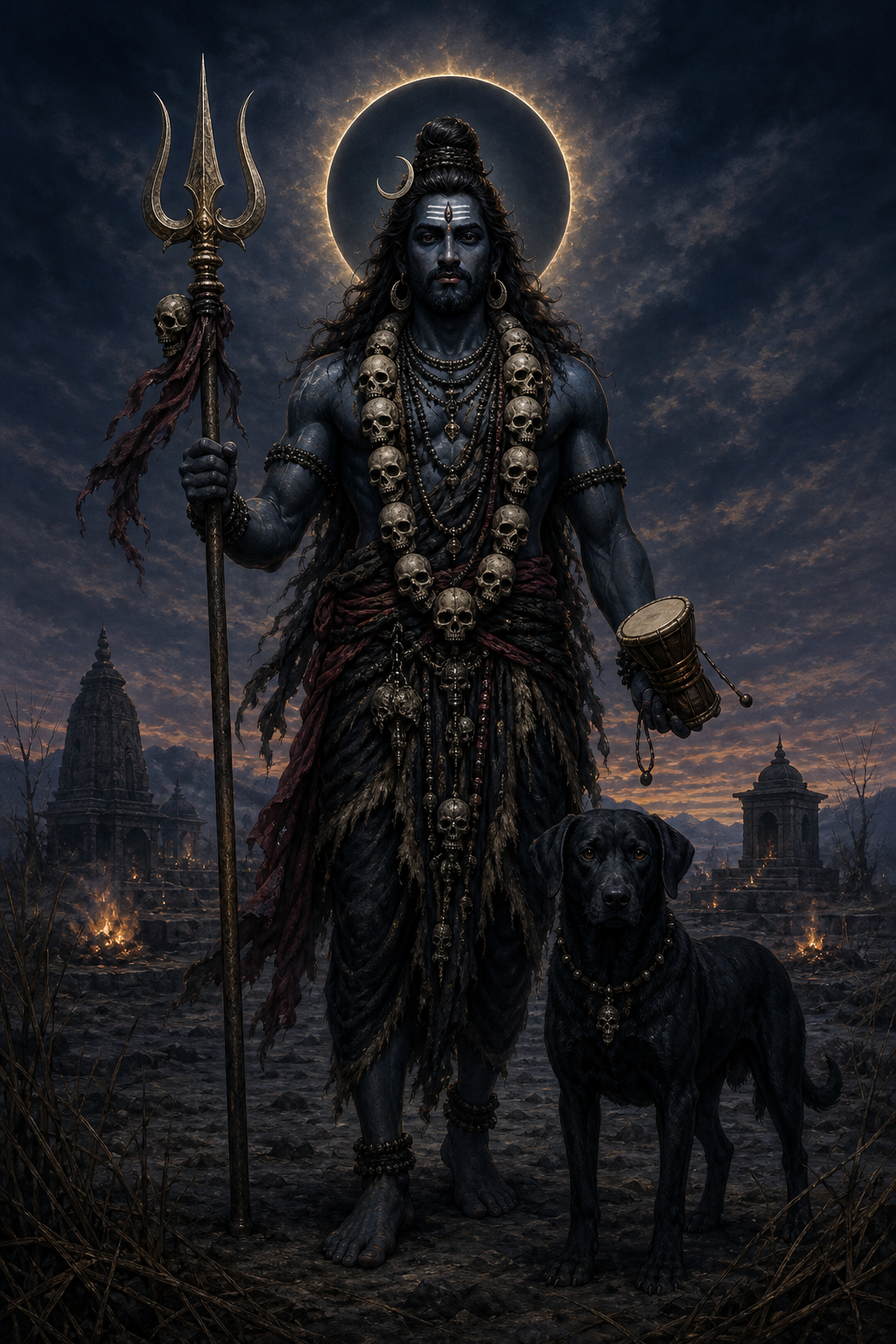
Samhara, the dissolution aspect of Shiva, is not violent destruction but compassionate renewal that clears exhausted forms so truth can shine. Grounded in Vedic, Purāṇic, and Āgamic sources, this long-form analysis explains how Samhara interlocks with Shiva’s five acts to sustain cosmic and personal transformation. The iconography of Naṭarāja, Mahākāla, and Kālābhairava decodes dissolution as…
-
May 22, 2026 Panchang: Exact Sashti–Saptami Shift, Good Muhurtas, Nakshatra and Rashi Insights

May 22, 2026 is a two-tithi day in the Hindu Calendar: Shukla Paksha Sashti lasts until 11:46 AM (IST), followed by Shukla Paksha Saptami. This guide explains how to plan devotion and life tasks across the Sashti-to-Saptami transition, when to prefer Abhijit and Brahma Muhurtas, and how to avoid Rahu Kalam using a simple, location-based…
-
Inspiring Dialogue in Kochi: HJS and Amrita Vishwa Vidyapeetham Explore Value-Centered Synergy

Representatives of the Hindu Janajagruti Samiti (HJS) paid a courtesy visit to Dr U. Krishnakumar at Amrita Vishwa Vidyapeetham, Kochi, opening a channel for academia–civil society collaboration. The exchange highlighted shared priorities in values-based education, Indian Knowledge Systems, and community engagement aligned with NEP 2020. By emphasizing non-partisan, ethics-driven design, the dialogue supports campus neutrality…
-
Historic Move: West Bengal Mandates ‘Vande Mataram’ in School Assemblies—Unity, Law, and Learning

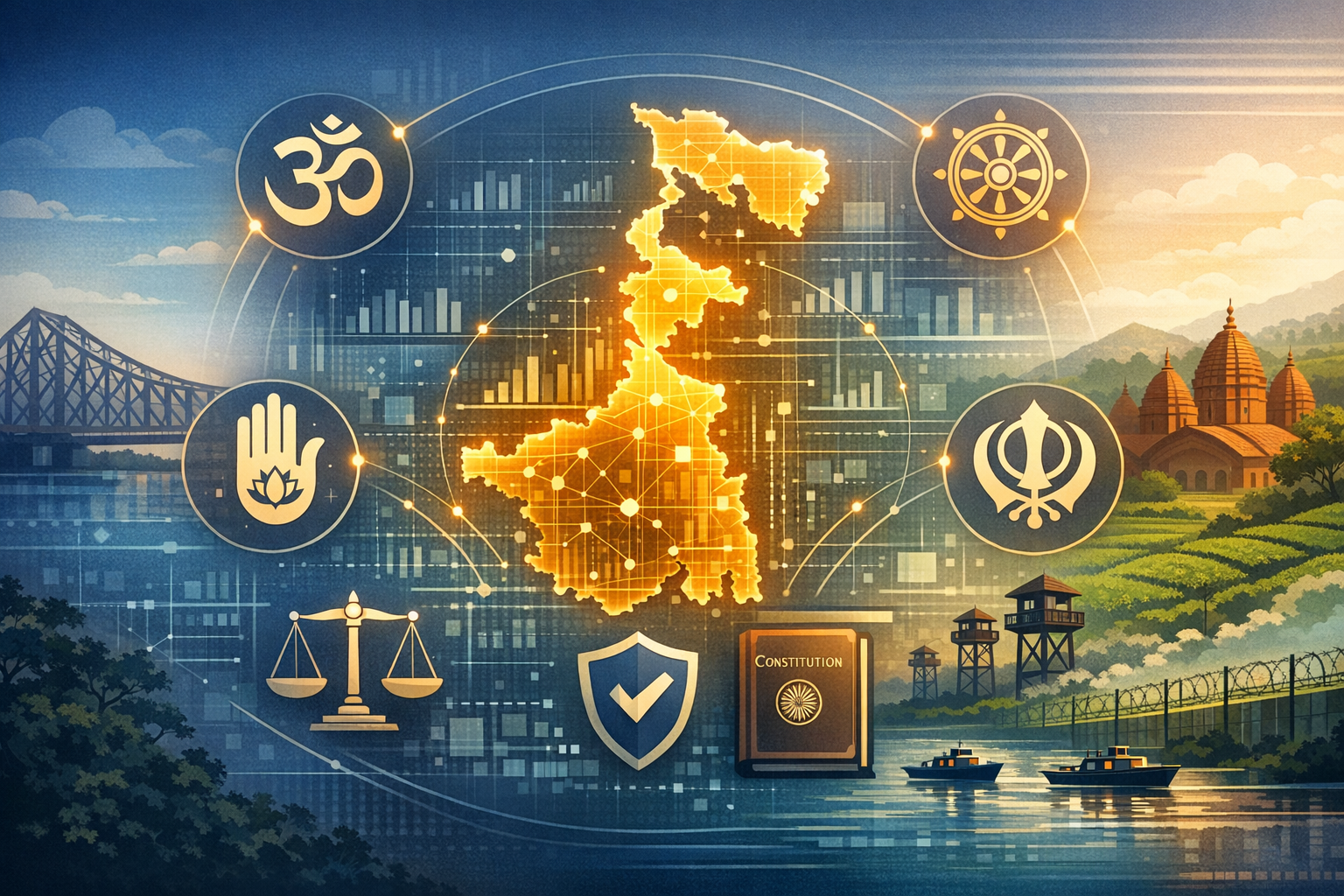
West Bengal has mandated the singing of ‘Vande Mataram’ in morning assemblies across recognized schools, positioning the policy as a civic and cultural intervention. Historically rooted in the freedom movement and recognized by the 1950 Constituent Assembly as the national song, ‘Vande Mataram’ can enrich civic learning when framed as gratitude to the motherland rather…
-
Halt Sought for Shyam Manav’s ‘Buva Tethe Baya’: A Measured Call to Protect Faith and Free Speech

A memorandum by the Hindu Rashtra Samanvay Samiti seeks cancellation of Shyam Manav’s proposed ‘Buva Tethe Baya’ lecture, citing a history of objectionable remarks about Hindu Dharma and Saints. The situation spotlights the constitutional balance between religious respect and free speech under Article 19. Courts emphasize that pre-emptive bans must rest on demonstrable risks, not…
-
Satara Hindu groups seek decisive legal action to protect legacy of Rashtraguru Samarth Ramdas

Representatives of pro-Hindu groups in Satara have sought decisive, lawful action against derogatory and unverified claims about Rashtraguru Samarth Ramdas Swami. The report explains why such appeals matter for cultural heritage, outlines the legal framework balancing free speech and public order, and clarifies relevant IPC provisions and due process. It highlights the civic role of…
-
Jwarahareshwara Shiva: Rare Three-Headed Healer Guarding Humanity from Disease and Fear

Jwarahareshwara Shiva is a rare and powerful healing manifestation of Lord Shiva, envisioned with three heads, three legs, and six arms to symbolize balance, fearlessness, and compassionate protection. The form integrates Vedic portrayals of Rudra as the supreme healer with Puranic narratives that dramatize the pacification of disease and dread. Its triadic symbolism aligns closely…
-
Reclaiming India’s Dharmic Sense of History: Evidence, Empathy, and Method

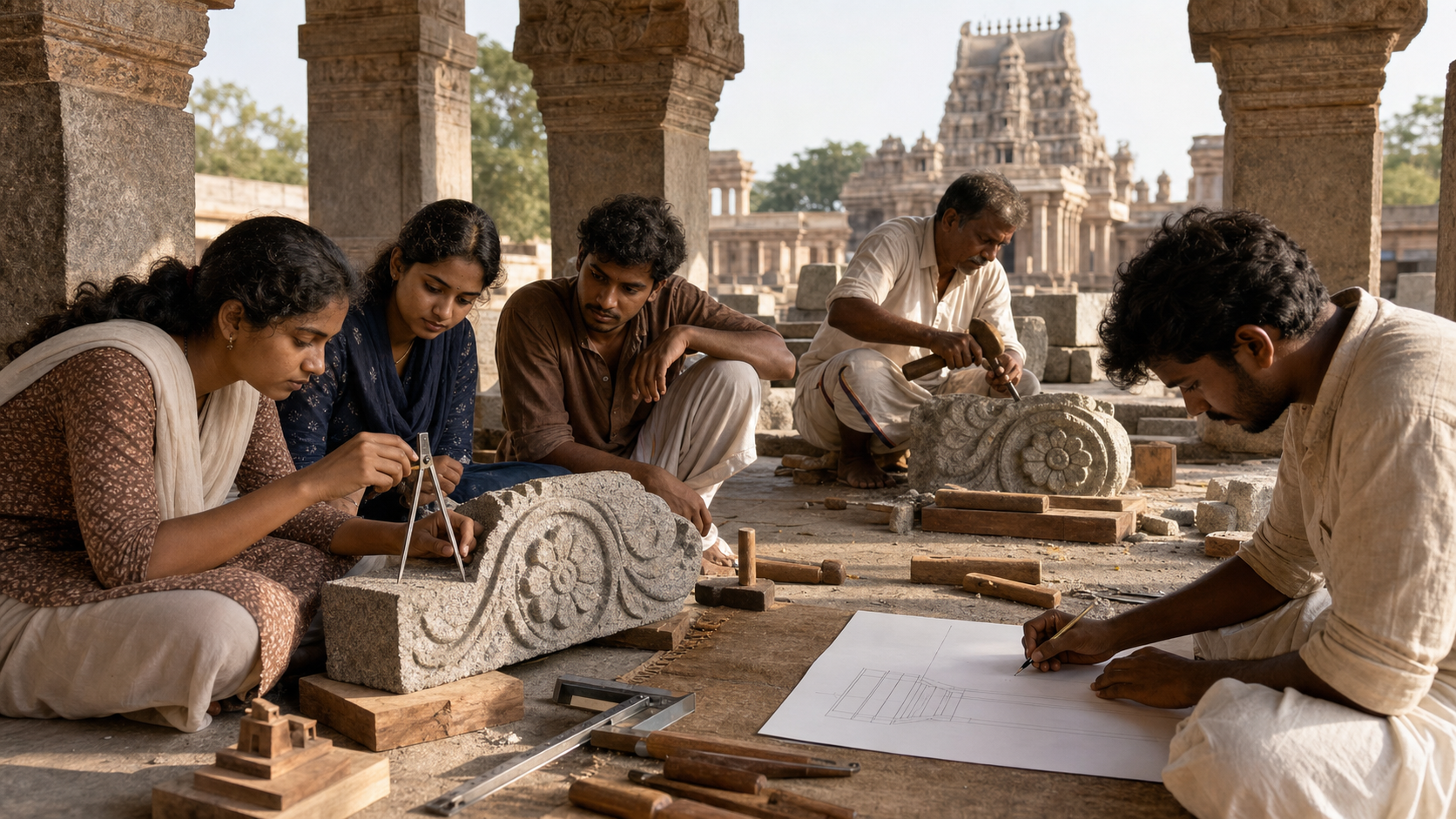
This essay offers a rigorous, empathetic roadmap to reclaim India’s Dharmic sense of history. It dismantles the colonial trope that Hindus lacked historical consciousness by surveying Itihasa, Puranas, caritras, inscriptions, and temple records across Ancient India and Medieval India. It explains why certain indigenous archives thinned during the medieval era and shows how to read…
-
From Triggered to Tranquil: How Rehearsed Boundaries Break Narcissistic Cycles

Many people know exactly what to say in narcissistic abuse dynamics yet cannot access those words when it matters. This analysis shows how voiced rehearsal—practicing a single boundary sentence out loud—transfers insight into procedural skill under stress. Drawing on psychophysiology (amygdala hijack, state-dependent retrieval, and polyvagal-informed regulation), it explains why the prefrontal cortex goes offline…
-
Indrajit’s Final Penance: A Riveting Study of Dharma, Filial Loyalty, and Redemption in Ramayana

This long-form analysis explores Indrajit (Meghanada) as one of the Ramayana’s most complex figures—an invincible warrior confronting a profound dharmic dilemma between filial loyalty and moral law. Anchored in the Valmiki Ramayana and enriched by regional traditions such as the Krittivasi Ramayana, it explains how the Nikumbhila sanctuary—often associated with Kali—frames his final yuddha-yajna as…
-
Aim Hrim Klim: Unlock the Sacred Triad of Shakti and the Three States of Consciousness

Aim Hrim Klim – the revered triad of bīja mantras – unites knowledge, compassionate power, and loving attraction into a single, practical discipline in Hindu spirituality. Drawing on classical mantra-śāstra and living lineages, the article explains how Aim clarifies cognition, Hrīṁ integrates heart-intelligence, and Klīṁ refines desire into dharmic will. It maps the triad to…
-
Ghaziabad Shock: Woman Alleges Forced Conversion, 5 Nikahs, 3 Halalas; FIR Against 16 — Explained

A registered FIR in Ghaziabad alleges that a Hindu woman was coerced over thirteen years into forced conversion, five nikahs, and three instances described as halala. This analysis explains the law on consent, coercion, and unlawful conversion in Uttar Pradesh, and clarifies how personal laws interface with non-derogable criminal statutes. Readers gain a clear primer…
-
Samavartana Unveiled: The Transformative Rite of Return and the Making of a Householder

Samavartana—Hindu Dharma’s rite of return—formally completes Brahmacharya and inaugurates the ethical agency required for Grihastha. Grounded in the Grihya Sutras, Dharmasutras, and the Taittirīya Upaniṣad’s convocation counsel, it transforms private learning into public responsibility through guru-dakṣiṇā, ritual bathing, and vows of truth, duty, and lifelong study. The rite prepares the Snātaka for pañca-mahāyajñas—daily disciplines that…
-
Organized Religion Reconsidered: Safeguarding Dharma Without Losing the Sacred Pulse

This essay examines the enduring paradox of organized religion in the dharmic traditions: the need to institutionalize sacred insight without extinguishing its contemplative core. Drawing on historical patterns from the Buddhist sangha, Hindu mathas and ashramas, Jain fourfold communities, and Sikh gurdwaras, it shows how organization can preserve wisdom, expand seva, and protect sacred spaces.…
-
King Charles III’s Lambeth Summit: A Powerful Step Toward Interfaith Harmony and Dharmic Unity

King Charles III convened about thirty leaders from Muslim, Sikh, Baháʼí, Christian, Hindu, and other traditions at Lambeth Palace Library to advance interfaith dialogue and social cohesion in the UK. The setting underscored scholarship and stewardship, framing the meeting as both symbolic and practical. Grounded in the UK’s 2021 Census realities, the piece explains why…
-
Inspiring Buckingham Palace Recognition: Bhaktivedanta Manor Volunteers Advance Seva and Unity

Volunteers from Bhaktivedanta Manor were invited to the King’s Garden Party at Buckingham Palace, affirming the role of dharmic service (seva) in the UK’s civic life. The recognition of Ketan Patel and Ashok Parmar highlights how faith-rooted initiatives can deliver measurable public benefit while nurturing cultural heritage. Readers gain a clear framework—inputs, activities, outputs, outcomes,…
-
Dashashanti: Ten Timeless Vedic Shanti Mantras for Protection, Harmony, and Inner Calm

Dashashanti designates a cycle of ten Vedic Śānti Mantras recited to sanctify study, rituals, and community life. Drawn from the Rigveda, Yajurveda, and early Upanishads, these hymns seek protection, clarity, and universal welfare. The cycle typically includes Bhadraṁ karṇebhiḥ, Śaṁ no mitraḥ, Saha nāvavatu, Pūrṇam adaḥ, Asato mā, Āpyāyantu mamāṅgāni, Āpyāyasva sametu te, Svasti na…
-
Thirukozhi Nachiyar Koil, Uraiyur: Azhagiya Manavala Perumal’s Sacred Wedding to Kamalavalli

Thirukozhi (Uraiyur) Nachiyar Koil in Tiruchirappalli honors the divine marriage of Azhagiya Manavala Perumal (Vishnu) and Kamalavalli Nachiyar (Lakshmi), making it a preeminent kalyana-sthalam among Tamil Nadu’s Divya Desams. The temple’s Dravida architecture, ritual precedence for Nachiyar, and festival calendar—especially Panguni Uthiram—express a living theology of compassion and auspicious union. Alvar hymns from the Nalayira…
-
Student Suicides in India: Data-Driven Causes, Risks, and Dharmic, Evidence-Based Solutions

Student suicides have reached record highs in India, mirroring a global public-health crisis that disproportionately affects youth. This analysis explains the scale of the problem using WHO and NCRB trends and unpacks multi-layered risks spanning mental-health vulnerability, academic pressure, family dynamics, social media, and sleep loss. It translates leading psychological models into clear prevention targets…