

You may understand why threads are needed for cloth and still wonder what makes them an “inherent cause.” Why is the color of those threads a different kind of cause? Why does the weaver belong to a third category? Until those distinctions are clear, samavayi karana can sound like an elaborate Sanskrit label for “material.”
The concept becomes useful when you treat it as a method of analysis. It tells you how to separate what constitutes an effect, what determines a feature of that effect, and what brings the effect into being. That separation is the heart of the Nyaya-Vaisheshika account of causation.
The word “inherent” hides two different ideas
Begin by keeping samavaya and samavayi karana distinct. Samavaya is inherence: the fundamental relation involved when a whole depends on its parts or when a quality belongs to a substance. Samavayi karana is a causal term: it names the cause that has a direct relation of samavaya with the effect.
This distinction prevents a common mistake. Samavaya is not another material sitting between two things, and samavayi karana is not the relation itself. One is an ontological relation; the other is an item occupying a specific causal role.
Consider a cloth. Its threads are parts, or avayavas, while the cloth is the whole, or avayavi. Nyaya-Vaisheshika does not reduce the whole to the statement that several threads happen to touch one another. The cloth is a new whole whose existence is grounded in those constituent threads. The threads therefore count as its samavayi cause.
The safest English gloss is “inherent material cause,” but the technical test matters more than the translation. Ask whether the proposed cause constitutes the effect and stands in the relevant relation of inherence with it. If it only produces, assists, colors, moves, or otherwise conditions the effect, it belongs elsewhere in the causal analysis.
This use of inherence fits the broader Nyaya-Vaisheshika picture of reality. A quality such as blueness cannot float independently of a substance, and a motion cannot occur without something that moves. Likewise, a composite whole cannot be detached from its constituent basis while remaining the same whole. These are not merely observations about physical closeness. They are claims about dependence.
One cloth requires three different causal explanations
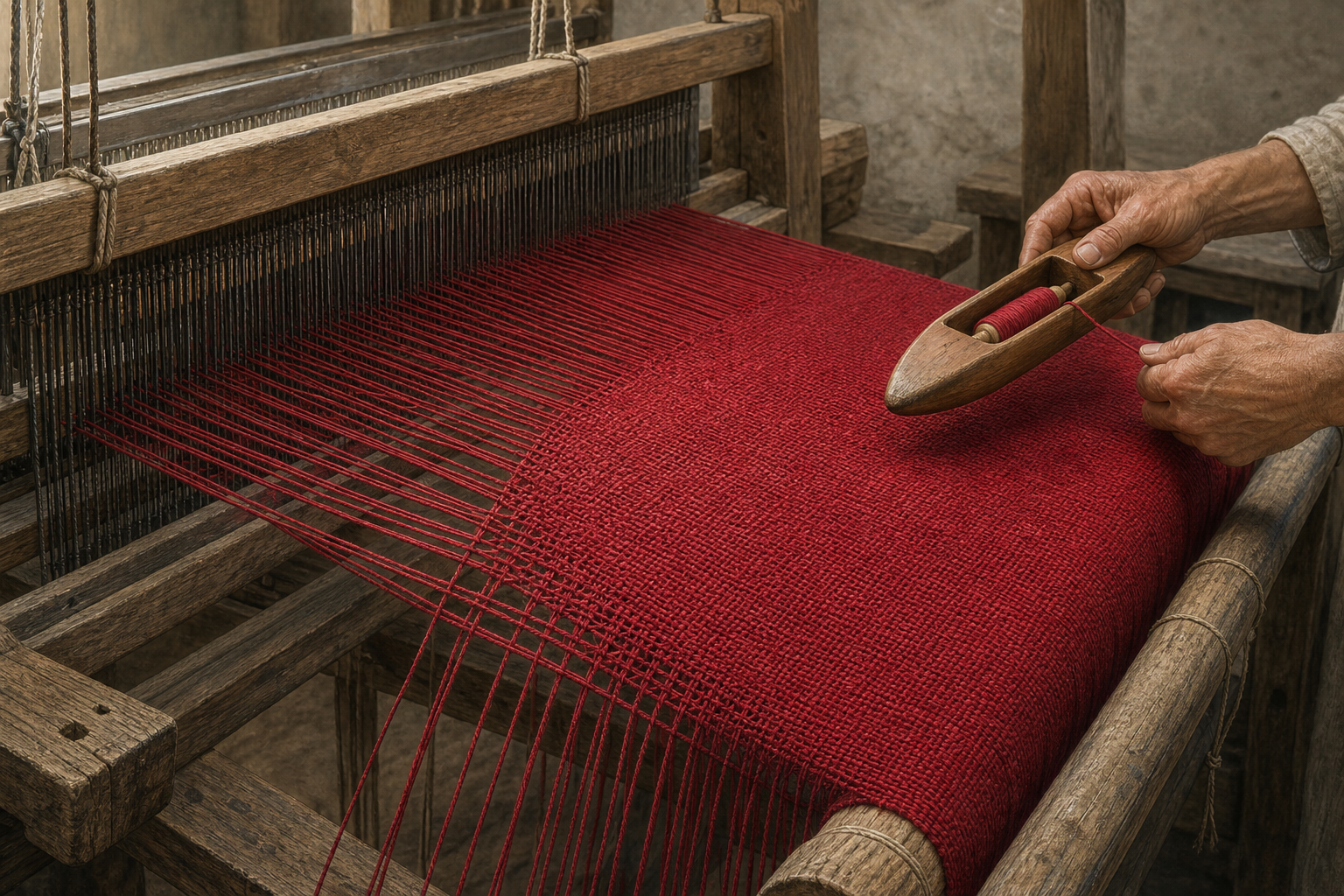
A complete explanation must do more than identify the material. The three-cause framework assigns a different job to samavayi, asamavayi, and nimitta causes.
| Causal role | What it explains | Cloth example | Question to ask |
|---|---|---|---|
| Samavayi karana | The constitutive basis of the effect | The threads | What is the effect materially constituted by? |
| Asamavayi karana | A causally relevant quality residing in the inherent cause and determining a quality of the effect | The color of the threads as a cause of the cloth’s color | Which feature of the constituent basis determines this feature of the result? |
| Nimitta karana | The operative agency that brings the effect about | The weaver | Who or what organizes the constituents into this product? |
Name the effect before you classify its causes. “Cloth” and “blue cloth” do not pose exactly the same explanatory question. The threads answer why there is a cloth with a constitutive material basis. Their color helps answer why the resulting cloth has that color. The weaver’s activity answers how the threads came to form a cloth at all.
A simple removal test makes the contrast easier to see. Remove the constituent basis as a basis, and the cloth is destroyed. Alter the color of the threads, and the cloth can remain a cloth while its color differs. The weaver need not remain inside or alongside the completed cloth, even though the weaver’s agency was required for its production.
This test is diagnostic rather than a complete proof. Physical difficulty of separation is not enough to establish samavaya. Two things can be hard to pull apart without thereby standing in the technical relation of inherence. You must ask what kind of dependence Nyaya-Vaisheshika is asserting, not merely whether separation would be inconvenient or destructive in practice.
The same discipline works with the clay-pot example. Clay supplies the pot’s material basis. That does not mean clay alone explains the pot’s particular production. An account that mentions only clay has identified an indispensable cause but has not yet supplied the whole causal story.
Why inherence does not make the effect eternal

Nyaya-Vaisheshika needs samavaya because ordinary contact cannot explain every dependence. Contact is the wrong model for a quality and its substance: blueness is not a second object merely touching a lotus. It is also inadequate for the relation between a genuine whole and its parts. If the relation joining them required another relation to connect it to each side, and that second relation required a third, the explanation would never reach its ground.
Samavaya stops that regress. It is treated as a fundamental, irreducible, and eternal kind of relation rather than as one more detachable link. You can assess the proposal by asking whether this single basic relation coherently explains recurring cases of part-whole and substance-quality dependence without generating another chain of connectors.
Calling samavaya eternal does not make every cloth or pot eternal. It identifies inherence as a basic ontological relation. Particular composite effects can still be produced and destroyed. When their constituent organization is destroyed, those effects cease to exist.
This matters because Nyaya-Vaisheshika generally accepts asatkaryavada: the effect is a new product rather than an already existing object merely becoming visible. The cloth depends completely on the threads, yet the completed cloth did not have to exist as cloth before its production. Constitution does not entail pre-existence.
Samkhya and many Vedanta positions take the contrasting satkaryavada approach, according to which an effect in some sense pre-exists in its cause. That disagreement should not be blurred into a generic claim that every Dharmic school teaches the same theory of matter. They can agree that an effect has a material basis while disagreeing about whether production creates a genuinely new effect or manifests what was already present in causal form.
When you encounter the sentence “the effect is inseparable from its cause,” therefore, ask what it means. It may mean that the produced whole cannot exist apart from its constituents. It does not automatically mean that the whole existed before it was produced. That single distinction prevents a great deal of confusion between Nyaya-Vaisheshika and satkaryavada traditions.
A four-step test for classifying a proposed cause
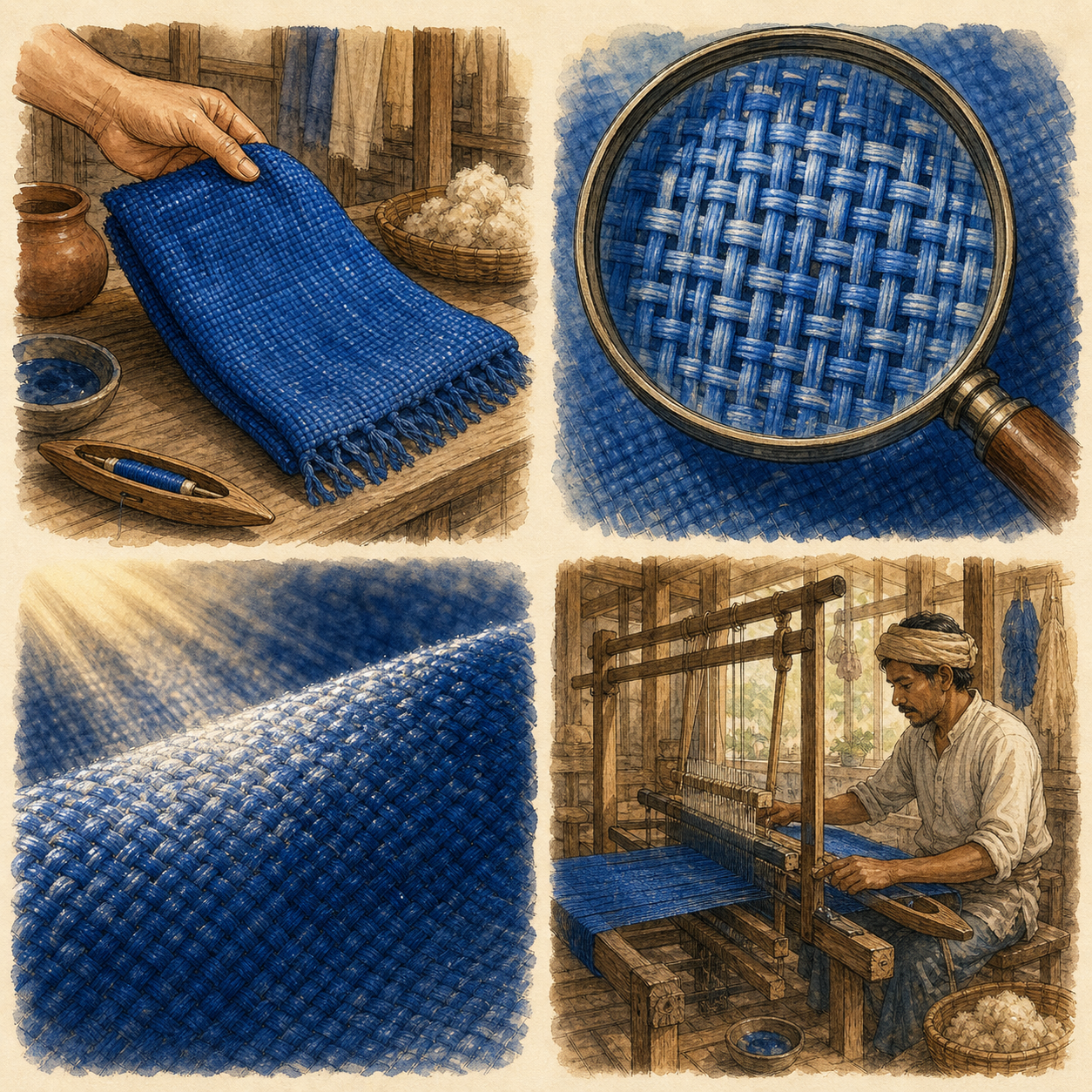
You can use the following procedure whenever a text labels something samavayi, asamavayi, or nimitta.
- Name one effect precisely. Do not begin with the vague question “What caused this?” Decide whether you are explaining the existence of the cloth, its color, or its production.
- Identify its constitutive basis. Ask what must be present as the material ground of this effect and what cannot be removed as a basis without the effect ceasing to be that effect. This is the candidate samavayi cause.
- Separate properties from constituents. If something is a quality of the constitutive basis and explains a corresponding feature of the effect, test it as an asamavayi cause rather than calling it material.
- Identify the operative producer. Ask what agency or operation brought the constituents into an effect-producing order. This is the candidate nimitta cause.
Then run a category check. Is the candidate a substance, or is it a quality belonging to a substance? Is it present as part of the completed effect’s constitutive ground, or did it act in bringing the effect about? Does it explain that the effect exists, or only why the effect has a particular feature? These questions expose category mistakes that the broad English word “cause” tends to conceal.
Modern comparisons can help you begin, but they should remain comparisons. An alloy’s microstructure can illuminate how a material basis conditions macroscopic strength. Hardware architecture can illustrate how a material platform constrains what a computer can do. Neither analogy, by itself, proves that the classical relation of samavaya applies exactly as it does to threads and cloth. Use an analogy to locate the question, then return to the system’s own ontological test.
Key takeaways
- Samavaya is the relation of inherence; samavayi karana is the cause directly related to an effect through that relation.
- The threads constitute the cloth, the threads’ color helps determine the cloth’s color, and the weaver produces the cloth. These are three causal roles, not three names for the same action.
- An effect’s dependence on its inherent cause does not establish that the effect existed before production.
- Always specify the effect first. A causal classification is only as precise as the result you are trying to explain.
Compare Dharmic systems without erasing their differences
Inherent causation can open a serious conversation across Dharmic traditions, provided you compare questions before equating terminology. Nyaya-Vaisheshika asks what constitutes a produced whole, which properties condition its features, and which agency produces it. Jain discussions of dravya, guna, and paryaya direct attention to substance, quality, and mode, while anekantavada warns against treating one standpoint as exhaustive. Buddhist pratityasamutpada analyzes layered dependence through causes and conditions. Sikh reflection on hukam places ordered unfolding within a unifying vision.
These frameworks share an interest in dependence, order, and the inadequacy of single-factor explanations. They are not interchangeable ontologies. Samavaya should not be silently translated as dependent origination, many-sidedness, or hukam. Such translations erase the very distinctions that make dialogue valuable.
For a careful comparison, make three columns in your notes: what each tradition accepts as real, whether it treats the effect as new or pre-existent in some sense, and how it distinguishes material, conditioning, and operative factors. If two schools answer those questions differently, preserve the disagreement even when their practical language of interdependence sounds similar.
You can also use the three-cause pattern as an analogy for practical deliberation. When an outcome fails, do not inspect intention alone. Ask whether its constitutive base was adequate, whether the relevant qualities and conditions were present, and whether effective agency organized them. Keep the analogy modest: a habit or community is not automatically a samavayi cause in the strict classical sense. The value lies in refusing to make one factor carry an explanation that requires several.
The next time you meet a causal claim in a philosophical text, write the effect at the top of the page. Beneath it, place the constitutive basis, the determining quality, and the producer in separate lines. If you cannot yet separate those roles, the problem is probably not the Sanskrit vocabulary; the causal question itself is still too broad. Refine that question, and samavayi karana becomes a working instrument of reasoning rather than a term to memorize.
References
