-
Decoding the Ten Siddhi Devis: Guardians of Mahameru’s Sri Chakra First Avarana

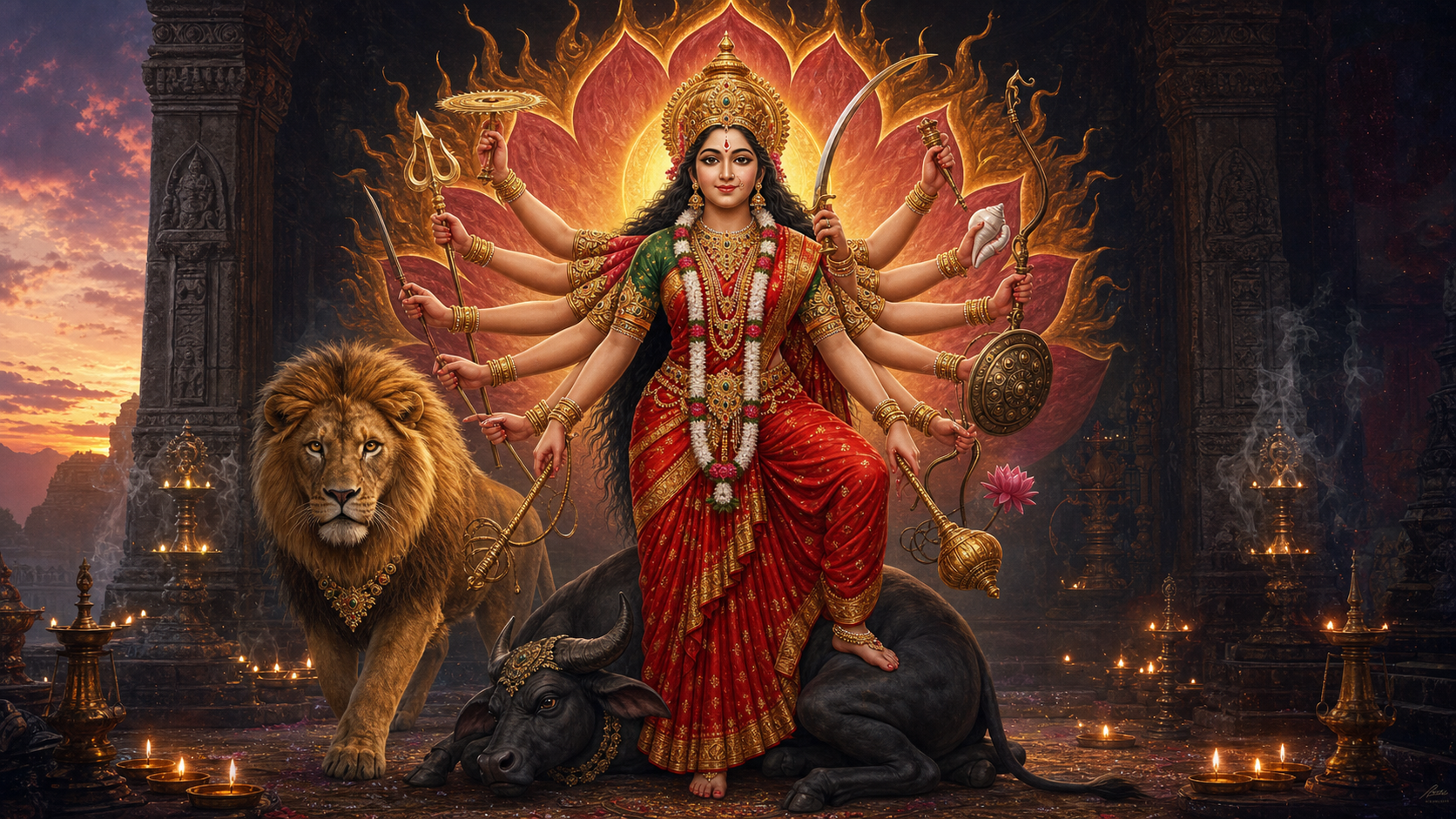
The Mahameru Sri Chakra’s first avarana—Trailokya-mohana, the bhupura—houses the Ten Siddhi Devis who guard the sacred threshold from Anima to Sarvakama. This long-form, research-driven essay decodes their technical meanings, ritual functions in Sri Vidya navavarana puja, and practical correlates in attention, ethics, and resilience. It clarifies variant lineage lists while preserving accuracy, situating siddhi within…
-
Padma Samhita Unveiled: Timeless Pancharatra Rituals to Elevate Modern Spiritual Life

Padma Samhita is a cornerstone of the Pañcarātra tradition, detailing thirty-one chapters that integrate temple construction, mūrti consecration, daily worship, and ethical formation. This overview explains its core theology—the vyūha doctrine and arcā avatāra—and shows how mantras such as Om Namo Nārāyaṇāya and Om Namo Bhagavate Vāsudevāya shape steady household practice. Readers gain a practical…
-
Temple Lands at Risk? Why Maharashtra’s 2026 Devasthan Inams Draft Act Alarms Dharmic Bodies

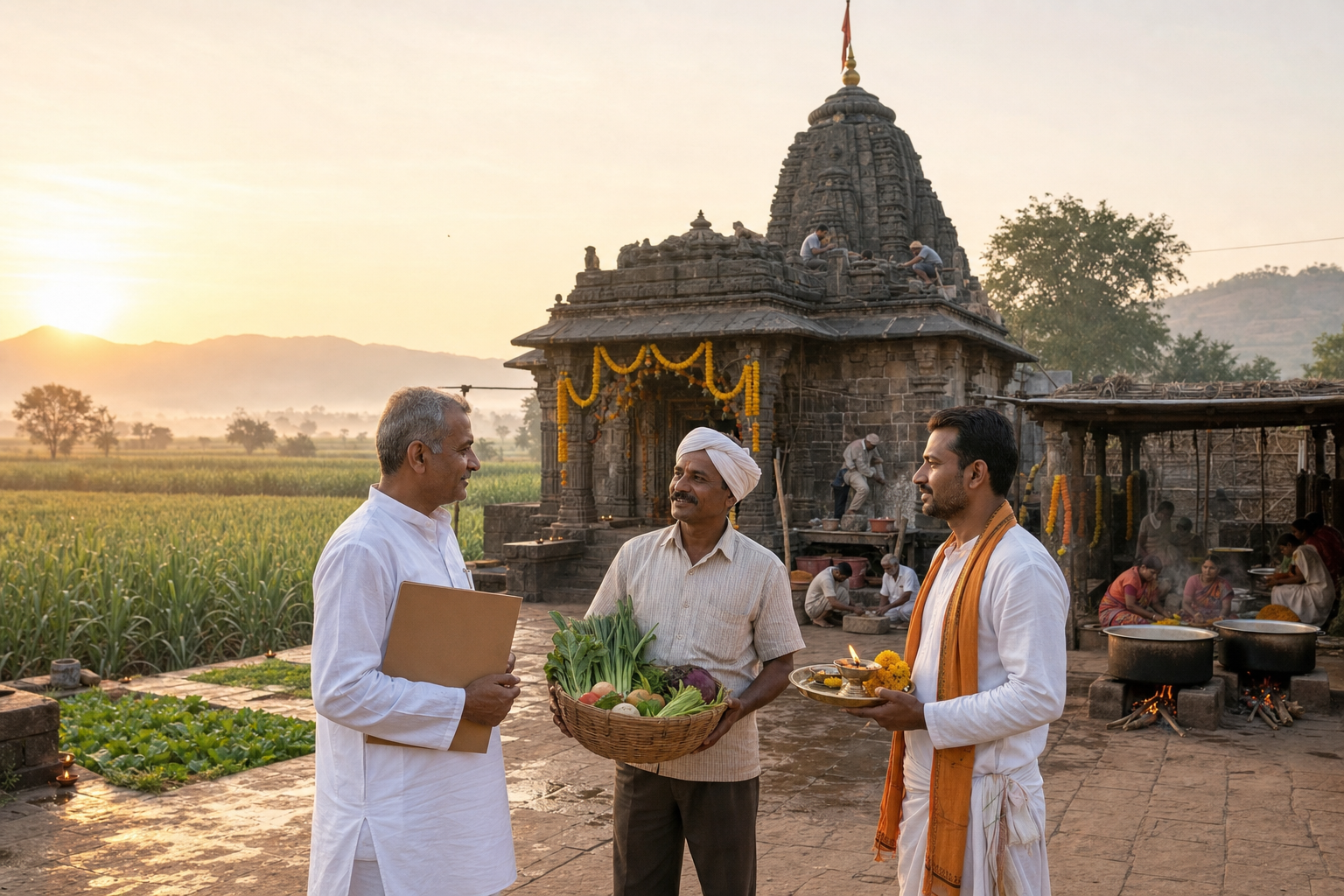
Maharashtra’s proposed Devasthan Inams Abolition Draft Act, 2026 has raised alarms among temple trusts and dharmic institutions that rely on endowment-backed revenues for worship, welfare, and heritage conservation. This analysis clarifies what devasthan inams are, why they matter to community life across Hindu, Buddhist, Jain, and Sikh traditions, and how constitutional safeguards under Articles 25,…
-
Vermilion Box (Sindoor Dabi): Goddess Lakshmi’s Grace, Prosperity Rituals, and Living Heritage

The Vermilion Box (Sindoor Dabi) is a living symbol of Goddess Lakshmi’s grace in Hindu homes, especially in Bengal and eastern India. This long-form exploration traces its ritual role in Panchopachara and Shodashopachara, its association with the sacred feminine, and its regional craft vocabularies. Readers learn how red—through kumkum or sindoor—visualizes ethical prosperity, and how…
-
Safeguarding Vishalgad’s Sanctity: Heritage-First Legal Review of Rehan Malik’s Urs

Hindu Ekta Andolan’s appeal regarding the Urs of Rehan Malik at Vishalgad Fort raises a conservation and public-safety question rather than a dispute of faith. This analysis explains Vishalgad’s historical significance, outlines how heritage and environmental laws apply, and details the conservation science behind crowd-induced stress on fragile masonry. It clarifies the meaning and practices…
-
Overcoming Egoism and Lethargy in Kali-Yuga: Bhagavad Gita Guidance for Humility and Seva

Egoism and lethargy are two subtle forces that derail spiritual progress in Kali-Yuga. Drawing on Bhagavad Gita teachings and parallel insights from Buddhism, Jainism, and Sikhism, this article explains how false ego (ahankara) reframes practice around I and mine, while tamasic inertia fosters delay and neglect. It then offers an integrated, practical program that combines…
-
Unshakable Safety in Saranagati: Why Krishna’s Protection Surpasses All Obstacles

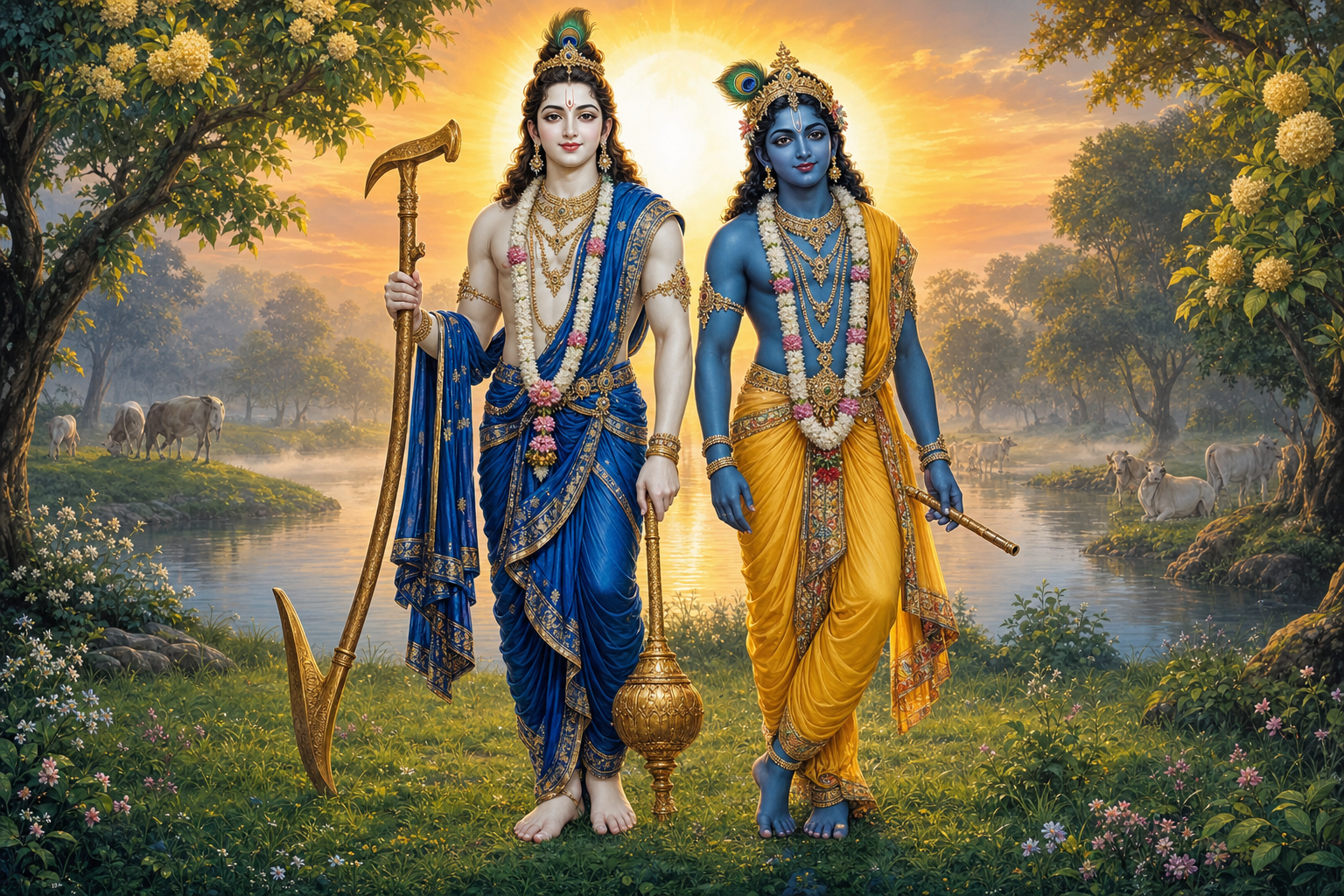
This essay examines the Vaishnava doctrine of saranagati—surrender to Krishna—as an intellectually rigorous and ethically disciplined path to unshakable protection. Anchored in Bhagavad Gita assurances (4.11, 9.22, 18.66) and illuminated by case studies such as Gajendra, Draupadi, Prahlada, and Govardhana, it shows how divine shelter operates within, not outside, responsible agency. The six limbs of…
-
Mastering Bhakti Yoga: How Loving Krishna Transforms Stress into Unshakable Peace

Bhakti yoga reframes modern stress by transforming daily work into purposeful seva anchored in Bhagavad Gita teachings. Regulated living in eating, sleep, speech, and activity cultivates sattva and aligns with contemporary research on circadian health. Japa and kirtan enhance attentional control and calm the nervous system, supporting wiser choices in work and relationships. A practical…
-
Neither Sat Nor Asat: Rigveda’s Nasadiya Sukta, Vedic Cosmology, and Sacred Paradox Explained

Rigveda’s Nasadiya Sukta opens with the paradox “neither sat nor asat,” a precise philosophical strategy rather than a rhetorical flourish. Read in concert with the Upanishads, the hymn marks a pre-categorical horizon where ordinary predicates fail, complementing later Vedantic distinctions between ultimate and conventional truth. Classical schools clarify its logic: Sāṅkhya’s causal latency, Nyāya’s theory…
-
Jnana–Karma Samuccaya Vada in Vedanta: Unifying Knowledge and Action on the Path to Moksha

Jnana Karma Samuccaya Vada explains how knowledge (jnana) and action (karma) can operate together on the path to moksha without diluting the distinctive role of each. Drawing on the Bhagavad Gita, Brahma Sutra, and classical Vedanta, it clarifies why Advaita treats karma as preparatory, how Bhedabheda argues for a robust synthesis, and how Vishishtadvaita and…
-
Pride Is Not Supremacy: Debunking Smears‑by‑Association Against Hindu American Communities

This evidence-driven analysis explains why smears-by-association misrepresent Hindu American community life and fuel Hinduphobia. It clarifies the difference between heritage and ideology, showing how family ties, youth camps, and diaspora networks are normal civic features, not pipelines to extremism. Readers learn practical standards for ethical journalism—quote the person, document conduct, triangulate records—and how these protect…
-
Unveiling Goddess Kaveri in Hindu Sculpture: Iconography, Ritual Power, and Sacred Geography

Goddess Kaveri, revered as a living river and divine mother, is rendered in Hindu sculpture through a precise visual grammar that blends Shilpa Shastra canons with the lived rhythms of sacred geography. This essay explains how to recognize her iconography, from kumbha and lotus attributes to makara-toranas and gentle mudras, and shows where she commonly…
-
From Reactivity to Freedom: Dharmic Wisdom on Maya, Attention, and Inner Mastery

Modern life conditions people to react incessantly; dharmic traditions explain this reflex as a misperception of appearances—Maya in Hinduism, avidyā and dependent origination in Buddhism, mithyātva and kashāyas in Jainism, and the pull of Maya away from Naam in Sikhism. Rather than denying experience, these lineages teach methods to recalibrate perception and lengthen the gap…
-
June 4, 2026 Panchang (IST): Clear Tithi Timings, Auspicious Windows, Nakshatra & Rashi Guidance

Thursday, 4 June 2026 (IST) features Krishna Paksha Chaturthi until 20:25 IST, after which Krishna Paksha Panchami begins. This guide explains how tithi boundaries are calculated, why they can fall at any time, and how to use them for planning. It outlines proven methods for deriving Abhijit Muhurat, Brahma Muhurta, Rahu Kalam, Yamaganda, Gulika Kala,…
-
Forge Unshakable Students: Aashishta, Balishta, Driddhishta as the Pillars of Mastery

This article distills a timeless triad for student development—Aashishta (complete faith), Balishta (integrated strength), and Driddhishta (stability)—into a practical, research-aligned roadmap. It defines each quality, shows their interdependence, and aligns them with shared values across Hinduism, Buddhism, Jainism, and Sikhism to support unity in diversity. Readers will find implementable school practices: mentorship circles inspired by…
-
Does Time Flow or Does Space Evolve? A Profound Reconciliation of Relativity and Dharmic Wisdom

This comprehensive analysis reconciles a popular paradox: modern physics is said to claim that time changes while space is constant, whereas ancient dharmic texts appear to say the opposite. Clarifying the science, general relativity treats spacetime as dynamic, with evolving spatial geometry and observer-dependent time. Clarifying the traditions, Hindu, Buddhist, Jain, and Sikh sources distinguish…
-
Vaidyo Narayano Harihi Explained: Sacred Medicine, Divine Healer, and Dharmic Healthcare Ethics

‘Aushadhi Jahnavi Toyam Vaidyo Narayano Harihi’ teaches that medicine should be received as sacred like Ganga’s waters and the physician honored as an instrument of Narayana. The phrase aligns with Ayurveda’s chikitsa chatushpada, where physician, medicine, attendant, and patient together determine outcomes. By sacralizing treatment, patients cultivate trust and clarity, which modern psychoneuroimmunology suggests can…
-
Is Any Indian Scripture Equal to the Quran or Bible? A Definitive Guide to Dharmic Canons

Is any Indian scripture equal to the Quran or Bible? In the dharmic world, authority is polycentric rather than centralized in one book. Hinduism distinguishes Sruti (the Vedas, as apex authority) from Smriti (Itihāsa, Purāṇa, Dharmashastras, and Agamas), with the Bhagavad Gita serving as the most accessible synthesis for general readers. Sikhism centers on a…
-
Is the Universe an Illusion? A Rigorous Vedic Guide to Maya, Vedanta, and Liberation

Vedic scriptures call the world an “illusion” not to deny its existence, but to redefine reality with precision. Advaita Vedanta distinguishes absolute reality (Brahman) from empirical, dependent reality (the cosmos as mithyā) and explains how māyā and avidyā generate the appearance of multiplicity. Upanishadic teachings, supported by the Bhagavad Gita, show why the world is…
-
Mira Road on Edge Before Bakri Eid: Urgent Call for Dialogue, Lawful, Humane Solutions

Ahead of Bakri Eid (Eid-ul-Aazha), Mira Road faces rising tensions over temporary goat sheds and the prospect of public sacrifice in housing societies. This article maps the legal and civic terrain—covering constitutional protections, municipal by-laws, animal welfare norms, and housing society rules—while offering a practical, peace-first roadmap. It argues against provocative counter-actions, including introducing pigs…