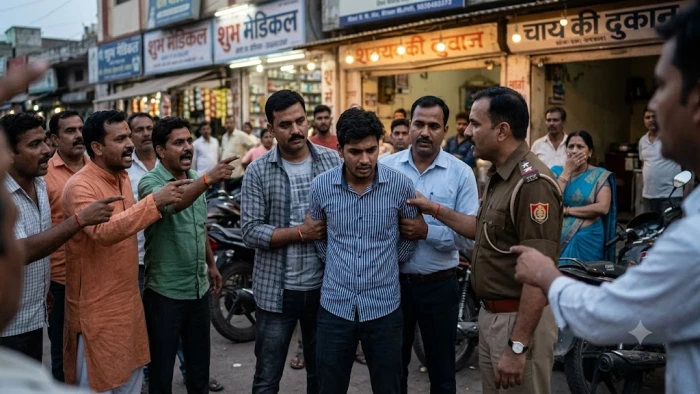
Prohibitory orders were clamped in parts of Madurai following reported clashes between Hindu activists and police in the Tirupparankundram Temple row on November 4, 2025. The immediate restrictions were framed as a preventive step to stabilize law and order around the shrine while ensuring darshan and routine worship could continue where permitted.
Initial accounts described tense exchanges near designated congregation points, with police deploying additional personnel to manage crowd movement and enforce assembly limits. Authorities signaled that the orders would be reviewed periodically, highlighting the short-term objective of preventing escalation and safeguarding devotees, residents, and public property.
Local media discussions referenced the involvement or presence of individuals aligned with groups such as Hindu Makkal Katchi, Hindu Munnani, Vishwa Hindu Parishad (VHP), and Rashtriya Swayamsevak Sangh (RSS). While mobilizations can amplify community concerns, they also raise the necessity for transparent permissions, clear procession routes, and adherence to codes of conduct that protect both the sanctity of the temple and public safety.
Residents in surrounding neighborhoods reported anxiety over traffic disruptions, loud sloganeering, and uncertainty about access to shops and schools. For many devotees, the situation stirred a deep emotional responsean attachment to sacred space coupled with a desire to express faith peacefully without confrontation or fear.
As a revered pilgrimage site, the Tirupparankundram Temple symbolizes living heritage for Hindus and embodies values that resonate across dharmic traditionsahimsa, discipline, and communal harmony. In moments of tension, these shared principles become essential: Hinduism, Buddhism, Jainism, and Sikhism all uphold non-violence, dialogue, and mutual respect as the most effective pathways to resolve disputes and preserve the dignity of worship.
Prohibitory orders, typically issued under the Code of Criminal Procedure to restrict large gatherings, are designed to be temporary. In practice, they may limit processions, rallies, or public meetings, while allowing routine religious functions under regulated entry. Devotees are encouraged to monitor official advisories from the district administration and temple authorities, carry identification if movement checks are in place, and follow updated traffic diversions to avoid congestion.
Constructive de-escalation depends on structured dialogue among temple administrators, community representatives, and district officials. Evidence from similar situations indicates that a jointly agreed route plan, time-bound permissions, trained volunteer marshals, real-time coordination cells, and transparent communication reduce friction and restore confidence in both worship and civic life.
Maintaining a rights-and-responsibilities equilibrium is crucial. The right to religious expression is strongest when paired with responsibility for non-violence, respect for police instructions, and care for fellow citizensincluding the elderly, children, and workers whose daily routines intersect with religious events in shared public spaces.
In the days ahead, key indicators of normalization will include the calibrated relaxation of prohibitory orders, regularized entry protocols for devotees, and visible channels for grievance redressal. Clear, consistent informationpreferably multilingual and widely disseminatedhelps prevent rumor, reduce polarization, and align community expectations with administrative realities.
Ultimately, the Tirupparankundram Temple row underscores a broader civic need: to uphold sanctity and safety together. A dharmic ethic of restraint and dialogueembraced across Hindu, Buddhist, Jain, and Sikh communitiesoffers a tested framework for navigating disagreement, protecting heritage, and reaffirming unity.
Inspired by this post on Struggle for Hindu Existence.