Pradosh Kaal Bhojan refers to an ancient Hindu practice of taking a single daily meal after sunset within the Pradosh period. In classical time-reckoning, Pradosh spans six ghatikasapproximately 144 minutes, or 2 hours and 24 minutesimmediately following sunset. Framed as an act of discipline and devotion, this observance situates nourishment within a sacred window, aligning daily life with nature’s transition from day to night.
The Pradosh period has long been regarded as spiritually potent. As a liminal phase, twilight signifies a threshold where the rhythm of the day yields to reflective stillness. Within many regions of Ancient India, this time was associated with worshipespecially Pradosham dedicated to Shivaand with mindful actions that calm the senses. Pradosh Kaal Bhojan uses the same contemplative frame: the meal is approached as a deliberate, grateful act rather than a hurried routine.
Ethically, the observance nurtures tapas (self-discipline) and aparigraha (restraint), transforming eating into a practice of awareness. Food is received with reverence, conversation softens, and the hush of early night encourages attention to taste, aroma, and breath. Such mindful eating supports gratitude for the land and labor that make the meal possible, while reinforcing a rhythm of simplicity central to many Hindu traditions.
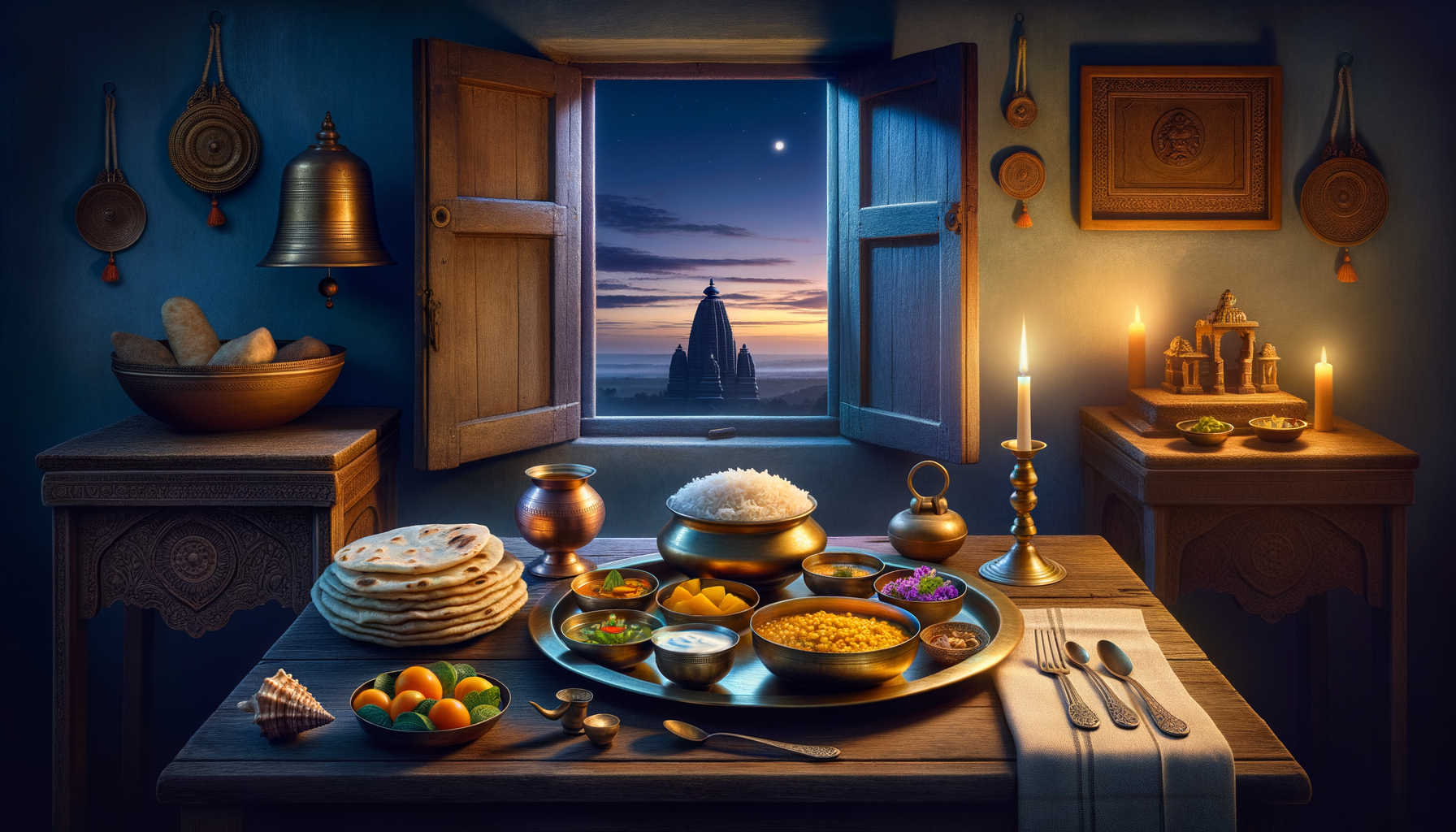
Culturally, the scene is evocative: lamps are lit, prayer or silence settles the household, and a simple, sattvic plate is shared without distraction. Families and communities often recall elders describing the serenity of first stars appearing as a bell or conch announced evening worship. In that atmosphere of quiet devotion, Pradosh Kaal Bhojan offered structure, belonging, and an intimate connection to sacred time.
Across the broader dharmic landscape, the ethos resonates deeply. Jain traditions emphasize restraint around night eating (rātri-bhojan tyāga) as part of careful, compassionate living; Buddhist practice cultivates mindful eating and reflective evenings, especially on Uposatha; Sikh teachings encourage disciplined living, seva, and gratitude around shared meals. While forms differ, the shared values of self-control, mindfulness, and reverence for life underscore unity among Hinduism, Buddhism, Jainism, and Sikhism.
Contemporary readers often find that the Pradosh period naturally invites a digital “sunset” and a return to presence: screens dim, voices lower, and attention gathers. Some also note that the schedule resembles time-restricted eating, a pattern discussed in the modern wellness discourse; however, spiritual intentrather than health outcomesremains central to Pradosh Kaal Bhojan. As with all observances, individual needs vary, and thoughtful adaptation is encouraged.
In practice, the observance rests on accuracy and simplicity. One determines local sunset, recognizes that Pradosh extends for six ghatikas thereafter, and plans the single daily meal within this window. Many households light a lamp, offer a brief prayer or moment of silence, and eat slowly, honoring the quiet sanctity of twilight. Those wishing to link the meal with worship may align with Pradosham observances, while consulting community elders and regional calendars for nuance.
Historically, Pradosh is widely attested as an auspicious evening interval for worship in smriti and puranic traditions, and Pradosh Kaal Bhojan reflects a lived, regional integration of sacred timing with sustenance. Its endurance illustrates how Hindu practices often weave ritual, ethics, and daily life into a single, coherent rhythm grounded in nature’s cycles and the cultivation of inner calm.
Ultimately, Pradosh Kaal Bhojan suggests that eating is more than caloric intake; it is a moment of alignmentbody with breath, action with intention, and the individual with community. By honoring the twilight hour, the practice offers a gentle bridge between the seen and the subtle, inviting unity across dharmic traditions and reaffirming timeless values of mindfulness, gratitude, and harmony.
Inspired by this post on Hindu Blog.