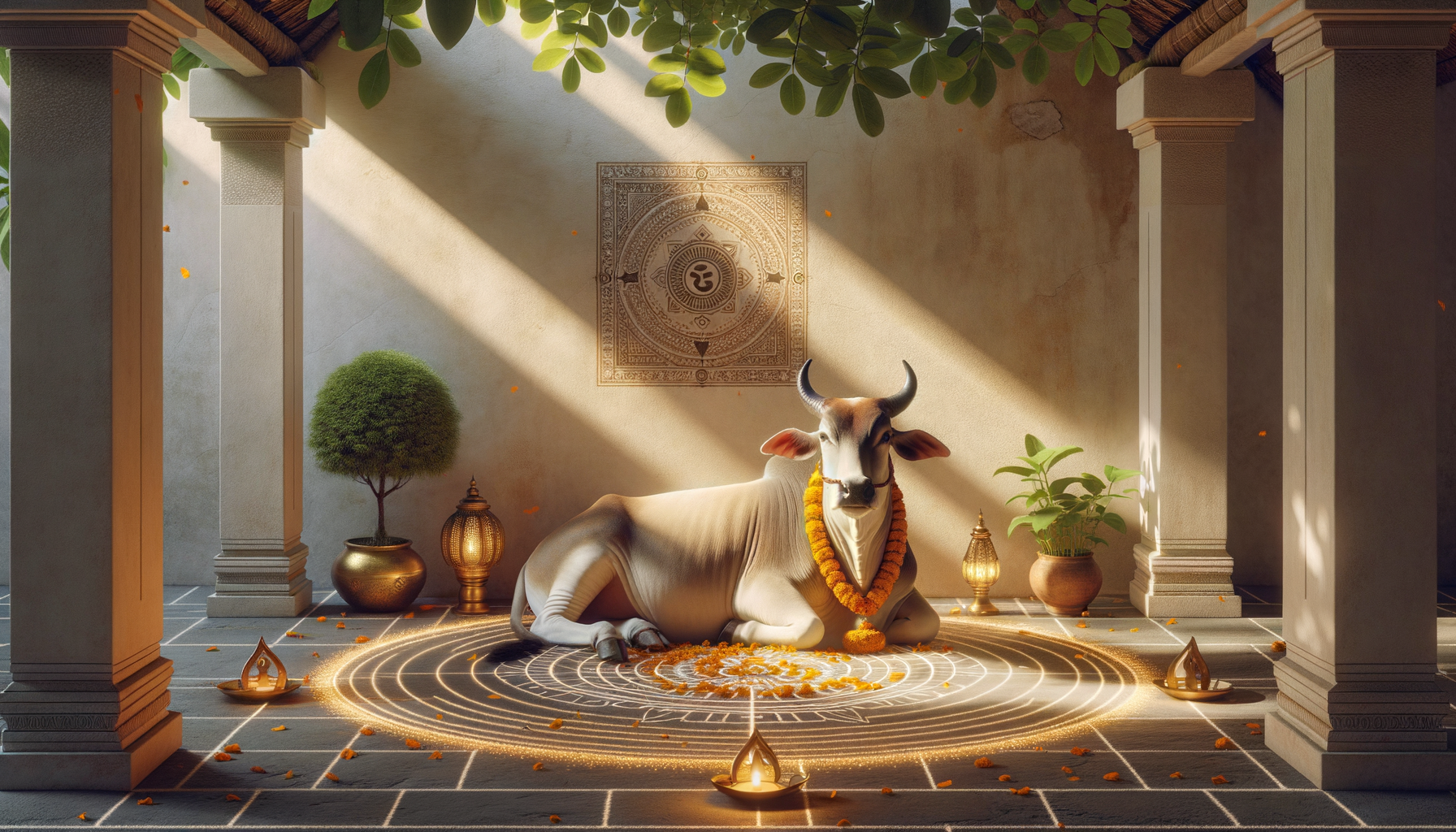
Gau Mata Mahatmyam occupies a revered place within Hindu Beliefs and Vedic culture, where the cow is honored as a symbol of abundance, protection, and harmony. The tradition associates the presence of the cow with auspiciousness, moral responsibility, and ecological care, themes that remain resonant across the wider dharmic world through shared values of compassion, non-violence, and stewardship.
गौ कृपा केवलम 1 गौ माता जीस जगह खडी रहकर आनंद पुर्वक चैन की सांस लेती है। वहा वास्तु दोष समाप्त हो जाते है। 2 गौ माता मे तैतीस कोटी देवी देवताओं का वास है। 3 गौ माता जीस जगह खुशी से रभांने से देवी देवता पुष्प वर्षा करते है। 4 गौ माता के गले […]
The opening assertion associates “Gau Krupa” (grace of the sacred cow) with the resolution of Vastu imbalances. Read symbolically, the calm, contented presence of a cow signifies an environment aligned with sattvatranquility, balance, and carequalities that households seek in Vastu for well-being. In this lens, the cow’s peaceful demeanor functions as a cultural marker of harmony rather than a mechanistic remedy.
The statement that “तैतीस कोटी देवी देवताओं का वास” resides in Gau Mata reflects a well-known Puranas motif: the cow as a microcosm of the sacred whole. Within Puranic imagination, such language emphasizes the cow’s integrative sanctity in Hindu Dharmagathering in one form the many aspects of divinity, the rhythms of nature, and the duties of care, gratitude, and restraint that define spiritual life.
The poetic image of deities showering flowers where the cow expresses joy evokes auspicious arrival and blessings. In traditional aesthetics, a contented animal signals environmental and moral concordhuman conduct grounded in dharma, kindness to animals, and mindful coexistence. As a spiritual metaphor, it affirms that shared joy between humans and other beings contributes to a cultivated atmosphere of grace.
The excerpt concludes with an incomplete line, indicating that traditional texts often enumerate additional auspicious attributes associated with different parts of the cow. Without extending beyond the provided wording, it may be noted that such enumerations typically serve to deepen reverence through contemplative symbolism rather than to prescribe literalist readings.
Beyond symbolism, the cultural heritage surrounding Gau Mata carries practical implications. Communities have long recognized the cow’s role in agrarian sustainabilitysupporting soil health, household economy, and resource cyclesthus connecting reverence with ecological wisdom. In this way, spirituality and daily livelihood intersect, reinforcing ethical use, reciprocity, and care for the land.
These themes resonate across dharmic traditions. Ahimsa in Jainism, karuna (compassion) in Buddhism, and seva with sarbat da bhala in Sikhism converge on respect for life and responsible stewardship. While modes of practice differ, the shared ethic is clear: cultivating compassion toward animals and the environment strengthens social harmony and spiritual insight without insisting on a singular path of worship.
In lived experience, many households recall a noticeable serenity when cows rest peacefully near courtyards or village commons. Such moments are remembered as quietly transformativereinforcing Vastu harmony as a felt quality, encouraging gentle speech, mindful action, and a renewed sense of community well-being grounded in Spirituality.
Taken together, Gau Mata Mahatmyam expresses an integrative vision: a sacred cow as emblem of plenitude, ethical restraint, and interdependence between humans and nature. Read academically yet empathetically, these statements invite a plural, inclusive understandinghonoring Hindu Beliefs while affirming the broader dharmic commitment to unity, compassion, and the flourishing of all beings.
Inspired by this post on Hindu Pad.