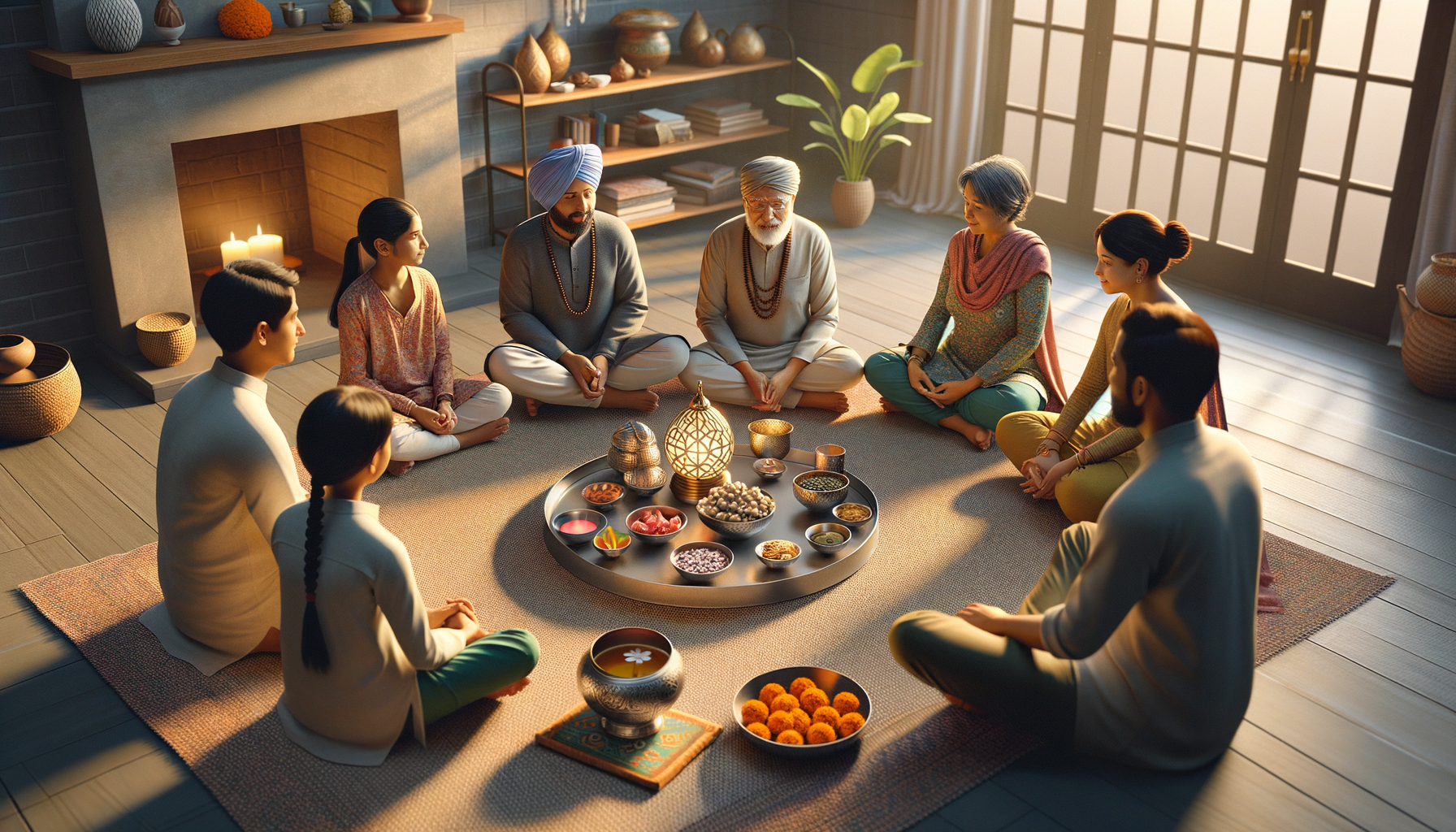
The saying “Family is the core from which all other relationships branch out” resonates deeply across Dharmic traditions. In Hinduismthe world’s oldest living spiritual traditionthis insight is not abstract; it is a lived principle guiding social harmony and ethical conduct. The Hindu family system provides the first, most formative space in which values are absorbed, relationships are refined, and one’s capacity for compassion and responsibility is cultivated.
Viewed through an academic lens, family functions as the first school of dharma. Within the framework of āśrama, the gṛhastha stage emphasizes duty, reciprocity, and care. Through everyday saṁskāras and ritualsnaming ceremonies, coming-of-age observances, shared prayersindividuals learn satya (truthfulness), dayā (compassion), dāna (generosity), and ahiṁsā (non-violence). These virtues, first practiced at home, extend outward to shape friendships, community ties, and civic responsibilities.
Interconnectedness is a unifying thread across Hinduism, Buddhism, Jainism, and Sikhism. In Hindu thought, Vasudhaiva Kutumbakam“the world is one family”expresses an ethic that begins at home and radiates outward. Buddhism’s insights on dependent origination and the centrality of the sangha reinforce the idea that wholesome relationships nurture liberation. Jainism’s anekāntavāda (many-sided truth) and ahiṁsā teach families to honor differing perspectives with empathy. Sikhism emphasizes living as gṛhastha (householder), practicing seva (selfless service) within the sangat (community), and recognizing the oneness of all in Ik Onkar. Together, these principles affirm that family is the seedbed of social harmony.
Daily life offers accessible illustrations. Shared meals that accommodate diverse dietary practices, morning japa or quiet reflection, and collaborative planning of festivalsDiwali, Vesak, Paryushana, and Gurpurabbecome practical lessons in mutual respect. Children observe elders negotiating differences with dignity; adults refine patience and active listening; and grandparents transmit cultural memory, stories, and songs that root identity in kindness and responsibility.
These home-grown habits scale up. Skills learned in familymindful speech, equitable decision-making, and compassionate boundary-settingtranslate into healthier workplaces, resilient neighborhoods, and a more cohesive civil society. When families normalize seva, conflict resolution, and gratitude, communities experience tangible gains in trust, public cooperation, and collective well-being.
From a Dharmic perspective, love is not merely sentiment; it is disciplined care. Practicing ahiṁsā in speech, dāna through time and attention, and satya with warmth builds durable “Family Bond” and “Family Values.” Such embodied virtues are the social infrastructure of unity in diversityan ethic essential to plural societies and global citizenship.
Contemporary realitiesnuclear households, joint families, diaspora life, and digital communicationevolve the form of family without diminishing its function. Whether under one roof or across continents, families can sustain intergenerational connection through intentional rituals, regular conversations, and community engagement. The principle remains constant: strong families nurture ethical citizens and inclusive societies.
Practical steps reinforce this foundation. Families might establish weekly circles for reflective dialogue; integrate brief daily practices such as shared silence, bhajans, or reading from the Bhagavad Gītā, Dhammapada, Tattvārtha Sūtra, or Guru Granth Sahib; volunteer together in local service projects; and commemorate life-cycle saṁskāras as opportunities to reaffirm compassion and responsibility. These small acts foster Interconnectedness and Social harmony.
Dharmic traditions also affirm spiritual freedom and respect for many pathsHindu Ishta (chosen form of worship), Buddhist plurality of practices, Jain ethical universality, and Sikh openness in community life. This shared commitment to dignity and dialogue helps families model inclusivity, counter polarization, and cultivate a culture in which diverse spiritual expressions can flourish side by side.
Ultimately, the maxim that family is the core of all relationships is a practical blueprint. By nurturing empathy, duty, and service at home, families strengthen the broader web of society. In this Dharmic framework, the home is the first sanctuary of wisdom, and its lessons branch outwardtoward friendship, community, nation, and the worldgrounding everyday life in love, responsibility, and harmony.
Inspired by this post on Hindu Blog.