
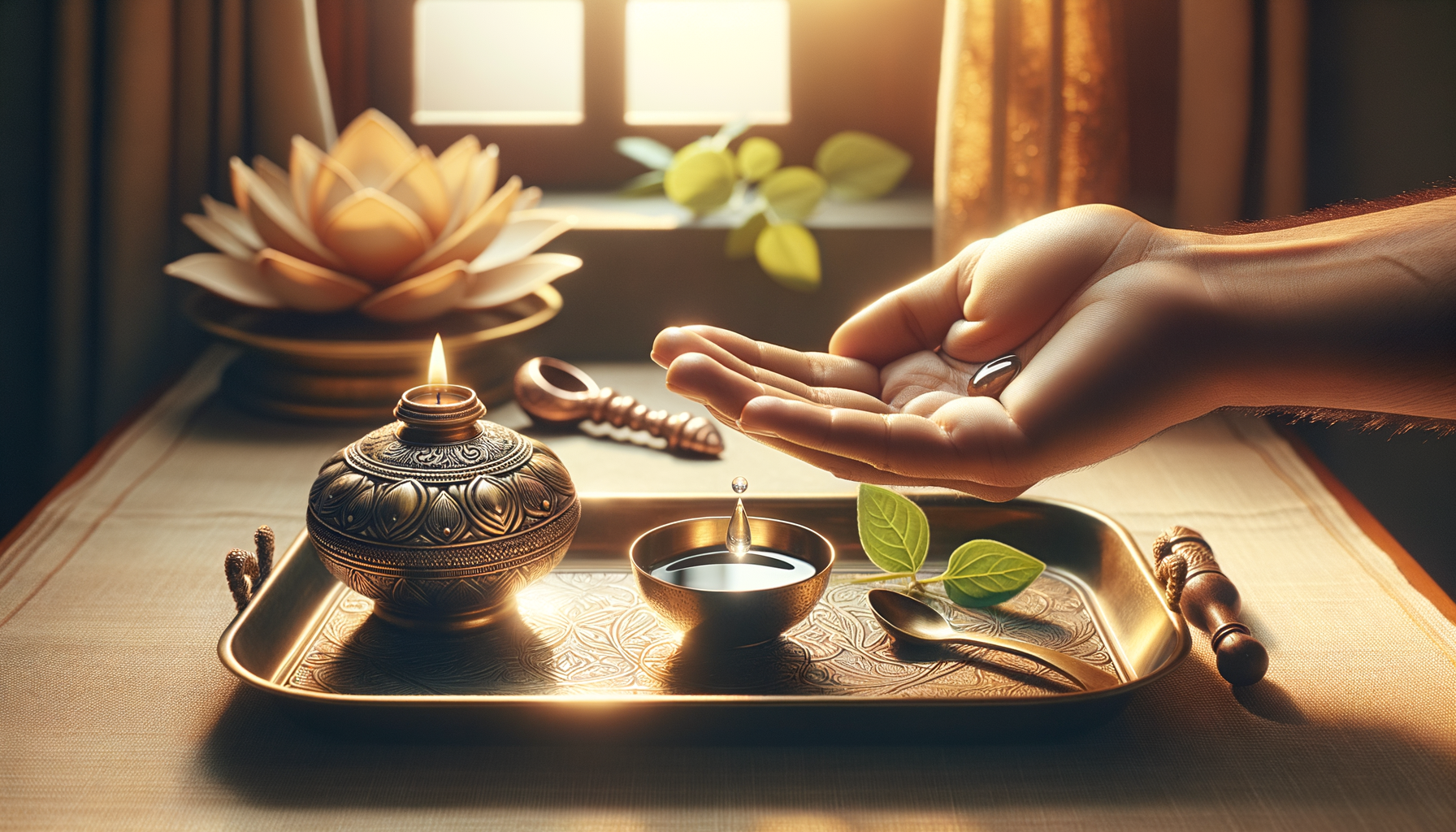
Achamanam (ācamana) is a time-honored Vedic purification rite found across Hindu rituals. It involves ritually sipping water to sanctify body, speech, and mind before prayer, mantra, japa, homa, or study. In the broader framework of Sanatana Dharma, this simple, precise act calms the senses, focuses attention, and sets a truthful intention for spiritual practice.
A common query concerns terminology: if water is called Apa (अप), why is it also called Achamanyam? In Sanskrit, ācamana denotes the rite of ritual sipping, and ācamaniya or Achamanyam refers to water specifically designated for that act. In other words, Apa is the general term for water, while Achamanyam names water prepared or set aside for Achamanam. Traditional teachers, including Sri Sri Ravishankar, often emphasize this linguistic and ritual clarity.
Achamanam is observed at the opening of many Hindu ritualsSandhyā-vandanam, temple worship, homa, and daily devotions. Practitioners consistently report that the measured sip of water steadies the breath and gathers attention, creating a brief yet meaningful pause that aligns thought, word, and deed with dharma. This focus enhances the efficacy of subsequent mantra and meditation.
Across sampradāyas, procedures vary slightly, but the essentials remain constant. Water is placed in the right palm and sipped in small quantities, often three times, accompanied by divine names (commonly Keśava, Nārāyaṇa, Mādhava or Achyuta, Ananta, Govinda, depending on lineage). This may be followed by touching specific parts of the body with mantras to consecrate action, speech, and thought. Vaishnava, Shaiva, and Smārta traditions preserve their own nuances while maintaining the same purificatory intent. Cleanliness, restraint in water use, and mindful recitation are central to all variants.
The philosophical significance is both elegant and practical. Water, revered in Vedic tradition, symbolizes life, clarity, and receptivity. By ritually sipping it, practitioners reaffirm sattva (clarity and balance), inviting purity into intention and humility into conduct. The triadic structurepurifying body (kāya), speech (vāc), and mind (manas)prepares one to engage sacred texts, worship, and service with integrity.
This reverence for water echoes across dharmic traditions. In Buddhism, offering bowls of water cultivate generosity and purity; in Jainism, snātra-pūjā and daily practices honor cleanliness and non-violence; in Sikhism, the sanctity of Amrit and the seva around sarovars uphold purity and service. Seen in this light, Achamanam resonates with a shared dharmic ethic: inner and outer purification as the foundation for compassion, discipline, and unity.
Contemporary practitioners find that Achamanam can be integrated gently into daily life. A mindful sip of clean water, a quiet breath, and a word of gratitude before study, meditation, or work can center the mind without ostentation. Responsible, minimal use of water respects ecological concerns while preserving the essence of the rite. This balance of precision and simplicity makes Achamanam both accessible and profound.
In summary, Achamanam is not a complex ceremony but a focused act of sanctification. The distinction between Apa and Achamanyam clarifies terminology and purpose: water as such, and water consecrated for ācamana. Practiced with awareness, Achamanam elevates everyday worship and study, strengthening unity across diverse Hindu practices and harmonizing naturally with the purity ideals cherished throughout the dharmic family.
Inspired by this post on Hindu Pad.










