
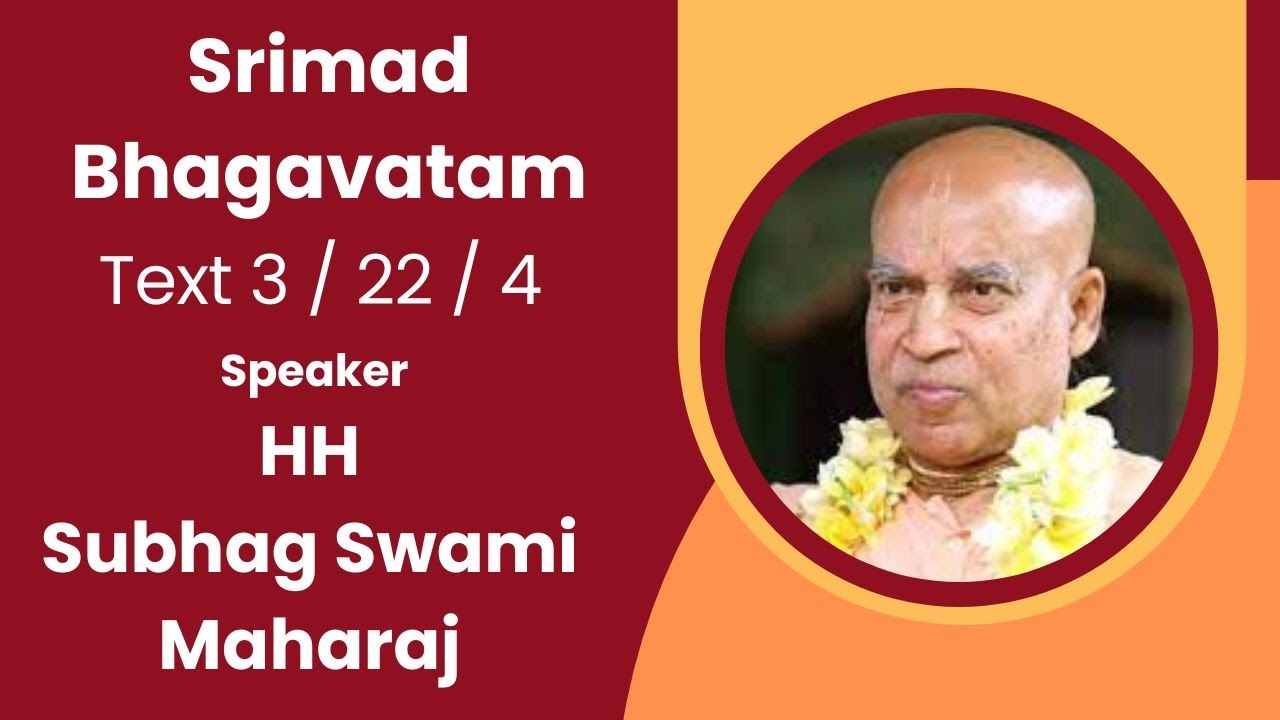
Srimad Bhagavatam (3.22.4) articulates a clear social vision: the varṇa and āśrama framework functions as a cooperative system designed to elevate everyone toward the highest standard of spiritual realization. In teachings associated with HH Subhag Swami, this framework is presented not as rigid hierarchy, but as a disciplined interdependence oriented to dharma and the common good.
Within this model, brāhmaṇas are protected by kṣatriyas so that knowledge, ritual integrity, and ethical counsel can flourish without fear or coercion. In turn, kṣatriyas are enlightened by brāhmaṇas so that their strength is guided by wisdom, restraint, and moral clarity. When protection and enlightenment operate in reciprocity, governance becomes principled, and knowledge remains socially anchored and practically relevant.
Such cooperation yields broad social benefits: stability, trust, and an environment where the remaining segments of society find secure space to contribute meaningfully. The outcome is not merely administrative efficiency, but lokasaṅgrahasocietal cohesion oriented to spiritual progress. In this sense, varṇa–āśrama dharma aims at social harmony and spiritual ascent simultaneously, aligning institutional roles with a shared ethical horizon.
This cooperative ethos resonates across dharmic traditions. In Buddhism, the sangha thrives when ethical discipline and compassionate guidance support each other. In Jainism, ahiṁsā and right knowledge together sustain a life of mindful restraint. In Sikhism, the ideal of the sant-sipahi integrates spiritual depth with courageous service. These parallel insights affirm a unifying principle: wisdom must guide power, and power must safeguard wisdom, so that diverse paths converge toward social well-being and spiritual realization.
Contemporary application of this teaching invites institutions and communities to cultivate knowledge-based counsel alongside duty-bound leadership. Practically, this means creating policies that protect spaces for learning and contemplation, while ensuring that leadership remains transparent, accountable, and receptive to ethical guidance. Approached in this way, Sanatana Dharma and its allied dharmic traditions offer a time-tested model for social harmony, unity in diversity, and sustainable spiritual development.
Seen through this lens, the varṇa and āśrama framework is best understood as cooperative dharmaa disciplined partnership of insight and responsibility. When brāhmaṇas and kṣatriyas cooperate with clarity and humility, society at large is uplifted, and the shared journey toward spiritual realization becomes both achievable and inclusive.
Inspired by this post on Dandavats.










