Ultimate Breakdown: Trump’s White House Diwali and the Proven MAGA Backlash Exposed

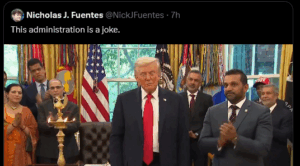
In a presidential office, people in suits and saris gather around a lit brass Diwali lamp; a man in a dark suit and red tie stands center, US flags behind, with an on-screen tweet: 'This administration is a joke.'

Diwali 2025 drew an unprecedented wave of greetings from leaders and institutions across the world, underscoring the festival’s growing global resonance. In the United Kingdom, along with senior political figures, major football clubs publicly shared festive messages. In the United States, bipartisan leaders extended wishes, reflecting an expanding recognition of the Festival of Lights in mainstream civic culture.

Public figures such as Kash Patel and Tulsi Gabbard also posted Diwali greetings on X. Their messages, however, attracted a small but visible cluster of hostile replies from self-identified Christian right-wing and MAGA-aligned accounts. Representative comments ranged from “Not My GOD!” accompanied by offensive emojis to demands that Hindu celebrants leave the country—language that was both exclusionary and derogatory toward Hindus and other dharmic communities.

Screenshot of a tweet saying 'Get the fuck out of my country' placed above a White House page titled 'Presidential Message on Diwali' dated Oct 20, 2025, highlighting Hinduphobia around Trump Diwali.
Over a White House 'Presidential Message on Diwali,' a tweet snarls 'Get the fuck out of my country.' This HHR Videos spotlight shows how Global Hindus see Hinduphobia driving the MAGA/rightwing christians backlash to Trump Diwali.

Other reactions invoked religious exclusivism and cultural gatekeeping. Some replies urged Hindu Americans to adopt a specific Christian creed, while others dismissed Diwali as irrelevant to the United States or mischaracterized the festival as environmentally harmful. One recurrent claim asserted, “This is America. We don’t celebrate Diwali,” overlooking the longstanding contributions of Hindu Americans and the shared civic values of pluralism and religious freedom.

Screenshot of a tweet with a meme: a crying cartoon in bed imagines a clip of ceremonial lamp-lighting in a formal hall; the post nods to Hinduphobia and 'trump diwali' reactions from rightwing christians.
A tweeted meme shows a tearful cartoon in bed picturing a ceremonial lamp-lighting, poking at backlash to a Diwali event. Global Hindus HHR Videos unpack Hinduphobia, maga chatter, and rightwing christians driving the 'trump diwali' uproar.

Against this backdrop, a White House Diwali event featuring Donald Trump took center stage online. The celebration, described as vibrant and inclusive, highlighted U.S.–India ties and recognized the contributions of Indian-American business leaders and public servants. The ceremonial lighting of the diya—symbolizing light over darkness and good over evil—served as an emblem of interfaith respect within American public life.

Screenshot in dark mode of two X/Twitter posts debating Diwali: a rightwing Christian warns 'Satan disguises as light'; a reply defends sincerity, highlighting Hinduphobia around Trump Diwali.
Two X posts capture the clash: a rightwing Christian attacks Diwali as false 'light,' while a reply defends genuine faith over hypocrisy. The exchange spotlights Hinduphobia surrounding the Trump Diwali event. HHR Videos | Global Hindus.

For many Hindus, Buddhists, Jains, and Sikhs, Diwali/Deepavali speaks to a shared ethical horizon: the triumph of knowledge over ignorance and compassion over fear. The public recognition of this symbolism at the highest levels of government sent an important message—pluralism is not a threat to national identity but a pillar of democratic strength. Such recognition affirms the presence and dignity of dharmic traditions within the broader American tapestry.

Screenshot of a tweet showing a poster titled 'America is a Christian nation!' with four labeled founder portraits and quotes disputing the claim; red headings on a white panel over a dark tweet background.
A viral tweet shares a graphic challenging Christian-nationalist claims with founders’ quotes—surfacing amid debates on Hinduphobia, MAGA, rightwing christians, and Trump Diwali. See our Global Hindus HHR Videos spotlight.

Online, the backlash to Diwali greetings also generated a countercurrent of solidarity and measured humor. Many Americans—across political preferences—responded by amplifying festive messages, correcting misinformation, and emphasizing constitutional ideals of religious liberty. This dynamic illustrated how civic engagement can transform divisive rhetoric into teachable moments that reinforce mutual respect.

Screenshot of social posts showing Hinduphobic hate: two tweets belittling Hindus and Diwali and a crude meme, illustrating backlash by rightwing christians around Trump Diwali news.
Social media snapshot exposes Hinduphobia as rightwing christians react to Trump Diwali. HHR Videos puts this in the spotlight for Global Hindus, documenting hinduphobic hate and MAGA-fueled outrage in our latest World Focus report.

Empirically, the incident offers a clear case study in contemporary digital discourse: a small cohort of highly vocal accounts can distort perceived sentiment, while the broader public may remain supportive or neutral. Understanding this asymmetry is essential to prevent fringe hostility from being mistaken for mainstream consensus. It also underscores the importance of evidence-based reporting and community education around religious literacy.

Screenshot of a quote-tweet above a colonial-era painting with an early U.S. flag. One post says “Nobody in this picture celebrated Diwali,” prompting debate over Hinduphobia and trump diwali reactions.
A viral thread uses a colonial painting to dismiss Diwali, sparking a sharp reply. Our video explores the Hinduphobia behind the trump diwali backlash from rightwing christians, MAGA voices, and white supremcists.

From an interfaith perspective, the episode highlights a practical path forward. First, acknowledging harmful language without amplifying it preserves accountability while minimizing harm. Second, centering shared civic values—freedom of worship, equal dignity, and neighborly coexistence—creates a common frame that resonates beyond any single community. Third, drawing attention to positive institutional gestures, such as bipartisan greetings and official celebrations, normalizes respect for diverse traditions.
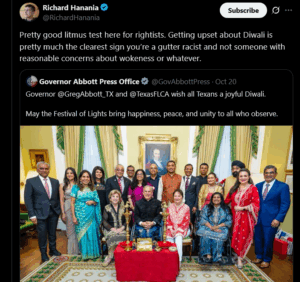
Screenshot of a tweet criticizing right-wing outrage over Diwali, above a formal group photo from a Diwali celebration, with attendees in colorful attire, diyas, rangoli, flags, and a portrait in a grand room.
A social post calls out hinduphobic hate as a state office wishes a joyful Diwali; below, a formal group poses amid diyas, rangoli, flags, and portraits. Context for Global Hindus, World Focus, and News updates on rightwing christians, MAGA, and trump diwali.

For dharmic communities, the lesson is both simple and profound: unity strengthens resilience. Hindus, Buddhists, Jains, and Sikhs can speak with a collective voice about Diwali’s ethical core—seva (service), satya (truth), and ahimsa (non-violence)—values that align naturally with pluralistic democracies. Building coalitions with allies across faiths further reduces the space for prejudice to take hold.

Dark-mode screenshot of two tweets debating Trump’s Diwali celebration at the White House; one condemns honoring other faiths, another urges respect for all religions; includes an event schedule card.
Social posts clash over President Trump’s Diwali at the White House—one denounces it as endorsing “false religion,” while a reply defends pluralism. A schedule snippet anchors the debate. Spotlight on Hinduphobia, rightwing christians, and MAGA discourse.

Crucially, civic institutions and media can help by contextualizing episodic online hostility within broader trends of acceptance. When coverage highlights both the celebratory mainstream and the fringe resistance, it provides a more accurate picture of public sentiment. Such balance prevents misperceptions and supports the long-term project of interreligious understanding.

Archival links provide additional context for readers interested in primary materials. Video of the White House celebration featuring Donald Trump is available here: Trump Diwali event (White House). A separate greeting by Tulsi Gabbard can be viewed here: Tulsi Gabbard Diwali message. These source materials help situate the discourse in its original setting for independent assessment.

Ultimately, Diwali 2025 in the United States demonstrated two parallel truths: intolerance remains present online, and yet public institutions, civic leaders, and broad swathes of society continue to uphold interfaith respect. The most effective response—grounded in constitutional principles and shared ethical values—lies in informed engagement, solidarity across dharmic and non-dharmic communities, and the continued celebration of light over darkness.


Inspired by this post on Hindu Human Rights Blog.


Graphic with an orange DONATE button and heart icons on a dark mandala background. Overlay text asks to support dharma-renaissance.org in reviving and sharing dharmic wisdom. Cultural Insights, Personal Reflections.

What event and topic does the post analyze?

It analyzes Diwali 2025 greetings globally, the White House Diwali event featuring Donald Trump, and the MAGA/Hinduphobia backlash. It contrasts fringe hostility online with broader civic support and emphasizes interfaith understanding.

What is the central message about pluralism and democracy?

The post argues that Diwali’s message of light over darkness reinforces social cohesion and pluralism within a democratic society. It underscores the dignity of dharmic traditions and constitutional values.

How are online reactions described in the piece?

Online reactions include a small but visible cluster of hostile replies from self-identified Christian right-wing and MAGA-aligned accounts. The piece also notes broader supportive responses and corrective civic engagement.

Which archival materials are linked for context?

Archival materials linked include video of the White House Diwali celebration and a Tulsi Gabbard Diwali greeting hosted on HinduhumanRights.info.

What remedies does the article propose to counter Hinduphobia and online hostility?

The piece suggests countering Hinduphobia by acknowledging harmful language without amplifying it, centering shared values like freedom of worship, equal dignity, and neighborly coexistence. It also recommends highlighting positive institutional gestures to normalize respect for diverse traditions.

What core values are associated with Diwali in the article?

Diwali’s ethical core includes seva (service), satya (truth), and ahimsa (non-violence), which align with pluralistic democracies.