Consider “Maya Times” as a metaphor for the mind’s most persuasive newsrooman editor that headlines every fleeting pleasure as permanent happiness, even when experience says otherwise. This metaphor captures a core insight of Hindu philosophy and the wider family of Sanatana DharmaBuddhism, Jainism, and Sikhismnamely that unexamined perception routinely mistakes the temporary for the enduring, and the insubstantial for the substantive. In practical terms, the glow of acquisition, praise, or power fades quickly; yet the inner editor continues to publish the same promise: lasting joy lies just one headline away.
As Srila Prabhupada crisply observed: “This place is miserable. But maya’s illusion, we are taking this miserable condition of life as happiness. This is called maya. There is no happiness in this material world. Everything miserable.” Lecture on BG 2.6 — London, August 6, 1973. This statement, though stark, points to a precise diagnosis of how perception, craving, and forgetting conspire to mislabel the nature of worldly experience.
Within the Bhagavad Gita, the material realm is famously characterized as duḥkhālayam aśāśvataman impermanent abode of suffering (BG 8.15). Far from preaching despair, this description functions as a methodological caution for seekers: take the measure of experience carefully. Contact-born pleasures, says the Gita, arise and pass (BG 2.14, 5.22); the mind’s reportage, however, tends to forget the “passing” and highlight only the “arising.” That habitual bias is what the metaphor “Maya Times” makes vivid.
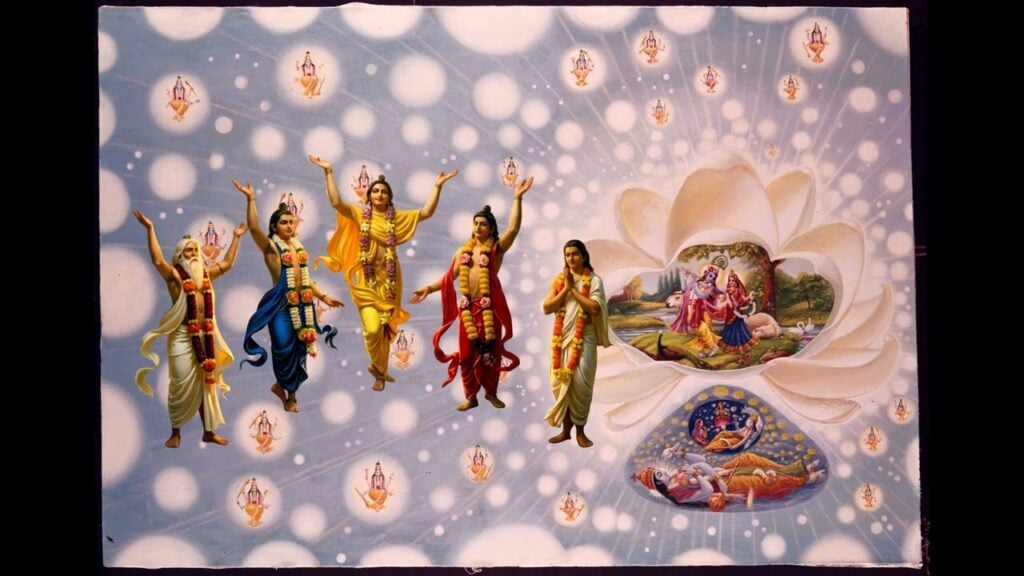
Classical Hindu philosophy analyzes this bias with great technical clarity. In Advaita Vedanta, avidya (ignorance) superimposes permanence, purity, and selfhood onto that which lacks these attributes. This superimposition is the cognitive grammar of maya. In Vaishnava traditions, maya is described as the Lord’s external energydaivī hy eṣā guṇa-mayī mama māyā duratyayā (BG 7.14)a bewildering potency that entangles beings through the three guṇas (sattva, rajas, tamas). Both perspectives agree on a functional point: unexamined sensation and untrained attention generate a counterfeit of happiness that is compelling yet unstable.
This counterfeit operates through predictable mechanisms. The senses report novelty; the mind predicts reward; the intellect rationalizes the chase. Contemporary psychology calls this the “hedonic treadmill”rapid adaptation erases yesterday’s thrill, yet the internal newsroom insists that tomorrow’s headline will deliver “real” contentment. The Dharmic critique anticipated this dynamic millennia ago, urging systematic training of attention, intention, and actionwhat the Gita calls dharma and yogaso that perception aligns with reality rather than with craving’s storyline.
Seen comparatively, the diagnosis is shared across Sanatana Dharma. In Buddhism, avidyā (ignorance) and grasping (tṛṣṇā) fabricate the fiction of permanence and selfhood, yielding dukkha (unsatisfactoriness). The Three Marksanicca (impermanence), dukkha, and anattā (non-self)serve as a rigorous “fact-checking” rubric against the mind’s headlines. Mindfulness and the Noble Eightfold Path then function as sustained corrective journalism, training the mind to report phenomena as they are, not as craving prefers them to be.
Jainism offers an equally technical appraisal through mithyātva (wrong belief), kaṣāyas (passions such as anger, pride, deceit, greed), and the karmic accretions that obscure the soul’s luminosity. Practices such as samyag-darśana (right vision), samyag-jñāna (right knowledge), and samyag-cāritra (right conduct), supported by samyika (equanimity) and pratikraman (ethical introspection), deliberately decondition the mind’s tendency to conflate possession with peace and indulgence with freedom.
Sikhism, while affirming full engagement with the world, identifies “maya” as the veil that distracts from Naam (Divine remembrance) and Hukam (Divine Order). The “five thieves”kāma (lust), krodha (anger), lobha (greed), moh (attachment), and ahankar (ego)steal clarity by turning means into ends. The Sikh discipline of simran (remembrance), seva (selfless service), and honest livelihood (kirat karni) restores truthful living amid activity, demonstrating that freedom from delusion does not require withdrawal but right alignment.
Across these traditions, the metaphors differ but the diagnostic core is strikingly unified: the mind’s untrained reportage amplifies the agreeable and edits out impermanence, producing a narrative that mistakes stimulation for happiness. The remedy, likewise, converges on disciplined seeing, ethical steadiness, and contemplative depthso that what is temporary is appreciated without being absolutized, and what is ultimate is sought without rejecting responsible worldly participation.
From a Gita-centered, bhakti-oriented lens that inspired the “Maya Times” metaphor, the corrective begins with śravaṇam (attentive listening to wisdom), kīrtanam (chanting), and japa (mantra repetition). These practices quiet the newsroom of craving and re-train attention toward the abiding. In complementary fashion, Buddhist mindfulness stabilizes present-moment clarity; Jain pratikraman cleanses ethical residues that skew perception; Sikh simran and seva anchor life in remembrance and responsibility. Each path, faithful to its distinct idiom, functions as rigorous “fact-checking” of the mind’s daily headlines.
It is important to read the assertion “There is no happiness in this material world” with philosophical precision rather than polemical exaggeration. In the Dharmic sense, what is denied is not all pleasant sensation (sukha) but the claim that such sensation can be made final, self-sufficient, and secure. The Gita distinguishes preyas (the immediately pleasant) from śreyas (the ultimately beneficial); religion and philosophy in India have long prioritized the śreyas-oriented arcfreedom (moksha), enduring equanimity, and compassionate serviceover the treadmill of novelty.
Practically, the mind can be trained to recognize the typical “Maya Times” pattern: intense anticipation, brief elation, swift normalization, and renewed longing. Observing this cycle without self-reproach is already emancipatory. Many householders and monastics alike report that a few minutes of daily mantra (japa or simran), mindfulness of breath, or samayika recalibrates attention enough to reveal where genuine contentment arisesusually not from acquisition, but from clarity, connection, and conscience.
Ethical disciplines (self-restraint, truthfulness, non-violence, generosity) reinforce this recalibration by reducing internal friction. When conduct aligns with conscience, the newsroom’s sensational headlines lose their emotional charge. In turn, contemplative insight stabilizes ethical resolve; one sees directly how craving distorts and how attention heals. This circular reinforcementethics supporting insight, insight deepening ethicsappears in the Eightfold Path, the Jain triad of right vision-knowledge-conduct, the Sikh triad of remembrance-service-honest work, and the Gita’s integration of karma, bhakti, and jñāna yogas.
Crucially, none of these disciplines require retreat from civic responsibility. Sanatana Dharma broadly insists that clarity be lived: in families, professions, and communities. When illusions are named, consumerism loosens its grip; when perception is tempered by wisdom, interfaith harmony becomes more natural; when craving subsides, compassion becomes efficient. In this sense, unmasking “Maya Times” is not a private victory but a public good, nurturing social trust and unity across Hinduism, Buddhism, Jainism, and Sikhism.
A balanced summary, then, emerges. The mind’s default settings publish persuasive but partial stories about happiness. Hindu philosophyexemplified by the Bhagavad Gita and Vaishnava teachings cited abovenames this process “maya.” Buddhism, Jainism, and Sikhism articulate homologous mechanisms and remedies. Through practicewhether kīrtanam, mindfulness, pratikraman, or simranthis newsroom can be reformed. The result is not world-denial, but world-clarity: the freedom to enjoy the transient without being deceived by it, and the strength to seek what endures.
When the headlines lose their spell, attention turns to what is not subject to the next breaking storytruth, compassion, and liberation. That turn, shared in idiomatically distinct ways by all Dharmic paths, is the heart of unity in spiritual diversity: different methods, one aspiration, and a common commitment to see through illusion for the sake of genuine well-being.
Inspired by this post on Dandavats.