“Sometimes letting things go is an act of far greater power than defending or hanging on.” ~Eckhart Tolle
Life often appears safer when planned with meticulous precisioncalendars organized, tasks sequenced, outcomes forecast. For years, control seemed synonymous with safety. That structure delivered academic success, professional stability, and social approval, yet beneath the surface persisted a steady current of anxiety, constant vigilance, and fear of making the wrong choice.
The belief that rest would finally arrive after enough achievements, earnings, and perfect plans proved illusory. Stability on the outside coexisted with tension on the inside. Anxiety thrived in the gap between what could be planned and what could never be controlled.
Then came a decisive rupture: a relationship ended with the difficult recognition that two people were no longer aligned, followed soon by a job loss during a departmental “restructuring.” Losing both anchors in the same season produced profound uncertainty. Familiar strategiesmore lists, more applications, more networkingoffered activity but not relief. The harder the attempt to fix everything, the more disoriented it felt.
One gray afternoon, immobilized in a car outside a coffee shop, hands trembling and surrounded by forms and empty cups, a quiet truth surfaced: “I don’t know what I’m doing anymore.” In that moment, striving paused. Silence replaced the scramble. Unexpectedly, reliefnot panicemerged. The struggle to control loosened, and acceptance began to take shape.
What followed was an experiment in surrender. It was neither passive nor dramatic. Each time anxious thoughts demanded certaintyWhat’s next? What if failure arrives? What will people think?the response shifted from reaction to noticing. A gentle counter-question helped: “Maybe there is no need to know right now.”
Simple practices supported this shift: unhurried walks without a phone, attentiveness to the sound of leaves against the sidewalk and the cadence of footsteps, and evening reflections framed by questions left open, such as What do I really want? By allowing questions to remain unanswered, inner calm gradually expanded. Presence began to replace pressure.
Two months later, an unexpected invitation arrived: a temporary volunteer role teaching English to newly arrived refugees. It was not part of any career plan, nor did it appear “practical” in conventional terms. Yet saying yeswithout overthinkingrevealed a new orientation to life transitions: show up, participate, and let outcomes unfold.
In the classroom, uncertainty transformed into connection. Communication moved through smiles, sketches, and shared laughter over pronunciation. Small victoriescompleting a full sentence, finding the right wordgenerated authentic joy. Each “thank you,” bright and genuine, loosened the habit of chasing outcomes and strengthened trust in what is real and present.
Months of service clarified an essential insight: peace does not arise from micromanaging the future. Peace emerges by participating attentively in the presentby allowing life to lead rather than forcing it to conform. Acceptance became a practice, not a posture. Mindfulness became practical: notice, breathe, respond.
Attunement to the ordinary brought unexpected healing. A child’s laughter on the bus. Petrichor after rainfall. Sunlight through branches. Such presence interrupted rumination and interrupted the reflex to control. Anxiety loosened its hold as gratitude, resilience, and self-trust took root.
Uncertainty ceased to feel like chaos and began to feel like possibility. When rigid expectations relax, life often surprises in constructive ways. The volunteer experience organically opened a role at a local nonprofitan outcome not pursued, yet aligned with evolving values and capacities.
Disappointment still arises when plans change, yet spirals soften. There is a rhythm to events that cannot always be understood in advance but can be met with presence, compassion, and trust. Often, the plans that fall apart create space for what is truer to emerge.
Letting go is not a single achievement but an ongoing discipline. On challenging days, when the urge to control returnsrefreshing an inbox, replaying conversations, forecasting worst-case scenariosa deliberate pause helps. One slow breath anchors attention in the body, returning awareness to what is actually happening now.
From that pause, one gentle inquiry reframes experience: What if everything is unfolding exactly as it should? Even as uncertainty remains, tension softens. Acceptance and peace re-enter.
Several principles crystallize from this process of growth and healing: Control often disguises fear; acceptance reduces anxiety more effectively than over-planning. Uncertainty is not disorder; it is fertile space for learning, renewal, and change. Surrender is active; it chooses mindful participation over resistance. Presence recalibrates perception; the need for control diminishes as awareness deepens.
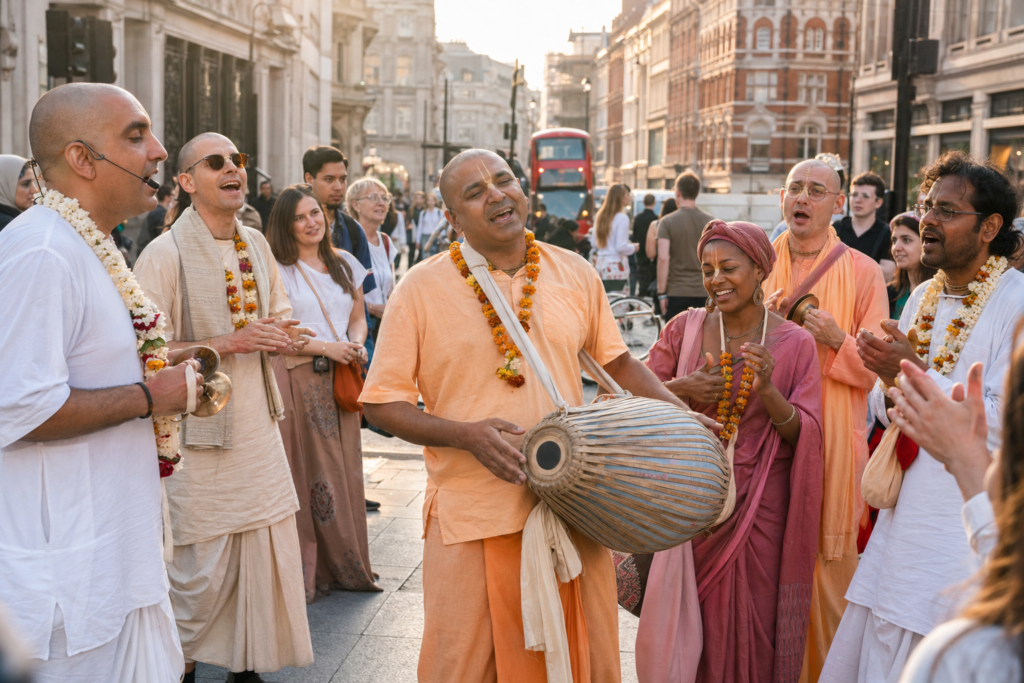
These insights align with shared dharmic wisdom across Hinduism, Buddhism, Jainism, and Sikhism. Non-attachment (vairagya), mindfulness (smṛti/sati), compassionate service (seva/karuṇā), and steady faith (śraddhā) converge on a unifying understanding: inner peace develops through ethical presence, attentive action, and surrender to reality as it is. Rather than prescribing a single path, these traditions honor diverse practices that cultivate resilience, trust, and peace.
A simple, unifying practice helps during life transitions: pause and feel the breath enter and leave the body. Notice the chair’s texture, ambient sounds, and the heartbeat’s rhythm. In this present moment, safety is more accessible than fear suggests. There is enoughness here, even without complete answers.
When the grip on how things “should” be is released, space opens for acceptance, presence, and clarity. In that space, peace becomes more than a concept; it becomes an experienced guide. Peace, in turn, illuminates the next step without demanding certainty about the entire path.
Inspired by this post on Tiny Buddha.