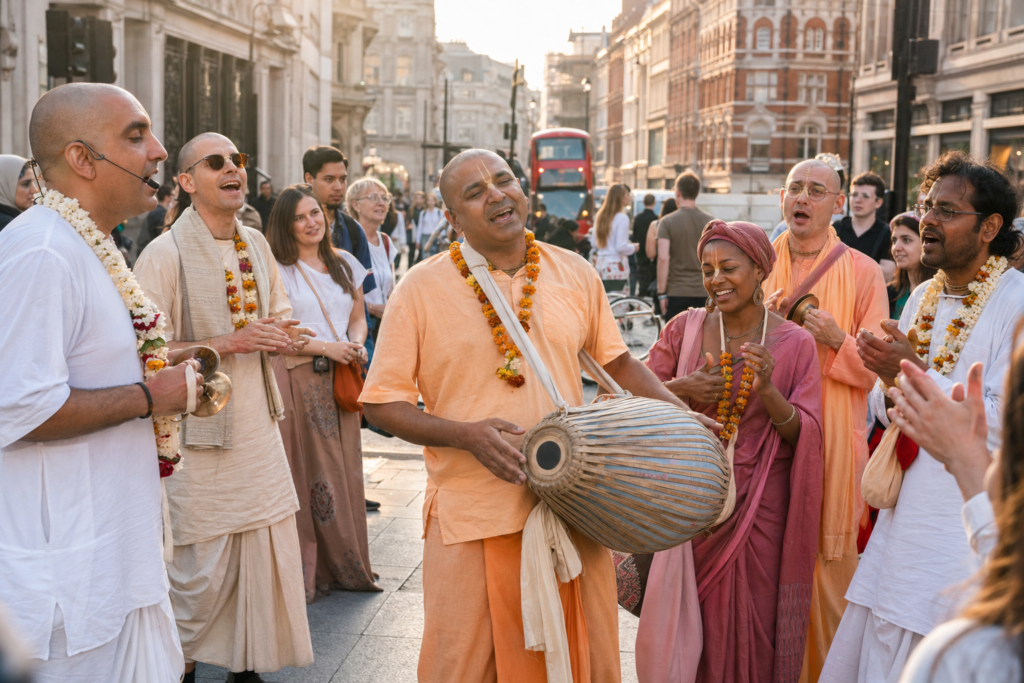
Canada has witnessed a sustained escalation of threats and violence directed at Indian cinema and Hindu cultural spaces, including vandalism of temples, intimidation around festivals such as Navratri and Diwali, and attacks on theatres screening films in Tamil, Telugu, Malayalam, Hindi, and other Indian languages. Assessed together, these incidents form a pattern that undermines cultural expression, chills public participation, and places families and community venues at risk.
A longitudinal view reveals continuity. In April 2016 across Brampton, Mississauga, and Scarborough, coordinated pepper-spray attacks during screenings of the Tamil film Theri forced Cineplex to cancel all shows. In July 2016, Cineplex withdrew Kabali nationwide, citing security concerns following the April incidents, producing a de facto suspension of Tamil films. Between 2016 and 2019, sporadic intimidation, vandalism, and screen-slashing targeted South Asian movie screenings across the Greater Toronto Area.
The pattern intensified in 2022. On February 23, in Halton and Waterloo, screens were deliberately slashed at three cinemas showing the Telugu film Bheemla Nayak, with Halton Police confirming purposeful targeting. In September 2022, a pepper-spray attack disrupted the Tamil film Vendhu Thanindhathu Kaadu at Landmark Cinemas in Calgary. That same month, exhibitors in Hamilton, Kitchener, and London reported explicit threats“We will tear up all your screens and release toxic… your employees will end up in the hospital”leading to cancellations.
Community fear deepened in 2023. On March 25 in Surrey, British Columbia, more than 20 attendees, including children, were pepper-sprayed at a Landmark Cinemas screening of the Sinhalese film Gajanan. On March 31, 2025, screens were again vandalized at Landmark Cinemas in Kanata, Ontario, the second such incident within a month. On December 5, 2023, coordinated “stink bomb” attacks disrupted packed Hindi screenings in Toronto, Vaughan, and Brampton, prompting evacuations of hundreds.
By 2024, the threat included firearms and arson. On January 24, drive-by shootings riddled multiple cinemas screening the Malayalam film Malaikottai Vaaliban; Cineplex then removed the title from theatres across Canada. On November 3, 2024, a Molotov cocktail attack targeted York Cinemas in Richmond Hill, a site previously linked to shootings around South Indian film releases. On September 25, 2025, Film.ca Cinemas in Oakville faced arson aligned with the release of the Telugu film They Call Him OG. One week later, on October 2, 2025, the same cinema was shot at, forcing cancellations of Kantara: Chapter 1 and OG.
Across the decade, the evolution from chemical irritants and screen-slashing to arson and live gunfire demonstrates an escalating campaign of intimidation. The common denominator remains clear: Indian films, Indigenous Indian language-speaking audiences, and the venues that host their cultural expression. While authorities have at times pointed to competing business interests and gang turf conflicts in South Indian film distribution, the lived effect on familiesthose considering a Diwali film or volunteers removing hate graffiti from a mandiris indistinguishable: a palpable chilling of culture in public space.
Public messaging from fringe actors has reinforced this climate. Shortly after the Oakville incidents, the Khalistan-aligned organization Sikhs for Justice (SFJ) publicly called for a ban on all “Made in India” films in Canada. Such statements should be understood as representing a narrow extremist position, not the Sikh community or the wider dharmic traditions. Hindu, Sikh, Jain, and Buddhist communities share deep civilizational commitments to pluralism and non-violence; collective condemnation of threats against any house of worship or cultural venue is both principled and necessary. Free societies do not outsource cultural legitimacy to intimidation or to extremist rhetoric.
Theatres have, at times, been forced to suspend operations under duress. On October 2, York Cinemas announced it would not screen Indian movies until further notice following a series of violent incidents, later reopening with additional security. Each closure signals a dangerous precedent: that coordinated threats can shape what communities are allowed to watch, celebrate, or teach their children in Canada’s multicultural public square.
Indian cinema, Hindu festivals, and temple life are not niche entertainment but living traditions within one of the world’s oldest civilizational lineages. When cinemas are shot at or set on fire for screening films, when temples are defaced, and when devotees are intimidated, the message risks being read as exclusion of Hindu cultureand, by extension, a discouragement of South Asian cultural pluralityfrom public life. Such exclusionary pressure is incompatible with Canada’s commitments to inclusion and diversity.
From a constitutional perspective, targeting venues because they host Indigenous Hindu and broader Indian-origin cultural content suppresses protected forms of cultural and spiritual practice. The resulting chilling effect impinges on freedom of expression and freedom of religion under Charter sections 2(b) and 2(a), and undercuts the interpretive mandate for multiculturalism in section 27. These are not only matters of cultural rights; they are immediate questions of public safety that require consistent, coordinated responses from law enforcement, civic leadership, and community stakeholders.
Families should not have to weigh risks of arson or gunfire before attending Navratri or Diwali celebrations or watching a Tamil, Telugu, Malayalam, Hindi, or Kannada film. A constructive path forward centers on three principles: reaffirming Charter rights for all communities, ensuring robust and even-handed security for cultural venues, and strengthening interfaith solidarityespecially among Hindu, Sikh, Jain, and Buddhist communitiesso that intimidation against any tradition is met with collective, visible support. Cultural freedom thrives when fear recedes and when the public square is protected for everyone.
Inspired by this post on CoHNA.