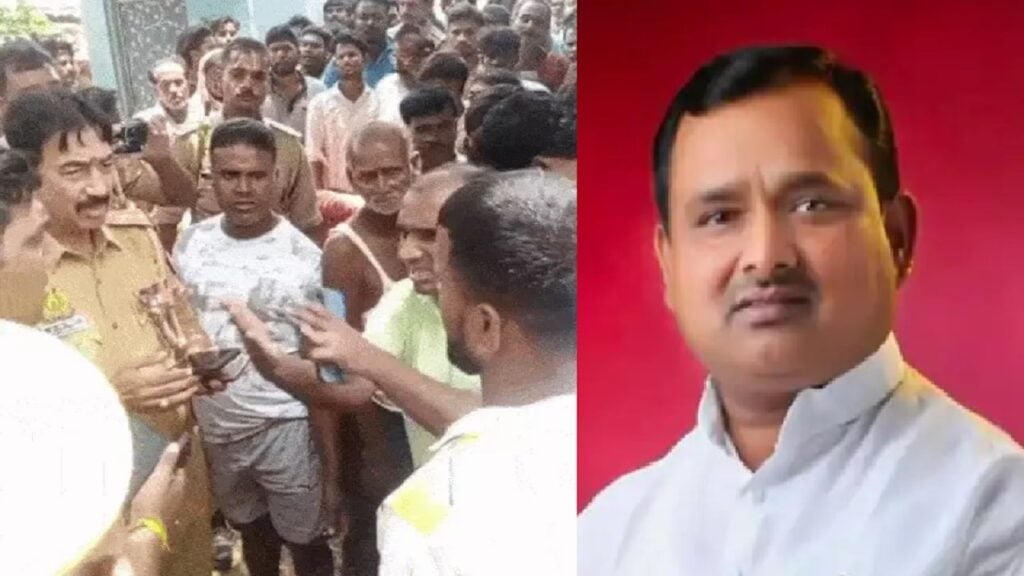
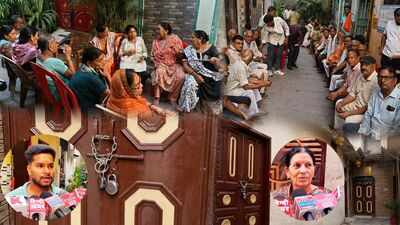
At the annual Magh Mela in Prayagraj on January 28, 2026, Hindu saints and community leaders organized a peaceful demonstration expressing concerns over the University Grants Commission’s Higher Education Equity Regulations 2026. The gathering framed the issue as a matter of religious freedom, cultural heritage, and institutional autonomy, emphasizing that equity reforms must protect the rights and traditions of all dharmic communitiesHindu, Buddhist, Jain, and Sikhwithin India’s higher education system.
Set against the spiritual and cultural backdrop of the Magh Mela, where millions come for pilgrimage and prayer, the protest resonated as an act of civic engagement. Participants highlighted that the regulations, while aimed at expanding access and ensuring fairness, may have unintended consequences for dharmic-run institutions, temple-linked colleges, and faith-based learning centers. The event became part of a broader national conversation about how to balance inclusive education policy with the constitutional promise of religious pluralism.
Speakers called for structured dialogue with the UGC and the Ministry of Education, requesting a transparent impact assessment before full implementation. Key proposals included an expert committee comprising representatives from Hindu, Buddhist, Jain, and Sikh organizations, alongside educationists, legal scholars, and administrators. The committee, they argued, should recommend safeguards on institutional autonomy, curriculum freedom, and faith-sensitive campus governance while upholding anti-discrimination norms.
Throughout the day, observers noted a careful balance of devotion and deliberation: pilgrim crowds, disciplined proceedings, and respectful appeals for constitutional fidelity. Chants invoking unity and dignity underscored a shared sentiment that equity and tradition need not be in conflict. Local authorities facilitated crowd movement and ensured public order, while community volunteers served pilgrimsan expression of seva aligned with the event’s call for constructive, non-confrontational dialogue.
From a policy perspective, participants acknowledged the stated goals of the UGC Higher Education Equity Regulations 2026expanding access, reducing bias, and creating safe learning environments. Their concerns focused on operational definitions of “equity,” compliance burdens for faith-led institutions, and oversight mechanisms that might inadvertently dilute dharmic identities. To address this, speakers urged clear definitions, proportionate compliance pathways for smaller institutions, and guidance documents recognizing the plural character of Indian education.
In alignment with dharmic unity, the appeal stressed that reforms should enhance inclusion without homogenizing spiritual traditions or academic life. Stakeholders proposed (1) clause-by-clause public review; (2) a time-bound pilot phase; (3) a grievance-redress channel for religious institutions; and (4) training modules for administrators on India’s civilizational diversity. Such steps, they argued, would strengthen the legitimacy and effectiveness of the regulations while safeguarding cultural continuity.
Political reactions spanned the spectrum, but speakers at the Magh Mela urged against polarizing rhetoric and instead advocated a bipartisan, evidence-based approach. They framed the Prayagraj Magh Mela protest as a principled intervention in support of inclusive education policy, religious freedom, and democratic consultationvalues integral to India’s constitutional order and its dharmic ethos of harmony.
As the debate advances, participants recommended a clear timeline for consultations before the next academic year, inviting written submissions from universities, seminaries, temple trusts, gurdwara committees, mathas, and community groups. Their stated objective is to ensure that the final design of the UGC Higher Education Equity Regulations 2026 upholds access and dignity for all students while honoring the lived practices of dharmic institutions across India.
The Prayagraj proceedings exemplified how sacred gatherings can also serve as forums for thoughtful policy dialogue. By centering dharmic unity and constitutional principles, the Magh Mela protest sought a collaborative path forwardone that protects pluralism, enriches campus life, and strengthens the social trust upon which equitable and excellent higher education depends.
Inspired by this post on Struggle for Hindu Existence.