-
Sitakund and Monghyr Fort: Shah Shuja’s Turmoil and a Sacred City’s Resilience

This long-form analysis reconstructs the layered history of Munger (Monghyr) from Gupta-era epigraphy and regional dynasties to Mughal turbulence and East India Company conquest. It clarifies Monghyr’s form as a classical Kaṭakafortified capital and garrisonwhile situating the city’s beauty on a bend of the Ganges documented by Viscount Valentia. It explains the ritual ecology of…
-
Prayagraj Magh Mela Protest: Saints Challenge UGC Equity Rules, Urge Dharmic Unity
At the Prayagraj Magh Mela on January 28, 2026, Hindu saints and community leaders held a peaceful protest addressing the UGC Higher Education Equity Regulations 2026. They argued that inclusive education policy must protect religious freedom, cultural heritage, and the autonomy of dharmic institutions. Proposals included an expert committee representing Hindu, Buddhist, Jain, and Sikh…
-
Magh Purnima 2026 (Feb 1): Auspicious Bathing, Rituals, and Dharmic Unity Guide

Magh Purnima 2026 falls on February 1 and is revered as the Full Moon of Magha month, concluding the season’s observances in North India. The day is especially auspicious for Magh Snan, quiet japa, and generous daana, and carries added significance during the Magh Mela and Kumbh Mela cycle. Families across regions mark the dawn…
-
Magh Snan Mahatmya: Profound Significance of the Holy Magha Dip for Purity and Moksha
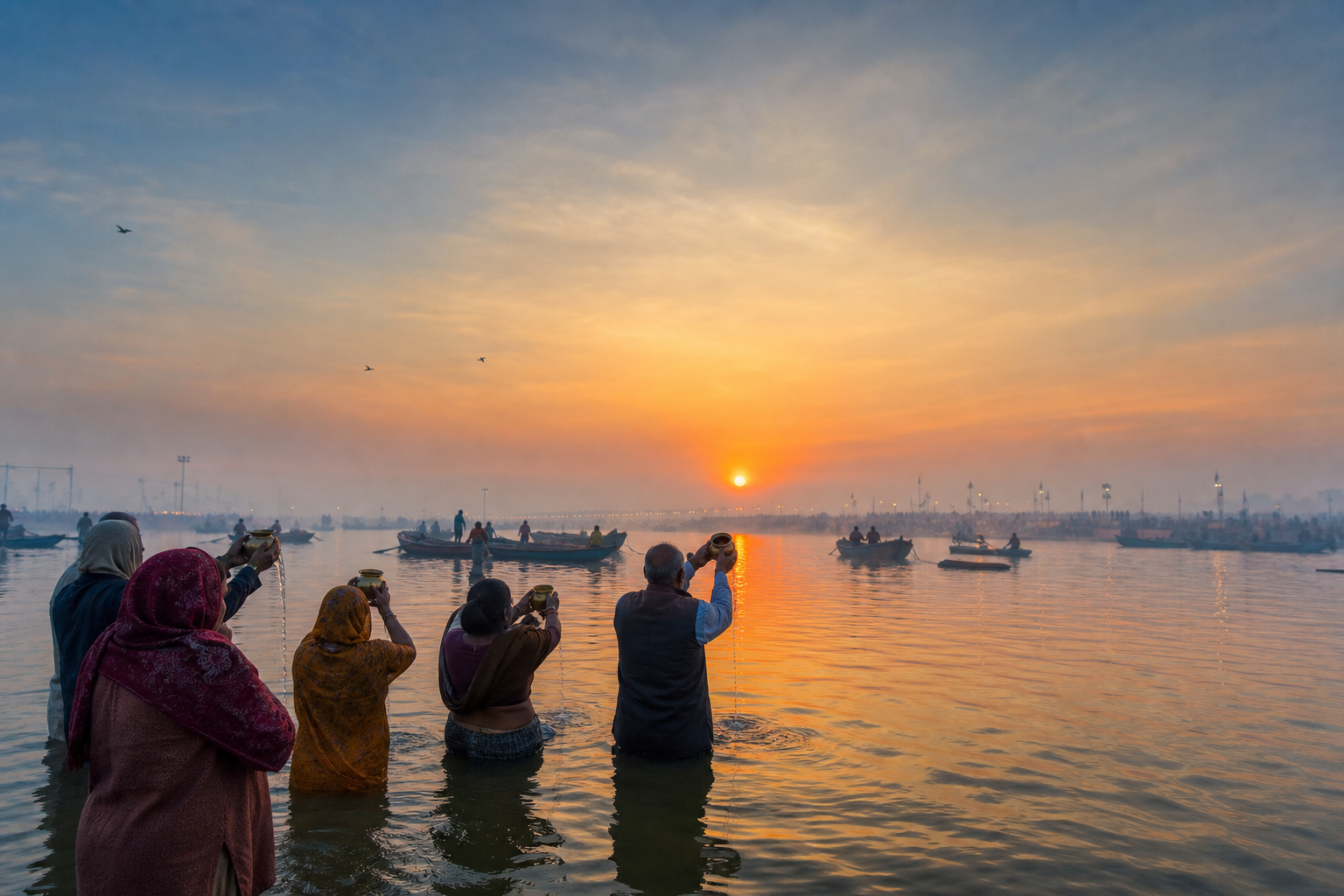
Magh Snan (Magha Snana) is honored during Magh Month (Magha masam) as a sacred vow for inner purification and the pursuit of moksha. Observed before sunrise, often in Brahma Muhurta, it integrates ritual bathing with sankalpa, japa, and charity, with special focus on Mauni Amavasya and Maghi Purnima. Pilgrims gather at the Ganga, Yamuna, Brahmaputra,…