
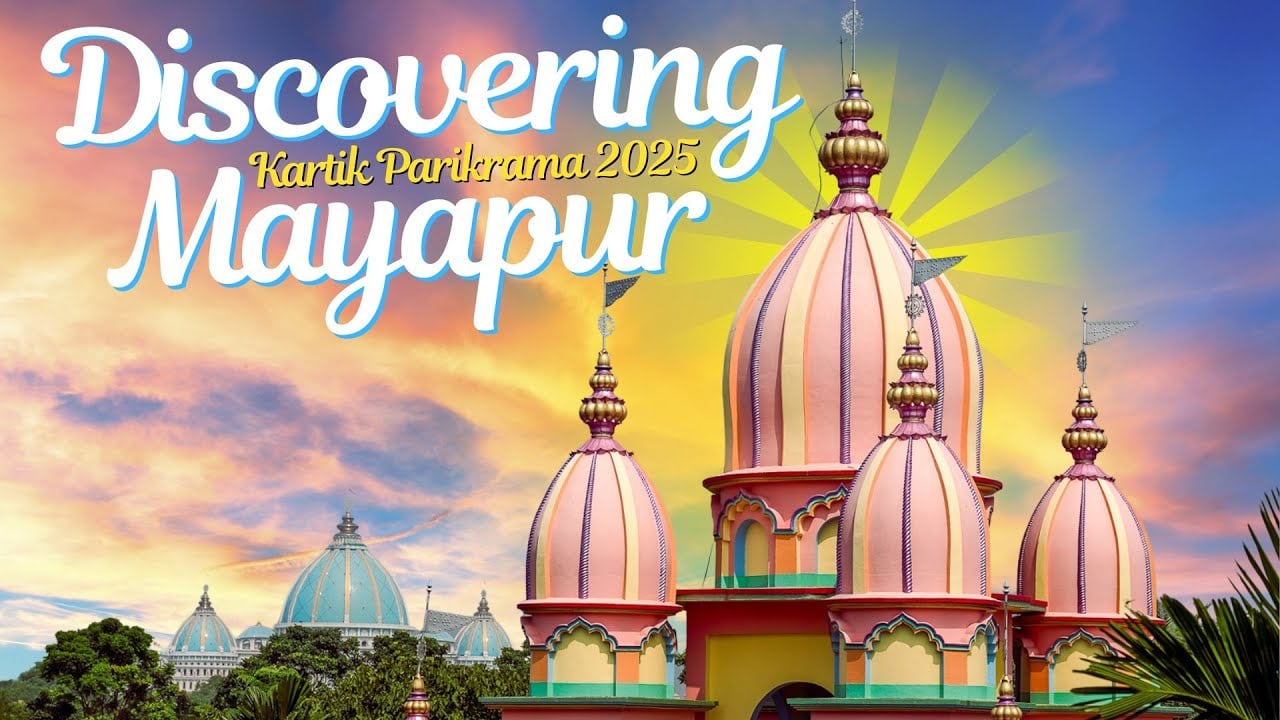
Kartik Parikrama 2025 in Mayapur presents a structured tirtha-yatra across the sacred geography of Navadvipa, intimately connected to Sri Chaitanya Mahaprabhu and His associates. The itinerary foregrounds congregational chanting (sankirtan) as the yuga-dharma, highlighting its enduring relevance for spiritual upliftment and community cohesion. This pilgrimage situates the bhakti tradition within a living heritage landscape while encouraging reflective engagement that honors unity across dharmic paths.
The route traditionally begins at Yogapitha, the birthplace of Sri Chaitanya Mahaprabhu. His appearance is widely regarded as inaugurating a spiritual renaissance intended to uplift all souls irrespective of background, caste, region, or social standing. In this context, Yogapitha functions not only as a historical site but also as a focal point for contemplation on inclusivity, humility, and the universality of divine remembrance.
As participants traverse Navadvipa’s sites, sankirtan serves as a unifying practice that harmonizes individual devotion with collective experience. Many pilgrims report that the rhythmic cadence of the holy names, combined with the serene riverine landscape, facilitates clarity of mind, deepened compassion, and renewed purpose. The emphasis on shared chanting underscores the pedagogical insight at the heart of bhakti: spiritual progress is nurtured through community, service, and remembrance of the Divine.
Aligned with the auspicious month of Kartik (Karthika masam), the parikrama leverages the devotional intensity associated with this period, culminating in the special significance of Kartik Purnima 2025. Within this seasonal frame, practices such as kirtan, scriptural reflection, and simple living are encouraged as complementary disciplines. The itinerary, beginning at Yogapitha and continuing through key lilasthanas of the Gaudiya tradition, is curated to uphold historical authenticity and a contemplative pace that supports meaningful absorption.
The ethos of this parikrama resonates with shared values across Hinduism, Buddhism, Jainism, and Sikhismnonviolence, service, remembrance, and inner transformation. While the devotional form here centers on Sri Chaitanya Mahaprabhu and Navadvipa, the underlying principles affirm spiritual plurality and respect for diverse sadhanas. By cultivating humility and mutual regard, the journey models unity in diversity within the wider dharmic family.
For many, Mayapur’s Kartik Parikrama becomes a catalyst for sustained practice after the pilgrimage concludes. Participants often consolidate learnings by maintaining regular chanting, study of sacred texts, and seva within local communities. In doing so, the experience transitions from a time-bound itinerary into a durable commitmentto personal growth, cultural continuity, and harmonious coexistence grounded in Sanatana Dharma’s inclusive spirit.
Inspired by this post on Dandavats.










