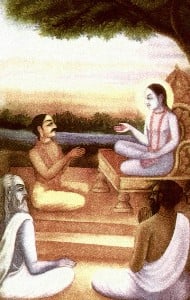
Shukratal holds a venerable place in sacred geography as the site where Shukadeva Goswami expounded the Srimad-Bhagavatam (Bhagavata Purana) to Maharaja Pariksit approximately 5000 years ago. Revered in the Hindu pilgrimage tradition, this small town preserves a living connection between scripture and landscape, offering a contemplative setting on the banks of the Ganga River.
Situated roughly midway between Delhi and Haridwar, Shukratal lies about 86 kilometers before Haridwar and approximately an hour east of Muzaffarnagar by road. Travel time is typically four to five hours from Delhi, depending on traffic and road conditions. The approach roads and the settlement are modest, and because the village often does not appear on standard maps, visitors benefit from precise directions and local guidance.
The Ganga cuts a dramatic swathe through the rocky terrain here, creating a quiet atmosphere that encourages reflection on the Bhagavata’s themes of devotion, ethical duty, and inner transformation. Travelers often describe a sense of stillness by the riverside and find that a measured walk along the ghats makes the text’s timeless teachings feel immediate and lived. The setting naturally invites seekers from diverse dharmic traditionsHinduism, Buddhism, Jainism, and Sikhismto appreciate shared values such as compassion, truthfulness, restraint, and reverence for life.
Despite its modest scale and understated profile, Shukratal continues to gain recognition among pilgrims and students of the Puranas. Those arriving for study or darshan frequently plan their route via Muzaffarnagar and coordinate with local residents for the final leg, given the village’s limited signage. Respect for local customs, a light ecological footprint near the river, and unhurried time for japa, silent contemplation, or scriptural reading help ensure a meaningful visit.
Shukratal demonstrates how sacred tradition can be experienced through place: the Srimad-Bhagavatam’s discourse is not only a historical account but a living current felt in the wind off the Ganga and the cadence of daily worship. For many visitors, this convergence of text, teacher, and terrain offers a nuanced understanding of India’s spiritual heritage and a unifying reminder that dharmic ideals continue to inspire seekers across regions and schools of thought.
Inspired by this post on Dandavats.