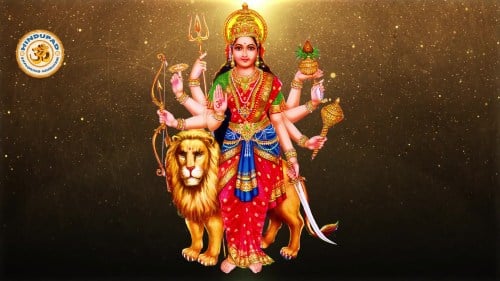
The Puri Rath Yatrawhen Lord Jagannath travels with Balabhadra and Subhadra from the Srimandir to the Gundicha Templeunfolds one of the most nuanced theological dramas in the Indic world. At its heart stands Suvarna Mahalakshmi, the golden-adorned form of Goddess Lakshmi at Puri, whose ritualized displeasure (mana or rosha) becomes a profound lesson in dharmic reciprocity, household ethics, and the living intimacy between the Divine Feminine and the Lord of the Universe. Rather than a literal quarrel, the episode is a carefully choreographed lila (divine play) that encodes values of love, responsibility, and reunion within a public liturgy of remarkable scale.
Classical sources situate Purushottama Kshetra (Puri) at the confluence of mythic time, temple practice, and community memory. The Skanda Purana (Utkala Khanda), Brahma Purana, and the temple’s chronicle Madala Panji preserve narratives that shape the festival’s meaning. Within this textual and ritual ecosystem, Suvarna Mahalakshmi is not a separate deity from Lakshmi, but an honorific emphasis on her golden splendor in Srimandir rites; the epithet reflects both her ornamentation and her sovereignty (Shri) as the sovereign energy inseparable from Vishnu.
Rath Yatra commences on Āshādha Shukla Dwitiya. In the pahandi procession, the three deities sway rhythmically from the sanctum to their massive wooden chariotsNandighosa for Jagannath (traditionally with sixteen wheels), Taladhwaja for Balabhadra (fourteen wheels), and Darpadalan for Subhadra (twelve wheels). The Gajapati Maharaja then performs chhera pahanra, ceremonially sweeping the chariot platforms to symbolize that, before the Divine, worldly rank dissolves into seva (service). The chariots roll along the Grand Road (Bada Danda) to the Gundicha Temple, where the deities reside for a sacred interlude known as Adapa Mandapa Darshana.
Hera Panchami, observed on Āshādha Shukla Panchami, frames the celebrated moment of Suvarna Mahalakshmi’s “anger.” The word hera in Odia means “to see,” and the rite ritually dramatizes Lakshmi’s visit to “see” Jagannath at Gundicha after his unannounced journey. She travels in a palanquin from the Srimandir in elegant procession, accompanied by servitors (sevayats), conches, and drums, embodying both regal sovereignty and intimate longing.
Upon reaching Gundicha, the doors are customarily closed before Lakshmi can enter the Adapa Mandapa. This gentle refusal is not a slight but a dramaturgical cue: the Divine Consort’s mana (sulking displeasure) must be acknowledged and dignified. In a highly symbolic gesture on her return, her servitors damage a small wooden piece of the Nandighosa chariot. The controlled, minimal act is a liturgical signifier of her grievance, signaling that absence without consent in a sacred partnership invites correction, not condemnation.
For many devotees standing along Bada Danda, the Hera Panchami sequence is unexpectedly intimate. The spectacle of a great public festival narrows into the relatable cadence of domestic life: a bond tested by separation, a grievance voiced without malice, and a promise of reconciliation. Observers often describe a quietly stirring tenderness in this moment, as if the immense pageantry briefly yields to a shared, household truth recognizable across generations.
Bahuda Yatrathe return journey from Gundicharecommences the movement toward reunion. In the days that follow, Suna Besha (the “Golden Attire”) adorns the deities with resplendent gold ornaments. Here, the “suvarna” resonance becomes explicit: the golden radiance evoked in Suvarna Mahalakshmi refracts through Jagannath’s royal majesty as well, affirming that Shri (prosperity, auspicious fullness) and Narayana (the sustaining Absolute) are inseparable facets of one divinity.
Niladri Bije, the culminating homecoming into Srimandir, brings resolution. Tradition holds that Lakshmi bars Jagannath’s re-entry at the Lion Gate (Simha Dwara) until his assurances and offerings heal the earlier breach. The ritual dialogue known as the Lakshmi–Narayana Bachanika is recited by servitors, setting out questions, answers, and commitments that re-establish trust and mutual regard. Among the offerings, Rasagola holds special renown in Odisha’s temple memory as the sweet by which Jagannath placates his Consorta culinary symbol of softened speech, tender regard, and the sweetness of reconciliation.
Anthropologically, the sequence from Hera Panchami to Niladri Bije may be read as “divine domesticity”: the cosmic household (griha) becomes a didactic stage on which dharma is taught through affection, accountability, and repair. Theologically, Lakshmi’s agency is unmistakable. She is not an accessory to sovereignty; she is Shri itselfmeasure, radiance, and rightful orderwithout whom the Lord’s home remains un-enterable. In this grammar of bhakti, Mahalakshmi’s anger is restorative, not retributive; it steers love back to promise, and power back to responsibility.
From an aesthetic standpoint, the festival converts raudra rasa (the flavor of anger) into shanta and madhura (peaceful and sweet) through public reconciliation. The Natya Shastra’s insightthat emotion, art, and ethics inform one anotherbreathes here as civic pedagogy. The community witnesses how displeasure, voiced with dignity and framed by care, culminates in a higher harmonya lesson as relevant to families as to institutions.
Temple craft and logistics further illuminate the festival’s depth. The chariots are rebuilt each year from specific timbers under long-standing prescriptions, their construction supervised at the Ratha Khala by hereditary artisans whose expertise constitutes a living archive of Odisha’s engineering and ritual knowledge. Thousands of sevayats coordinate timings, processions, and liturgies with remarkable precision, ensuring that theology, craftsmanship, and community trust interlock seamlessly.
Within the broader dharmic family, this liturgy’s core values resonate widely. The interplay of Purusha and Prakriti, love and law, liberty and responsibility, echoes Indic philosophical intuitions recognized across Hinduism, Buddhism, Jainism, and Sikhism: harmonious living, gentle speech, mutual regard, and the centrality of ethical householding (grihastha-dharma) to social well-being. By modeling how power yields to tenderness and how grievance seeks restoration, the festival nourishes a shared civilizational ethic of unity in diversity.
Devotees and cultural travelers alike often remark that the emotional arcfrom separation to reunionlingers long after the chariots are disassembled. The “anger” of Suvarna Mahalakshmi is remembered not as conflict but as compass: it directs love back to presence, vows back to meaning, and community back to the sweetness of belonging. In this sense, Rath Yatra is not only a journey across the Bada Danda; it is a passage through the interior landscape of relationship, duty, and joy that defines the dharmic way of life.
Inspired by this post on Hindu Blog.