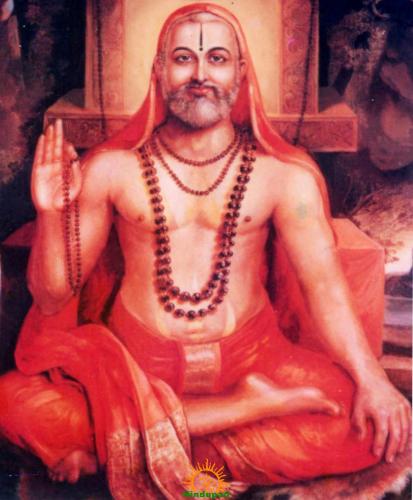
Vashishta Jayanti marks the birth anniversary of Maharshi Vashistha, a revered Vedic sage and one of the Saptarishis of Sanatana Dharma. In 2026, Vashishta Jayanti falls on 25 April (Vaishakh Shukla Paksha Navami as per the Hindu calendar). The observance honors Vashistha’s role as a seer of Rigvedic hymns, a foundational teacher of dharma, and the preceptor to kings of the Ikshvaku lineage, including King Dasharatha and Sri Rama. Across traditions and regions, the day invites study, reflection, and practice rooted in Vedic wisdom and the guru–shishya parampara.
Maharshi Vashistha occupies a distinctive place in Vedic literature. The “Vashistha family book” (Rigveda Mandala 7) preserves numerous hymns associated with his lineage, articulating early insights into ṛta (cosmic order), satya (truth), and dharma (ethical rightness). These hymns model a contemplative yet engaged spiritualityaffirming that realization and righteous action are complementary rather than opposed. Vashistha’s persona in the textual tradition harmonizes sagehood with statesmanship, offering enduring guidance for householders and leaders alike.
Vashistha’s dharma-related authority is also reflected in the Vasistha Dharmasutra, an early śāstraic text that discusses rites, vrata, āśrama-dharma, and social ethics. While scholarly debates continue regarding authorship, chronology, and redactional layers, the Dharmasutra tradition associated with Vashistha presents a coherent vision of disciplined daily practice (nitya-karma), life-stage duties, and ritual purity. Its emphasis on responsibility, restraint, and service (seva) has made the text a touchstone for discussions of Hindu jurisprudence and social norms across centuries.
Philosophically, Vashistha’s name is inseparably linked with the Yoga Vasistha (also called Maha-Ramayana), a major Sanskrit work that frames nondual insights through dialogues between Vashistha and Sri Rama. The text probes causality, mind (citta), latent impressions (vāsanā), liberation (moksha), and the art of living with inner freedom amidst worldly responsibilities. Although compiled over a long period and in various recensions, its teaching voiceattributed to Vashisthahas shaped Vedantic inquiry and inspired commentarial traditions with enduring relevance for seekers exploring self-knowledge and contemplative practice.
Vedic science and astronomy also preserve a Vashistha imprint. Varāhamihira’s Pañca-siddhāntikā records the Vasiṣṭha Siddhānta as one of five ancient Indian astronomical canons, now largely lost except for references. The memory of this school underscores the breadth of the Vedic knowledge traditionlinking ritual timekeeping, celestial observation, and calendric science that continues to underpin the Hindu calendar and festival reckoning.
In cultural astronomy, Vashistha and Arundhati are identified with the Mizar–Alcor star pair in the Saptarishi (Ursa Major) asterism. The Arundhati–Vashistha darshan, part of many Hindu marriage rites, symbolizes steadfast companionship and shared virtue. On Vashishta Jayanti, families often reflect on this symbolism, relating cosmic order to ethical orderhow constancy, discernment, and mutual support sustain dharma within the grihastha (householder) path.
Vashishta Jayanti observances are generally simple, contemplative, and centered on guru reverence and scriptural study rather than on elaborate public spectacle. Common home practices include a morning saṅkalpa on Vaishakh Shukla Paksha Navami; lighting a lamp; offering water, flowers, and incense before images of one’s ishta-devata and the lineage of gurus; and chanting Gayatri or selected Rigvedic hymns from Mandala 7. Many households read passages from Yoga Vasistha, listen to satsang on Vedic ethics, and undertake a sattvika vrata (simple fast or moderated diet) to support clarity and equanimity.
Ritual specialists may additionally perform rishi tarpaṇa (water oblations honoring sages), simple abhishekam to a Shiva linga or saligrama with the intention of guru-puja, and collective Veda parayana focusing on hymns attributed to the Vashistha lineage. In temples and study circles, the day often features discourse on Vashistha’s guidance to the Ikshvaku kings, thematic readings on righteous statecraft, and reflections on how dharma principles translate into contemporary professional, familial, and civic life.
From a calendric standpoint, the tithi called Navami is determined by the angular elongation between the sun and moon (each tithi spans 12 degrees of separation). Shukla Paksha Navami denotes the ninth lunar day of the bright fortnight. Vaishakh can be reckoned in two major systems: the Purnimanta system (widely used in many northern regions) counts months from full moon to full moon, while the Amanta system (common in peninsular India) counts from new moon to new moon. Because tithi observance follows sunrise-based locality, there can be regional variation by a civil day; local panchang guidance is therefore recommended for exact timings.
Ethically and spiritually, Vashistha’s teaching integrates insight and responsibility. In Yoga Vasistha, the sage presents a psychology of liberation: mind projects multiplicity through vikalpa (conceptualization) and vāsanā (habit-energies), yet returns to serenity through viveka (discernment), vairāgya (dispassion), and steady abhyāsa (practice). The resulting sakshi-bhava (witness-awareness) does not negate worldly duties; rather, it refines intention and reduces suffering by aligning action with dharma, compassion, and clarity. This practical nonduality resonates with seekers navigating modern pressures while aspiring to inner freedom.
Stories surrounding Vashisthahis steadfast counsel in the Ramayana, the Kamadhenu/Nandini episode, and the famed dialectic with Vishvamitraillustrate the creative tension and eventual complementarity of brahma-tejas (spiritual brilliance) and kshatra (sovereign responsibility). Read symbolically, these narratives teach that civilizational well-being requires collaboration between ethical wisdom, disciplined power, and a shared commitment to the common good.
Vashishta Jayanti also offers a bridge for dharmic unity. The reverence for enlightened teachers (guru) is a shared motif across Hinduism, Buddhism, Jainism, and Sikhism. Householder excellence espoused in Vashistha’s lineage aligns with the Sikh ideal of grihasthi; disciplined ethics and ahiṃsā echo through Jain śrāvakadharma; contemplative inquiry and compassionate action parallel Buddhist sīla and bhāvanā. Honoring Maharshi Vashistha on this Navami thus becomes a moment to celebrate the plural, complementary streams of dharmic wisdom while deepening mutual respect.
Practical observance at home can remain accessible and meaningful. After a simple morning purification and saṅkalpa, one may chant Gayatri, read a short selection from Rigveda Mandala 7 or Yoga Vasistha, reflect on one personal duty that can be performed with greater care, and close with gratitude (kṛtajñatā) to parents, teachers, and mentors. Many families choose a small act of service (seva)supporting education, sharing food respectfully, or volunteeringthereby embodying the festival’s spirit beyond the ritual space.
Frequently asked clarifications include whether fasting is mandatory (it is not; a sattvika approach to food and speech suffices for many), whether a specific mantra is required (general guru-puja, Gayatri, and Rigvedic mantras are widely accepted), and whether the observance differs by sampradaya (local acharyas and family parampara may prescribe distinct practices, all within the broad embrace of Sanatana Dharma). One may also incorporate evening Arundhati–Vashistha darshan when skies permit, as a contemplative coda linking the day’s study to the living sky.
In sum, Vashishta Jayanti 2026 (25 April) on Vaishakh Shukla Paksha Navami is an occasion to engage the Hindu calendar with understanding, to explore Vedic literature with intellectual honesty, and to honor the Saptarishi legacy with practice. By combining study, reflection, modest puja, and mindful service, households and communities can translate the timeless voice of Maharshi Vashistha into contemporary lifestrengthening ethical resilience, interfaith goodwill across dharmic traditions, and steadfast commitment to truth (satya) and duty (dharma).
Inspired by this post on Hindu Pad.