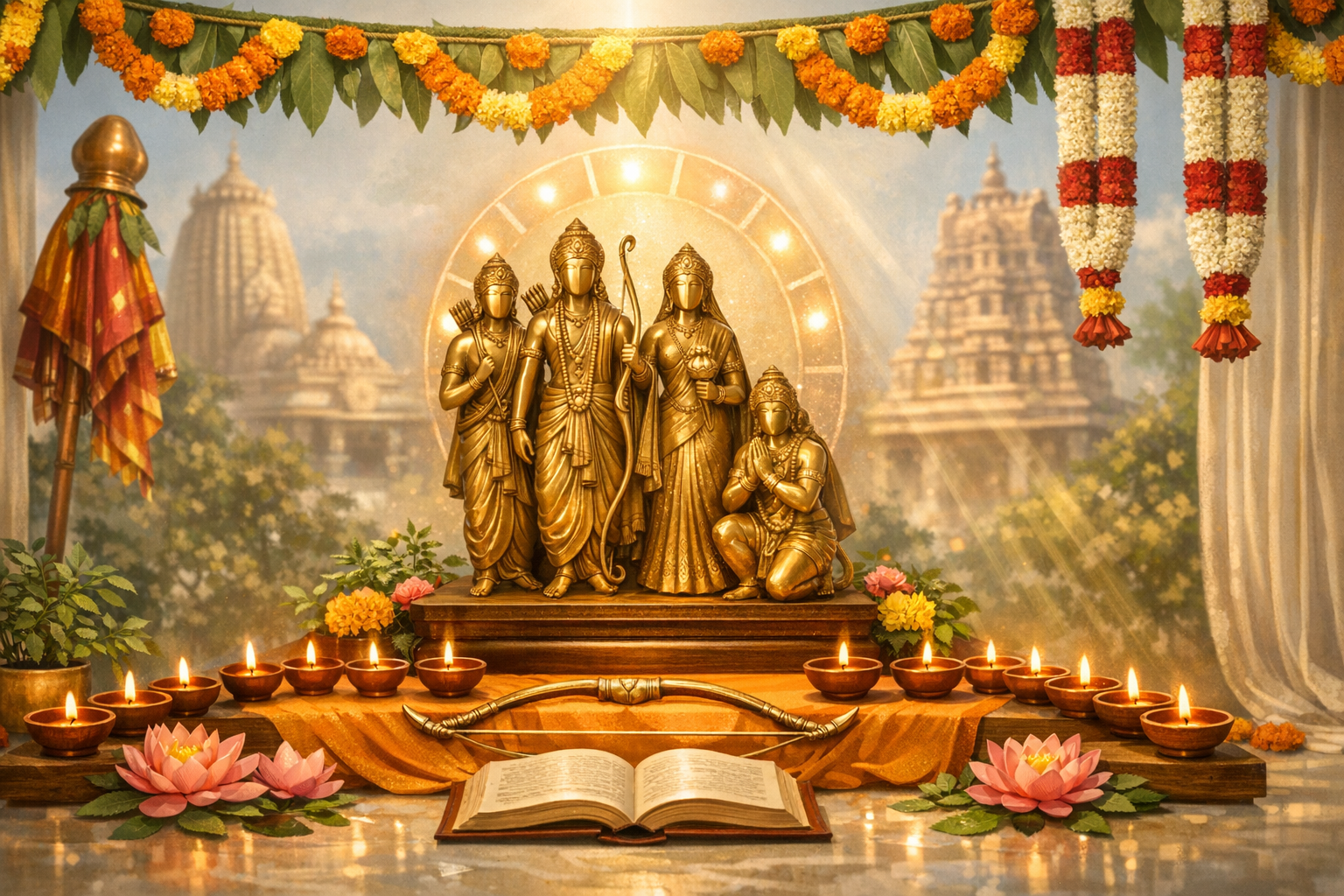
Sri Ram Navratrialso called Sri Rama Navami Navaratri, Vasant Navratri, or Chaitra Navratriis observed during the bright fortnight (Shukla Paksha) of the Chaitra month in the Hindu lunisolar calendar. In 2026, the observance begins on March 19, coinciding in many regions with Ugadi/ Gudi Padwa, and culminates with Sri Ram Navami on March 27. These dates reflect the traditional Panchang reckoning for India; local sunrise-based tithi transitions may shift observance by location and temple tradition.
Liturgically, Chaitra Shukla Paksha unfolds across nine sacred daysPratipada through Navamilinking seasonal renewal with the remembrance of Sri Rama as Maryada Purushottama, the embodiment of dharma, compassion, and just governance. While Sharad Navratri (in autumn) is widely known for the Navadurga emphasis, Vasant Navratri holds parallel antiquity and sanctity, with many traditions combining reverence for Devi (Shakti) and focused devotion to Sri Rama through Ramayana parayana, kirtan, and vrata.
Dates and alignment for 2026 (as per prevalent Indian Panchang traditions) are as follows: Chaitra Shukla Pratipada (March 19), Dwitiya (March 20), Tritiya (March 21), Chaturthi (March 22), Panchami (March 23), Shashthi (March 24), Saptami (March 25), Ashtami (March 26), and Navami (March 27). For Sri Ram Navami observance, the midday period (Madhyahna) when the Navami tithi prevails is traditionally significant, symbolizing the auspicious janma-kala of Sri Rama. Devotees typically confirm local muhurta using their regional Panchang or guidance from nearby temples.
Across India’s cultural landscape, Ram Navratri interweaves vibrant regional expressions. In the Deccan and the South, Ugadi on March 19 marks the civil New Year for many Hindu communities; in Maharashtra and parts of the Konkan, Gudi Padwa on the same day raises the victory pennant (gudi) as a symbol of auspicious renewal. In North India, Chaitra Navratri brings widespread Rama katha, bhajans, and household vratas leading to Ram Navami. Eastern regions preserve Basanti Puja traditions for Devi during the spring, while also honoring the culminating Ram Navami with readings from Valmiki Ramayana and Ramcharitmanas.
Ritual practice during these nine days focuses on sattvic discipline, scriptural recitation, and seva. Common household observances include lighting a daily deepa, offering flowers and naivedya, reciting the Rama Raksha Stotra, Sundara Kanda, or passages from Valmiki Ramayana, Tulsidas’ Ramcharitmanas, Adhyatma Ramayana, or Kamba Ramayanam. In many Vaishnava homes, the name “Sri Rama” is chanted with japa, while families also honor Devi as the power that upholds Rama’s dharmaexpressing the integral harmony of Shakti and Vishnu in the cycle of Navaratri.
Puja vidhi at home typically follows a simple, orthodox structure: achamana and sankalpa for Ram Navratri 2026; invocation of Sri Rama, Sita, Lakshmana, and Hanuman; Panchopachara or Shodashopachara offerings as per family tradition; parayana of selected chapters; and arati. Many observe a vrata (fast) in a graded wayphalahara, satvik one-meal, or upavasamindful of health and age. The vrata is customarily concluded after Navami puja when the observance’s tithi and local tradition allow. Families often describe the experience as deeply centering, with children remembering the cadence of evening bhajans and elders sharing episodes from the Ramayana that shaped their own values.
On Sri Ram Navami (March 27, 2026), temples emphasize the Madhyahna window for janma puja. In Ayodhya and many prominent kshetras, the ritual sequence includes abhishekam, alankaram, archana, and a festive arati accompanied by vigorous kirtan of “Sri Rama Jayam.” In Bhadrachalam (Telangana), the famed Sri Sita Rama Kalyanam is celebrated on Ram Navami day, followed by Sri Rama Rajyotsavam (Pattabhishekam) the next daya profound liturgical enactment of dharmic kingship that inspires reflections on ethical leadership and just administration in contemporary civic life.
Day-by-day observance often follows a thematic deepening of dharma. Devotees align the first three days with a renewed sankalpa (intention), the middle triad with disciplined practice (vrata, parayana, and seva), and the final triad with contemplation on Rama’s compassion, courage, and adherence to truth. Households may also align colors and offerings with traditional Navratri associations, while keeping the emphasis firmly on Sri Rama’s life-lessonsequanimity in adversity, integrity in decision-making, and tenderness in relationships.
From an interpretive standpoint, Sri Rama’s epithet, Maryada Purushottama, underscores the excellence of boundaries and responsibilitiesmaryadaas a framework for personal and social ethics. This insight resonates widely across the broader dharmic familyHindu, Buddhist, Jain, and Sikh communitieswhere virtues such as ahimsa, satya, daya, and seva are celebrated. Many interfaith families in South Asia and the global diaspora participate in the cultural dimensions of Ram Navamilistening to Rama katha, joining community kitchens (annadanam), or attending musical recitalsfinding in the festivities a shared language of ethical living and spiritual aspiration.
Technical considerations for 2026 planning can help devotees keep observance precise and inclusive. First, check a trusted regional Panchang for tithi boundaries at local sunrise and for Madhyahna on March 27. Second, note temple-specific achara: some communities may shift public celebrations when Navami overlaps with Ashtami at midday. Third, plan homa materials, parayana schedules, and community activities (such as collective Sundara Kanda recitation) in advance to ensure accessibility for elders, children, and working professionals.
Environmental stewardship during festivals is increasingly embraced. Households are opting for biodegradable decor, natural dyes for rangoli, and plastic-free naivedya packaging. Many temples coordinate volunteer teams to reduce waste and facilitate water-wise abhishekam practices. These choices express the dharmic principle of reverence for life and the shared natural worldlinking devotion with responsible action.
For those traveling in 2026, larger venuesAyodhya’s Ram Mandir, Bhadrachalam, and other renowned kshetrascan be exceptionally crowded on March 27. Early arrival, pre-arranged darshan passes where available, and attention to local advisories are prudent. Families often find meaningful alternatives in neighborhood temples, where they can participate more intimately in Ram Navami puja, sing kirtan, and offer annadanam in a community setting.
In sum, Sri Ram Navratri 2026 spans March 19–27 (Chaitra Shukla Paksha), beginning with Ugadi/ Gudi Padwa and culminating in Sri Ram Navami on March 27. Observance centers on disciplined vrata, sustained parayana of the Ramayana, and sharable acts of seva that strengthen community bonds. Whether at home or in temple, the festival invites a reflective engagement with Rama’s virtuescourage, compassion, truthfulness, and just conductprinciples that speak across generations and unify the broader dharmic traditions in a spirit of harmony.
Inspired by this post on Hindu Pad.