
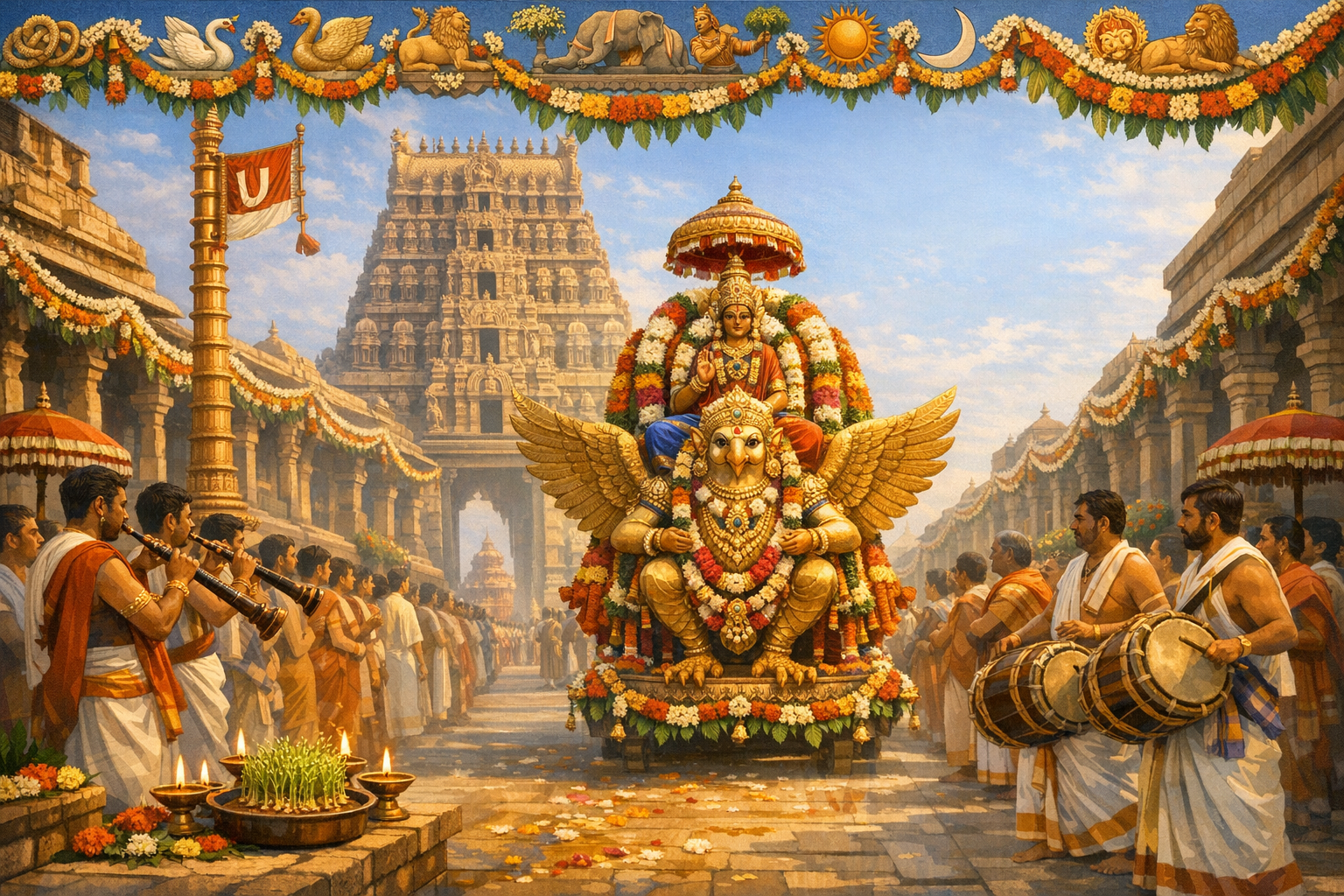
Sri Kalyana Venkateshwara Swamy Temple at Punganur, Andhra Pradesh, will observe its annual Brahmotsavams from 24 February to 4 March 2026. The auspicious Ankurarpanam, inaugurating the festival through the sowing of sacred grains, is scheduled for 23 February between 7:00 pm and 8:30 pm IST. As announced, daily Vahana Sevas will be conducted from 8:00 am to 11:00 am throughout the Brahmotsavam. These dates and timings enable devotees to plan darshan during the most significant rites of the temple festival.
Brahmotsavam is a navahnika mahotsava central to Vaishnava temple tradition and is typically anchored in the Vaikhanasa Agama that guides worship at many Venkateshwara shrines. The festival ritually enacts the Lord’s cosmic sovereignty and compassionate outreach through the utsava murti, who is taken in procession for the benefit of all beings. In theological terms, Brahmotsavam integrates Vedic recitation, agamic kriyas, homas, alankaras, and processions to reaffirm dharma, social harmony, and auspiciousness for the region.
Ankurarpanam, the ceremonial sowing of seeds, is the canonical purvanga that sanctifies time and space for the coming days of worship. In agamic praxis, this rite symbolizes generative potential, prosperity, and the invocation of guardian deities to ensure an obstacle-free festival. Per tradition, it is performed in the evening hours to align the sankalpa with the next day’s dawn rites, formally opening the vrata of Brahmotsavam.
The daily Vahana Sevas from 8:00 am to 11:00 am constitute the most visible and instructive expressions of the festival. Each vahanam embodies a distinct theological concept: Sesha Vahana evokes the Lord’s timeless support of the cosmos; Hamsa Vahana points to viveka or discriminative wisdom; Simha Vahana signals fearlessness and royal valor; Gaja Vahana represents sovereign strength and stability; Hanumantha Vahana exemplifies steadfast bhakti; Surya and Chandra prabhams reflect the ceaseless rhythms of time and grace. Garuda Vahana, traditionally drawing the largest congregations, celebrates the Lord’s role as protector and deliverer.
While local custom finalizes the day-wise order, Brahmotsavam generally opens with Dhwajarohanam, the hoisting of the sacred flag to announce divine presence and protection. Across the nine days, devotees can expect alankarams, archana, and both morning and evening processions led by traditional temple music. Toward the close of the festival, a grand Rathotsavam is typically observed, followed by Chakrasnanam and Dwajavarohanam, ritually concluding the mahotsava and returning the temple to its daily rhythm.
The liturgical backbone of the festival is methodical and exacting. Suprabhatam, Thomala Seva, and special archana honor the moola murti at dawn, while Snapana Tirumanjanam (abhishekam) to the utsava murti on designated days refreshes the icon through mantras, perfumed waters, and sacred substances. These acts align with agamic prescriptions to maintain sattva, ritual purity, and anubhava, ensuring that darshan remains spiritually elevating for all participants.
The epithet Kalyana Venkateshwara emphasizes the Lord’s beneficent presence as the divine bridegroom who confers harmony, prosperity, and stability in family life. Many households visit to pray for vivaha samskara, mutual understanding, and long-term well-being. The Kalyana dimension of the deity becomes especially resonant during Brahmotsavam, when blessings are collectively sought for new beginnings, household peace, and social concord.
For pilgrims, the experience is multisensory and deeply communal. Temple streets resound with nadaswaram and percussion, floral garlands perfume the air, and the sight of the utsava murti on each vahanam evokes shared memory and devotion. Many families speak of year-on-year returns to Brahmotsavam as a rhythm of life that anchors values, strengthens kinship bonds, and transmits tradition intergenerationally.
Punganur is well connected by road within Andhra Pradesh’s Rayalaseema region. The nearest railhead commonly used by visitors is Madanapalle Road on the Dharmavaram–Pakala line, with onward connections from Tirupati and Dharmavaram. The closest major airports are Tirupati and Bengaluru. Travel times vary by route, but Punganur lies roughly 85–100 km from Chittoor, about 100–110 km from Tirupati, and approximately 120–140 km from Bengaluru, making it viable for weekend itineraries.
Practical planning enhances the pilgrimage. The morning Vahana Seva window from 8:00 am to 11:00 am is the prime period to witness processions comfortably. Modest attire, hydration, and sun protection are advisable. Families with elders or young children often prefer reaching early to find suitable vantage points, adhering to queue discipline and local instructions for a smooth darshan.
Brahmotsavam’s social meaning extends beyond individual worship to shared welfare. Annadanam, volunteer service, and neighborhood hospitality often accompany the festivities, reinforcing seva as a cornerstone of dharmic life. The festival’s inclusive ethos resonates with the broader dharmic family, fostering valuescompassion, self-restraint, non-harm, and servicethat are celebrated across Hindu, Buddhist, Jain, and Sikh traditions, thereby strengthening inter-community goodwill.
Health and safety considerations are part of responsible pilgrimage. Garuda Vahana and Rathotsavam days can see higher footfall, so staggered arrival, awareness of entry and exit points, and cooperation with volunteers help maintain orderly movement. Photography norms and access rules inside sanctified precincts vary by temple section; following on-site guidance preserves sanctity and visitor comfort.
Environmental mindfulness during large gatherings is increasingly vital. Devotees are encouraged to minimize single-use plastics, use designated waste points, and support eco-friendly practices around the temple. Such small actions ensure that sacred streets remain clean, safe, and welcoming to all.
Key information for Punganur Brahmotsavams 2026 thus includes: festival dates from 24 February to 4 March; Ankurarpanam on 23 February between 7:00 pm and 8:30 pm; and daily Vahana Sevas from 8:00 am to 11:00 am. As with all traditional mahotsavams, the detailed day-by-day order of specific vahanams and evening observances is finalized by the temple authorities according to local custom and agamic guidance. Devotees are best served by planning early, arriving with reverence and patience, and embracing the festival’s spirit of unity, seva, and auspicious renewal.
Inspired by this post on Hindu Pad.
