
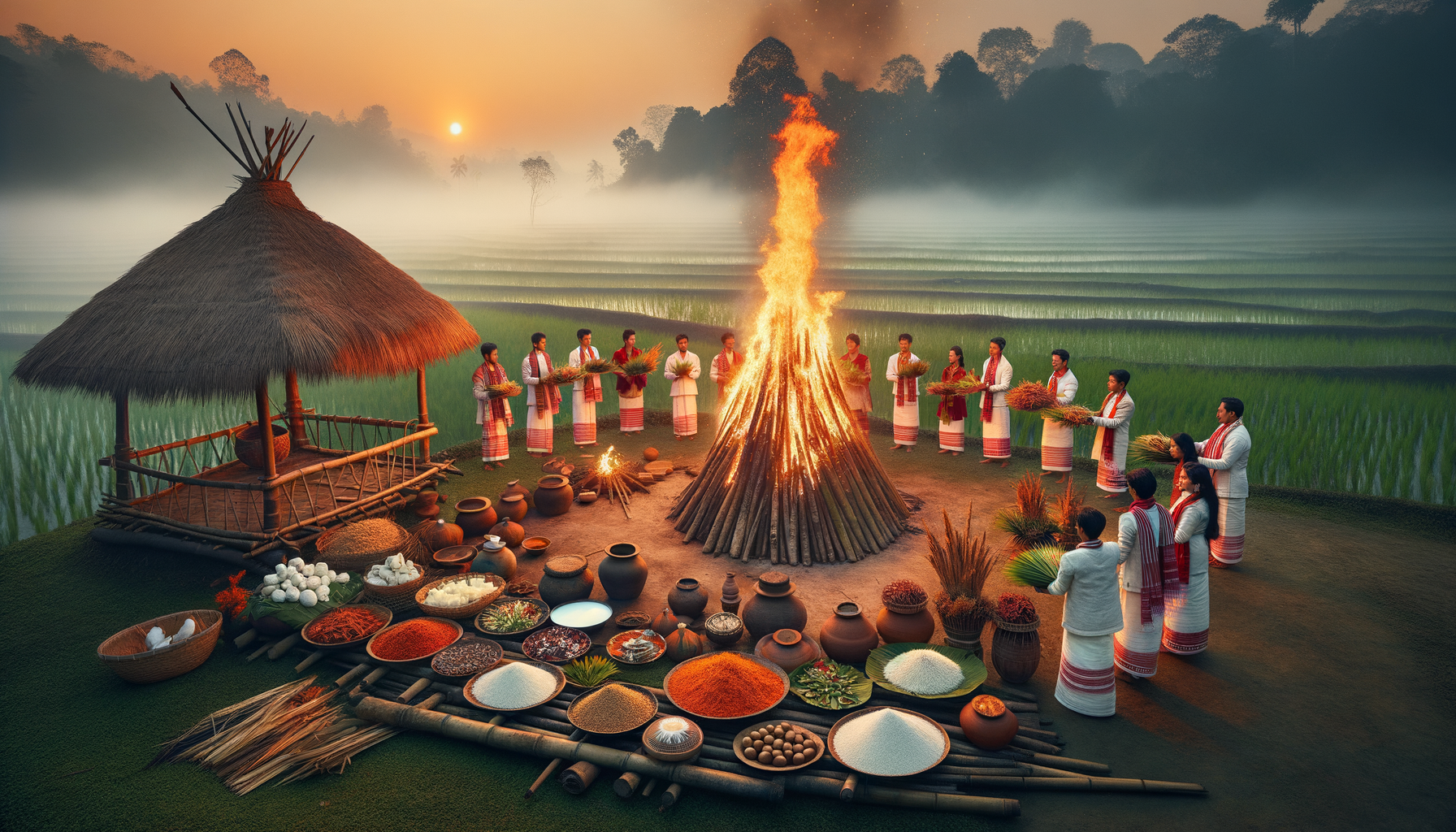
Magh Bihualso known as Bhogali Bihu or Maghar Domahiis the harvest festival of Assam, observed in the month of Magh and aligned with the solar transition of Makar Sankranti. In 2026, Magh Bihu falls on January 14. Celebrated across Assam and the Assamese diaspora, it marks the culmination of the harvest season and expresses gratitude for abundance through communal feasting, games, and ritual bonfires.
Anchored in the agrarian calendar, Magh Bihu is observed over several days, often extending into a week of community-led events and local traditions. The festival signifies the end of the harvesting cycle and the beginning of a new seasonal arc (Uttarayana), reinforcing values of resilience, mutual care, and social cohesion in Northeast India.
The festivities begin with Uruka, the eve of Bihu, when communities gather for a convivial night of cooking and sharing food. Temporary bamboo-and-thatch structures called bhelaghar are built as communal spaces for conversation, song, and warmth. The atmosphere remains inclusive and celebratory, reflecting an ethic of shared labor and shared joy at the heart of Assamese cultural heritage.
At dawn on Bihu day, the Meji bonfire is lit. Offerings of newly harvested grains and sesame are placed in the fire with prayers for prosperity and well-being. As the bhelaghar and Meji are ritually consigned to flames, the act symbolizes letting go of the old agricultural cycle and inviting auspicious beginnings, a theme that resonates across Indian harvest observances.
Food remains central to Bhogali Bihu. Households prepare til pitha, sunga pitha, laru (especially sesame and coconut), chira with curd and jaggery, and hearty seasonal dishes. The flavors of sesame, rice, and jaggery echo the season’s essence and the land’s bounty, grounding the celebration in the lived experience of rural and urban Assam alike.
Magh Bihu shares a civilizational thread with Makar Sankranti, Pongal, and Maghi/Lohrifestivals that express gratitude for nature’s cycles. This shared spirit of thanksgiving reinforces unity among dharmic traditions, where diverse regional forms converge on common values of reverence for the earth, ethical living, and community fellowship.
For 2026 planning, the principal observances cluster around January 13–14: Uruka feasts and community gatherings on the night of January 13, followed by Meji bonfires at dawn on January 14. Many neighborhoods continue local sports, friendly visits, and food exchanges through the week, sustaining the festival’s communal rhythm beyond the main day.
Participants often recall the sensory tapestry that defines Bhogali Bihu: winter mist lifting over fields, the crackle of bamboo in the fire, and the aroma of sesame warming in pans. These details, vivid yet understated, carry forward intergenerational memory and invite respectful participation from visitors and new residents who wish to understand Assam’s cultural traditions.
As a celebration of harvest, harmony, and hope, Magh Bihu 2026 offers a timely reminder of ecological interdependence and social unity. Observed with mindfulnesssourcing sustainable materials for bonfires, honoring local customs, and sharing food without excessthe festival affirms values that speak to the wider family of dharmic cultures across India.
Inspired by this post on Hindu Pad.










