
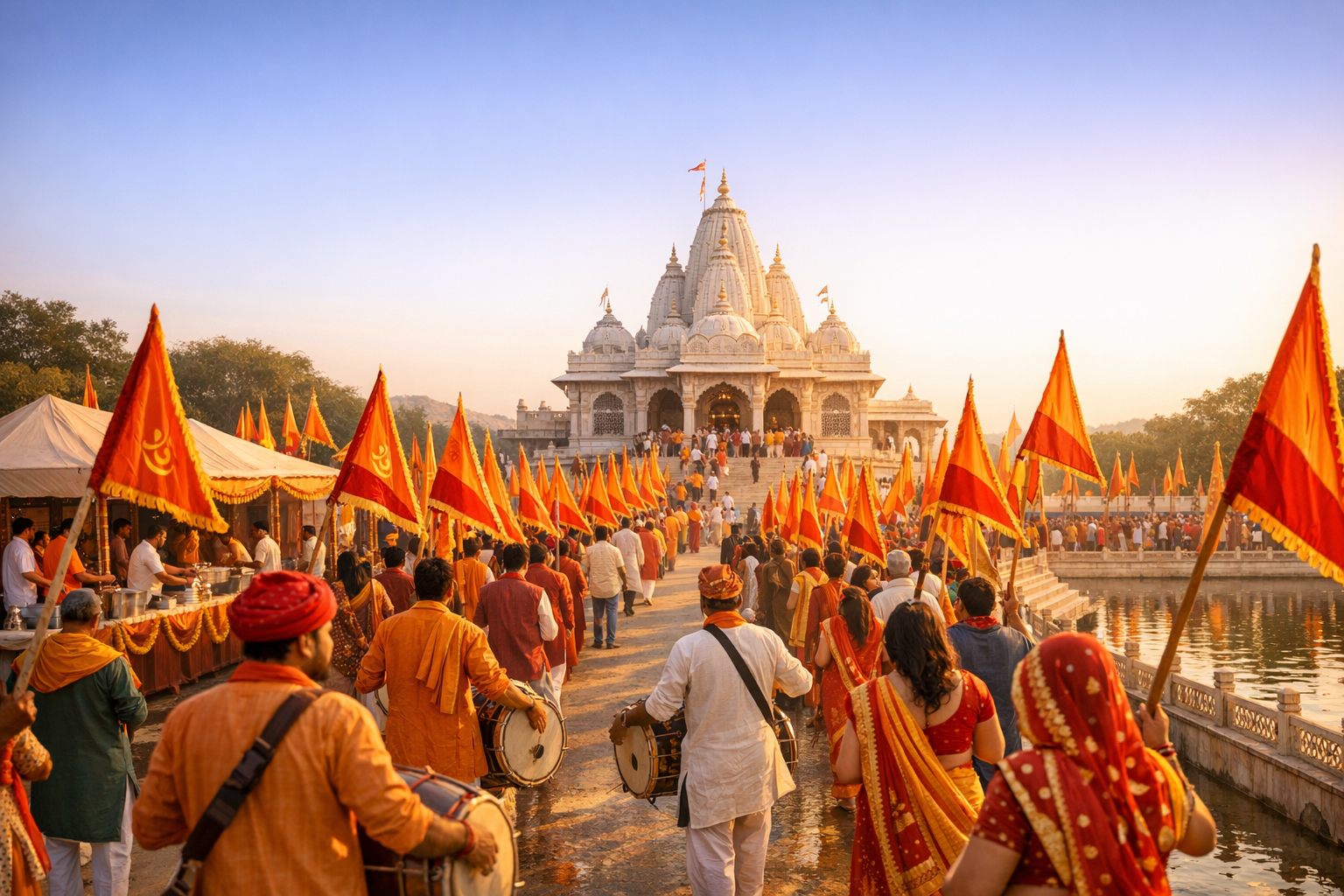
Falgun Mela (Shyambaba Falgun Mela) is one of the most celebrated gatherings for devotees of Shyam Baba worldwide, centering on the Khatu Shyamji Temple in Khatu town, Sikar district, Rajasthan. For 2026, the mela is scheduled to begin on 18 February and conclude on 28 February, drawing lakhs of pilgrims for darshan, Nishan Yatra processions, and community seva. Locally known as the Lakkhi Mela, the festival embodies devotion, generosity, and unity across the broader dharmic family, welcoming respectful participation from seekers aligned with Hindu, Buddhist, Jain, and Sikh traditions.
Set in the auspicious Falgun (Phalguna) month, the mela aligns with key lunar tithis that traditionally elevate devotional observances to Shyam Baba (Barbarika, venerated as an incarnation graced by Sri Krishna). While specific ritual peaks vary by year, the 2026 window of 18–28 February is expected to include the high-footfall days around the bright fortnight (Shukla Paksha). During these days, devotees undertake Nishan Yatrapilgrimages carrying sacred flags (nishans)and converge at Khatu for darshan, kirtan, and offerings.
Khatu Shyamji Temple’s sanctity is rooted in the living tradition that the head of Barbarika was discovered at the site’s Shyam Kund and later enshrined in the garbhagriha. Over centuries, the temple has been expanded and restored under regional patronage, becoming a major Vaishnava pilgrimage destination. The spiritual ethos emphasizes bhakti, sankirtan, dana (charity), and sincere vows, with devotees attributing fulfillment of heartfelt prayers (mannat) to the compassionate grace of Shyam Baba.
Nishan Yatra is central to Falgun Mela. Groups and communities from across Indiaand from the diasporajourney to Khatu Shyamji carrying saffron triangular flags bearing the sacred name of Shyam. The processions are accompanied by bhajans, dhols, and disciplined group walking (padayatra), culminating in ceremonial offerings of the nishans at the temple. Pilgrims often describe the sea of fluttering flags entering Khatu as an emotionally charged moment of surrender and shared purpose.
Lakkhi Mela, a popular name for the fair, reflects the immense footfallliterally lakhs of devoteeswho arrive over the festival period. Many engage in akhand kirtan (continuous devotional singing), night-long jagrans, and bhandaras (community kitchens). These practices of seva and shared meals resonate with the broader dharmic values of compassion and service (seva), reinforcing the festival’s inclusive spirit across communities that honor mutual respect and non-violence.
Temple rituals during the mela typically include Mangala Aarti at dawn, Shringar and Bhog offerings in the forenoon, and Sandhya and Shayan Aarti in the evening and night. On peak Falgun days, darshan windows may be extended and sometimes run near-continuously to accommodate devotees; however, timings are subject to daily on-ground management by the temple trust and district administration. Devotees frequently visit Shyam Kund for a ritual snan (bath) before darshan, offer prasad, and partake of charnamrit in accordance with temple guidelines.
For 2026, the announced dates18 February to 28 Februaryprovide a practical planning horizon. As the mela approaches, the district administration of Sikar and the Shyam Mandir Sansthan typically release detailed advisories on darshan queues, barricading, route diversions, and medical posts. Pilgrims are encouraged to verify the most current notices closer to travel dates, especially regarding any staggered entries, special darshan passes (if implemented), or temporary restrictions prompted by crowd management needs.
Khatu is well-connected by road. From Jaipur (approximately 80–90 km via NH 52 towards Sikar and then Ringas), frequent RSRTC and private buses operate. Ringas (Reengus) is the nearest railway junction, about 17–20 km from Khatu; from there, local taxis, autos, and shuttle services run regularly to the temple town. The nearest major airport is Jaipur International Airport (JAI). From Delhi, the preferred route is typically via NH 48 towards Jaipur, then NH 52 to Ringas, subject to live traffic updates.
During Falgun Mela, the district often deploys dedicated parking zones outside the temple core, linking them to pedestrian corridors and shuttle services. Pilgrims should budget extra time for last-mile movement, comply with security screening, and avoid carrying bulky items. Crowd management is generally optimized through segmented queues, separate lanes for elderly/devotees with special needs where feasible, and periodic holding areas to prevent congestion near the temple gates.
Accommodation options span dharamshalas, budget lodges, and hotels in Khatu, Ringas, and Sikar. Demand surges sharply during mela days, making early reservations prudent. Many community-run dharamshalas operate on minimal tariffs or donation-based models, while private hotels in Sikar and Jaipur offer a wider range of amenities for families and senior citizens. Larger groups may consider staying in Ringas for easier rail access and predictable onward shuttles.
Food and potable water points are typically scaled up across the town, with numerous bhandaras serving simple vegetarian meals. While this hospitality is a signature of the mela, pilgrims are advised to carry personal water bottles, use authorized refill points, and observe hygiene discipline. Medical first-aid centers, ambulances, and emergency response teams are usually on standby, especially near high-density choke points and along major procession routes.
Devotional etiquettes enhance darshan for everyone. Modest attire, patience in queues, refraining from pushing, and adherence to volunteer instructions are strongly recommended. Photography may be restricted inside the garbhagriha or specific temple zonessignage and staff guidance should be followed. Offerings are best sourced from authorized counters or reputable shops; single-use plastics are discouraged in support of the local ecology and the shared sanctity of the space.
Weather in late February around Khatu and Sikar is generally pleasant, with cool mornings and evenings. Layered clothing, comfortable walking footwear, small daypacks, and sun protection are practical choices. For Nishan Yatra participants, group coordination (flags, first-aid kits, water, and reflective bands for night stretches) significantly improves safety and cohesion. Families traveling with seniors or children may consider off-peak darshan hours as indicated by on-ground advisories.
Many pilgrims plan a circuit that includes nearby sacred sites such as Jeen Mata Temple (near Sikar), Salasar Balaji (Hanuman) in Churu district, and Harshnath Temple. This broader itinerary deepens the Falgun experience and distributes the travel load across several days. Such circuits also highlight the interwoven fabric of regional devotion across Shakta, Vaishnava, and Shaiva streams, echoing a dharmic unity anchored in mutual reverence.
From an economic and social perspective, Falgun Mela serves as a seasonal lifeline for local livelihoodstransporters, artisans, flower sellers, prasad vendors, and accommodation providers benefit directly. The fair’s community kitchens and volunteer networks showcase an indigenous model of social welfare that is self-organizing and values-driven. These patterns resonate with the broader Indic ethos where worship, work, and welfare integrate through seva and shared responsibility.
Ritually, devotees often perform sankalp (vow-taking) at Shyam Kund, followed by darshan and prasad distribution to family and neighbors on return. Bhajans extolling Shyam Baba’s compassion are central, with many groups hosting jagrans through the night. Tilted towards simplicity and sincerity, offerings such as flowers, kheer, churma, and gulal are common in Falgunsymbolizing purity, sweetness in speech and conduct, and the joy that accompanies the spring season.
Historically informed narratives connect Khatu Shyam to the Mahabharata tradition of Barbarikarevered for his unmatched valor balanced by a profound ethical vow: to support the side that is helpless. The theological interpretation, sanctified by Sri Krishna’s blessing, frames Shyam Baba as a compassionate refuge for devotees facing worldly trials. This moral corevalor guided by empathyaligns seamlessly with the shared dharmic emphasis on ahimsa, satya, and seva across Hinduism, Buddhism, Jainism, and Sikhism.
Practical planning for 2026 includes: confirming dates (18–28 February), reserving transport and stays well in advance, carrying government ID for hotel check-in, and monitoring district advisories for traffic diversions and peak-day queue strategies. Pilgrims using Ringas Junction should check special mela trains and add buffer time for transfers. Those bringing Nishans are encouraged to coordinate group entry, label group contact numbers, and follow designated procession corridors to the temple.
Accessibility provisions often include separate lanes or priority windows for the elderly and persons with disabilities when feasible; wheelchair availability may be limited and should be verified beforehand. Families may identify rendezvous points in case of separation, keep children’s identification cards visibly secured, and use simple communication protocols (for example, SMS meets at fixed intervals). Crowd-aware walkingsteady pace, minimal halts in bottleneckssignificantly reduces risk.
Environmental stewardship during the mela is a collective dharma. Reusable bottles, cloth bags, and mindful disposal of waste align with temple town directives and protect local water bodies like Shyam Kund. Vendors and devotees alike are encouraged to minimize plastic, segregate waste when possible, and keep pathways clean for the next group of yatris. These small disciplines tangibly improve the darshan experience for all.
Financially, devotees may prefer digital payments where connectivity permits; carrying some cash remains sensible due to temporary network load during peak hours. ATMs and mobile charging points can be crowded; portable power banks and pre-arranged cash for essentials are practical. Official temple counters and authorized prasad stalls reduce transaction friction and ensure quality.
Safety advisories commonly include restrictions on inflammables, laser pointers, drones, and oversized bags near the sanctum and procession routes. On high-density days, authorities may implement one-way pedestrian flows to ease movement. Hydration and light, frequent meals help sustain long queues; those with medical conditions should keep prescriptions and emergency contacts handy and inform group leaders about any specific needs.
Beyond its devotional apex, Falgun Mela fosters cultural literacyfolk music, regional crafts, and local cuisines add to the sensory map of Khatu during these days. Visitors often return with a refined understanding of how devotional practice and social organization intertwine in living Indic traditions. The festival’s atmospheresuffused with music, color, and an ethic of carecreates enduring memories for first-time pilgrims and regulars alike.
In sum, Falgun Mela 2026 at Khatu Shyamji Templespanning 18–28 Februarycombines precise ritual practice, large-scale community coordination, and a welcoming devotional culture. Nishan Yatra and the Lakkhi Mela exemplify how shared faith can move peacefully through public space, uniting lakhs in song, service, and darshan. With early planning and mindful participation, devotees can experience a spiritually elevating, safe, and seamless yatra that honors the temple’s sacred heritage and the broader dharmic ideals of unity, humility, and compassion.
Note: Darshan timings, procession routes, and operational details may be revised by the temple trust and local administration for safety and crowd management. Pilgrims are advised to review official advisories issued closer to the mela dates.
Inspired by this post on Hindu Pad.










