Bhogi marks the first day of the four-day Sankranthi season in Andhra Pradesh and Karnataka, and it is observed as Bhogi Pongal among Tamil communities. As a harvest festival anchored in the agrarian calendar, Bhogi inaugurates Makara Sankranti with a focus on renewal, gratitude, and community bonding across South India.
Central to Bhogi is the theme of renewaldiscarding what is obsolete and preparing homes and hearts for prosperity. Traditionally, communities tidy their houses, reorganize household spaces, and symbolically let go of the past. This act of cleansing is culturally understood as an ethical reset, aligning family life with seasonal rhythms and the dharmic values of simplicity and intention.
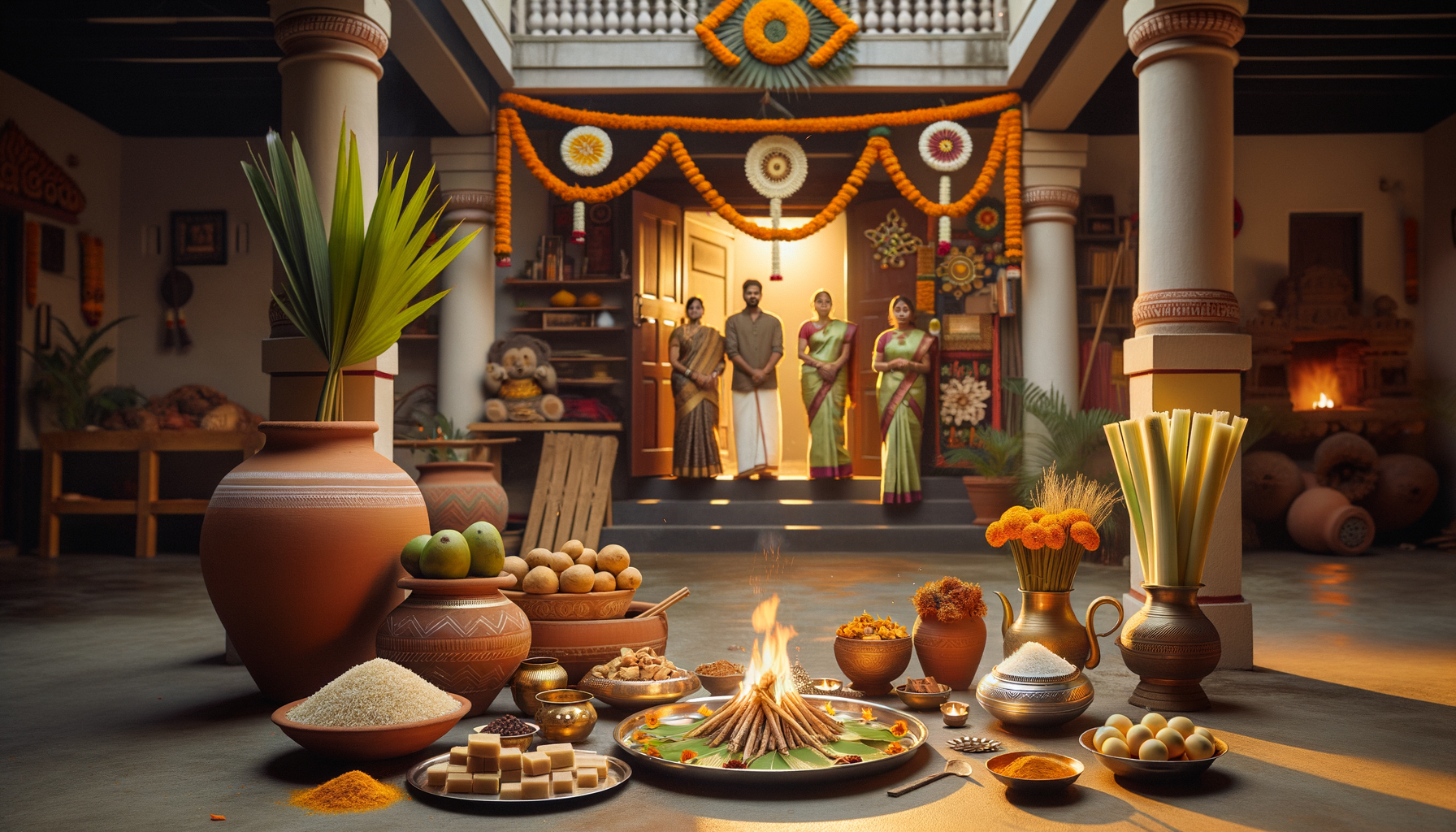
The pre-dawn sacred bonfire, known as Bhogi Mantalu, is the most visible ritual. Families gather to light the fire, offer prayers, and sing songs that celebrate auspicious beginnings. Children circle the flames with joyful songs and clapping, reflecting the festival’s emphasis on collective well-being and the warmth of intergenerational togetherness.
Equally significant is Bhogi Pallu, a ritual of blessings for children. A mixture typically includes regi pallu (jujube/ber), sugarcane pieces, rice, turmeric, flower petals, and sometimes coins. Elders gently shower this mixture over children with wishes for health, protection from drishti (evil eye), and growth. The practice blends devotion and care, reinforcing communal responsibility and the transmission of cultural heritage.
Homes and neighborhoods are adorned with vibrant muggulu/kolam drawn at the threshold, often complemented by gobbemmalu (small cow-dung mounds) and torans of mango leaves. Seasonal producesugarcane, sesame preparations, and fresh ricefeatures in household offerings and community sharing. New clothes, warm greetings, and open doors for neighbors and relatives emphasize hospitality and social harmony.
Regional observances vary in nuance but share a clear core. In Kannada and Telugu households, Bhogi Mantalu and Bhogi Pallu set the day’s tone. In Tamil Nadu, Bhogi Pongal anticipates the following day’s Surya Pongal, with families preparing spaces, ingredients, and decorations in continuity. Farmers often honor tools, cattle, and the life-sustaining forces of nature, offering gratitude to Surya and, in some traditions, Indra, for timely rains and good harvests.
These practices echo values shared across dharmic traditionsreverence for nature, mindful living, and community cohesion. The festival’s inclusive ethos highlights unity-in-diversity: diverse customs, one intent. Whether expressed as Sankranthi or Pongal, Bhogi affirms a shared cultural fabric that nurtures compassion, interdependence, and ethical prosperity.
In practice, Bhogi is celebrated through a simple sequence: pre-dawn lighting of Bhogi Mantalu with prayers and song; morning Bhogi Pallu for children; daytime home visits, kolam-making, and exchange of seasonal sweets; and evening gatherings that strengthen community bonds. These steps make Bhogi both accessible and profound, blending ritual precision with everyday warmth.
Inspired by this post on Hindu Pad.